In the age of viral skincare trends, few tools have captured attention quite like the jade roller and its more sophisticated cousin: the gua sha. Scroll through any beauty-focused corner of Instagram or TikTok, and you’ll see influencers gliding smooth stones across glowing faces, promising sculpted jawlines, reduced puffiness, and even “facelifts without surgery.” But beneath the aesthetic appeal and serene rituals lies a pressing question—is gua sha facial massage actually effective, or is it just another social media-fueled fad?
The answer isn’t a simple yes or no. Gua sha has roots in traditional Chinese medicine (TCM) dating back centuries, where it was used to promote circulation and energy flow. Today’s version, however, has been rebranded as a luxury self-care ritual, often stripped of its cultural context and repackaged with promises of instant glow and contouring. To separate fact from fiction, we need to examine the science, the anecdotal evidence, and the potential pitfalls.
What Exactly Is Gua Sha Facial Massage?
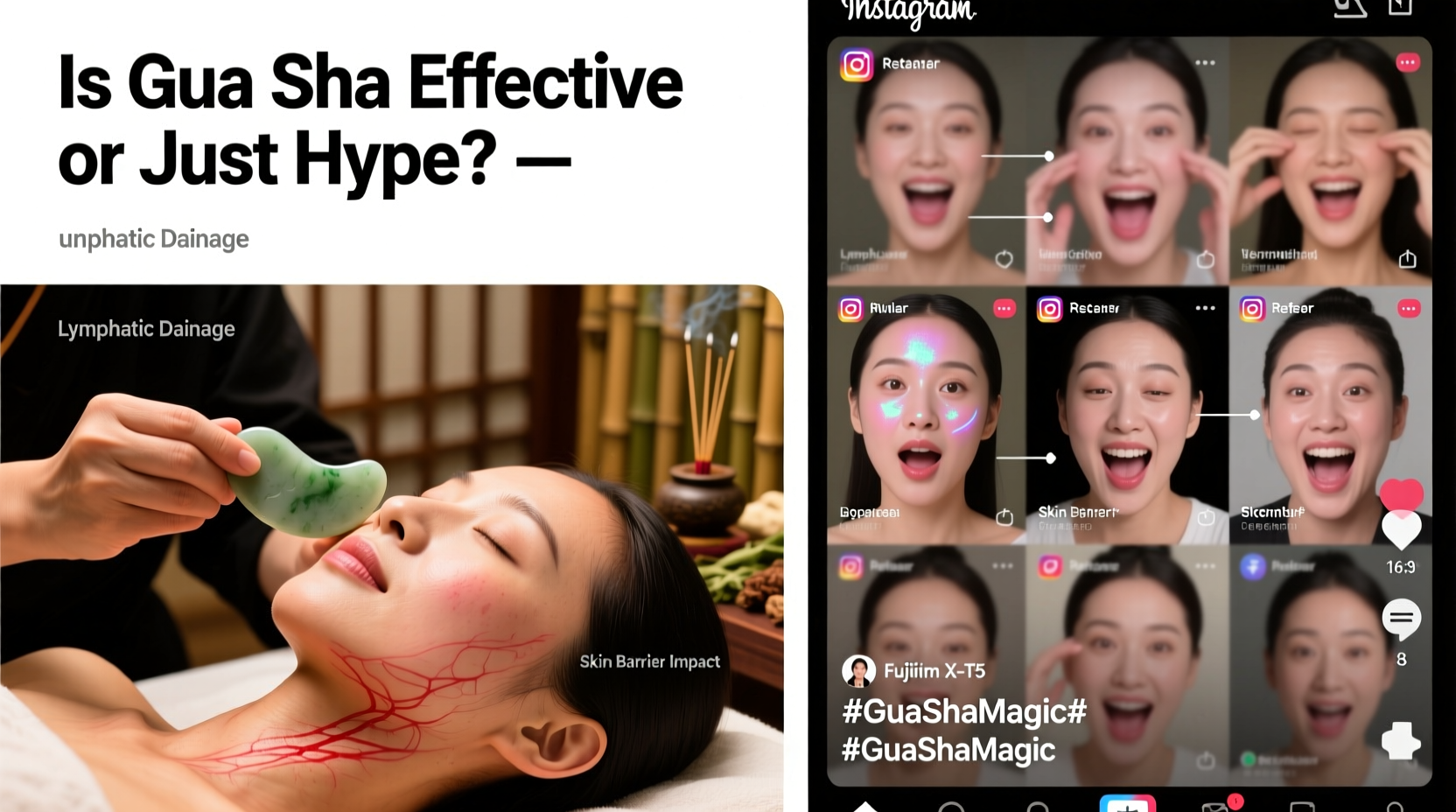
Gua sha, pronounced “gwa-shah,” translates to “scraping sand” in Chinese. Traditionally, it involved using a flat tool—often made of jade, rose quartz, or horn—to gently scrape the skin in specific patterns, primarily on the back, neck, and limbs. The goal was to release stagnant energy, improve blood flow, and alleviate pain and inflammation.
Facial gua sha is a modern adaptation. Instead of vigorous scraping, practitioners use light pressure and upward strokes on the face and neck to:
- Stimulate lymphatic drainage
- Reduce facial puffiness
- Improve circulation for a radiant complexion
- Relieve muscle tension in the jaw and forehead
- Enhance product absorption when used with serums or oils
Unlike body gua sha, which may leave temporary redness (“sha”), facial techniques are gentle and non-abrasive. When done correctly, there should be no bruising or discomfort.
Tip: Always use a facial oil or serum as a glide medium to prevent tugging on delicate skin.The Science Behind the Claims
While gua sha is steeped in tradition, does modern science support its benefits?
Lymphatic Drainage: One of the most cited benefits is reduced puffiness through improved lymphatic flow. The lymphatic system removes waste and excess fluid from tissues. When sluggish—due to poor sleep, diet, or stress—it can lead to morning puffiness, especially under the eyes and along the jawline.
A small 2017 study published in *Evidence-Based Complementary and Alternative Medicine* found that facial massage could enhance lymphatic movement and reduce edema. While not specific to gua sha, the principle aligns: gentle manual stimulation may encourage fluid movement.
Circulation and Glow: Increased blood flow brings oxygen and nutrients to the skin, potentially giving a temporary \"post-facial\" glow. A 2020 review in *Dermatologic Surgery* noted that mechanical stimulation—like massage—can boost microcirculation, which may support collagen production over time.
Muscle Tension Relief: Many people clench their jaws or furrow their brows unconsciously. Gua sha’s targeted strokes along the jaw, temples, and brow can help relax these muscles, similar to facial acupuncture or acupressure.
However, there is limited peer-reviewed research specifically on facial gua sha. Most evidence remains anecdotal or derived from related practices like facial massage and lymphatic drainage.
“While gua sha isn’t a miracle cure, consistent use can support healthy circulation and relaxation—both of which contribute to better skin health.” — Dr. Li Chen, Integrative Dermatologist
What Gua Sha Can—and Can’t—Do
It’s important to set realistic expectations. Gua sha is not a substitute for medical dermatology, anti-aging treatments, or proper skincare routines. But it can be a valuable complementary practice.
| Claim | Supported by Evidence? | Notes |
|---|---|---|
| Reduces facial puffiness | ✅ Likely | Especially noticeable in the morning after fluid retention |
| Improves skin radiance | ✅ Short-term | Due to increased blood flow; effect is temporary |
| Sculpts jawline or slims face | ⚠️ Partially | No fat reduction, but reduced puffiness may create illusion of definition |
| Reduces wrinkles | ❌ Not proven | No direct evidence it reverses aging; may support skin health over time |
| Relieves TMJ or tension headaches | ✅ Anecdotal support | May help relax masseter and temporalis muscles |
| Treats acne or rosacea | ❌ No | Can irritate inflamed skin; avoid active breakouts |
The key takeaway: gua sha offers subtle, cumulative benefits rather than dramatic transformations. Think of it as a wellness tool for the face—not a quick fix.
How to Use Gua Sha Properly: A Step-by-Step Guide
Using gua sha incorrectly can lead to irritation, broken capillaries, or ineffective results. Follow this routine for safe, effective practice.
- Cleanse your face. Start with a clean canvas to avoid pushing dirt into pores.
- Apply a facial oil or serum. Use a slippery medium to minimize friction. Avoid water-based products that don’t provide enough glide.
- Warm the tool. Hold it between your palms for a few seconds. Warm stone feels more soothing and may enhance circulation.
- Begin with the neck. Use the curved edge to sweep downward from the chin to the collarbone. This primes lymphatic drainage.
- Move to the jawline. Place the tool under the ear and sweep down along the jaw toward the neck. Repeat 3–5 times per side.
- Address the cheeks. Starting from the nose, sweep outward toward the ears using the broad side of the tool.
- Work the under-eye area. Use the smaller curve gently from the inner corner to the temple. Never press hard.
- Smooth the forehead. Use upward motions from the eyebrows to the hairline, then outward to the temples.
- Finish with the brow bone. Sweep from the center of the forehead out to the temples to relieve tension.
- Wipe and store the tool. Clean with mild soap and water, then dry thoroughly.
Frequency: 3–5 times per week is sufficient. Daily use is fine if your skin tolerates it, but overuse can cause sensitivity.
Tip: Store your gua sha in the fridge for a cooling, depuffing effect—especially useful in the morning.Real Results: A Mini Case Study
Sarah, a 34-year-old graphic designer from Portland, struggled with chronic jaw tension from grinding her teeth at night. She also noticed persistent morning puffiness, particularly around her cheeks and under her eyes. After seeing gua sha videos online, she purchased a rose quartz tool and committed to a nightly routine for six weeks.
She followed the proper technique using a hydrating facial oil and focused on lymphatic drainage along her jaw and neck. Within two weeks, she reported feeling less tightness in her jaw. By week four, her partner commented that her face looked “more defined.” A photo comparison showed reduced under-eye swelling and a brighter complexion.
Sarah didn’t expect—or achieve—a chiseled jawline, but she appreciated the ritualistic aspect and the subtle improvements. “It’s not magic,” she said, “but it feels like I’m giving my face a mini-massage every night. My skin looks calmer, and I’ve become more mindful about how much I clench.”
Her experience reflects what many users report: modest but meaningful benefits, especially when combined with good sleep, hydration, and skincare.
Common Mistakes and What to Avoid
Even well-intentioned routines can go wrong. Here are frequent errors to watch for:
- Using too much pressure. The face has thin skin and delicate blood vessels. Pressing too hard can cause broken capillaries or bruising.
- Skipping the glide medium. Dry scraping damages the skin barrier and accelerates fine lines.
- Using on active acne or broken skin. Gua sha can spread bacteria and worsen inflammation.
- Expecting overnight results. Benefits build gradually. Consistency matters more than intensity.
- Ignoring hygiene. A dirty tool harbors bacteria. Clean it after every use.
Checklist: Getting Started with Gua Sha
Before you begin, ensure you’re set up for success:
- ☑ Choose a high-quality tool (jade, rose quartz, or bian stone)
- ☑ Select a non-comedogenic facial oil or serum
- ☑ Set aside 5–10 minutes daily or every other day
- ☑ Learn the correct strokes (follow reputable tutorials)
- ☑ Avoid use on irritated, sunburned, or infected skin
- ☑ Be patient—observe changes over 4–6 weeks
Frequently Asked Questions
Can gua sha really slim your face?
Not in the way some influencers suggest. It won’t melt fat or permanently alter your bone structure. However, by reducing fluid retention and improving lymphatic drainage, it can create a temporarily slimmer appearance, especially along the jawline.
Is one stone better than another—jade vs. rose quartz?
Jade is traditionally believed to balance energy and retain coolness. Rose quartz is associated with love and emotional healing. From a functional standpoint, both work similarly. Choose based on personal preference or aesthetics. The shape and smoothness of the tool matter more than the material.
Can I use gua sha if I have sensitive skin?
Yes, but with caution. Use feather-light pressure and avoid inflamed areas. If you have conditions like rosacea, eczema, or psoriasis, consult a dermatologist first. Sensitive skin types may benefit more from shorter sessions and gentler tools.
Conclusion: Ritual Over Revolution
Gua sha facial massage sits at the intersection of ancient wisdom and modern self-care. While it’s easy to dismiss it as Instagram hype—especially given the curated videos and celebrity endorsements—the practice holds genuine value when approached realistically.
It won’t replace retinoids, sunscreen, or professional treatments. But as a tool for relaxation, circulation, and subtle refinement, it earns its place in a holistic skincare routine. The real power of gua sha may lie not in dramatic transformations, but in the quiet discipline of daily touch—a moment of mindfulness in an otherwise rushed day.
If you’re curious, try it with patience and proper technique. Track how your skin responds over time. You might not wake up with a Hollywood jawline, but you may find something just as valuable: a calmer face, a clearer complexion, and a deeper connection to your own skin.
💬 Have you tried gua sha? Did you notice a difference? Share your experience in the comments—your insights could help others decide whether to pick up the stone.








