
Facial mists have become a staple on beauty shelves and social media feeds, often touted as the final step for dewy skin or a midday refresh. But with so many products vying for space in your routine, is a facial mist actually necessary — or just a feel-good luxury? Dermatologists weigh in on the science behind these spritzes, their real benefits, and whether they belong in every skincare regimen.
Unlike cleansers, moisturizers, or sunscreens — all of which are non-negotiable for healthy skin — facial mists occupy a gray area. They’re not essential for everyone, but under certain conditions, they can offer measurable advantages. The key lies in understanding your skin type, environment, and overall goals.
What Exactly Is a Facial Mist?
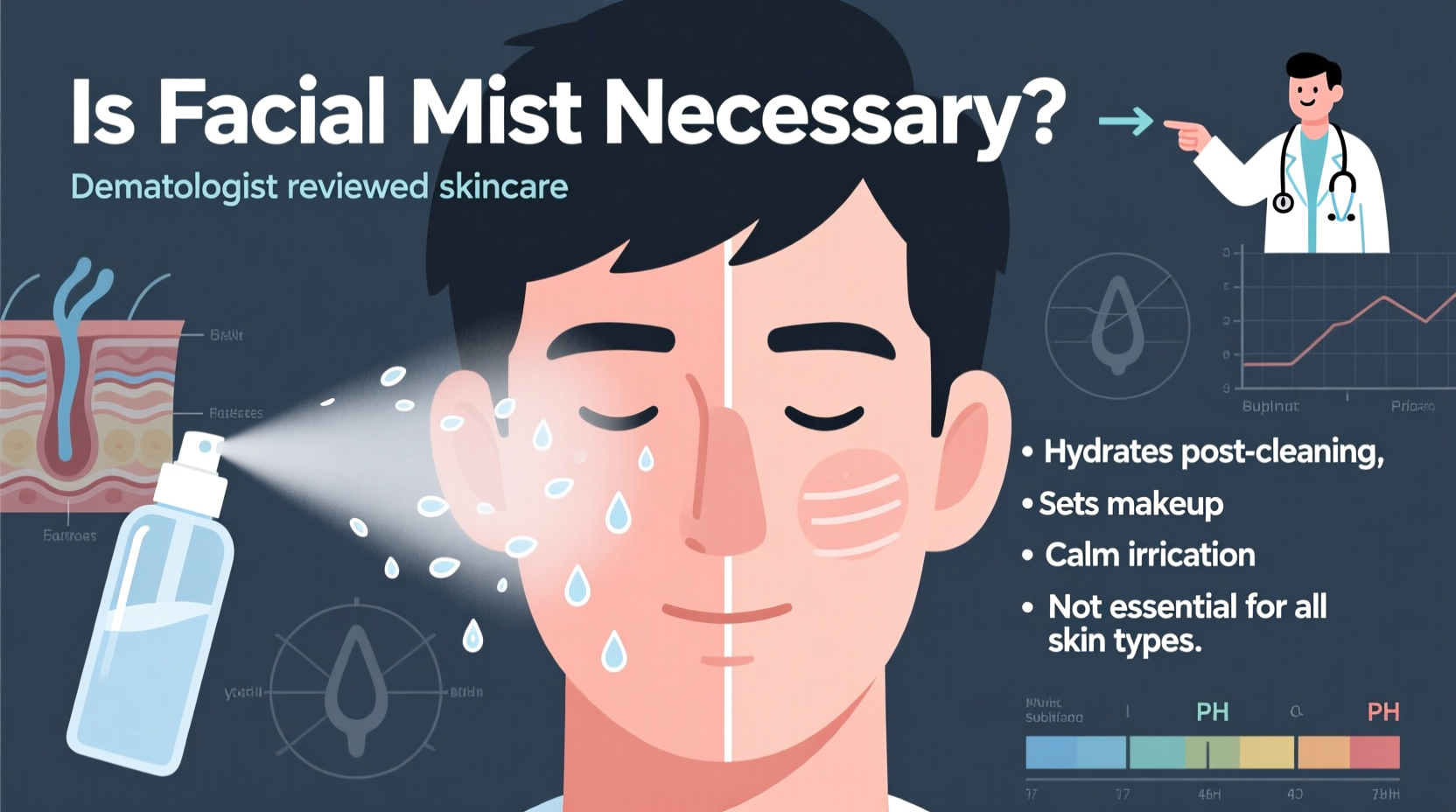
A facial mist is a lightweight, water-based product dispensed via a spray nozzle. Most contain a blend of purified water, humectants (like glycerin or hyaluronic acid), soothing botanicals (such as chamomile or aloe), and sometimes antioxidants or pH-balancing ingredients. Some are formulated purely for hydration; others include toning agents or even SPF.
They differ from toners in texture and delivery: while traditional toners are applied with cotton pads and may contain alcohol or exfoliants, facial mists are generally alcohol-free and designed for direct spraying onto the face. Their primary function is surface-level hydration and comfort, not deep cleansing or active ingredient delivery.
Tip: Hold the bottle 6–8 inches from your face when spraying to ensure even distribution without dripping.When Facial Mists Provide Real Benefits
While not universally required, facial mists serve practical purposes in specific scenarios. Dermatologists agree that context matters more than frequency when evaluating their necessity.
- Dry or dehydrated skin: In arid climates or heated indoor environments, a mist containing humectants like hyaluronic acid can help attract moisture to the skin’s surface.
- Post-procedure care: After laser treatments, chemical peels, or microneedling, gentle mists can soothe irritation and support barrier recovery — provided they're free of fragrance and alcohol.
- Makeup setting: Some mists act as makeup sealants, helping foundation adhere better and reducing powderiness.
- Midday refresh: For people who experience oil buildup or dullness by afternoon, a quick spritz can revive the complexion without disrupting makeup.
“Facial mists aren’t miracle workers, but they can be useful tools. Think of them as supportive players — not lead actors — in your skincare lineup.” — Dr. Lena Patel, Board-Certified Dermatologist
Common Misconceptions About Facial Mists
Despite their popularity, several myths persist about what facial mists can do. Understanding these misconceptions helps prevent wasted spending and misplaced expectations.
Mist Myth #1: “It deeply hydrates the skin”
While mists deliver water to the surface, they lack occlusive agents (like ceramides or oils) needed to lock in moisture. Without follow-up with a moisturizer, the water evaporates quickly — potentially worsening dryness through transepidermal water loss.
Mist Myth #2: “All mists are safe for sensitive skin”
Not true. Fragrances, essential oils, and preservatives in some mists can trigger irritation or allergic reactions. Always check the ingredient list if you have reactive skin.
Mist Myth #3: “You need one for every step of your routine”
Some influencers promote using mists between each product layer (“layering”), but this isn’t backed by clinical evidence. Over-misting can disrupt product absorption or cause pilling.
Who Should Consider Using a Facial Mist?
The decision to incorporate a facial mist should be based on individual needs rather than trends. Here’s a breakdown of who may benefit most — and who might want to skip it.
| Skin Type / Situation | Benefit Level | Recommendation |
|---|---|---|
| Dry or Dehydrated Skin | High | Use post-cleansing or before moisturizer to boost hydration absorption. |
| Oily or Acne-Prone Skin | Moderate | Choose oil-free, non-comedogenic formulas; avoid heavy botanical extracts. |
| Combination Skin | Moderate | Use selectively on dry zones; avoid over-spraying oily T-zone. |
| Normal Skin | Low to Moderate | Potentially beneficial for refreshing skin during the day. |
| Sensitive or Rosacea-Prone Skin | Caution Required | Only use fragrance-free, hypoallergenic mists after patch testing. |
| Post-Procedure Skin | High | Clinically recommended for cooling and soothing; must be sterile and simple. |
How to Use a Facial Mist Effectively: A Step-by-Step Guide
If you choose to include a facial mist in your routine, proper application makes a difference. Follow this dermatologist-approved sequence for optimal results.
- Cleanse your face: Start with a freshly washed face to remove dirt and oils.
- Spray evenly: Close your eyes and mist in a “T” and “X” pattern across the face — three sprays vertically (forehead to chin), then three diagonally from cheek to opposite forehead.
- Let it settle: Allow 15–30 seconds for the mist to absorb into the upper layers of the skin.
- Follow with moisturizer: Apply your serum or moisturizer immediately after misting to seal in hydration. This step is crucial — otherwise, evaporation negates any benefit.
- Optional: Set makeup: If using as a finisher, hold the bottle further away (about 10 inches) and spritz lightly over completed makeup. Let air-dry naturally.
Ingredients That Make a Difference — and Those to Avoid
Not all mists are created equal. The formulation determines whether a product supports skin health or causes harm. Look for these key components:
- Hyaluronic Acid: A powerful humectant that holds up to 1,000 times its weight in water. Ideal for plumping and smoothing.
- Glycerin: Another effective humectant that draws moisture into the epidermis.
- Niacinamide: Helps strengthen the skin barrier and reduce redness.
- Aloe Vera or Allantoin: Soothing agents beneficial after sun exposure or irritation.
- Green Tea Extract: Provides antioxidant protection against environmental stressors.
Conversely, steer clear of mists containing:
- Fragrance (synthetic or natural essential oils)
- Alcohol (especially denatured alcohol, which dries skin)
- Parabens or harsh preservatives
- Peppermint or menthol (can cause stinging)
Mini Case Study: Office Worker in a Dry Climate
Sarah, a 34-year-old graphic designer in Denver, Colorado, struggled with tight, flaky skin by mid-afternoon despite using a rich moisturizer. Her office HVAC system ran constantly, stripping moisture from the air. After consulting her dermatologist, she began using a hyaluronic acid facial mist right after cleansing and again before applying moisturizer at night. She also kept a travel-sized version at her desk for a midday spritz followed by a light moisturizing balm.
Within two weeks, Sarah reported significantly less tightness and improved makeup wear. Her dermatologist emphasized that the mist alone wasn’t the solution — the real change came from using it as a primer for moisturizer, maximizing hydration retention in a low-humidity environment.
Checklist: Choosing the Right Facial Mist for Your Skin
Before purchasing a facial mist, ask yourself the following questions:
- ✅ Does it contain proven hydrators like hyaluronic acid or glycerin?
- ✅ Is it free from fragrance, alcohol, and known irritants?
- ✅ Does my skin type match the product’s intended use (e.g., soothing vs. mattifying)?
- ✅ Will I actually use it consistently, or is it just trendy packaging?
- ✅ Am I pairing it with a moisturizer to lock in hydration?
If you answered “no” to more than two of these, reconsider the purchase. A well-formulated mist should complement your existing routine — not complicate it.
FAQ: Common Questions About Facial Mists
Can I use a facial mist instead of a moisturizer?
No. Facial mists provide temporary surface hydration but lack occlusive properties needed to prevent moisture loss. Always follow with a moisturizer to maintain hydration.
How often should I use a facial mist?
There’s no set rule. Once or twice daily is typical — after cleansing or before moisturizing. You can also use it midday for refreshment, but avoid overuse if it contains active ingredients or if your skin reacts poorly.
Are facial mists good for acne-prone skin?
Some are. Opt for lightweight, non-comedogenic formulas without pore-clogging botanical oils. Avoid mists with high concentrations of witch hazel or alcohol, which can irritate and over-dry, triggering rebound oil production.
Final Verdict: Is It Necessary?
The short answer: no, a facial mist is not necessary in a skincare routine for most people. However, it can be a valuable addition under the right circumstances. Dermatologists emphasize that skincare fundamentals — cleansing, moisturizing, sun protection, and targeted treatments — come first. A facial mist may enhance comfort and hydration but shouldn’t replace any core steps.
For those living in dry climates, undergoing skin treatments, or seeking a sensory boost during the day, a well-chosen mist can offer tangible benefits. But for others, especially those with minimal concerns or oily skin, it may be redundant.
The bottom line? Listen to your skin. If a mist improves how your skin feels and functions — and you’re using it correctly — it earns its place. If it sits unused or causes irritation, let it go without guilt.
💬 Have you found a facial mist that works for your skin? Share your experience or ask questions in the comments — your insights could help others decide what’s truly necessary.








