
Blue light is everywhere. From the glow of your smartphone to the overhead LED in your office, it’s a constant presence in modern life. While not inherently harmful, excessive or poorly timed exposure can disrupt sleep, strain your eyes, and potentially contribute to long-term health issues. Understanding how blue light affects your body—and when it becomes problematic—is essential for maintaining well-being in a digitally dominated world.
The Science Behind Blue Light
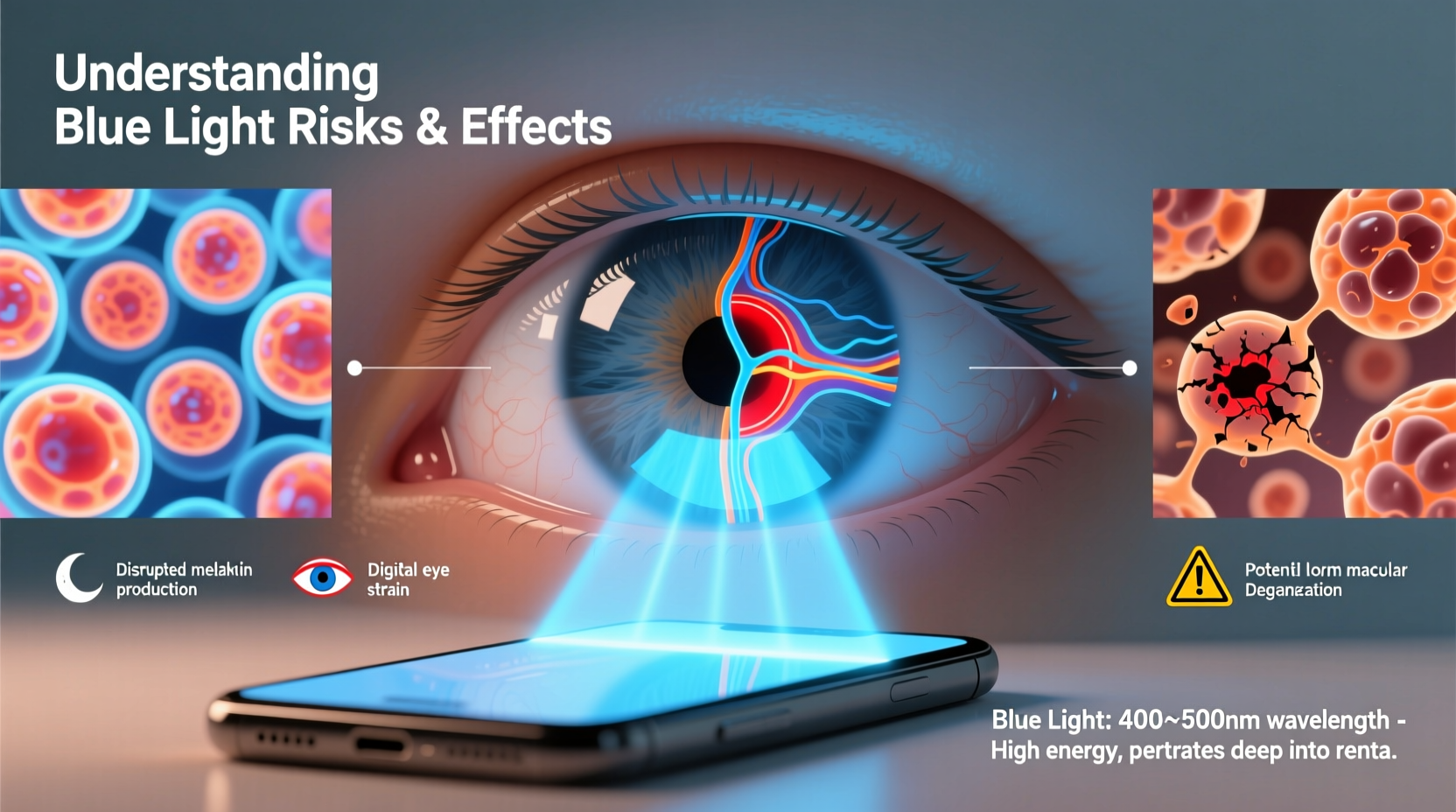
Blue light is part of the visible light spectrum, with wavelengths between approximately 380 and 500 nanometers. It has higher energy than other colors due to its short wavelength, which is why it scatters more easily—this scattering is what makes the sky appear blue during the day.
Natural blue light from the sun plays a crucial role in regulating circadian rhythms, boosting alertness, and improving mood. However, artificial sources such as smartphones, tablets, computer screens, LED lighting, and fluorescent bulbs emit significant amounts of blue light, often at times when your body expects darkness.
When absorbed by photoreceptors in the retina, particularly intrinsically photosensitive retinal ganglion cells (ipRGCs), blue light signals the brain to suppress melatonin—the hormone responsible for sleep onset. This effect is strongest in the evening and night, precisely when melatonin should be rising to prepare the body for rest.
“Evening exposure to blue-rich light can delay sleep onset by up to 30 minutes and reduce overall sleep quality.” — Dr. Sarah Lee, Sleep Neurologist, Harvard Medical School
Health Effects of Excessive Blue Light Exposure
While moderate daytime exposure supports cognitive function and wakefulness, chronic overexposure—especially after sunset—can lead to several adverse outcomes:
- Sleep disruption: Suppressed melatonin delays sleep, reduces REM cycles, and leads to non-restorative rest.
- Digital eye strain: Prolonged screen use causes dry eyes, blurred vision, headaches, and discomfort—a condition known as Computer Vision Syndrome.
- Circadian misalignment: Chronic nighttime exposure may increase the risk of metabolic disorders, depression, and cardiovascular issues over time.
- Potential retinal damage: Some animal studies suggest high-intensity blue light could contribute to oxidative stress in retinal cells, though human evidence remains limited.
Day vs. Night: When Blue Light Helps—and Hurts
The impact of blue light depends heavily on timing. During daylight hours, it enhances attention, reaction times, and mood. In fact, light therapy using blue-enriched lamps is a standard treatment for seasonal affective disorder (SAD).
But when used late in the day, that same stimulating effect becomes counterproductive. The problem isn’t blue light itself—it’s the mismatch between environmental cues and biological expectations.
| Time of Day | Effect of Blue Light | Recommendation |
|---|---|---|
| Morning (6–9 AM) | Boosts alertness, resets circadian clock | Embrace natural sunlight or use bright indoor lighting |
| Afternoon (10 AM–5 PM) | Supports focus and productivity | Continue normal screen use; take breaks every 20 minutes |
| Evening (6–10 PM) | Suppresses melatonin, delays sleep | Reduce screen brightness, enable night mode, dim lights |
| Night (after 10 PM) | Disrupts sleep architecture, increases wakefulness | Avoid screens entirely; use red or amber nightlights if needed |
Practical Strategies to Manage Blue Light Exposure
You don’t need to eliminate blue light—just manage it wisely. Here’s a step-by-step approach to minimizing risks while preserving benefits:
- Optimize your lighting environment: Replace cool-white LEDs with warmer bulbs (2700K–3000K) in living areas and bedrooms.
- Use screen filters or software: Enable “Night Shift” (iOS), “Night Light” (Android/Windows), or third-party apps like f.lux to reduce blue emission after sunset.
- Follow the 20-20-20 rule: Every 20 minutes, look at something 20 feet away for 20 seconds to reduce eye strain.
- Wear blue-blocking glasses: Amber-tinted lenses in the evening can block up to 90% of blue light and improve sleep onset.
- Set device curfews: Turn off non-essential electronics one hour before bed. Consider using smart plugs or parental controls to automate this.
Mini Case Study: Reducing Screen Time Improves Sleep Quality
Mark, a 34-year-old software developer, struggled with insomnia despite maintaining a consistent bedtime. He routinely used his laptop until midnight and kept his phone beside the bed. After tracking his sleep with a wearable device, he discovered he averaged only 5.5 hours of restful sleep per night, with frequent awakenings.
He implemented two changes: enabling night mode on all devices after 8 PM and switching to a physical book before bed. Within two weeks, his average sleep duration increased to 6.8 hours, and he reported feeling more refreshed in the morning. His sleep tracker showed a 25% increase in deep sleep cycles.
Do Blue Light Glasses Really Work?
Research on blue light-blocking glasses shows mixed but generally positive results. A 2020 study published in Chronobiology International found that participants who wore amber-tinted glasses for three hours before bedtime experienced earlier melatonin onset and improved subjective sleep quality compared to a placebo group.
However, not all products are equal. Clear lenses labeled “blue light blocking” often filter only a small portion of high-energy blue light. For real impact, choose glasses with amber or red tints specifically designed for evening wear.
Tip: Look for glasses that block wavelengths below 500nm. Labels like “HEV (high-energy visible) light protection” indicate more effective filtering.FAQ
Can blue light cause permanent eye damage?
Current scientific consensus suggests that typical screen exposure does not cause irreversible retinal damage in humans. While some lab studies show blue light can harm retinal cells under extreme conditions, everyday device use falls far below those thresholds. Still, long-term effects are still being studied.
Are children more vulnerable to blue light?
Yes. Children’s eyes absorb more blue light than adults’ because their ocular media are more transparent. Combined with developing circadian systems, excessive screen time—especially before bed—can significantly disrupt sleep and behavior. Experts recommend limiting screen exposure for kids under 12 after 7 PM.
Does turning my phone to grayscale help?
Grayscale mode doesn’t reduce blue light emission, but it can decrease visual stimulation and make devices less engaging, helping users disengage more easily. Pair it with night mode for both reduced blue light and lower cognitive pull.
Conclusion: Balance, Not Elimination
Blue light isn’t inherently bad—it’s a natural part of our environment and essential for healthy daytime functioning. The issue arises when artificial sources extend exposure into biological night, disrupting sleep and undermining long-term wellness. By aligning your light environment with your body’s internal clock, you can harness the benefits of blue light without suffering its downsides.
💬 Start tonight: Dim your lights, turn on night mode, and give your eyes—and your sleep cycle—a break. Share your experience or tips in the comments below to help others build healthier digital habits.








