
In compact urban living spaces, every square foot counts. For those in studio apartments, the idea of owning fitness equipment often feels like a luxury reserved for homeowners with basements or spare rooms. Enter the foldable treadmill—a sleek, space-saving solution marketed to city dwellers who want to stay active without sacrificing floor space. But does it deliver on its promise, or is it destined to become another overpriced coat rack collecting dust?
The answer isn’t straightforward. While foldable treadmills offer undeniable spatial advantages, their long-term practicality depends on user habits, apartment layout, equipment quality, and maintenance discipline. This article examines the real-world viability of foldable treadmills in small living environments, backed by design insights, user behavior patterns, and expert recommendations.
Space Efficiency vs. Real Estate Reality
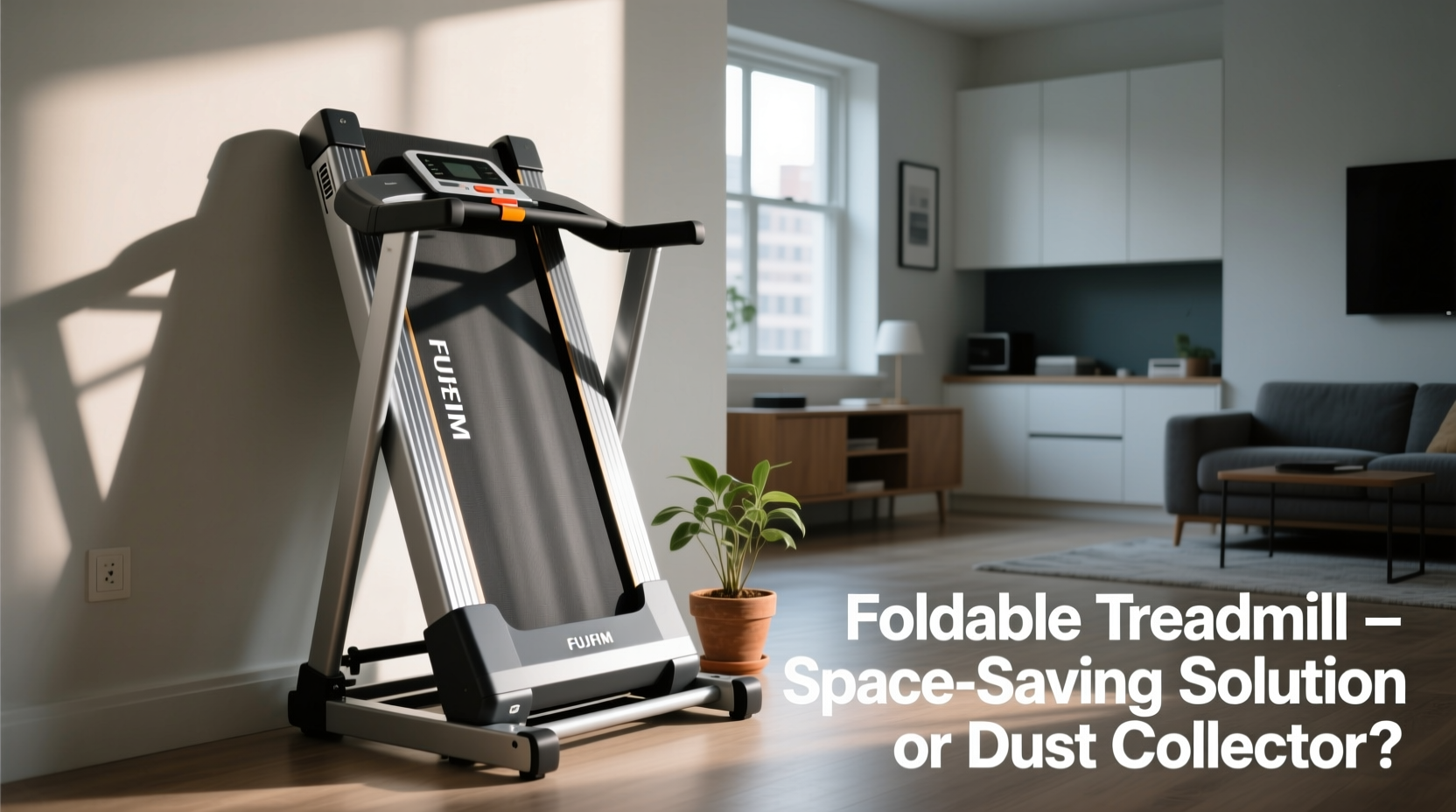
Studio apartments average between 300 and 600 square feet—often combining sleeping, cooking, and living areas into one multifunctional zone. In such settings, bulky appliances are impractical unless they serve multiple purposes or can be easily stored.
Foldable treadmills are engineered with this constraint in mind. Most models feature hydraulic or manual lift systems that allow the deck to pivot vertically against a wall, reducing their footprint by up to 70%. Some high-end variants even include wheels for effortless repositioning.
However, “foldable” doesn’t always mean “invisible.” Even when upright, many treadmills still occupy 2–3 square feet of floor space and stand 5 to 6 feet tall—potentially blocking windows, mirrors, or wall outlets. The key is measuring your available clearance: both horizontal floor space during use and vertical clearance when folded.
Tip: Measure your room’s traffic flow before purchasing. Leave at least 3 feet behind the treadmill during use and ensure ceiling height allows for full vertical storage.User Behavior: The Hidden Factor in Equipment Longevity
According to a 2022 study by the American Council on Exercise (ACE), nearly 40% of home fitness equipment becomes underused within six months of purchase. Treadmills rank among the most abandoned machines—not due to mechanical failure, but behavioral inertia.
In studio apartments, the challenge is amplified. Without a dedicated workout zone, users must actively clear space, unfold the machine, power it on, and mentally transition into exercise mode—all before taking a single step. That friction reduces consistency.
Conversely, residents who integrate workouts into rigid daily routines—such as morning exercisers or remote workers using movement breaks—are far more likely to sustain usage. The presence of visual cues also matters; keeping the treadmill partially assembled or in a visible location increases engagement.
“Equipment visibility correlates strongly with usage frequency. A treadmill tucked behind the couch is more likely to gather dust than one positioned near natural light or daily pathways.” — Dr. Lena Patel, Behavioral Health Researcher, Urban Wellness Institute
Choosing the Right Model: Features That Matter
Not all foldable treadmills are created equal. Budget models may sacrifice durability, motor strength, or ease of folding for lower price points. To avoid buyer’s remorse, consider these five critical features:
- Motor Power (Continuous Duty): Look for at least 2.5 CHP (continuous horsepower) for consistent performance, especially if you weigh over 180 lbs or plan to run regularly.
- Folding Mechanism: Hydraulic systems require less effort than manual lifts. Check user reviews for reports of stiffness or difficulty.
- Deck Size: A minimum of 50\" x 20\" ensures safe stride length. Smaller decks increase tripping risk and reduce comfort.
- Weight Capacity: Verify the maximum supported weight matches your needs. Many compact models cap at 250 lbs.
- Noise Output: In thin-walled apartments, loud motors disrupt neighbors. Opt for models under 70 dB at 5 mph.
| Feature | Minimum Recommended | Avoid If… |
|---|---|---|
| Motor (CHP) | 2.5+ | Less than 2.0 CHP – inadequate for running |
| Deck Size | 50\" x 20\" | Narrower than 18\" – limits stride safety |
| Folding Height | Under 72\" | Taller than ceiling clearance – unstoreable |
| Assembly Time | Under 60 minutes | Requires tools or two people – discourages setup |
| Price Range | $600–$1,200 | Below $400 – typically poor durability |
Real-Life Scenario: One New Yorker’s Experience
Jamie R., a 32-year-old graphic designer in Brooklyn, lives in a 420-square-foot studio. After gaining weight during remote work, she invested $850 in a mid-range foldable treadmill with automatic incline and Bluetooth connectivity.
Initially, she used it five times a week, storing it upright beside her Murphy bed. However, after two months, she found herself skipping workouts because unfolding it disrupted her limited evening routine. She also discovered that the treadmill blocked access to her only closet when unfolded.
Solution? She relocated it to face the window during use, creating a “virtual running” experience with scenic videos. She also established a rule: the treadmill stays unfolded until she completes three weekly sessions. Now in her eighth month, she averages four runs per week and reports improved energy and sleep.
Her takeaway: “The machine didn’t fail me—I failed to adapt my environment to support it. Once I treated it like an appointment, not a chore, it became part of my life.”
Maximizing Practicality: A Step-by-Step Integration Plan
Purchasing a foldable treadmill is only the first step. Sustained use requires intentional integration into your daily rhythm. Follow this timeline to build lasting habits:
- Week 1: Measure & Map
Identify where the treadmill will be used and stored. Test the folding mechanism. Mark the area with tape to visualize footprint changes. - Week 2: Trial Runs
Unfold and set up the treadmill daily—even if you don’t use it. Practice quick deployment to reduce psychological resistance. - Week 3: Schedule Workouts
Block 20–30 minutes in your calendar three times per week. Pair it with a habit (e.g., post-coffee, pre-dinner). - Week 4: Optimize Environment
Add motivation triggers: place water nearby, queue up playlists, or mount a tablet for guided runs. - Ongoing: Monthly Audit
Review usage logs. If inactive for 10+ days, reassess placement, schedule, or necessity.
Common Pitfalls and How to Avoid Them
- Overestimating Storage Ease: Some models require awkward lifting or lack stability when upright. Always test in-store or check return policies.
- Ignoring Maintenance: Dust buildup in folding joints can jam mechanisms. Wipe rails monthly and lubricate belts as recommended.
- Underestimating Noise: Running at 6 mph generates noise comparable to a vacuum cleaner. Use during daytime hours and inform neighbors if walls are thin.
- Buying Based on Price Alone: Cheap treadmills often have weaker motors, shorter warranties, and steeper learning curves for assembly.
Frequently Asked Questions
Can I leave a foldable treadmill assembled all week?
Yes, but only if it doesn’t obstruct movement or violate fire code clearances. However, regular folding helps maintain the hinge mechanism and reinforces intentionality around use. If left out permanently, treat it like furniture—keep it clean and integrated into decor.
Do foldable treadmills last as long as non-foldable ones?
High-quality foldable models from reputable brands (e.g., NordicTrack, Sole Fitness, Horizon) can last 7–10 years with proper care. The folding mechanism adds complexity, so longevity depends on build quality and usage frequency. Regular lubrication and avoiding overloading extend lifespan.
Are there alternatives for ultra-small spaces?
Absolutely. Consider:
- Folding exercise bikes: Take up less depth and are quieter.
- Resistance bands or jump ropes: Zero footprint, highly portable.
- Walking/running outdoors: Free and eliminates space concerns.
Action Checklist: Is a Foldable Treadmill Right for You?
Before buying, complete this checklist:
- ✅ Measured available floor and vertical space
- ✅ Confirmed building rules (noise, flooring weight limits)
- ✅ Researched at least three models with 4+ star ratings
- ✅ Verified warranty (minimum 1 year frame, 6 months parts)
- ✅ Identified a consistent time slot for workouts
- ✅ Discussed noise with roommates or neighbors
- ✅ Established a cleaning and maintenance plan
Conclusion: Tool or Trophy?
A foldable treadmill isn’t inherently practical or wasteful—it becomes one based on how it’s used. In the right hands, it’s a powerful tool for maintaining physical health in constrained environments. In others, it becomes a passive monument to good intentions.
The difference lies in planning, commitment, and environmental design. If you approach the purchase as a behavioral project rather than a one-time fix, you dramatically increase the odds of success. Choose wisely, integrate thoughtfully, and treat the machine not as a magic solution, but as a partner in your wellness journey.
🚀 Ready to make movement part of your small-space lifestyle? Assess your space, define your goals, and take the next step—whether that’s buying a treadmill, trying a low-footprint alternative, or sharing your experience to help others decide.








