Many people use the terms “introvert” and “social anxiety” interchangeably, assuming that someone who avoids parties or prefers solitude must be anxious in social settings. While there can be overlap in behavior, the underlying motivations and emotional experiences are fundamentally different. Understanding these distinctions is essential—not only for self-awareness but also for recognizing when avoidance stems from a deeper psychological issue that may require support.
Introversion is a personality trait rooted in how individuals gain energy and process stimulation. Social anxiety, on the other hand, is a mental health condition characterized by intense fear of judgment and negative evaluation in social situations. Confusing the two can lead to mislabeling normal preferences as pathology—or worse, dismissing real distress as mere shyness. This article breaks down the core differences, offers practical tools for self-assessment, and outlines when seeking professional help becomes not just beneficial, but necessary.
What Is Introversion? A Natural Preference
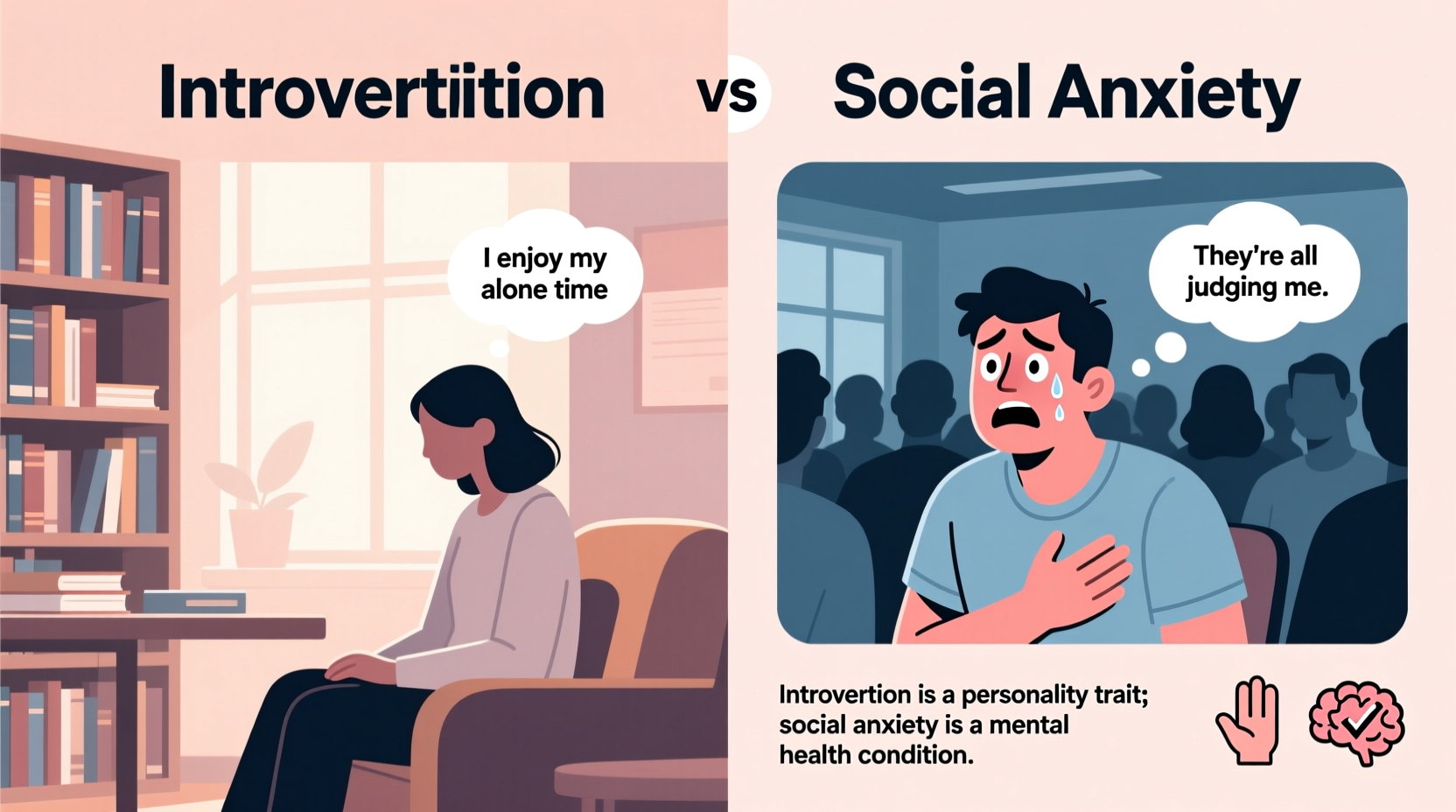
Introversion is one end of the extroversion-introversion spectrum in personality psychology. It describes individuals who tend to feel most energized when spending time alone or in small, meaningful gatherings. Introverts often prefer deep conversations over small talk and may need time to recharge after social interaction, especially in large groups or high-stimulation environments.
Carl Jung, who first popularized the concept, described introverts as those whose focus is directed inward—toward thoughts, feelings, and internal reflections—rather than outward toward people and external activity. Modern research, including studies based on the Big Five personality model, confirms that introversion is a stable, non-pathological trait present across cultures and age groups.
Being an introvert does not imply discomfort or fear in social settings. Many introverts enjoy socializing—they simply do so selectively and in moderation. After engaging with others, they may retreat to solitude not because they felt anxious, but because their energy has been spent and they need restoration.
Tip: If you’re an introvert, honor your natural rhythm. Schedule downtime after social events instead of pushing through fatigue—it’s not antisocial, it’s self-care.Understanding Social Anxiety: More Than Just Shyness
Social anxiety disorder (SAD), clinically known as social phobia, is a diagnosable mental health condition listed in the DSM-5. It goes beyond occasional nervousness before public speaking or meeting new people. People with social anxiety experience persistent, excessive fear of being watched, judged, embarrassed, or humiliated in everyday social interactions.
This fear is often disproportionate to the actual threat and can lead to avoidance behaviors that interfere with work, education, relationships, and daily functioning. Common symptoms include rapid heartbeat, sweating, trembling, blushing, difficulty speaking, and catastrophic thinking (“Everyone will think I’m stupid”). These reactions occur even in low-stakes situations like ordering food at a restaurant or making eye contact with a coworker.
Unlike introversion, social anxiety is not a preference—it’s a source of distress. The desire to connect is often present, but it’s blocked by overwhelming fear. As Dr. Ellen Hendriksen, clinical psychologist and author of How to Be Yourself: Quiet Your Inner Critic and Rise Above Social Anxiety, explains:
“Social anxiety isn’t about not liking people. It’s about fearing that people won’t like you—and that this rejection will be unbearable.” — Dr. Ellen Hendriksen
Key Differences Between Introversion and Social Anxiety
To clarify the distinction, consider motivation and emotional response. An introvert might decline a party invitation because they’d rather read a book or spend time with a close friend. They don’t dread the event; they simply choose differently. A person with social anxiety, however, might avoid the same event out of fear—worrying they’ll say something awkward, be judged, or feel physically ill from stress.
The table below summarizes core differences:
| Factor | Introversion | Social Anxiety |
|---|---|---|
| Motivation | Preference for low stimulation, solitude, or deep connection | Fear of judgment, embarrassment, or negative evaluation |
| Emotional Response | Calm, content, or neutral when alone | Anxious, tense, or distressed in social settings |
| Energy Source | Recharged by solitude or small-group interaction | No clear recharging pattern; avoidance driven by fear |
| Symptoms | None—trait-based, not pathological | Panic attacks, rumination, physical symptoms (sweating, shaking) |
| Desire for Connection | May vary, but not inherently impaired | Often strong, but blocked by fear |
Crucially, introversion does not impair functioning. In fact, many introverts thrive in careers requiring focus, creativity, and deep thinking. Social anxiety, however, can severely limit life choices—from avoiding job interviews to skipping medical appointments due to fear of interaction.
When Avoidance Crosses the Line: Signs You May Need Help
It’s normal to feel nervous before giving a speech or walking into a room full of strangers. But when anxiety begins dictating decisions, affecting performance, or causing significant emotional pain, it may be time to seek professional support. Here are key indicators that what you're experiencing goes beyond introversion:
- You consistently avoid social situations—even ones you want to attend—due to fear.
- You experience physical symptoms (racing heart, nausea, dizziness) before or during social interactions.
- You spend hours ruminating after minor interactions, convinced you made a bad impression.
- Your relationships suffer because you’re too afraid to initiate or maintain them.
- You turn down promotions, educational opportunities, or events that could enrich your life.
- You rely heavily on safety behaviors (e.g., always bringing a friend, scripting conversations).
If several of these resonate, it doesn’t mean you’re broken—it means you’re human, and help is available. Left untreated, social anxiety can become more entrenched over time, reinforcing avoidance patterns and reducing quality of life.
A Real-Life Example: Maya’s Story
Maya, a 28-year-old graphic designer, always considered herself shy. She preferred working remotely, avoided team lunches, and rarely spoke up in meetings. For years, she assumed this was just her introverted nature. But over time, her avoidance began to take a toll. She turned down a leadership role because presenting terrified her. She skipped a best friend’s wedding, fabricating an illness to avoid scrutiny. Afterward, she replayed every past interaction, convinced colleagues thought she was rude or incompetent.
Only when her therapist asked, “Do you avoid these situations because you prefer quiet, or because you’re afraid of what people will think?” did Maya realize her behavior wasn’t preference—it was fear. With cognitive behavioral therapy (CBT), she gradually faced feared situations, challenged distorted beliefs, and rebuilt confidence. Today, she still values solitude, but no longer lets fear make decisions for her.
Practical Steps Toward Clarity and Support
Distinguishing between temperament and disorder starts with honest self-reflection. Ask yourself: Am I choosing solitude because it feels right, or because I’m afraid of what might happen if I engage?
Here’s a step-by-step guide to help assess your experience and determine next steps:
- Track Your Reactions: For one week, journal your social interactions. Note where you went, how you felt before, during, and after, and whether you avoided anything. Look for patterns of fear versus preference.
- Identify Triggers: What specific situations cause distress? Speaking up in meetings? Eating in public? Making phone calls? Pinpointing triggers helps differentiate generalized discomfort from situational anxiety.
- Assess Impact: Is your behavior limiting your goals? Are relationships strained? Does avoidance bring relief, or guilt and isolation?
- Try Small Exposures: If anxiety is mild, practice gradual exposure. Start with low-risk interactions—making brief eye contact, asking a cashier how their day is going. Observe outcomes: Were fears realized?
- Seek Professional Evaluation: If anxiety persists or impairs functioning, consult a licensed therapist. A proper assessment can confirm or rule out social anxiety disorder and guide treatment.
Checklist: When to Consider Professional Help
- ☑ Avoidance interferes with work, school, or relationships
- ☑ Physical symptoms (shaking, sweating, nausea) occur regularly in social settings
- ☑ Fear persists for six months or longer
- ☑ Self-help strategies haven’t reduced distress
- ☑ You feel trapped by your own thoughts or behaviors
Frequently Asked Questions
Can an introvert also have social anxiety?
Yes, absolutely. Introversion and social anxiety are not mutually exclusive. An introvert may naturally prefer solitude but still experience anxiety in unavoidable social situations. In such cases, the challenge is managing both temperament and fear without conflating the two.
Is social anxiety just extreme shyness?
No. While shyness involves temporary discomfort around new people, social anxiety is chronic and debilitating. It includes persistent fear, physical symptoms, and avoidance that significantly disrupt daily life. Shyness may fade with familiarity; social anxiety often does not without intervention.
What treatments are effective for social anxiety?
Cognitive Behavioral Therapy (CBT) is the gold standard, particularly with exposure therapy. Medications like SSRIs may be prescribed in moderate to severe cases. Mindfulness practices, group therapy, and skills training (e.g., assertiveness, conversation techniques) also show strong results.
Conclusion: Honor Yourself, Seek Support When Needed
There is strength in quiet reflection, and there is courage in facing fear. Knowing the difference between introversion and social anxiety allows you to honor your natural tendencies while also recognizing when distress requires attention. Being an introvert is not a flaw to fix. But enduring silent suffering under the guise of “just being shy” denies you the fullness of connection and opportunity.
If you’ve been avoiding situations not because you prefer peace, but because you’re afraid of being seen, know this: support exists, and healing is possible. Whether through therapy, self-guided growth, or trusted conversations, taking the first step toward understanding your inner world is an act of profound self-respect.
💬 Have you struggled to tell the difference between introversion and anxiety? Share your experience or questions in the comments—your story could help someone feel less alone.