Maintaining oral hygiene while traveling or during busy days demands practical tools that deliver real results. Two popular options—interdental brushes and compact travel toothbrushes—are frequently used to freshen breath and remove debris when a full brushing session isn’t possible. But when it comes to actual cleaning performance away from home, which tool truly excels? The answer depends on your dental needs, lifestyle, and how you define “clean.” While both have merits, understanding their specific functions reveals where each shines—and where they fall short.
Understanding the Core Functions
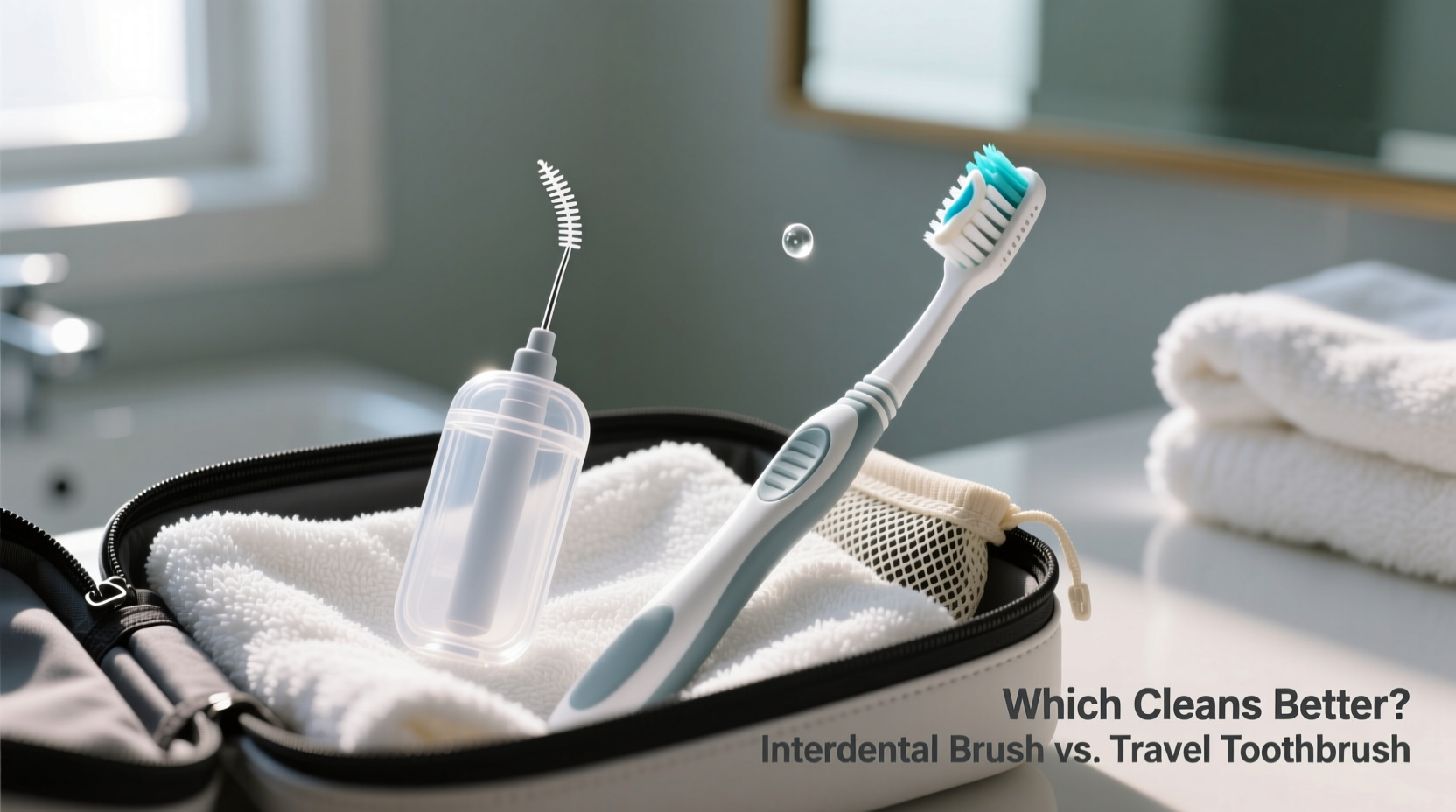
A travel toothbrush is essentially a scaled-down version of a standard manual toothbrush. Designed for portability, it typically features a shorter handle, a smaller head, and sometimes a protective cap. Its purpose is to replicate the mechanical action of regular brushing: disrupting plaque, removing food particles, and stimulating gums across all tooth surfaces.
In contrast, an interdental brush is engineered specifically to clean between teeth—areas where traditional brushing often fails. These small, cone-shaped brushes fit into tight spaces along the gumline and between molars, targeting plaque buildup in interproximal zones. They are especially effective for people with braces, implants, or naturally wider gaps between teeth.
The fundamental difference lies in scope: travel toothbrushes aim for broad coverage; interdental brushes focus on precision. Neither replaces a complete oral care routine, but each addresses different aspects of on-the-go maintenance.
Tip: Always rinse your interdental brush before and after use to prevent bacterial transfer and prolong bristle life.Effectiveness in Plaque Removal: A Side-by-Side Comparison
To assess which tool cleans better, consider where plaque accumulates most. According to the American Dental Association (ADA), over 40% of plaque builds up between teeth—areas inaccessible to standard brushing alone. This makes interdental cleaning critical for preventing gingivitis and cavities in proximal regions.
Studies published in the Journal of Clinical Periodontology consistently show that interdental brushes outperform floss and even single-tufted brushing in reducing interproximal bleeding and plaque scores. For individuals with spacing or periodontal pockets, these brushes can remove up to 70% more plaque than brushing alone.
Travel toothbrushes, while convenient, rely on bristles designed for external surfaces. Even high-quality compact models struggle to reach between teeth effectively. Without proper technique and time, they may only dislodge loose food rather than disrupt biofilm. In fast-paced settings—like midday office breaks or post-lunch touch-ups—many users perform quick swipes rather than thorough two-minute cleans, further limiting efficacy.
“Plaque control isn’t just about frequency—it’s about access. If you’re not cleaning between teeth, you’re missing a major portion of the problem.” — Dr. Lena Patel, Preventive Dentistry Specialist
Portability and Practicality: Real-World Use Cases
When evaluating tools for on-the-go use, convenience matters as much as performance. Let’s break down key factors affecting daily usability.
| Feature | Travel Toothbrush | Interdental Brush |
|---|---|---|
| Size & Weight | Compact, lightweight, often foldable | Slightly bulkier due to wire stem and case |
| Setup Time | Immediate use (just add paste) | Requires selection of correct size tip |
| Cleaning Coverage | Broad surface cleaning | Narrow, targeted access between teeth |
| Hygiene Maintenance | Cap prevents dirt exposure | Needs rinsing; tips degrade over time |
| Lifespan per Unit | Weeks to months with care | Single tip lasts 1–2 weeks (replace regularly) |
For someone eating a sandwich at work, a travel toothbrush offers immediate freshness and odor control. However, if spinach is lodged between molars, only an interdental brush will fully resolve it. Similarly, after drinking coffee on a commute, a quick brush removes surface staining, but doesn’t address residual sugars trapped below the gumline.
Mini Case Study: Commuter with Braces
Sarah, a 28-year-old graphic designer, wears lingual braces and commutes via subway for 45 minutes each way. She packs both a travel toothbrush and interdental brushes in her bag. On mornings when she eats breakfast en route, she uses the travel toothbrush to clear food from bracket surfaces. Later, before a client meeting, she uses a size #2 interdental brush to remove hidden plaque behind wires and between lower incisors—where floss picks had previously failed. Over six months, her hygienist noted significantly reduced inflammation compared to colleagues using only portable brushes. Her dual approach maximized both convenience and clinical cleanliness.
Step-by-Step: Optimizing On-the-Go Oral Care
Maximizing cleanliness while mobile requires strategy. Follow this sequence for best results:
- Rinse Immediately After Eating: Swish water or mouthwash to loosen debris and neutralize acids.
- Select the Right Tool Based on Need:
- If breath freshness is the goal → use a travel toothbrush with fluoride toothpaste.
- If food is stuck between teeth or you have wide gaps → choose an appropriately sized interdental brush.
- Use Proper Technique:
- For travel brushing: angle bristles at 45 degrees to gums, use short strokes for at least 30 seconds.
- For interdental: gently insert brush without forcing; use back-and-forth motion, not twisting.
- Rinse and Store: Rinse tool under tap water, shake dry, replace cap or case.
- Replenish Supplies Weekly: Carry spare interdental tips or a second brush head in a sealed pouch.
Frequently Asked Questions
Can I use an interdental brush instead of a travel toothbrush?
No—not entirely. An interdental brush only cleans between teeth and along gumlines, leaving outer, inner, and chewing surfaces untreated. It should complement, not replace, toothbrushing. For true on-the-go cleaning, carry both or prioritize based on your immediate need.
How do I know what size interdental brush to use?
Select a size that fits snugly but doesn’t require force. Most kits include sizes #0 (smallest) to #3 or larger. Start with medium (#1 or #2) and adjust based on comfort and effectiveness. Your dentist can recommend the right diameter during checkups.
Are disposable travel toothbrushes hygienic?
Yes, if used once and discarded. Many come with built-in toothpaste and sealed caps, making them ideal for flights or emergencies. However, reusable travel brushes with replaceable heads offer better long-term value and environmental sustainability.
Final Verdict: Which Cleans Better?
When judged solely by clinical effectiveness in plaque removal, the interdental brush wins—for the areas it targets. It reaches anatomical zones that even high-end travel toothbrushes cannot, making it superior for preventing gum disease and interproximal decay. However, it does not provide full-mouth cleaning.
The travel toothbrush offers broader utility and psychological satisfaction—fresh breath, clean-feeling teeth, and social confidence—but often misses critical plaque hotspots.
The optimal solution? Combine both. Use the interdental brush when you’ve eaten fibrous foods or notice debris between teeth. Use the travel toothbrush for general freshening and surface cleaning. Together, they form a powerful duo that bridges the gap between convenience and comprehensive hygiene.
“On-the-go tools aren’t about perfection—they’re about prevention. Even 30 seconds with the right instrument can stop plaque from hardening into calculus.” — Dr. Marcus Tran, Dental Hygiene Researcher
Take Action Today for Cleaner Teeth Tomorrow
Don’t let convenience compromise your oral health. Audit your current travel kit: does it address only surface-level freshness, or does it actively fight plaque where it hides? Upgrade your routine by adding properly sized interdental brushes and adopting a targeted approach. Share your go-to travel oral care hack in the comments—your insight could help others make smarter choices on the move.
💬 What’s in your oral care travel kit? Tell us how you balance cleanliness and convenience—we’d love to hear your routine!








