In the quiet hours after dark, many people reach for their phones without thinking. A quick glance at social media turns into 30 minutes of scrolling through news updates, viral debates, or endless reels. Before they know it, it’s 1 a.m., and sleep feels impossible. This behavior—known as doomscrolling—is more than just a bad habit; it’s a growing threat to sleep quality, mental health, and daily functioning.
Doomscrolling refers to the compulsive consumption of negative or distressing online content, often late at night when cognitive control is low and emotional regulation is strained. The combination of blue light exposure, psychological arousal from unsettling headlines, and algorithm-driven content loops makes this habit particularly disruptive to sleep. But with intentional changes, it’s possible to break the cycle and rebuild a restful bedtime routine.
The Science Behind Doomscrolling and Sleep Disruption
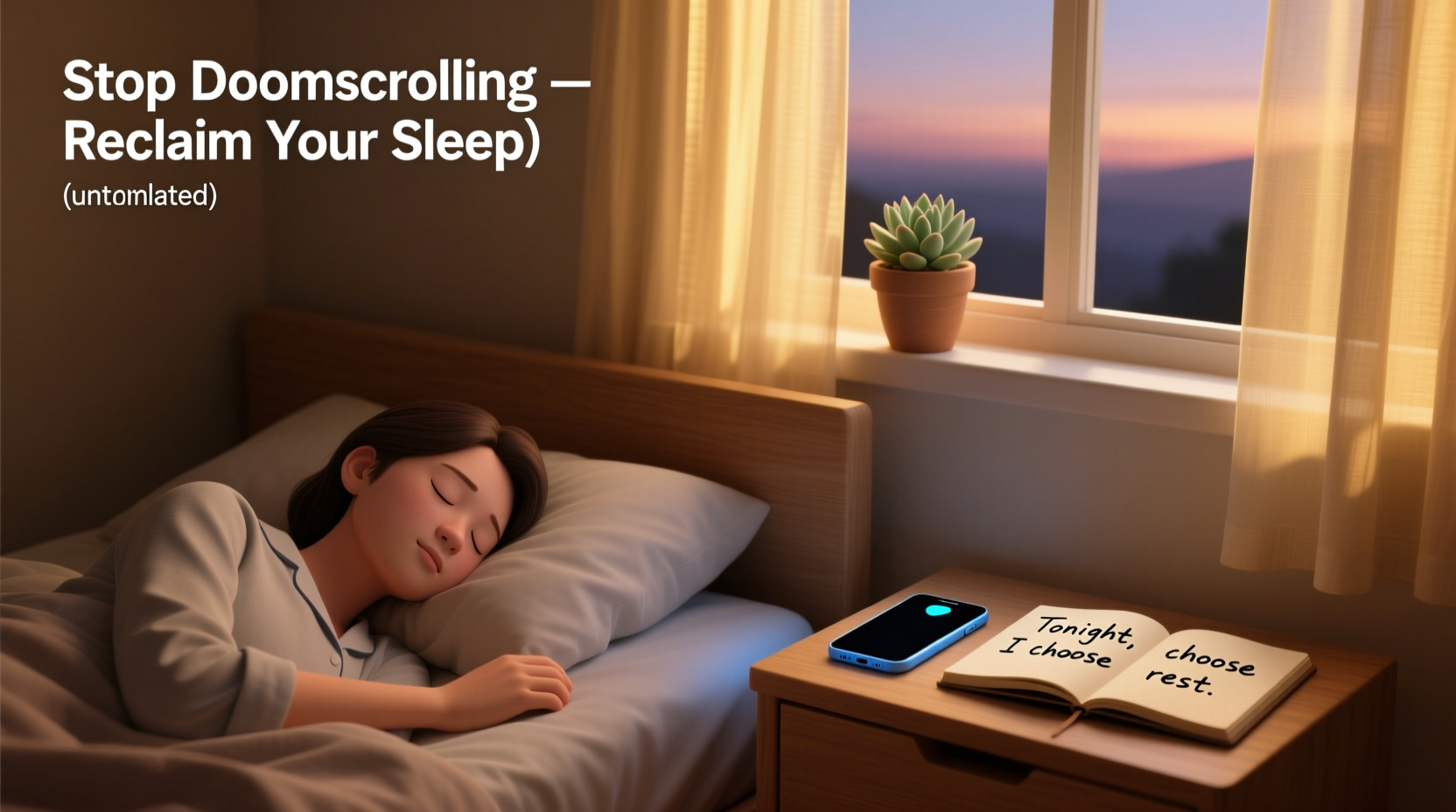
Understanding why doomscrolling happens—and why it’s so hard to stop—starts with neuroscience. When we engage with digital content, especially emotionally charged or unpredictable material, our brains release dopamine, a neurotransmitter associated with pleasure and reward. Social media platforms are designed to exploit this system, using infinite scroll, notifications, and variable rewards (likes, comments, new posts) to keep users engaged.
This becomes problematic at night because the brain should be transitioning into a state of relaxation and melatonin production in preparation for sleep. Instead, doomscrolling activates the sympathetic nervous system—the same system responsible for the \"fight or flight\" response. Elevated heart rate, heightened alertness, and racing thoughts make it difficult to wind down.
Additionally, the blue light emitted by smartphone screens suppresses melatonin secretion by up to 50%, delaying the natural onset of sleep. According to Dr. Matthew Walker, neuroscientist and author of *Why We Sleep*, “Even brief exposure to blue light in the hour before bed can shift your circadian rhythm by one to three hours.”
“Even brief exposure to blue light in the hour before bed can shift your circadian rhythm by one to three hours.” — Dr. Matthew Walker, Neuroscientist and Sleep Expert
Over time, chronic doomscrolling contributes to insomnia, reduced REM sleep, and next-day fatigue. It also increases anxiety and depressive symptoms, creating a feedback loop where poor sleep leads to more nighttime phone use in search of distraction.
Recognizing the Triggers of Nighttime Scrolling
Breaking the habit begins with awareness. Most people don’t start scrolling with the intention of losing an hour—they fall into it through subtle cues and automatic behaviors. Common triggers include:
- Boredom: Lying in bed with nothing else to do creates a vacuum that the phone fills instantly.
- Stress or rumination: Unresolved worries lead people to seek distraction or information online.
- Habitual autopilot: Picking up the phone becomes a conditioned response to lying down or turning off the lights.
- Fear of missing out (FOMO): Concerns about being out of the loop drive repeated checking.
- Emotional avoidance: Scrolling serves as a way to numb uncomfortable feelings like loneliness or sadness.
A 2022 study published in the journal *Sleep Health* found that individuals who reported higher levels of emotional dysregulation were significantly more likely to engage in nighttime screen use. This suggests that addressing underlying emotional patterns—not just removing the phone—is key to lasting change.
Step-by-Step Guide to Breaking the Doomscrolling Cycle
Reclaiming your sleep isn’t about willpower alone—it’s about redesigning your environment and habits to support better choices. Follow this six-step timeline to create sustainable change over the course of two weeks.
- Week 1, Day 1–3: Audit Your Current Routine
Track when and why you pick up your phone at night. Use a notebook or notes app to log each instance: time, duration, platform used, and emotional state. This builds self-awareness without judgment. - Week 1, Day 4–7: Create a Phone-Free Buffer Zone
Establish a 60-minute screen curfew before your target bedtime. During this time, remove your phone from the bedroom or place it on silent and face-down in another room. Replace scrolling with low-stimulation activities like reading a physical book, stretching, or listening to calming music. - Week 2, Day 8–10: Optimize Your Environment
Charge your phone outside the bedroom. Invest in a traditional alarm clock if needed. Replace your phone as your sleep-time companion with tangible alternatives: a gratitude journal, a puzzle, or herbal tea ritual. - Week 2, Day 11–12: Set Digital Boundaries
Use built-in tools like Screen Time (iOS) or Digital Wellbeing (Android) to set app limits for social media and news apps during evening hours. Enable grayscale mode after 8 p.m. to reduce visual appeal. - Week 2, Day 13: Practice Mindful Transitions
Develop a consistent pre-sleep ritual: wash your face, brush your teeth, dim the lights, and spend five minutes doing a breathing exercise. This signals to your brain that it’s time to shift modes. - Day 14 and Beyond: Reinforce Success
Celebrate small wins. If you made it through three nights without scrolling, acknowledge it. Consider sharing your goal with a friend or partner for accountability.
Effective Alternatives to Late-Night Scrolling
Replacing doomscrolling with healthier habits is more effective than simply trying to resist temptation. The brain craves stimulation—especially when tired—so offering satisfying, low-arousal alternatives is crucial.
| Instead of... | Try This Instead | Why It Works |
|---|---|---|
| Scrolling through Twitter/X | Reading a fiction novel or magazine | Engages imagination without triggering anxiety; print material doesn’t emit blue light. |
| Watching disturbing news clips | Listening to a calming podcast or audiobook | Auditory input can be relaxing if content is neutral or positive (e.g., nature sounds, storytelling). |
| Reacting to social drama | Journaling or practicing gratitude | Provides emotional release and self-reflection without external stimulation. |
| Mindlessly browsing TikTok/Reels | Doing light stretching or yoga | Reduces physical tension and promotes body awareness, aiding sleep onset. |
| Checking work emails | Creating a to-do list for tomorrow | Clears mental clutter while setting boundaries between work and rest. |
Mini Case Study: How Sarah Regained Her Sleep in Two Weeks
Sarah, a 32-year-old marketing consultant, routinely stayed up until 1:30 a.m. scrolling through LinkedIn, news sites, and Instagram. She’d wake up exhausted, rely on coffee to function, and nap during lunch breaks. After learning about the impact of doomscrolling on cortisol levels, she decided to make a change.
She started by charging her phone in the kitchen and using an old-school alarm clock. The first few nights were difficult—she reached for her phone instinctively—but she kept a paperback novel on her nightstand and began reading instead. By day five, she noticed she was falling asleep faster. On day ten, she replaced her pre-bed scrolling with a five-minute gratitude journaling practice.
Within two weeks, Sarah was consistently asleep by 11 p.m. and waking up without an alarm. Her energy improved, and she reported feeling less anxious during the day. “I didn’t realize how much mental noise I was absorbing every night,” she said. “Cutting that out gave me my mind back.”
Checklist: Your 7-Day Action Plan to Stop Doomscrolling
Use this checklist to implement practical changes immediately:
- ✅ Charge your phone outside the bedroom tonight.
- ✅ Set a daily screen curfew (e.g., 9:30 p.m.) and stick to it.
- ✅ Delete or disable one distracting app (e.g., TikTok, Reddit) during evening hours.
- ✅ Install a blue light filter or enable grayscale mode on your phone after 8 p.m.
- ✅ Prepare a non-digital wind-down kit: book, journal, tea, eye mask.
- ✅ Write down tomorrow’s top three priorities before bed to reduce mental clutter.
- ✅ Track your progress for seven days using a simple calendar checkmark system.
FAQ: Common Questions About Stopping Doomscrolling
What if I need my phone as an alarm?
You can still use your phone as an alarm, but only if it’s not within arm’s reach. Place it across the room and turn on Do Not Disturb mode. Better yet, invest in a standalone alarm clock—many models now include sunrise simulation or gentle sound options that support natural waking.
How long does it take to break the doomscrolling habit?
Behavioral studies suggest that replacing a habit takes between 21 and 66 days, depending on consistency and context. However, most people notice improvements in sleep quality within 7–10 days of eliminating nighttime screen use. The key is repetition and environmental design, not perfection.
Is all nighttime screen use bad?
Not necessarily. Occasional use of calming, non-stimulating content—like watching a familiar, low-intensity show on a TV (not a handheld device)—may not disrupt sleep as severely. But interactive, fast-paced, or emotionally charged content (social media, news, messaging) is best avoided within 60–90 minutes of bedtime.
Conclusion: Reclaim Your Nights, Restore Your Energy
Stopping doomscrolling isn’t just about putting down your phone—it’s about reclaiming your attention, your peace, and your biological rhythm. Every night presents an opportunity to reset, to choose rest over reactivity, presence over passivity. The habits you build now compound over time, leading to deeper sleep, sharper focus, and greater emotional resilience.
Your phone will still be there in the morning. But your sleep, your mood, and your mental clarity? Those are far harder to recover once lost. Start tonight. Charge your phone outside the bedroom. Pick up a book. Breathe deeply. Let your mind unwind without interference. Small shifts create lasting transformation.
💬 Ready to take back your nights? Share your first step in the comments or with a friend. Accountability starts with action.








