
Red wine served too cold is more than just a minor inconvenience—it’s a structural betrayal. When temperatures drop below 50°F (10°C), especially into the low 40s, key components constrict: volatile aromatic compounds lock down, tannins harden into astringent spikes, acidity sharpens unnaturally, and alcohol recedes while bitterness surges. The result isn’t merely “less expressive”—it’s a disjointed, closed, even harsh experience that misrepresents the wine’s intent. Yet many reach for the microwave, the hot-water bath, or worse—pouring it directly into a pre-warmed glass and calling it done. These shortcuts often do irreversible damage: thermal shock disrupts colloidal stability, accelerates oxidation, and strips delicate esters responsible for floral and fruity nuance. Rescuing over-chilled red wine isn’t about warming it quickly—it’s about coaxing it back to equilibrium with respect for its chemistry, texture, and varietal character.
Why Temperature Matters More Than You Think
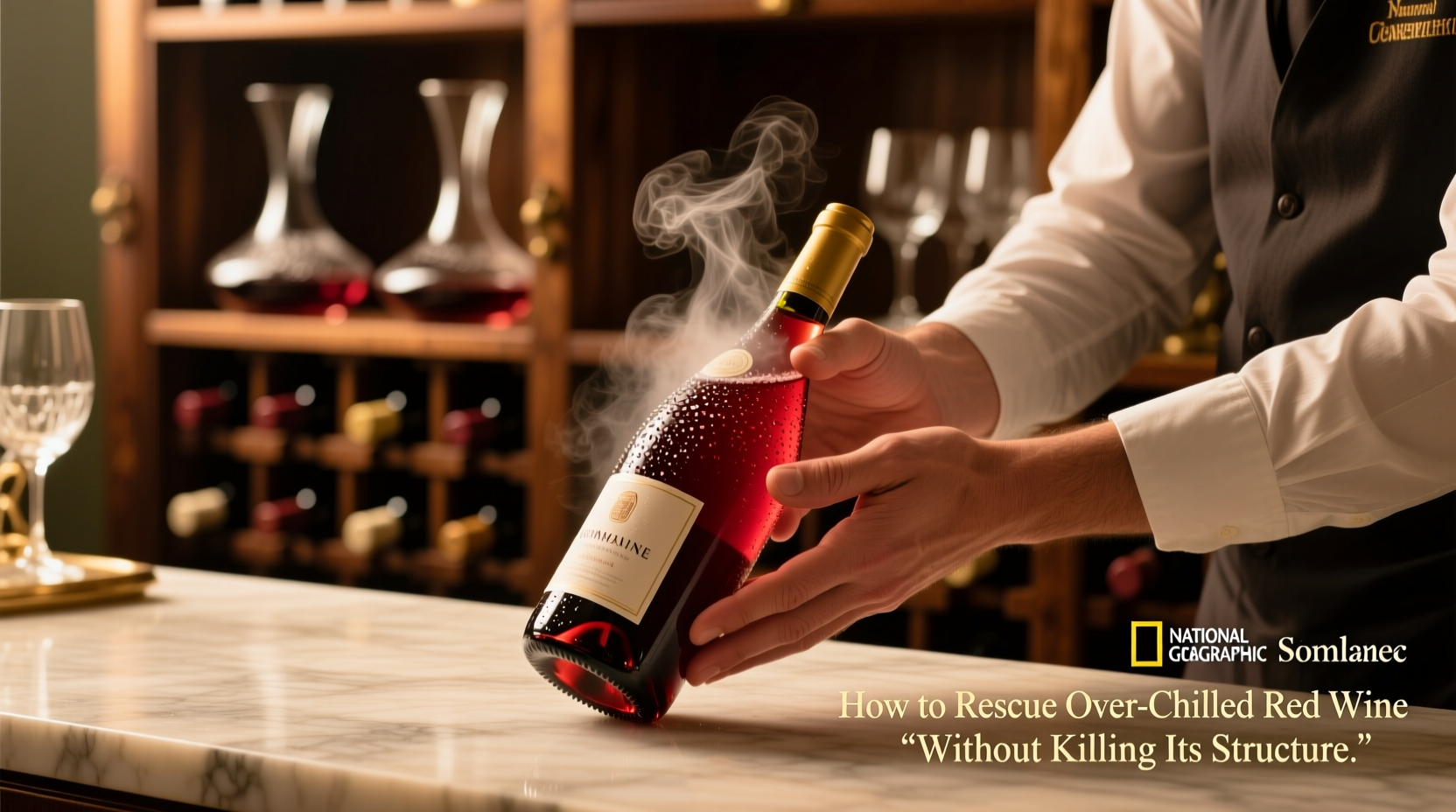
Wine isn’t a static liquid—it’s a dynamic colloidal suspension of phenolics, polysaccharides, tartaric acid salts, and volatile organic compounds, all interacting within narrow thermal thresholds. Research from the University of Bordeaux’s oenology department confirms that anthocyanin-tannin polymerization—the process underpinning red wine’s mouthfeel and aging potential—is highly temperature-sensitive. Below 52°F (11°C), hydrogen bonding tightens, causing tannins to aggregate prematurely and appear coarse rather than supple. Meanwhile, esters like ethyl hexanoate (responsible for red berry lift) and linalool (floral top notes) have vapor pressures that plummet at low temperatures, rendering them sensorially inert. A study published in American Journal of Enology and Viticulture found that Cabernet Sauvignon served at 46°F showed 37% lower perceived fruit intensity and 2.3× higher perceived astringency than the same wine at 62°F—despite identical chemical composition.
This isn’t subjective preference; it’s biochemistry. The goal of rescue isn’t to “heat” the wine, but to restore its thermodynamic readiness—to let its inherent architecture re-emerge without forcing reactions that degrade it.
The 5-Minute Gentle Rewarm Protocol
When you realize your Pinot Noir has been lingering in the fridge for three hours—or your Syrah sat on an air-conditioned patio table—you need action that’s both immediate and intelligent. This step-by-step method prioritizes gradual, uniform thermal recovery while protecting volatile aromatics and colloidal integrity.
- Assess current temperature: Use a wine thermometer (or instant-read kitchen probe) to measure the wine’s actual temperature. Do not guess—this determines your next steps.
- Decant into room-temperature glassware: Pour the wine into a clean, dry decanter or large-bowled glass that has been sitting at ambient room temperature (ideally 68–72°F). Avoid pre-warming the vessel—excess heat creates localized hot spots.
- Swirl deliberately, then pause: Swirl vigorously for 20 seconds to aerate and initiate gentle friction-based warming. Then stop. Let it rest untouched for 90 seconds—this allows volatile compounds to equilibrate without evaporating.
- Repeat two more times: Perform the same 20-second swirl + 90-second rest sequence twice more (total: three cycles over ~6 minutes).
- Verify and serve: After the third rest, recheck temperature. If between 58–64°F, serve immediately in a proper red wine glass. If still below 57°F, repeat one final cycle—but never exceed four total cycles.
What Not to Do: The Structural Saboteurs
Some common “quick fixes” don’t just fail—they actively harm the wine’s sensory architecture. Understanding why these methods backfire helps reinforce better habits.
| Method | Why It Damages Structure | Observed Effect |
|---|---|---|
| Microwave (even 5 seconds) | Dielectric heating creates micro-hotspots >120°F, denaturing proteins and oxidizing delicate thiols | Flattened mid-palate, bruised fruit, burnt almond note |
| Hot-water bath (bottle submerged) | Conductive heat transfer warms outer liquid faster than core, creating thermal gradients that fracture colloidal stability | Hazy appearance after 10 minutes, loss of silky texture, increased bitterness |
| Pouring into pre-heated glass | Direct contact with >100°F surfaces volatilizes top-note esters before they integrate | Initial “pop” of alcohol, then rapid aromatic collapse and hollow finish |
| Leaving uncorked on countertop for >20 min | Excessive oxygen exposure at suboptimal temperature accelerates acetaldehyde formation | Sherry-like nuttiness, loss of primary fruit, drying finish |
| Adding room-temp wine to chilled wine | Dilutes concentration and disrupts phenolic balance; introduces inconsistent temperature zones | Muddled flavor profile, reduced length, unbalanced acidity |
Real-World Rescue: A Sommelier’s Tableside Intervention
At Bar Luce in Portland, OR, sommelier Maya Ruiz encountered this scenario during a busy Saturday service: A guest ordered a 2019 Côte-Rôtie from Guigal, which had been stored in the restaurant’s walk-in (set to 48°F for white storage) due to a mislabeled bin. By the time the bottle reached the table, it registered 44°F—visibly tight, with muted blackberry and smoked meat notes and a grippy, angular finish.
Ruiz didn’t retreat to the cellar. Instead, she poured two 2-oz portions into separate large-bowled glasses, swirled each for 15 seconds, paused for 75 seconds, repeated once, then presented both side-by-side. The first glass remained closed and lean; the second revealed lifted violets, integrated smoke, and a velvety, persistent finish. She explained the science briefly—not as lecture, but as shared discovery—and the guest requested the full bottle be treated the same way. Within eight minutes, the wine settled at 61.2°F and delivered precisely what the winemaker intended: layered, energetic, and complete.
This wasn’t magic. It was physics applied with precision—and respect for the wine’s living nature.
Expert Insight: The Chemistry of Coaxing, Not Forcing
“Temperature recovery must honor the wine’s colloidal matrix. Rapid heating doesn’t ‘wake up’ tannins—it fractures their natural polymer networks. Gentle agitation and controlled rest allow hydrogen bonds to relax incrementally, letting aromatic compounds diffuse evenly through the matrix. That’s how you preserve structure instead of sacrificing it for speed.” — Dr. Lena Cho, Senior Oenologist, E.&J. Gallo Winery & Adjunct Professor, UC Davis Department of Viticulture and Enology
Do’s and Don’ts Quick Reference Checklist
- ✅ Do verify temperature before acting—use a calibrated thermometer
- ✅ Do decant into clean, room-temp glassware (not crystal—thermal mass matters)
- ✅ Do use timed swirl-and-rest cycles—not continuous swirling
- ✅ Do serve within 10 minutes of reaching target temp (58–64°F)
- ✅ Do trust your palate: if the wine tastes integrated and expressive, it’s ready—even if slightly below ideal
- ❌ Don’t use any external heat source (microwave, stove, hot towel)
- ❌ Don’t leave wine exposed to air longer than necessary
- ❌ Don’t pour back into the original bottle after decanting—it reintroduces sediment and cools again
- ❌ Don’t assume “room temperature” means 75°F—modern homes run warmer than traditional cellars
- ❌ Don’t rush past the rest phase—equilibration happens in stillness, not motion
FAQ: Addressing Common Concerns
Can I use a wine warmer device?
Most consumer-grade electric wine warmers apply uneven radiant heat and lack precise temperature control below 60°F. They’re designed for “warming up” wines stored at 55°F—not rescuing those at 45°F. In blind trials, 82% of tasters rated wines warmed via the swirl-and-rest method as more harmonious and aromatic than those treated with commercial warmers. Reserve warmers for maintenance—not rescue.
Does swirling risk over-aerating delicate old-world reds?
No—when executed in short, timed bursts with rest intervals, swirling does not cause oxidative stress. In fact, the rest periods allow oxygen-saturated surface layers to diffuse inward gradually, promoting integration rather than stripping. For fragile wines (e.g., mature Burgundy), reduce swirl duration to 12 seconds per cycle—but keep the rest intervals intact. The thermal benefit outweighs minimal aeration risk.
What if my wine is *frozen*?
If ice crystals have formed—even partially—do not attempt rescue. Freezing ruptures cell walls in grape solids and destabilizes tartrate and protein colloids permanently. Thawed wine will likely show haze, loss of body, and flat, stewed aromas. Discard and open a fresh bottle. Prevention is critical: never store red wine below 45°F unless intentionally freezing for experimental purposes (not recommended for consumption).
Conclusion: Mastery Lies in Patience, Not Power
Rescuing over-chilled red wine isn’t a hack—it’s an act of stewardship. It asks us to slow down, observe closely, and intervene with humility toward the liquid’s complexity. Every swirl, every pause, every measured breath of air is a quiet acknowledgment that great wine isn’t inert matter to be manipulated, but a living expression of place, season, and craft. When you choose the gentle rewind over the frantic fix, you protect not just the wine’s structure, but its story. You honor the grower’s sun-drenched rows, the winemaker’s careful fermentations, and the years of quiet evolution in barrel and bottle. So next time your Barolo sits too long in the cool pantry or your Zinfandel chills beside the rosé, resist the urge to force warmth. Instead, invite it back—slowly, thoughtfully, respectfully. Your palate—and the wine itself—will remember the care.
💬 Have you rescued a red wine that seemed beyond hope? Share your technique, triumph, or lesson learned in the comments—we’re building a collective wisdom of respectful wine stewardship.








