In a world where new serums, essences, and miracle creams flood the market daily, it’s easy to fall into the trap of overstocking. More products don’t always mean better skin. In fact, too many actives or overlapping ingredients can lead to irritation, breakouts, and diminished results. The key to glowing, healthy skin isn’t in accumulating every trending bottle—it’s in thoughtful organization, strategic layering, and intentional use. This guide walks you through building a streamlined, effective skincare routine that delivers visible benefits without cluttering your bathroom counter.
Assess Your Skin’s True Needs
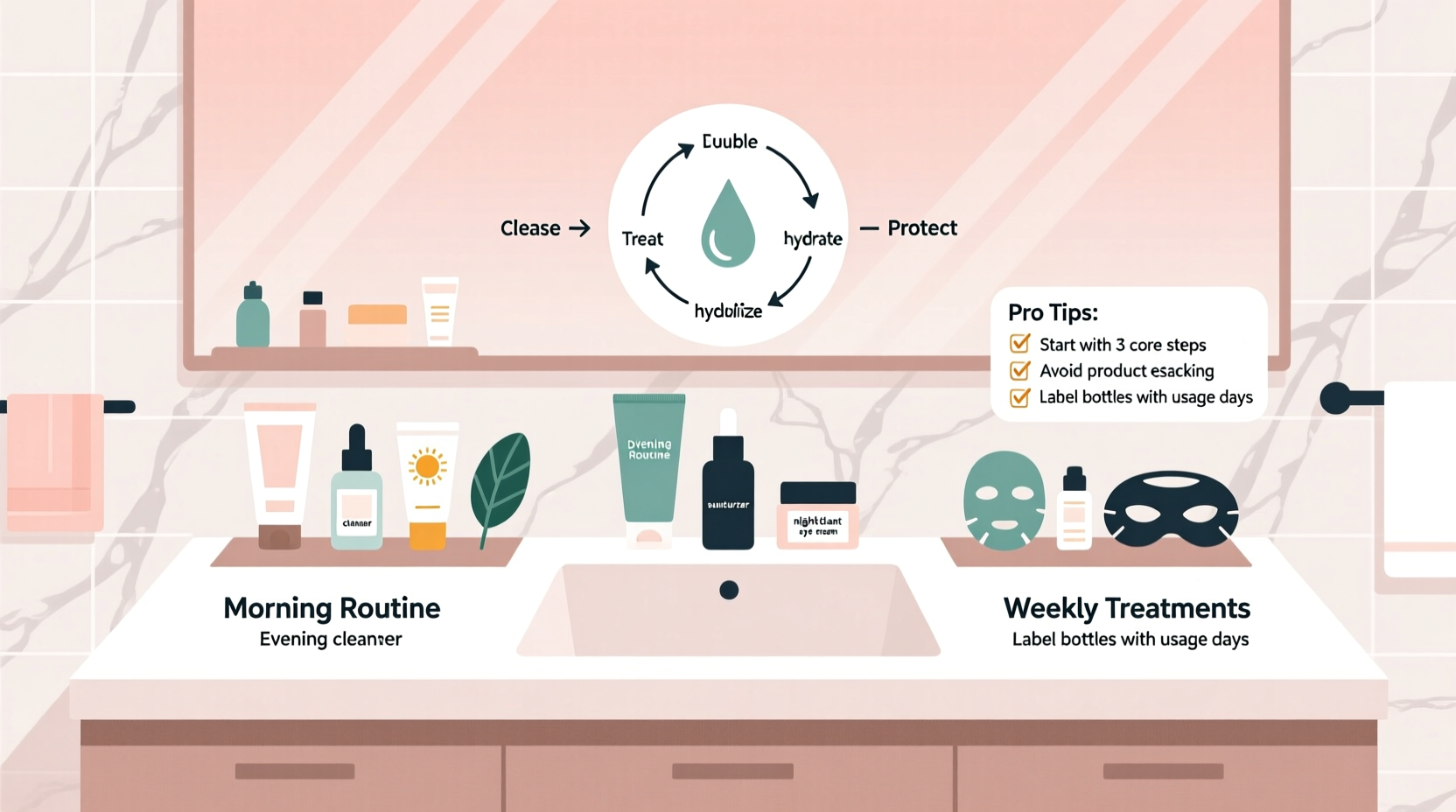
Before organizing your routine, understand what your skin actually requires. Many people buy products based on marketing claims rather than their skin type or concerns. Begin by identifying your primary skin goals: hydration, acne control, anti-aging, brightening, or barrier repair. Then, evaluate your skin type—oily, dry, combination, sensitive, or normal.
Consider keeping a two-week skin journal. Note how your skin feels each morning and night, any reactions to products, environmental factors (like humidity or pollution), and changes in diet or stress levels. This data helps distinguish between genuine needs and impulse purchases.
Tip: Take photos of your face weekly under consistent lighting to track subtle improvements or adverse reactions.The Foundation: Know Your Core Categories
An effective skincare routine doesn’t require ten steps. Most dermatologists agree that four core categories form the foundation of healthy skin:
- Cleanser – Removes dirt, oil, and makeup without stripping natural oils.
- Moisturizer – Supports the skin barrier and locks in hydration.
- Sunscreen (AM) – Non-negotiable for preventing photoaging and skin cancer.
- Active Treatment – Targets specific concerns (e.g., retinoids, vitamin C, AHAs).
Everything else—toners, essences, facial mists, sleeping masks—are optional enhancements. Start with the essentials, then add only what delivers measurable value.
Create a Minimalist Morning and Night Routine
Aim for simplicity. Overloading your skin with too many ingredients at once reduces absorption and increases the risk of irritation. Here’s a balanced template:
Morning Routine (5–7 minutes)
- Cleanse with a gentle, non-foaming cleanser or rinse with water if skin is dry.
- Apply antioxidant serum (e.g., vitamin C) to protect against free radicals.
- Use an eye cream if needed.
- Moisturize with a lightweight formula.
- Finish with broad-spectrum SPF 30+.
Night Routine (8–10 minutes)
- Double cleanse if wearing makeup or sunscreen (oil-based cleanser first, then water-based).
- Apply treatment product (e.g., retinoid, exfoliant, or hydrating serum).
- Use eye cream.
- Seal everything with a nourishing moisturizer—thicker at night.
This structure ensures efficacy while minimizing shelf space. Rotate additional treatments (like clay masks or overnight peels) 1–2 times per week, storing them out of daily reach.
| Routine Phase | Essential Products | Optional Additions | Frequency |
|---|---|---|---|
| Morning | Cleanser, Vitamin C, Moisturizer, Sunscreen | Toner, Facial Mist, Eye Cream | Daily |
| Night | Double Cleanser, Active Treatment, Moisturizer | Sleeping Mask, Facial Oil, Exfoliant | Daily + Treatments 2–3x/week |
| Weekly | Clay Mask, Chemical Exfoliant | Sheet Mask, Gua Sha Tool | 1–2x/week |
Declutter and Organize Strategically
Begin by removing every product from your shelf or cabinet. Check expiration dates—most serums last 6–12 months after opening; creams up to 12–24 months. Discard anything expired, separated, or smelling off.
Next, categorize items:
- Daily essentials
- Weekly treatments
- Seasonal (e.g., heavier creams in winter)
- Travel-sized backups
- Unused or redundant products
Store daily products within easy reach. Use drawer dividers, acrylic organizers, or tiered trays to maximize visibility. Keep seasonal or occasional items in labeled boxes or secondary storage. If you travel often, maintain a small kit with duplicates of your core routine.
“Simplifying your routine isn’t about sacrificing results—it’s about removing noise so your skin can respond clearly to what works.” — Dr. Lena Torres, Board-Certified Dermatologist
Rotate, Don’t Stack
Instead of using all products every night, rotate active ingredients to prevent over-exfoliation or irritation. For example:
- Monday & Thursday: Retinol
- Tuesday & Friday: Hydrating serum with hyaluronic acid
- Wednesday: Gentle AHA toner
- Weekend: Recovery night with ceramide cream only
This approach gives your skin time to recover while still addressing multiple concerns over time.
Tip: Label bottles with start dates using waterproof tape or a marker to track freshness.Build a Smart Product Checklist
Before purchasing anything new, consult this checklist to avoid redundancy:
- ✅ Do I already own a product that addresses this concern?
- ✅ Does this contain an ingredient proven to work (e.g., niacinamide, salicylic acid, peptides)?
- ✅ Is my skin currently stable enough to introduce something new?
- ✅ Can I patch test this for 5–7 days before full-face use?
- ✅ Will this layer well with my current routine (e.g., pH compatibility, texture)?
- ❌ Am I buying this because of social media hype?
- ❌ Is this a limited edition or influencer collab with no clinical backing?
If three or more answers are “no” or “uncertain,” wait. Sleep on it. Research independently. Most dermatologists recommend introducing only one new product at a time, spaced 2–4 weeks apart, to monitor reactions.
Real Example: From Shelf Chaos to Skincare Clarity
Sophie, a 32-year-old graphic designer, had 27 skincare products lining her bathroom shelf. She used eight steps each night but struggled with persistent redness and breakouts. After consulting a dermatologist, she discovered she was layering two exfoliating acids (glycolic and lactic) with a retinol every night—over-exfoliating her barrier.
She simplified:
- Kept a gentle milky cleanser and SPF 50.
- Switched to a single nightly treatment: encapsulated retinol every other night.
- Added a ceramide-rich moisturizer to repair her barrier.
- Used a hydrating serum with panthenol twice a week.
- Donated 18 unused or expired products.
Within six weeks, her skin appeared calmer, brighter, and more resilient. Her shelf now holds just nine curated products—less clutter, better results.
Optimize Layering Order and Timing
Even the best products fail if applied incorrectly. Follow the golden rule: thin to thick, water-based to oil-based.
Correct AM Layering Sequence:
- Cleanser
- Toner (if used)
- Vitamin C serum
- Hyaluronic acid serum
- Eye cream
- Lightweight moisturizer
- Sunscreen (minimum 1/4 tsp for face and neck)
Correct PM Layering Sequence:
- Oil cleanser (first step of double cleanse)
- Water-based cleanser
- Exfoliant or treatment toner (1–3x/week)
- Targeted serum (e.g., niacinamide, peptide)
- Retinoid (buffer with moisturizer if sensitive)
- Eye cream
- Heavier moisturizer or sleeping mask
- Facial oil (optional, sealed on top)
Wait 30–60 seconds between layers to allow absorption, especially when using actives like vitamin C or retinol. This prevents pilling and ensures deeper penetration.
Common Pitfalls to Avoid
- Overusing actives: More isn’t better. Using retinoids or acids daily can compromise your moisture barrier.
- Skipping sunscreen: Even if you’re indoors, blue light and UV exposure degrade collagen over time.
- Duplicating ingredients: Running both a niacinamide serum and a moisturizer packed with niacinamide may cause purging or sensitivity.
- Ignoring formulation: Water-based serums should go before oil-based ones. Mixing incompatible pH levels (e.g., vitamin C and AHAs) can neutralize effects.
- Storing products improperly: Keep vitamin C and retinol in cool, dark places. Heat and sunlight degrade potency.
FAQ: Your Skincare Organization Questions Answered
Can I really get good results with fewer products?
Absolutely. Studies show that consistent use of a few well-formulated products yields better long-term results than rotating dozens of half-used items. Focus on proven ingredients at effective concentrations.
How do I know if a product is working?
Gauge effectiveness over 6–8 weeks. Look for subtle shifts: improved texture, reduced redness, fewer breakouts, or enhanced glow. Take weekly photos and keep notes. Immediate tingling or stinging isn’t a sign of efficacy—it may indicate irritation.
What should I do with unopened expired products?
Unopened products past their expiration date should be discarded. Even if sealed, ingredients degrade over time, especially antioxidants and preservatives. Consider recycling packaging through programs like TerraCycle.
Conclusion: Less Is More, When Done Right
Organizing your skincare routine isn’t about deprivation—it’s about intention. By curating products that align with your skin’s biology and simplifying your process, you create space for consistency, clarity, and real transformation. A minimalist shelf doesn’t mean minimal effort; it means focused, intelligent care. You’ll save money, reduce decision fatigue, and give your skin the chance to thrive without interference.
🚀 Ready to transform your routine? Start tonight: pull everything off your shelf, assess what you truly need, and rebuild a system that works—for your skin and your space.








