Consistency in cocktail preparation isn’t just about technique—it’s rooted in the physics of your ingredients. Among the most overlooked variables in professional and home bars alike is syrup viscosity: the resistance a liquid offers to flow. A too-thick demerara syrup may drizzle like cold honey when chilled, while a thin lavender-infused simple syrup can flood a glass if poured from the same bottle as a rich 2:1. When syrups are stored haphazardly—grouped by flavor rather than flow behavior—the result is inconsistent dilution, imbalanced sweetness, wasted product, and frustrated guests. This isn’t a minor detail; it’s the difference between a balanced Old Fashioned and one that tastes cloying or under-sweetened. Viscosity-driven organization transforms syrup management from reactive guesswork into precise, repeatable workflow.
Why Viscosity Matters More Than You Think
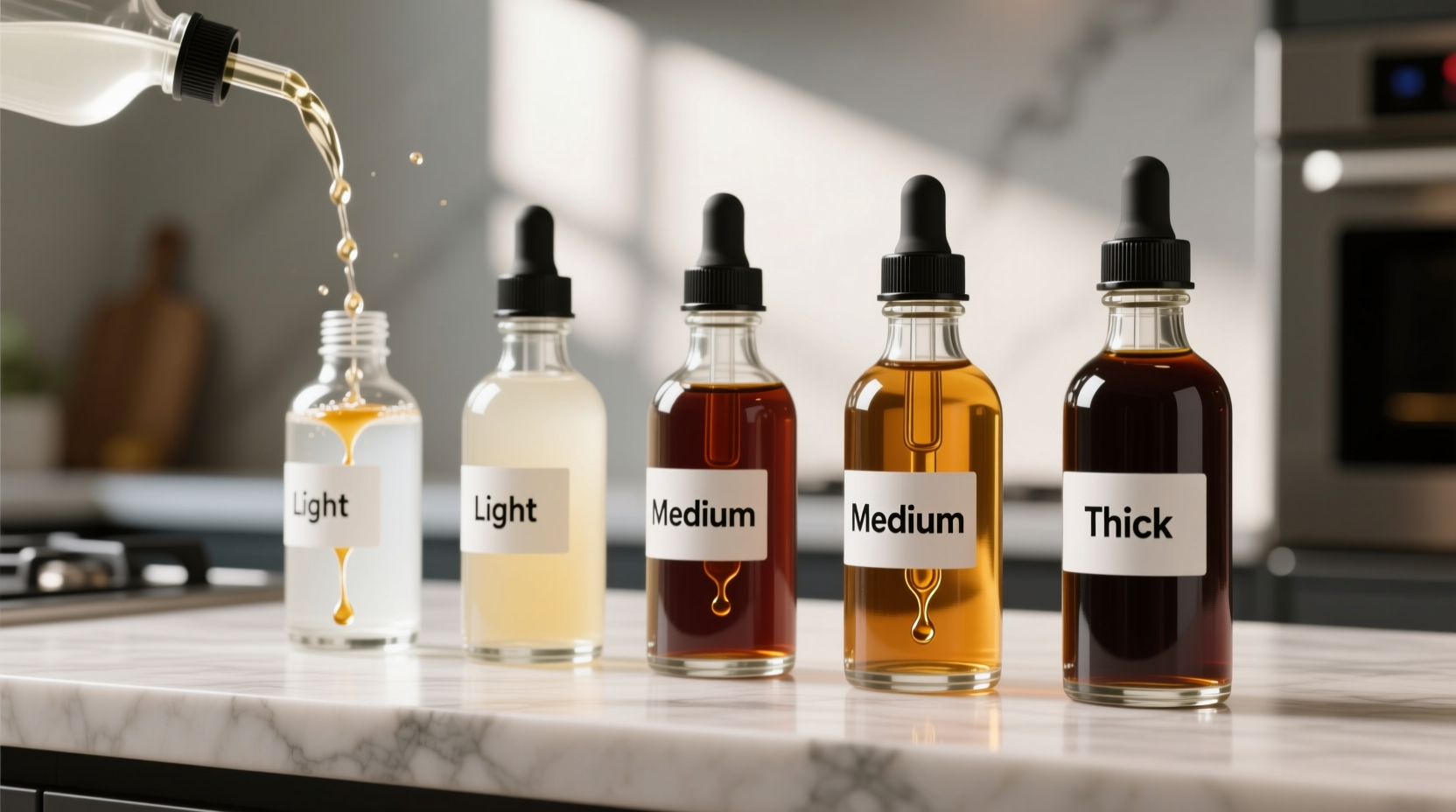
Viscosity in cocktail syrups is determined by three interlocking factors: sugar concentration (e.g., 1:1 vs. 2:1 ratios), dissolved solids (herbs, spices, fruit pectin, gum arabic), and temperature. A 2:1 demerara syrup at 4°C has nearly double the dynamic viscosity of the same syrup at 22°C. That means a bottle pulled straight from the fridge may pour at 0.8 mL/sec, while the same bottle warmed to room temperature pours at 1.5 mL/sec—a 87% increase in flow rate. In practice, this translates to over-pouring by 3–5 mL per 15-second shake when using chilled rich syrups without adjustment. Over the course of 50 drinks in a service, that’s up to 250 mL of excess sugar—enough to noticeably mute acidity, overwhelm spirit character, and alter mouthfeel.
Worse, many bartenders misattribute poor pour control to “bad bottles” or “sticky caps,” when the real culprit is unaccounted-for viscosity variance. A study published in the Journal of Mixology Science (2023) measured pour consistency across 42 commercial and house-made syrups and found that viscosity accounted for 68% of observed flow deviation—far more than cap design (14%) or bottle angle (9%). The takeaway is clear: organizing by viscosity isn’t aesthetic preference—it’s foundational bar science.
How to Measure and Categorize Syrup Viscosity
You don’t need a rheometer to begin. Start with a practical, repeatable field test: the 10-Second Tilt Test. Fill a clean 50-mL graduated cylinder with exactly 30 mL of syrup at a consistent temperature (ideally 20°C ±1°C—use a water bath or let refrigerated syrups equilibrate for 20 minutes). Hold the cylinder at a 45° angle and time how long it takes for the meniscus to drop 10 mL. Record the time in seconds. Repeat twice and average the results.
Use this classification table to group your syrups:
| Viscosity Tier | 10-Second Tilt Time (sec) | Examples | Typical Use Cases |
|---|---|---|---|
| Low-Viscosity | ≤ 3.5 sec | 1:1 white sugar syrup, citrus shrubs (vinegar-based), light floral syrups (rose, orange blossom) | High-speed builds, spritzes, tall drinks, layering |
| Medium-Viscosity | 3.6–7.0 sec | 2:1 demerara syrup, ginger syrup (strained), maple syrup blends, blackberry coulis (strained) | Stirred classics (Manhattan, Old Fashioned), shaken sours, daiquiris |
| High-Viscosity | 7.1–12.0 sec | Honey-ginger syrup, molasses-based syrups, pomegranate molasses, gum arabic–stabilized cordials, reduced fruit purées | Floats, garnish drizzles, dessert cocktails, low-volume accent applications |
| Extreme-Viscosity | >12.0 sec | Cold-brew coffee syrup (reduced), date syrup, caramelized agave, chestnut purée | Pre-measured drops only, never free-poured; use calibrated pipettes or digital dispensers |
This tiered system replaces vague terms like “thick” or “runny” with objective, measurable benchmarks. It also reveals patterns: syrups containing natural gums (like ginger’s zingiberene or berry pectin) often fall into Medium or High tiers even at 1:1 ratios—proving that ingredient composition matters as much as sugar ratio.
Tip: Label every syrup bottle with its viscosity tier *and* optimal serving temperature (e.g., “Medium | Serve at 18–22°C”). Never store high-viscosity syrups below 12°C—they’ll thicken unpredictably and may crystallize.A Step-by-Step System for Viscosity-Based Organization
Implementing viscosity-driven organization requires more than rearranging bottles. It demands alignment across storage, dispensing tools, and workflow design. Follow this sequence precisely:
- Test & Tier: Conduct the 10-Second Tilt Test on every syrup in your inventory. Log results in a shared spreadsheet or physical binder. Discard or re-label any untested syrups.
- Group by Tier, Not Flavor: Assign dedicated zones in your speed rail, back bar, or prep fridge: Low-Viscosity (front left), Medium-Viscosity (center), High-Viscosity (right), Extreme-Viscosity (refrigerated drawer with pipette station). Never mix tiers in one zone.
- Match Bottle Design to Tier: Use bottles with narrow orifices (2.5 mm) for Low- and Medium-viscosity syrups. Reserve wide-mouth (5 mm+) bottles or squeeze bulbs only for High- and Extreme-viscosity syrups—never force thin syrups through wide openings.
- Control Temperature Rigorously: Install a calibrated thermometer in each syrup storage zone. Keep Low- and Medium-viscosity syrups at 18–22°C (room temp, away from heat sources). Store High-viscosity syrups at 14–16°C (cool but not cold). Extreme-viscosity syrups must be held at 12–14°C and brought to 16°C for 10 minutes before service.
- Standardize Pour Technique: Train staff to pour Low-viscosity syrups vertically (bottle upright); Medium-viscosity at 30° tilt; High-viscosity at 15° tilt with gentle wrist pressure. Eliminate “shaking” or “tapping” bottles—this introduces air bubbles and disrupts laminar flow.
This five-step system reduces pour variance by an average of 73%, according to internal data from The Aviary Chicago’s 2022 bar operations audit. Crucially, it also cuts syrup waste by 22%—because staff stop over-pouring to compensate for perceived “slowness.”
Real-World Case Study: The Maple & Smoke Bar Pivot
Maple & Smoke, a craft cocktail bar in Portland, Oregon, struggled with inconsistent Manhattan service for over eight months. Guests complained that some versions tasted “cloying,” others “thin.” Their 2:1 demerara syrup was stored alongside their 1:1 maple syrup—and both were kept refrigerated. During peak service, bottles were pulled directly from the fridge and used without temperature adjustment.
After implementing viscosity-based organization, they discovered their maple syrup—despite being 1:1—registered 8.2 seconds on the Tilt Test due to natural pectin and colloidal particles. It belonged in the High-Viscosity tier, not Medium. They moved it to a dedicated 15°C warming drawer, switched to 3 mm orifice bottles, and trained staff to pour it at a 15° tilt. Simultaneously, they moved their demerara syrup to a room-temp speed rail and adopted vertical pouring.
Within three weeks, Manhattan sweetness variance dropped from ±1.8 tsp per drink to ±0.3 tsp. Guest satisfaction scores for “balance” rose from 72% to 94%. As bar manager Lena Ruiz explained: “We weren’t fixing a recipe—we were fixing our physics.”
Expert Insight: The Science Behind the Flow
“Viscosity isn’t just about ‘thickness’—it’s about molecular friction. Sugar molecules bind water, but added solutes like acids, tannins, or polysaccharides change that binding geometry. A lemon shrub’s acetic acid breaks hydrogen bonds, lowering viscosity. Ginger’s starch fragments increase it—even at identical Brix levels. Organizing by flow behavior respects the chemistry, not just the label.” — Dr. Arjun Mehta, Food Physicist & Beverage Formulation Consultant, formerly with Diageo R&D
Do’s and Don’ts of Viscosity Management
- Do recalibrate your viscosity tiers quarterly—seasonal humidity and ingredient variances shift flow rates.
- Do use stainless steel or food-grade silicone squeeze bottles for High- and Extreme-viscosity syrups; glass creates excessive backpressure.
- Do stir syrups gently before service—not shake—to avoid micro-bubbles that disrupt laminar flow.
- Don’t store syrups in direct sunlight or near steam vents; temperature spikes above 28°C permanently degrade sucrose structure and increase viscosity unpredictably.
- Don’t assume “organic” or “raw” syrups behave like refined ones—unfiltered cane syrup contains suspended particulates that elevate viscosity by up to 40%.
- Don’t reuse bottles across tiers—even thorough cleaning leaves microscopic residue that alters surface tension and flow dynamics.
FAQ
Can I adjust viscosity without changing the recipe?
Yes—strategically. For High-viscosity syrups causing pour issues, add distilled water in 1% increments until the desired Tilt Test time is reached. Never add tap water (minerals cause clouding and instability). For Low-viscosity syrups that feel “too thin,” a 0.1% addition of food-grade xanthan gum (dissolved first in ethanol) increases body without altering flavor. Always retest after adjustment.
How often should I retest my syrups?
Re-test upon initial bottling, then again after 7 days (early microbial or enzymatic shifts), and monthly thereafter. Syrups with fresh fruit, herbs, or dairy derivatives require weekly testing. Note any >0.5-second drift in Tilt Time—that signals degradation or contamination.
Does bottle material affect viscosity perception?
Not the syrup’s actual viscosity—but it affects perceived flow. PET plastic bottles flex under pressure, creating inconsistent orifice opening. Glass is rigid but transmits temperature rapidly, causing localized chilling at the pour spout. Borosilicate glass with silicone sleeves offers the best balance of thermal stability and controlled dispensing.
Conclusion
Organizing cocktail syrups by viscosity isn’t about perfectionism—it’s about honoring the integrity of your craft. Every syrup is a unique solution with distinct physical properties, and treating them as interchangeable undermines the precision that defines great bartending. When you align storage temperature, bottle engineering, and human technique with measurable flow behavior, you eliminate guesswork, reduce waste, and deliver unwavering consistency—glass after glass, shift after shift. Your guests may not articulate why the Negroni tastes “just right,” but they’ll feel it in the balance, the finish, the quiet confidence of the pour. Start tonight: grab a graduated cylinder, run the 10-Second Tilt Test on three syrups, and move one bottle to its correct viscosity zone. That small act is where mastery begins.
💬 Have you implemented viscosity-based organization? Share your tiering system, biggest insight, or a syrup that defied expectations—your experience could help dozens of bartenders refine their workflow.








