In a world where productivity is prized above all, many turn to caffeine as a quick fix for mental fog and waning attention. But while coffee and energy drinks offer temporary stimulation, they come with drawbacks—jitters, crashes, dependency, and disrupted sleep. The good news? You don’t need caffeine to sharpen your mind. Modern neuroscience and behavioral research have identified powerful, sustainable ways to enhance focus naturally. These methods are rooted in biology, not habit, and when applied consistently, they deliver lasting improvements in concentration, clarity, and cognitive endurance.
The Problem with Caffeine Dependency
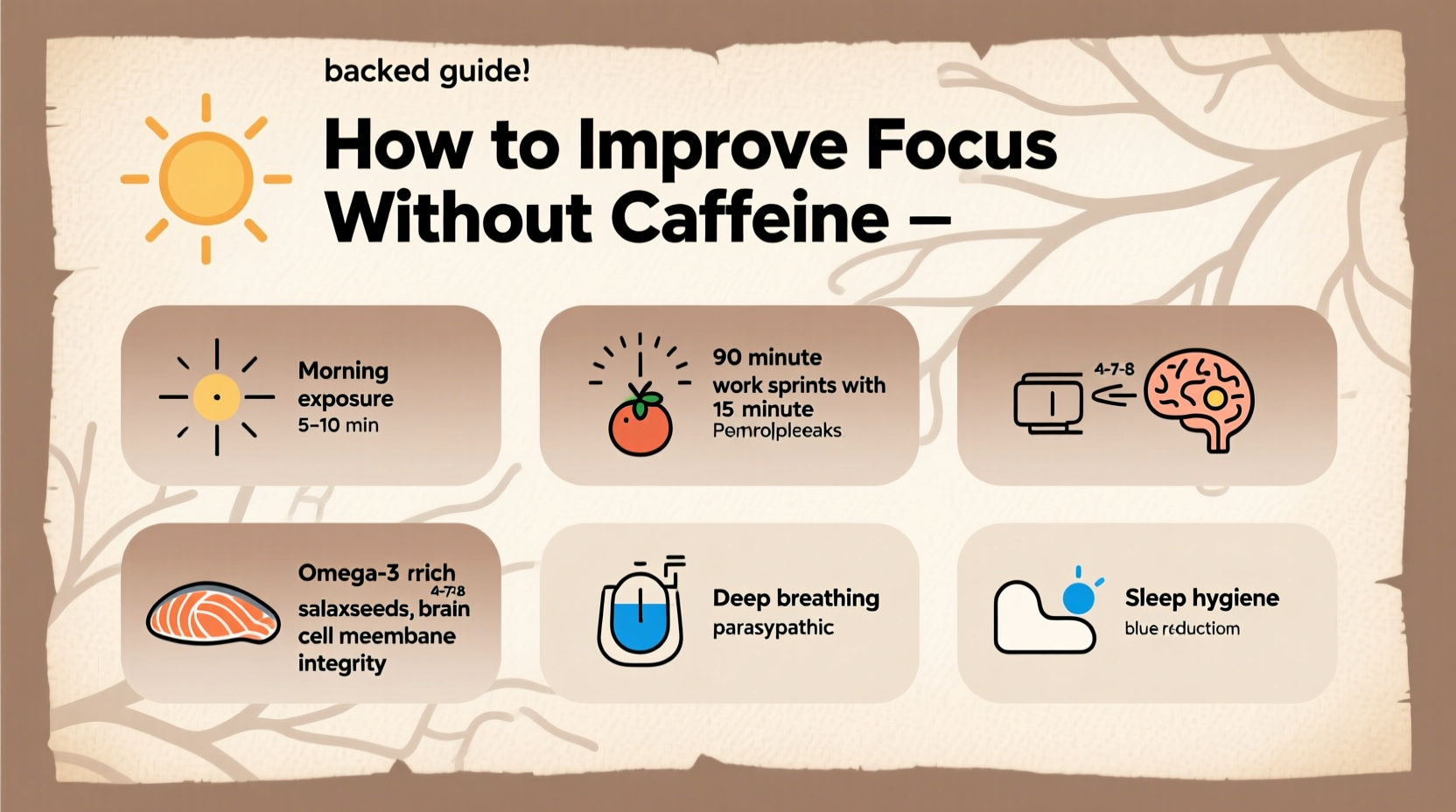
Caffeine works by blocking adenosine receptors in the brain—the chemical responsible for making us feel tired. This creates a temporary surge in alertness. However, over time, the brain adapts by producing more adenosine receptors, requiring higher doses of caffeine to achieve the same effect. This leads to tolerance, dependence, and a cycle of fatigue that only worsens without it.
Additionally, caffeine disrupts deep sleep—even if consumed six hours before bedtime—reducing overall sleep quality. Poor sleep directly impairs executive function, memory consolidation, and emotional regulation, all of which undermine focus. Relying on stimulants becomes counterproductive when the foundation of mental performance—restorative rest—is compromised.
Tip: If you're trying to reduce caffeine, taper gradually—cut 25% per week—to avoid withdrawal headaches and irritability.Sleep Optimization: The Foundation of Focus
No cognitive enhancement strategy works without adequate sleep. Research from Harvard Medical School shows that even one night of poor sleep reduces prefrontal cortex activity—the brain region responsible for decision-making, attention control, and impulse regulation. Chronic sleep deprivation mimics the cognitive impairment of being legally drunk.
To build a brain-ready state each day, prioritize both sleep duration and quality:
- Consistent schedule: Go to bed and wake up within the same 30-minute window daily, even on weekends.
- Nighttime wind-down: Begin a 60-minute pre-sleep routine free of screens. Blue light suppresses melatonin, delaying sleep onset.
- Environment: Keep the bedroom cool (60–67°F), dark, and quiet. Use blackout curtains and white noise if needed.
- Avoid late eating: Finish meals at least three hours before bed to prevent digestive interference with sleep cycles.
“Sleep is non-negotiable for peak cognitive performance. It’s during deep sleep that the brain clears metabolic waste and consolidates learning.” — Dr. Matthew Walker, Neuroscientist and author of *Why We Sleep*
Movement and Blood Flow: Activate Your Brain Naturally
Physical activity is one of the most effective, underused tools for boosting focus. Exercise increases cerebral blood flow, delivering oxygen and nutrients to the brain. It also stimulates the release of brain-derived neurotrophic factor (BDNF), a protein essential for neuron growth and synaptic plasticity.
A 2021 study published in *Neuropsychologia* found that just 20 minutes of moderate aerobic exercise (like brisk walking or cycling) improved sustained attention and information processing speed for up to two hours post-exercise.
Practical Movement Strategies for Daily Focus
- Morning activation: Start the day with 10 minutes of dynamic stretching or a short walk outside. Sunlight exposure resets circadian rhythms and boosts alertness.
- Workplace micro-breaks: Every 50 minutes, take a 5-minute break to stand, stretch, or walk. This prevents mental fatigue and maintains blood flow.
- Lunchtime movement: A 15–20 minute walk after lunch stabilizes blood sugar and prevents the post-meal slump.
- Resistance training: Twice weekly strength sessions improve executive function over time by enhancing neural connectivity.
Nutrition That Fuels Concentration
Diet profoundly influences brain chemistry and energy availability. Unlike caffeine, which forces alertness through artificial stimulation, proper nutrition supports stable, long-term cognitive performance.
The key is maintaining steady glucose levels. Blood sugar spikes and crashes lead to distractibility, irritability, and mental fatigue. To avoid this, focus on whole foods rich in complex carbohydrates, healthy fats, and high-quality protein.
Foods That Enhance Focus
| Food | Benefit | How It Works |
|---|---|---|
| Fatty fish (salmon, mackerel) | Rich in omega-3s (DHA/EPA) | Supports neuronal membrane integrity and reduces inflammation |
| Blueberries | High in antioxidants | Protects brain cells from oxidative stress |
| Walnuts | Contains alpha-linolenic acid (ALA) | Precursor to DHA; improves reaction time |
| Leafy greens (kale, spinach) | Source of folate, vitamin K, lutein | Linked to slower cognitive decline |
| Oats and quinoa | Slow-digesting complex carbs | Provide steady glucose supply to the brain |
Avoid highly processed snacks, sugary drinks, and refined grains. These cause rapid insulin spikes followed by crashes, impairing working memory and attention span within an hour of consumption.
“The brain uses 20% of the body’s energy but has no storage capacity. It depends on a constant supply of fuel from diet.” — Dr. Lisa Mosconi, Director of the Women’s Brain Initiative
Mindfulness and Attention Training
Mindfulness isn’t just relaxation—it’s cognitive weightlifting. Regular practice strengthens the brain’s ability to sustain attention, resist distraction, and switch tasks efficiently. A meta-analysis in *Psychological Science* found that just 10 minutes of daily mindfulness meditation improved focus and reduced mind-wandering within eight weeks.
One of the most effective techniques is **focused attention meditation**: sitting quietly and directing attention to the breath. When the mind wanders (and it will), gently return focus without judgment. This repetition builds the anterior cingulate cortex—the brain’s “attention muscle.”
Step-by-Step Guide to Building a Mindfulness Habit
- Choose a consistent time: First thing in the morning or during a midday break works best.
- Start small: Begin with 3–5 minutes daily. Use a timer to avoid checking the clock.
- Find a quiet space: Sit upright in a chair, hands on lap, eyes closed or softly focused downward.
- Focus on breath: Notice the sensation of air entering and leaving the nostrils or the rise and fall of the abdomen.
- Notice distractions: When thoughts arise, acknowledge them (“thinking”) and return to the breath.
- End gently: After the timer, sit quietly for 10 seconds, noticing how your body and mind feel.
Over time, this practice rewires default mode network activity, reducing rumination and increasing present-moment awareness—both critical for deep work.
Tip: Use apps like Insight Timer or Headspace for guided sessions if starting solo feels challenging.Mini Case Study: From Burnout to Breakthrough
Jamie, a software developer in her early 30s, relied on four cups of coffee daily to power through coding sprints. Despite long hours, her productivity declined. She experienced afternoon crashes, difficulty concentrating, and frequent errors in code reviews. After consulting a functional medicine practitioner, she began a 6-week protocol focused on natural focus enhancement.
She eliminated caffeine, prioritized 7.5 hours of sleep nightly, added 20-minute walks after lunch, and started a 10-minute mindfulness practice each morning. Her diet shifted to include fatty fish twice a week, daily leafy greens, and nuts as snacks.
By week four, Jamie reported fewer distractions, faster problem-solving, and improved mood stability. By week six, she completed a major project two days ahead of schedule—without overtime. Most notably, she no longer felt mentally drained by 3 PM. Her reliance on external stimulants was replaced by internal resilience.
Science-Backed Checklist for Caffeine-Free Focus
Use this checklist daily to reinforce habits that support sustained attention:
- ✅ Get 7–9 hours of quality sleep last night
- ✅ Ate a balanced breakfast with protein, healthy fat, and fiber
- ✅ Completed at least 20 minutes of physical activity
- ✅ Took three 5-minute movement breaks during work
- ✅ Practiced mindfulness or deep breathing for 5+ minutes
- ✅ Avoided sugary snacks and processed foods
- ✅ Hydrated with at least 2 liters of water
- ✅ Protected 30 minutes before bed from screens
Common Myths About Focus Without Stimulants
Despite growing evidence, misconceptions persist about natural focus enhancement:
- Myth: You need to be \"wired\" to be productive.
Truth: Calm, sustained attention outperforms forced alertness in creativity and problem-solving. - Myth: Only high achievers can focus without caffeine.
Truth: Focus is a trainable skill, not a personality trait. Everyone can improve with the right habits. - Myth: Supplements can replace lifestyle changes.
Truth: While some nootropics show promise (e.g., L-theanine, rhodiola), they work best alongside foundational behaviors like sleep and exercise.
Frequently Asked Questions
Can I still drink tea or chocolate?
Yes, in moderation. Herbal teas like chamomile or rooibos are caffeine-free and calming. Green tea contains small amounts of caffeine but also L-theanine, which promotes relaxed alertness. Dark chocolate has minimal caffeine and antioxidants, but limit intake to 1–2 squares to avoid overstimulation.
How long does it take to see results without caffeine?
Most people notice improved mental clarity within 1–2 weeks of consistent sleep, movement, and nutrition changes. Full adaptation—where energy feels stable throughout the day—typically takes 3–4 weeks as the brain recalibrates its natural alertness rhythms.
What if I work night shifts?
Night workers face unique challenges, but the principles remain: maximize sleep quality during the day using blackout curtains and white noise, maintain consistent meal timing, and use bright light exposure strategically. Morning sunlight (after waking) helps reset circadian cues, even if your \"morning\" is at 2 PM.
Conclusion: Reclaim Your Natural Focus
Improving focus without caffeine isn’t about sacrifice—it’s about upgrading your operating system. Instead of relying on artificial stimulation, you’re investing in the biological pillars of cognitive performance: sleep, movement, nutrition, and mental training. These methods don’t just help you concentrate; they make your brain healthier, more resilient, and better equipped for long-term success.
The shift may require patience, especially if you’ve depended on caffeine for years. But the payoff—a calm, clear mind capable of deep work without crashes or cravings—is worth it. Start with one change: protect your sleep, move deliberately, eat for energy stability, or begin a mindfulness practice. Small steps compound into transformative results.
🚀 Ready to break free from caffeine dependence? Pick one science-backed method from this article and commit to it for seven days. Track your focus, energy, and mood. Share your experience in the comments—your journey could inspire someone else to begin theirs.








