
Testosterone is a crucial hormone in both men and women, though it plays a dominant role in male development and health. In men, it regulates libido, muscle mass, fat distribution, red blood cell production, and mood. As men age, testosterone levels naturally decline—typically starting around age 30 at a rate of about 1% per year. However, when levels drop too low, it can significantly impact quality of life. Recognizing the signs early and understanding how to confirm them through proper testing is essential for effective management.
Common Signs of Low Testosterone
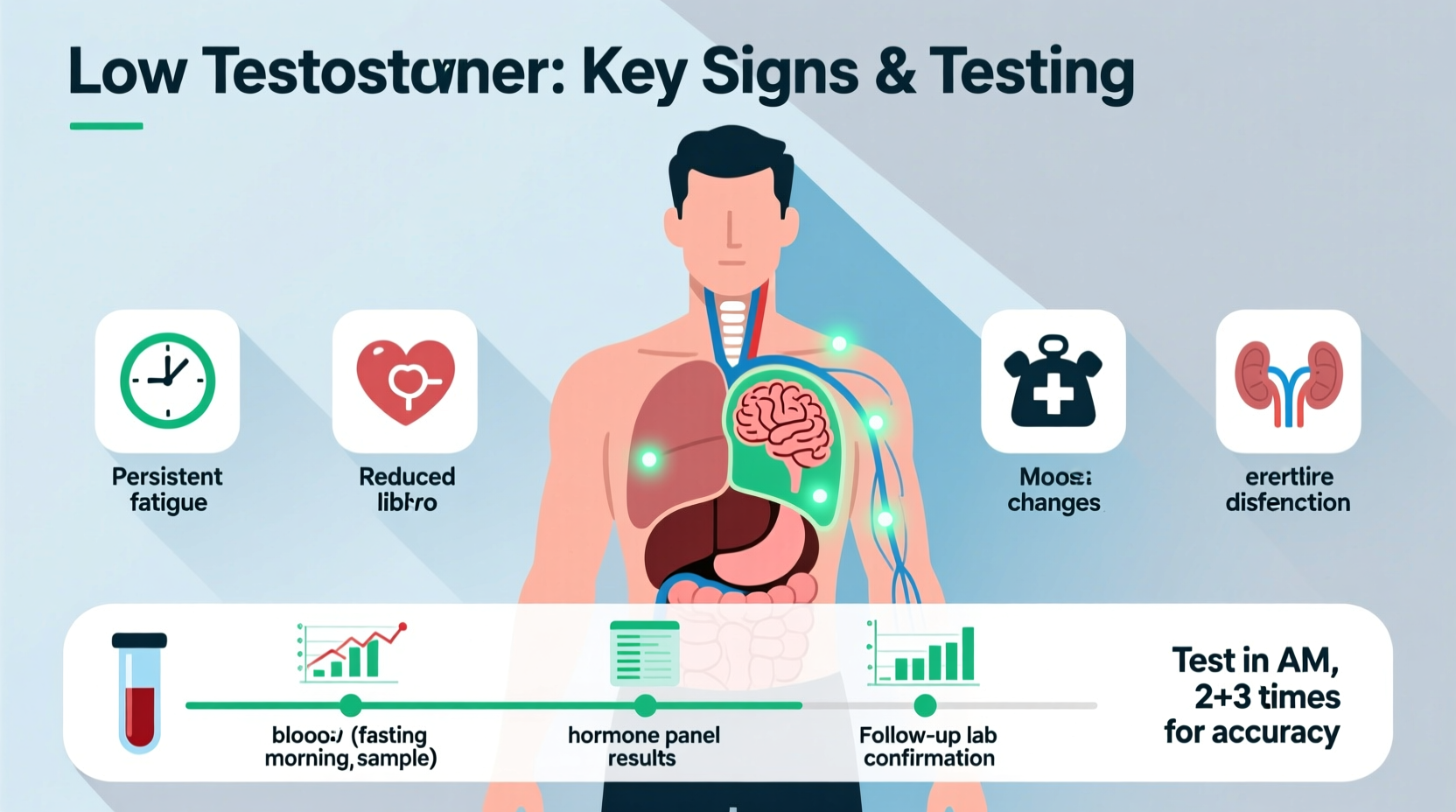
Low testosterone, also known as hypogonadism, doesn’t always announce itself with dramatic symptoms. Instead, changes tend to be gradual, making them easy to overlook or attribute to aging, stress, or lifestyle factors. However, several physical, emotional, and sexual symptoms are strongly associated with declining testosterone.
- Reduced sex drive (low libido)
- Erectile dysfunction or difficulty maintaining erections
- Fatigue and low energy levels
- Loss of muscle mass and strength
- Increased body fat, especially around the abdomen
- Mood changes such as irritability, depression, or lack of motivation
- Difficulty concentrating or memory issues (“brain fog”)
- Decreased bone density (osteoporosis risk)
- Reduced facial or body hair growth
- Hot flashes or night sweats (less common but possible)
Many men dismiss these signs as inevitable parts of getting older. But persistent symptoms—especially when they occur together—should prompt further investigation. Notably, low T affects more than just physical performance; it can erode confidence, intimacy, and overall well-being.
Tip: Track your symptoms over time using a journal. Note energy levels, sleep quality, mood shifts, and sexual function weekly to spot patterns.Who Is at Risk?
While aging is the most common factor, certain conditions and lifestyle choices increase the likelihood of developing low testosterone earlier or more severely.
- Obesity: Excess body fat, particularly visceral fat, converts testosterone into estrogen, lowering available testosterone.
- Type 2 diabetes: Men with insulin resistance are twice as likely to have low T.
- Sedentary lifestyle: Lack of exercise contributes to hormonal imbalance.
- Chronic stress: Elevated cortisol suppresses testosterone production.
- Testicular injury or infection: Direct damage impacts hormone output.
- Pituitary disorders: The pituitary gland controls testosterone release; tumors or inflammation can disrupt this.
- Medications: Opioids, steroids, and some antidepressants may reduce testosterone levels.
Men with multiple risk factors should consider proactive screening—even if symptoms seem mild.
Reliable Testing Methods for Low Testosterone
Suspecting low testosterone isn't enough. Diagnosis requires accurate laboratory testing, ideally conducted under medical supervision. Here’s what you need to know about reliable testing protocols.
Blood Tests: The Gold Standard
Testosterone levels fluctuate throughout the day, peaking in the morning. For this reason, total serum testosterone is best measured between 7:00 a.m. and 10:00 a.m., after an overnight fast.
A single test isn't sufficient. Doctors typically require two early-morning blood tests showing consistently low levels before confirming a diagnosis.
| Test Type | What It Measures | Normal Range (Adult Men) |
|---|---|---|
| Total Testosterone | All testosterone in the bloodstream (bound + free) | 300–1,000 ng/dL |
| Free Testosterone | Unbound testosterone available to tissues | 9–30 ng/dL |
| LH & FSH | Pituitary hormones that regulate testosterone | Varies by lab |
| Sex Hormone-Binding Globulin (SHBG) | Protein that binds testosterone; affects bioavailability | 10–50 nmol/L |
If total testosterone falls below 300 ng/dL on two separate tests, and symptoms are present, a diagnosis of low testosterone is likely. Free testosterone testing adds clarity, especially in men with borderline total levels or high SHBG.
At-Home Test Kits: Convenience vs. Accuracy
Several companies offer at-home finger-prick testosterone tests. While convenient, they vary in reliability.
- Some use reputable labs and provide clinically valid results.
- Others lack standardization or fail to measure free testosterone or SHBG.
- No at-home test replaces clinical evaluation—especially when treatment is being considered.
Use these kits cautiously. They can serve as an initial screen but should be followed up with a physician-led assessment.
“Diagnosing low testosterone isn’t just about a number—it’s the combination of lab values and clinical symptoms that matters.” — Dr. Alan Kim, Endocrinologist, Johns Hopkins Medicine
Step-by-Step Guide to Confirming Low Testosterone
If you suspect low T, follow this evidence-based process to get accurate answers:
- Self-Assess Symptoms: Use standardized tools like the ADAM (Androgen Deficiency in Aging Males) questionnaire. Answer honestly about energy, mood, sexual function, and physical changes.
- Consult a Healthcare Provider: Discuss concerns with a primary care doctor or endocrinologist. Bring your symptom log.
- Schedule Morning Blood Work: Request total and free testosterone, LH, FSH, and SHBG. Fast for 8 hours prior.
- Repeat Testing: If initial results are low, repeat within a few weeks to confirm.
- Rule Out Other Causes: Your doctor may check thyroid function, prolactin, and iron levels to exclude mimicking conditions.
- Discuss Treatment Options: If diagnosed, explore lifestyle changes, hormone replacement therapy (HRT), or monitoring based on severity.
Mini Case Study: Mark’s Journey to Diagnosis
Mark, a 48-year-old project manager, began noticing subtle changes over two years: constant fatigue despite adequate sleep, dwindling interest in sex, and unexplained weight gain around his midsection. He initially blamed work stress and aging. After his wife expressed concern about his irritability, he took the ADAM questionnaire online—and scored positive for possible androgen deficiency.
He visited his primary care physician, who ordered early-morning blood tests. Results showed total testosterone at 265 ng/dL and low free testosterone. A second test confirmed the findings. Further evaluation ruled out pituitary issues. With a clear diagnosis, Mark started a tailored plan including strength training, dietary improvements, and eventually, transdermal testosterone therapy under supervision. Within six months, his energy, mood, and libido improved significantly.
His story underscores the importance of not dismissing “normal aging” symptoms without investigation.
Do’s and Don’ts of Managing Suspected Low Testosterone
| Action | Do | Don’t |
|---|---|---|
| Testing | Get tested in the morning after fasting | Rely solely on at-home kits without medical follow-up |
| Symptom Tracking | Keep a detailed log of changes | Ignore persistent or worsening symptoms |
| Treatment | Work with a licensed provider for HRT | Buy testosterone from unregulated sources |
| Lifestyle | Exercise regularly, manage stress, optimize sleep | Assume supplements alone will fix low T |
FAQ
Can women have low testosterone too?
Yes. Though present in smaller amounts, testosterone contributes to women’s libido, energy, and bone health. Low levels can occur due to aging, oophorectomy, or adrenal insufficiency. Testing and treatment must be carefully managed due to potential side effects like facial hair growth or voice deepening.
Is testosterone replacement therapy (TRT) safe?
For properly diagnosed individuals, TRT can be safe and effective under medical supervision. Risks include increased red blood cell count, acne, sleep apnea exacerbation, and potential impact on fertility. Regular monitoring is essential.
How long does it take to feel better after starting treatment?
Most men report improved energy and mood within 4–6 weeks. Sexual function and muscle gains often improve over 3–6 months. Full benefits depend on adherence, dosage, and individual response.
Conclusion: Take Control of Your Hormonal Health
Low testosterone is more than a bedroom issue—it’s a systemic condition that affects energy, mental clarity, metabolism, and emotional resilience. Recognizing the signs early and pursuing accurate diagnosis can make a profound difference. Don’t accept fatigue, low drive, or mood swings as unavoidable consequences of age. With proper testing and informed care, hormonal balance can be restored, and vitality renewed.
💬 Your health journey starts with a question. Have you noticed changes in your energy or mood? Talk to your doctor, get tested, and take the first step toward feeling like yourself again.








