Colorful plush pillowcases with heart patterns are more than just bedroom accessories—they’re expressions of warmth, personality, and comfort. Whether used daily or reserved for special occasions, these delicate textiles require thoughtful care to maintain their vibrant hues, soft texture, and intricate designs. Over time, exposure to body oils, dust, sunlight, and improper washing can lead to fading, pilling, and structural damage. But with the right techniques, you can extend their life while keeping them as cozy and cheerful as the day you bought them.
Understanding Your Pillowcase Material
Before cleaning, identify the fabric composition. Most plush pillowcases with printed heart patterns are made from polyester-blend fleece, velour, or cotton-polyester mixes. These materials provide softness but vary in sensitivity to heat, agitation, and detergents. Always check the care label first—some may say “hand wash only,” while others allow gentle machine cycles.
Fleece-based fabrics tend to pill when rubbed aggressively or washed with rougher textiles like denim. Cotton blends breathe better but may shrink if exposed to high heat. The printed hearts often use dye-sublimation or screen printing, which can crack or fade under harsh conditions. Knowing your material helps you choose the safest cleaning method.
Tip: If there’s no care label, assume the fabric is delicate. Test a small hidden area with water and mild soap before full cleaning.Step-by-Step Guide to Gentle Hand Washing
Hand washing is the most reliable way to preserve plush texture and prevent print damage. Follow this sequence for best results:
- Prepare the Wash Solution: Fill a clean basin or sink with cold water. Add one tablespoon of mild liquid detergent (preferably labeled for delicates or baby clothes). Avoid bleach or enzymes.
- Turn Inside Out: Flip the pillowcase so the printed heart side is protected. This reduces friction on the design during washing.
- Soak Gently: Submerge the pillowcase and let it soak for 5–10 minutes. Do not scrub or twist.
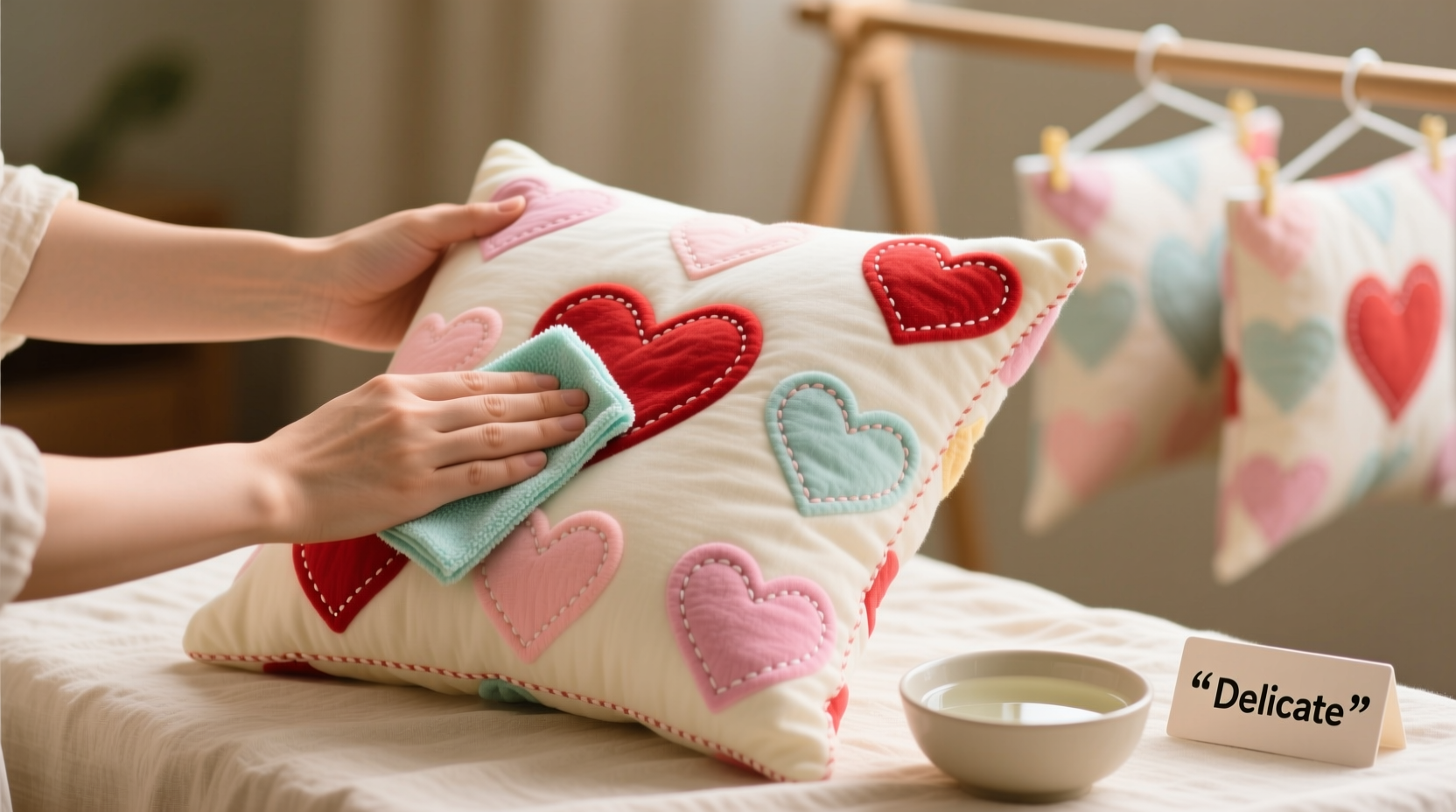
- Clean Stained Areas: For localized stains (e.g., makeup or sweat), use a soft cloth dampened with soapy water. Dab—don’t rub—the spot lightly.
- Rinse Thoroughly: Drain the soapy water and refill with cool clean water. Press the fabric gently to release suds. Repeat until water runs clear.
- Remove Excess Water: Press the pillowcase against the basin’s side to drain. Never wring—it stretches fibers and distorts shape.
- Dry Flat: Lay on a clean towel, roll up to absorb moisture, then unroll and air-dry flat away from direct sunlight or heat sources.
Avoid hanging plush fabrics vertically; gravity can cause stretching along seams.
Machine Washing: When and How to Do It Safely
If the care label permits machine washing, proceed with caution. Use the delicate cycle with cold water and a mesh laundry bag to contain the pillowcase. This minimizes friction with other items.
Choose a front-loading washer if possible—top loaders with agitators increase mechanical stress. Use half the usual detergent amount and skip fabric softeners, which can coat fibers and dull plush texture over time.
| Action | Recommended | Not Recommended |
|---|---|---|
| Water Temperature | Cold (below 30°C / 86°F) | Warm or hot water |
| Detergent Type | Mild, fragrance-free liquid | Bleach, powder detergents |
| Spin Speed | Low (600 RPM or less) | High-speed extraction |
| Drying Method | Air-dry flat or low-heat tumble | High-heat dryer or clothesline |
Preserving Color and Print Integrity
The heart patterns on colorful pillowcases are especially vulnerable to fading. UV exposure is a primary culprit—even indirect sunlight through windows can degrade dyes over weeks. Store pillowcases in drawers or dark linen closets when not in use.
Washing inside out helps, but also consider using a color-protecting detergent formulated for darks or brights. Some brands include UV inhibitors that slow fading. Additionally, avoid ironing directly on printed areas. If ironing is necessary (for cotton blends), use the lowest heat setting and place a pressing cloth between the iron and fabric.
“Repeated exposure to heat and light breaks down textile dyes at the molecular level. For decorative plush items, prevention is far more effective than restoration.” — Dr. Lena Patel, Textile Conservation Specialist, Royal School of Fabric Preservation
Daily Care and Storage Tips
Maintenance doesn’t end after washing. How you use and store your pillowcase daily affects its longevity.
- Rotate pillowcases regularly to reduce wear on a single piece.
- Use a removable insert instead of stuffing with loose filling—this prevents uneven pressure.
- Keep away from pets who may scratch or chew the fabric.
- Avoid placing near radiators or heating vents, which dry out fibers and accelerate color loss.
- Store with acid-free tissue paper if kept long-term to prevent yellowing.
Mini Case Study: Reviving a Faded Keepsake Pillowcase
Sophie, a collector of sentimental home textiles, inherited a bright pink plush pillowcase covered in red hearts from her grandmother. After years in a sunlit guest room, the colors had dulled, and lint clung to the surface. She avoided washing it, fearing damage. Eventually, she consulted a local fabric conservator who recommended a two-step process: first, a gentle hand wash with a pH-neutral detergent, followed by air-drying in shadow. After drying, she used a fabric-safe lint roller with low-tack adhesive to remove pills without pulling fibers. The result? A visibly refreshed pillowcase that regained much of its original softness and emotional value. Sophie now rotates her decorative pieces seasonally and stores them in breathable cotton bags.
Essential Checklist for Long-Term Preservation
Follow this checklist every time you care for your colorful plush pillowcases:
- ✔ Check the care label before any cleaning.
- ✔ Turn the pillowcase inside out.
- ✔ Use cold water and mild detergent.
- ✔ Hand wash when in doubt; machine wash only on delicate settings.
- ✔ Dry flat, away from sunlight and heat.
- ✔ Inspect for pilling and gently remove with a fabric shaver or lint roller.
- ✔ Store in a cool, dark, dry place with airflow.
- ✔ Rotate usage to minimize continuous wear.
FAQ
Can I use vinegar to freshen a musty-smelling plush pillowcase?
Yes, but cautiously. Add one tablespoon of white vinegar to the rinse water during hand washing. It helps neutralize odors without damaging most synthetic fibers. Do not mix vinegar with bleach or scented detergents, and always rinse thoroughly afterward.
Why is my pillowcase shedding fibers after washing?
Shedding is common in new plush fabrics and usually diminishes after 2–3 gentle washes. If excessive, it may indicate poor fiber quality or too much agitation. Always wash separately or in a mesh bag to reduce friction.
How often should I clean a decorative plush pillowcase?
If used nightly, wash every 3–4 weeks. For display-only pieces, a light surface clean and airing every 2–3 months is sufficient. Immediate cleaning is needed if stained or exposed to smoke, perfume, or pet dander.
Final Thoughts
Caring for colorful plush pillowcases with heart patterns isn’t just about cleanliness—it’s an act of preserving joy, memory, and personal style. With mindful handling, proper washing techniques, and smart storage, these soft treasures can remain vibrant and inviting for years. Their charm lies not only in appearance but in the comfort they provide, making the effort well worth it.
💬 Have a favorite method for caring for plush textiles? Share your experience or ask a question—we’d love to hear how you keep your cozy decor looking beautiful!








