Selecting a Garmin watch isn't just about picking the most advanced model or the one with the longest battery life. It's about aligning technology with your daily routine, activity level, and long-term health objectives. With dozens of models across multiple series—Froma, Venu, Forerunner, Fenix, Instinct, and more—the decision can feel overwhelming. But when you break it down by use case, design preference, and feature priority, the right choice becomes clear.
Understand Your Primary Use Case
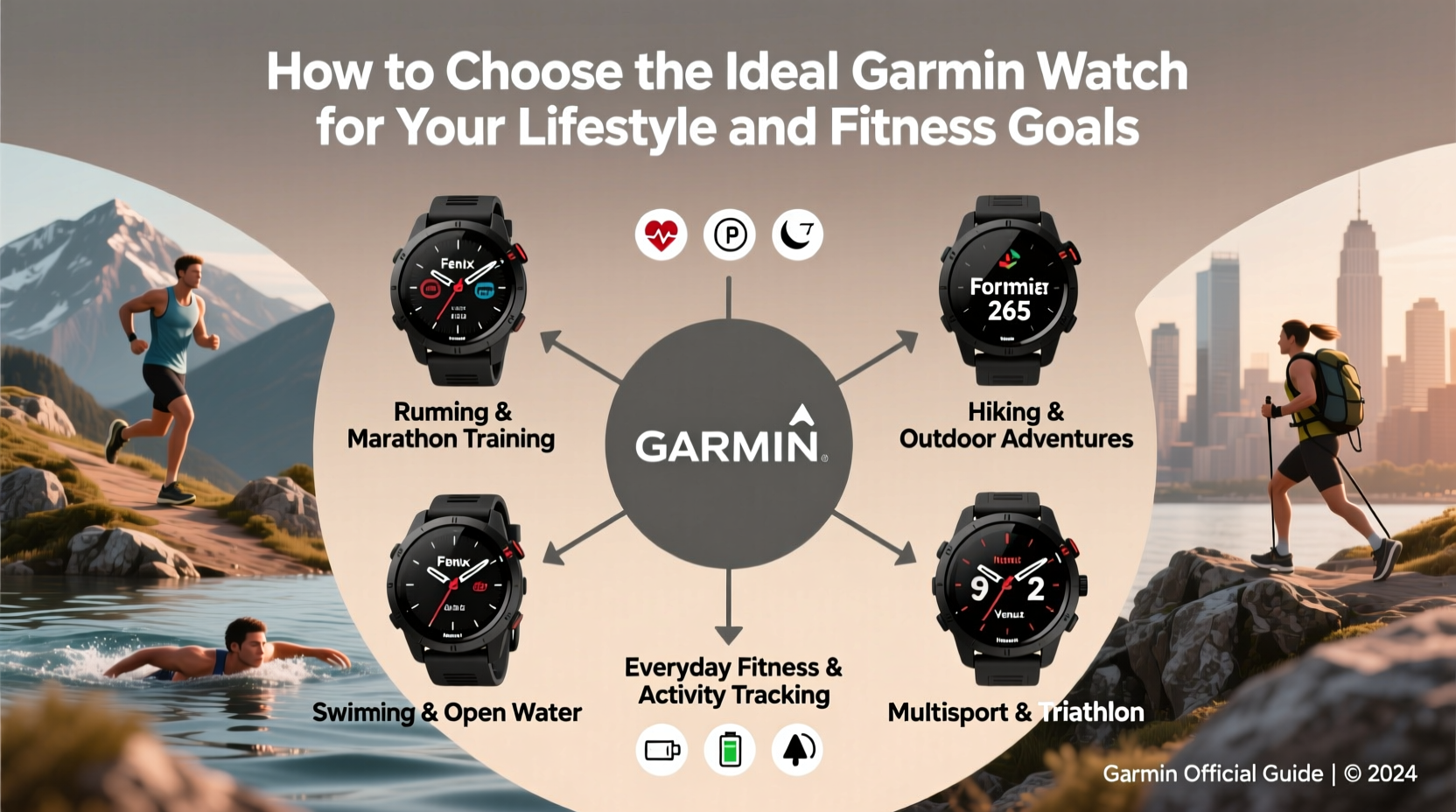
The first step in choosing a Garmin watch is identifying how you plan to use it. Are you training for marathons? Do you hike rugged trails on weekends? Or are you focused on improving sleep and managing stress during a busy workweek? Each Garmin series is engineered with a specific user in mind.
- Fitness & Daily Wellness: Venu and Vivosmart series offer strong health tracking, including heart rate variability, sleep score, and hydration logging.
- Running & Triathlon: Forerunner models provide advanced running dynamics, race predictor tools, and training load balance.
- Outdoor Adventure: Fenix and Instinct watches are built for durability, with multi-band GPS, topographic maps, and survival-grade materials.
- Everyday Smartwatch: Some users want notifications, music storage, and contactless payments without sacrificing battery life—Venu and higher-end Forerunners deliver this blend.
Compare Key Features Across Series
Garmin’s ecosystem offers overlapping features, but not every watch has every tool. Below is a comparison of core capabilities across five popular lines.
| Model Series | Battery Life (Smart Mode) | GPS Accuracy | Health Sensors | Best For |
|---|---|---|---|---|
| Venu 3 | Up to 14 days | Multi-GNSS | HRV, Sleep Score, Stress, Blood Oxygen, Skin Temperature | Lifestyle + moderate fitness |
| Forerunner 955 | Up to 20 days | Multi-Band GPS | All above + Training Readiness, Recovery Time | Serious runners & triathletes |
| Fenix 7X | Up to 34 days | Multi-Band + Dual-Frequency | Full suite + Pulse Ox, Elevation Profile | Hikers, climbers, ultra-runners |
| Instinct 2X | Up to 40 days | Standard GPS + TracBack | Basic HR, Sleep, Stress | Durable outdoor use |
| Vivosmart 5 | Up to 7 days | No standalone GPS | Heart rate, Sleep, Stress | Light activity tracking |
This table highlights a key trade-off: functionality versus simplicity. The more features you add—like music storage, Wi-Fi syncing, or satellite connectivity—the more complex the interface and the higher the price. Simpler models often last longer between charges and are easier to navigate for casual users.
Match Design and Comfort to Your Lifestyle
A watch that looks out of place at the office or feels bulky during yoga defeats its purpose. Consider size, weight, and band material based on where and how you’ll wear it.
- Size: Smaller wrists may prefer the 40–42mm cases (e.g., Forerunner 255S), while larger models like the Fenix 7X (51mm) suit those needing bigger displays for trail navigation.
- Weight: Titanium or fiber-reinforced polymer models reduce strain during long activities.
- Band Options: Silicone is sweat-resistant; leather or metal bands elevate style for professional settings.
“Wearability determines consistency. A user who takes off their watch because it’s uncomfortable will miss valuable data.” — Dr. Lena Patel, Sports Biomechanist & Wearable Tech Researcher
Step-by-Step Guide to Choosing Your Model
Follow this sequence to narrow down your options efficiently:
- Define your main goal: Weight loss, marathon training, hiking safety, or general wellness?
- List must-have features: GPS, heart rate monitoring, blood oxygen, music, offline maps?
- Set a budget: Garmin watches range from $150 (Vivosmart 5) to over $800 (Fenix 7X Solar).
- Test display preferences: AMOLED (Venu) vs. sunlight-readable transflective (Fenix/Instinct).
- Check compatibility: Ensure it works with your smartphone OS (iOS/Android) and preferred apps like Strava or MyFitnessPal.
- Read real-world reviews: Focus on long-term usability, not just initial impressions.
Real Example: Sarah’s Decision Process
Sarah, a 34-year-old project manager and weekend trail runner, wanted a watch that could track her 5K times, monitor stress during high-pressure workweeks, and survive muddy hikes. She initially considered the Fenix 7 due to its rugged reputation. However, after evaluating her actual usage, she realized she didn’t need satellite messaging or solar charging.
Instead, she chose the Forerunner 955 Solar. It offered advanced running metrics, up to 20 days of battery (even with daily GPS runs), a bright display, and a sleek profile that transitioned from trail to office. The solar charging extended battery life slightly on sunny days, and she appreciated the detailed recovery insights after tough workouts.
Her experience underscores a common insight: premium features aren’t always necessary. Matching function to reality leads to better satisfaction.
Frequently Asked Questions
Can I use a Garmin watch if I’m not an athlete?
Absolutely. Models like the Venu 3 or Vivosmart 5 focus on everyday wellness—tracking steps, sleep quality, menstrual cycle, and mindfulness sessions. These are ideal for non-athletes seeking healthier habits.
Do all Garmin watches have GPS?
No. Entry-level trackers like the Vivosmart 5 rely on connected GPS via your phone. Standalone GPS is available on Forerunner, Fenix, Instinct, and Venu models. Always verify specs before purchase.
How important is wrist-based heart rate accuracy?
Modern Garmin sensors are highly accurate for steady-state cardio. However, rapid interval changes (e.g., HIIT) may lag slightly compared to chest straps. For elite training, pairing with a chest monitor like the HRM-Pro improves precision.
Checklist: Before You Buy
- ✅ Identify your primary activity (running, swimming, hiking, daily tracking)
- ✅ Confirm required features (GPS, music, SpO2, maps)
- ✅ Check smartphone compatibility
- ✅ Evaluate battery life against your charging habits
- ✅ Assess comfort and aesthetics for daily wear
- ✅ Compare prices across retailers and consider refurbished options
- ✅ Read user reviews focusing on long-term reliability
Make the Right Choice for Your Journey
Your Garmin watch should act as a seamless extension of your lifestyle—not a complicated gadget collecting dust. Whether you're building endurance, managing stress, or exploring remote trails, there's a model designed to support your pace and priorities. The best watch isn’t the most expensive or feature-packed—it’s the one you’ll wear consistently and trust implicitly.
💬 Found your perfect Garmin match? Share your story or ask questions in the comments—help others make informed decisions too.








