
Pregnancy is a transformative journey filled with anticipation, questions, and milestones. One of the most essential pieces of information for expectant parents is knowing how far along the pregnancy has progressed. Accurate estimation of pregnancy weeks helps guide medical decisions, track fetal development, and prepare for delivery. While it may seem straightforward, miscalculations are common—especially when relying solely on memory or irregular cycles. This guide provides evidence-based methods, real-world examples, and practical tools to help you confidently determine pregnancy duration.
Understanding Pregnancy Week Calculation Basics
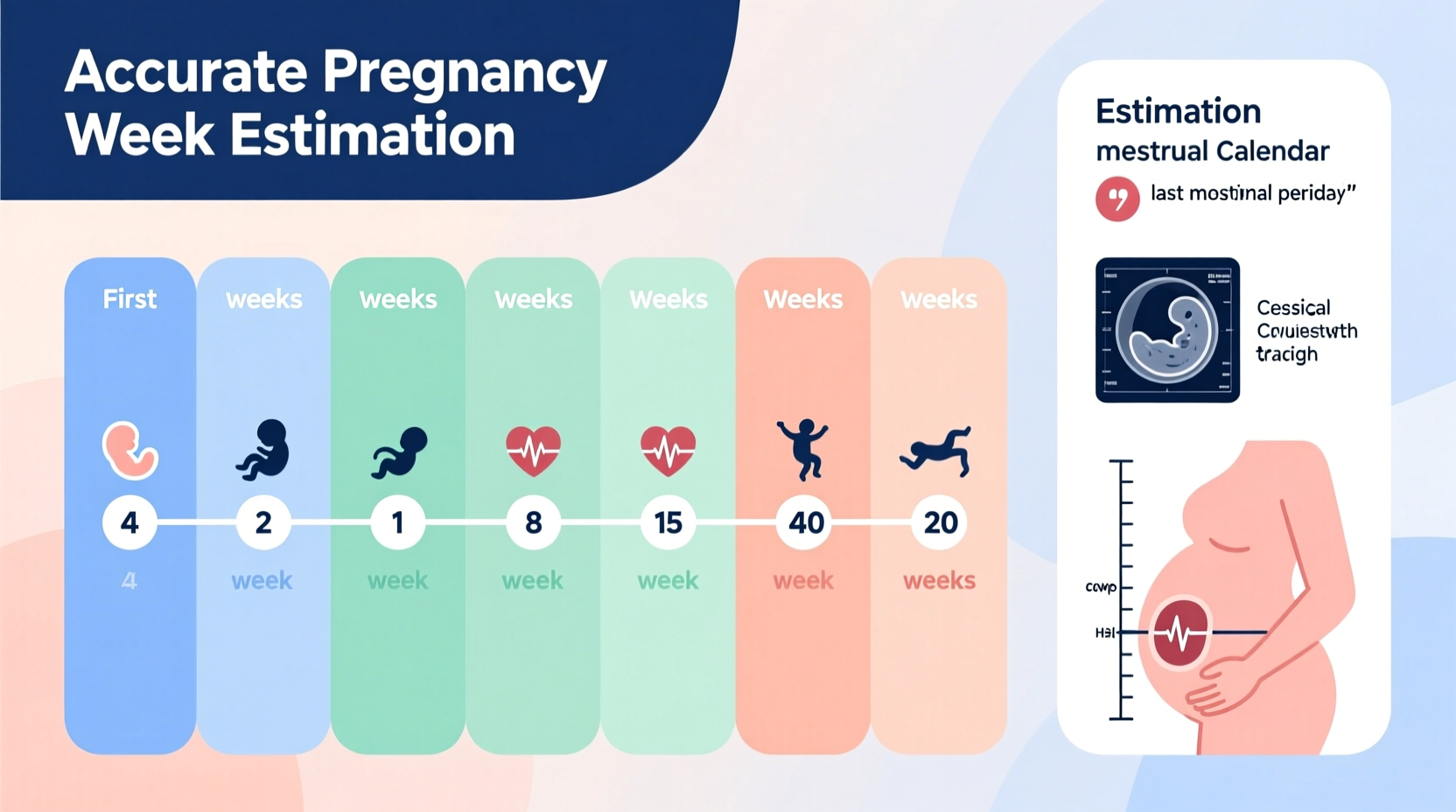
Pregnancy is typically measured from the first day of the mother’s last menstrual period (LMP), not from the date of conception. This method, known as gestational age, accounts for approximately two weeks before actual fertilization occurs. Most pregnancies last about 40 weeks from LMP, though full-term ranges from 37 to 42 weeks.
The reason clinicians use LMP is historical and practical: ovulation and conception dates are often unknown, but the start of the last period is usually easier to recall. However, this system assumes a regular 28-day cycle with ovulation on day 14—an assumption that doesn’t hold true for everyone.
Tip: Write down the exact date of your last menstrual period as soon as you suspect pregnancy. This single detail can significantly improve the accuracy of early estimates.Step-by-Step Guide to Estimating Pregnancy Weeks
Follow these steps to calculate pregnancy duration with confidence:
- Determine the first day of your last menstrual period (LMP). Be as precise as possible—even a one-day error can shift the entire timeline.
- Count the number of days from LMP to today. Divide by 7 to get the number of completed weeks.
- Add 266 days (38 weeks) to the LMP to estimate the due date using Naegele’s Rule—a standard formula used in obstetrics.
- Adjust for cycle length if necessary. If your cycle is longer or shorter than 28 days, add or subtract the difference from day 14.
- Confirm with an ultrasound, especially during the first trimester, which remains the gold standard for dating a pregnancy.
For example, if your LMP was March 1st and today is April 5th, that’s 35 days elapsed—or exactly 5 weeks pregnant. An estimated due date would be calculated by adding 9 months and 7 days to March 1st, landing around December 8th.
When LMP Isn't Reliable: Alternative Methods
Not all women have regular periods or remember their LMP clearly. In such cases, healthcare providers turn to other diagnostic tools:
- First-trimester ultrasound: Measures the crown-rump length (CRL) of the fetus. This is most accurate between 6 and 13 weeks, with a margin of error of ±5–7 days.
- Fetal heartbeat detection: A heartbeat detectable at 6 weeks suggests conception occurred roughly 4 weeks prior.
- Assisted reproductive technology (ART) records: For IVF or IUI pregnancies, embryologists know the exact date of egg retrieval and embryo transfer, allowing precise dating.
“Ultrasound dating in the first trimester supersedes LMP, even if the patient is certain of her dates. It's the most objective measure we have.” — Dr. Lena Patel, Maternal-Fetal Medicine Specialist
Common Pitfalls and How to Avoid Them
Misjudging pregnancy duration can lead to unnecessary concern or delayed care. Here are frequent errors and how to prevent them:
| Common Mistake | Why It Happens | How to Prevent |
|---|---|---|
| Confusing implantation bleeding with menstruation | Some women bleed around the time of expected periods after conception | Note any differences in flow, color, or duration; consult provider if uncertain |
| Using ovulation date instead of LMP without adjustment | Ovulation varies; assuming day 14 leads to underestimation in long cycles | Add (cycle length – 28) / 2 days to adjust LMP-based calculation |
| Relying on late ultrasounds for dating | Growth variations increase after 14 weeks, reducing accuracy | Use first-trimester scans for dating; later scans assess growth, not age |
Real Example: Sarah’s Experience with Irregular Cycles
Sarah, 32, had polycystic ovary syndrome (PCOS), leading to irregular cycles ranging from 32 to 45 days. When she missed her period in January, she took a home test—positive. But she couldn’t recall her LMP clearly. Her initial doctor visit used the assumed LMP of December 10th, suggesting she was 7 weeks along. However, a transvaginal ultrasound showed a crown-rump length consistent with only 5 weeks and 3 days.
After reviewing her calendar and symptoms, Sarah realized her last true period started on December 24th—not the earlier spotting she’d mistaken for a period. The ultrasound corrected the dating, aligning with her revised LMP. Without the scan, she might have been misclassified as having a delayed fetal development, potentially leading to unnecessary interventions.
Checklist: Key Actions for Accurate Pregnancy Dating
To ensure the most accurate estimation of your pregnancy week, follow this checklist:
- ✅ Record your LMP immediately upon suspecting pregnancy
- ✅ Note any unusual bleeding in early pregnancy
- ✅ Schedule a first-trimester ultrasound (ideally between 6–10 weeks)
- ✅ Share your average cycle length with your provider
- ✅ Bring fertility tracking data (e.g., ovulation tests, basal body temperature charts) if available
- ✅ Confirm due date at the anatomy scan (18���22 weeks), though changes are rare after first-trimester dating
Frequently Asked Questions
Can I be pregnant and not know the date of my last period?
Yes. If you’re unsure of your LMP, your healthcare provider will rely heavily on early ultrasound measurements to establish gestational age. Other clues like when you felt movement or when the uterus reaches certain landmarks can help later, but ultrasound remains the most accurate method.
What if my ultrasound date differs from my LMP date?
If the discrepancy is more than 7 days in the first trimester, providers typically adopt the ultrasound date. After the first trimester, adjustments are less common unless there’s a large difference (e.g., over 10–14 days). Consistency in dating prevents confusion during prenatal monitoring.
Does being pregnant with twins affect how weeks are counted?
No. Twin pregnancies are dated the same way—as from the LMP or early ultrasound. However, twin gestations often require closer monitoring and may result in earlier delivery, usually around 36–38 weeks for dichorionic twins and 34–37 for monochorionic.
Conclusion: Stay Informed, Stay Confident
Accurately estimating pregnancy weeks is more than a number—it shapes every aspect of prenatal care, from screening timelines to delivery planning. By combining personal awareness with clinical tools like ultrasounds and professional guidance, expecting parents can navigate this critical detail with confidence. Remember, small discrepancies are normal, but early clarity sets the foundation for a healthy pregnancy journey.
💬 Have questions about your pregnancy timeline? Share your experience or ask for advice in the comments—your story could help another parent find clarity.








