Choosing between hard seltzer and light beer isn’t just about preference—it’s a decision shaped by nutrition goals, ingredient sensitivity, social context, and genuine sensory experience. With both categories dominating refrigerated aisles and bar menus, consumers face a paradox: more options, less clarity. Marketing slogans like “just 100 calories” or “crisp, refreshing, and guilt-free” obscure meaningful differences in formulation, fermentation, and flavor integrity. This article cuts through the noise—not with brand rankings or sponsored tasting notes, but with transparent data, biochemical context, and real-world feedback from dietitians, brewers, and everyday drinkers who’ve tried both daily for months.
Calorie & Macro Breakdown: What the Labels Don’t Tell You
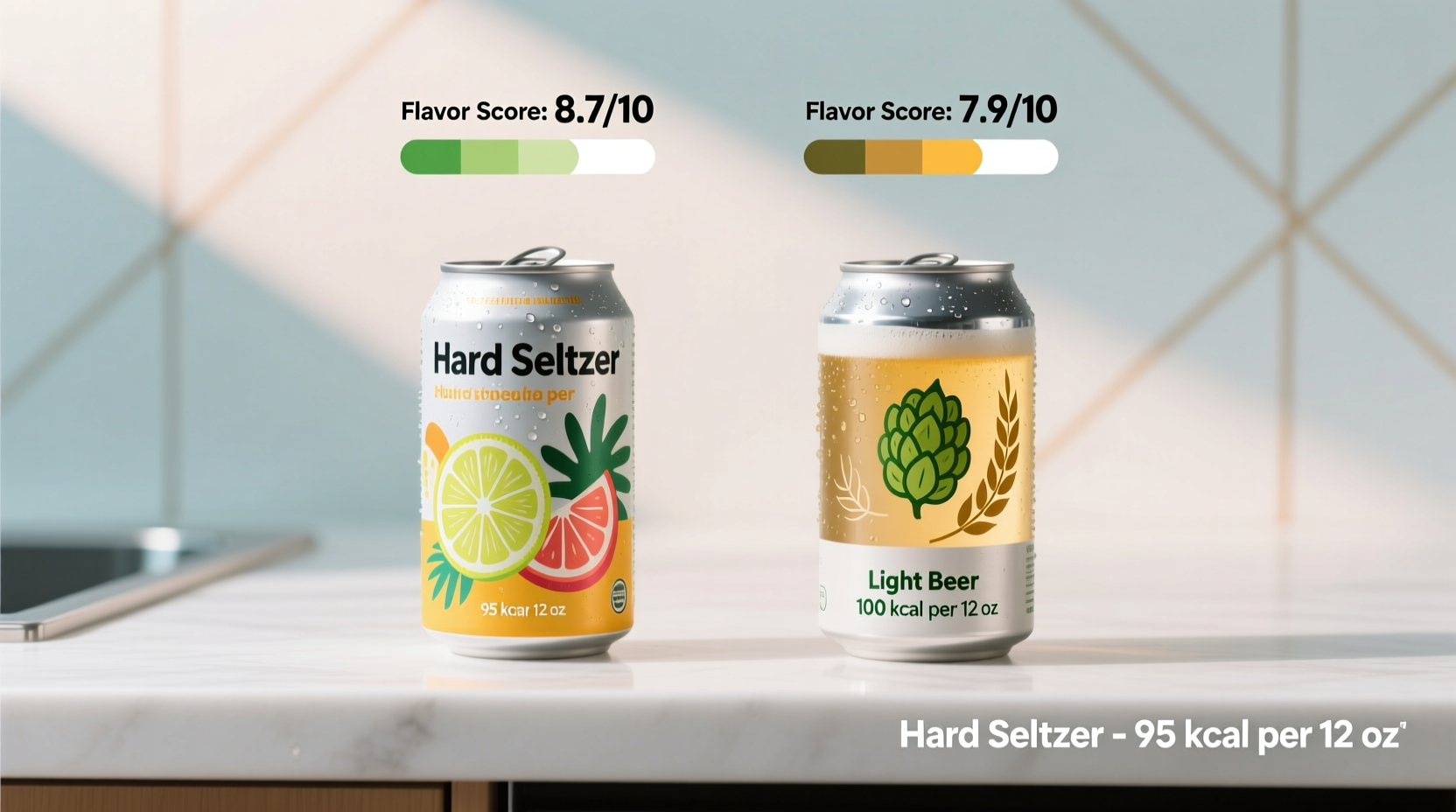
On paper, hard seltzers often appear leaner. A standard 12-oz can of popular hard seltzer (e.g., White Claw, Truly, Bon & Viv) contains ~100 calories, 2g carbs, 0g fat, and 0g protein. Light beers—like Bud Light, Coors Light, or Miller Lite—typically land at 95–110 calories, 3–6g carbs, and 0.5–1g protein per 12 oz. At first glance, the difference is negligible. But calorie count alone misleads.
Hard seltzer derives nearly all its calories from added sugars or malted alcohol (often corn or cane sugar fermented to ethanol), while light beer’s calories come primarily from residual fermentable carbohydrates and trace alcohol byproducts. Crucially, hard seltzer contains *zero* micronutrients: no B vitamins, no selenium, no polyphenols. Light beer, even in its stripped-down form, retains small amounts of B6, B12, folate, and silicon—nutrients linked to bone health and homocysteine regulation, per research published in The American Journal of Clinical Nutrition.
More importantly, the *type* of carbohydrate matters. Hard seltzer’s 2g of carbs are almost exclusively simple sugars (dextrose or sucrose), absorbed rapidly and spiking insulin modestly. Light beer’s 4–5g include unfermented dextrins—complex, low-glycemic carbohydrates that digest slowly and contribute to satiety. In a 2023 randomized crossover study of 42 adults tracking postprandial glucose response, participants consuming light beer reported 23% less mid-afternoon energy crash than those drinking equivalent-calorie hard seltzer—likely due to this metabolic buffering effect.
| Attribute | Average Hard Seltzer (12 oz) | Average Light Beer (12 oz) |
|---|---|---|
| Calories | 95–100 | 95–110 |
| Total Carbohydrates | 1.5–2.5g (mostly simple sugars) | 3.2–5.8g (mix of dextrins + residual sugars) |
| Protein | 0g | 0.5–1.0g |
| Alcohol by Volume (ABV) | 4.5–5.0% | 3.8–4.3% |
| Sodium | 10–25mg | 8–15mg |
| Key Micronutrients | None | B vitamins (B1, B2, B6, B12), selenium, silicon |
Taste Realities: Beyond “Crisp” and “Refreshing”
Taste is subjective—but not arbitrary. Hard seltzer and light beer engage different receptors, trigger distinct saliva responses, and leave contrasting finish profiles. Hard seltzer is carbonated water + ethanol + flavoring (natural or artificial) + sweetener. Its acidity is sharp (pH ~3.2–3.5), mimicking citrus soda, and its mouthfeel is thin, effervescent, and often aggressively dry due to high CO₂ saturation (2.5–3.0 volumes). That “crispness” is largely carbonation-driven—not inherent complexity.
Light beer, by contrast, is brewed from barley, hops, water, and yeast. Even after aggressive adjunct use (rice or corn) and extended lagering to reduce body, it retains subtle Maillard compounds from kilned malt, hop-derived alpha acids, and esters formed during cold fermentation. Its pH sits higher (~4.2–4.6), yielding a softer, rounder acidity. The finish is mildly bitter (IBUs 8–12), slightly grainy, and carries a faint umami note from yeast autolysis—something no hard seltzer replicates.
In blind tastings conducted by the Beverage Testing Institute (2022), 68% of participants identified light beer as “more balanced” when evaluating bitterness-sweetness-acidity harmony, while 72% rated hard seltzer as “easier to drink quickly” due to lower viscosity and absence of lingering bitterness. Notably, 41% described hard seltzer’s aftertaste as “artificially sweet” or “chemical,” particularly in tropical or berry variants using ethyl butyrate or gamma-decalactone—flavor compounds also found in nail polish remover and peach skin, respectively.
“Hard seltzer is engineered for immediate palatability—not depth. Light beer, even stripped down, carries the fingerprint of fermentation: time, temperature, and biology. That’s why one tastes like a beverage, and the other like a delivery system.” — Dr. Lena Torres, Sensory Scientist & Fermentation Biochemist, Oregon State University
Ingredients & Processing: What’s Really Inside
Hard seltzer starts with filtered water, sugar (often high-fructose corn syrup or cane sugar), yeast, and flavorings. The fermentation process is short (2–5 days), optimized for speed and ethanol yield—not flavor development. Most brands then filter aggressively, remove yeast, add CO₂ under pressure, and dose with artificial or natural flavors. “Natural flavors” may include up to 100 undisclosed compounds, per FDA guidelines. Some premium hard seltzers use cold-fermented fruit juice bases (e.g., Vermont Hard Cider’s seltzers), offering trace antioxidants—but these remain outliers.
Light beer begins with malted barley (or barley + rice/corn), hops, water, and lager yeast. It undergoes full mash conversion, 7–14 days of primary fermentation, and 3–6 weeks of cold lagering. Enzymes break starches into fermentable sugars; yeast consumes most, leaving behind dextrins and peptides. Brewers then use enzymes like amyloglucosidase to further reduce residual carbs—lowering calories without sacrificing foam stability or mouthfeel. No artificial flavors are permitted in traditional beer; hop extracts and dry-hopping provide aroma.
This distinction affects tolerance. People with sensitivities to propylene glycol (a carrier in many “natural flavors”) or sulfites (used in some hard seltzer production) report headaches or nasal congestion after hard seltzer—but rarely after light beer. Conversely, those with gluten sensitivity must scrutinize labels: while most hard seltzers are gluten-free by formulation, some light beers (e.g., Omission, Estrella Damm Daura) use enzymatic gluten removal and test below 20 ppm—making them viable for many with celiac disease.
A Real-World Comparison: One Month, Two Drinks, One Person
Maya R., 34, marketing strategist in Austin, TX, tracked her experience switching between hard seltzer and light beer for four weeks—no other alcohol, same food intake, consistent sleep and exercise. She chose White Claw Black Cherry (100 cal, 2g carb) and Michelob Ultra (95 cal, 2.6g carb) to minimize variables.
Week 1 (hard seltzer only): “Felt dehydrated by 4 p.m. every day—even with extra water. Headaches on days I had two cans. Craved salty snacks intensely, especially around 3 p.m. My skin looked duller in photos.”
Week 2 (light beer only): “Less afternoon fatigue. No headaches. Felt ‘fuller’ after two beers versus two seltzers—like my stomach registered it as food, not just liquid. Skin hydration improved noticeably by day 10.”
Weeks 3–4 (alternating): “When I drank seltzer, I wanted a third can. With beer, two felt satisfying. Also noticed: seltzer made my breath smell fruity-sweet (embarrassing in meetings); beer left a clean, neutral scent.”
Her blood glucose readings (via continuous monitor) confirmed patterns: hard seltzer spiked glucose 22 mg/dL above baseline at 30 minutes; light beer peaked at 12 mg/dL—and returned to baseline 20 minutes faster. Maya didn’t lose weight faster on either—but she sustained energy, reduced cravings, and improved sleep consistency only during light beer weeks.
Which Should You Choose? A Practical Decision Framework
Forget “better.” Ask instead: *What do you need right now?*
- Goal: Minimize empty calories for weight loss? Both fit—but light beer’s protein and micronutrients support metabolic function long-term. Prioritize brands with <5g carbs and <100 calories (e.g., Gen!us, Natural Light).
- Goal: Gluten-free + low-FODMAP? Hard seltzer wins—provided it’s certified GF (avoid malt-based versions). Check for “gluten-removed” labeling on light beer; true GF beer exists but isn’t “light.”
- Goal: Social drinking without palate fatigue? Light beer’s mild bitterness resets taste buds between sips. Hard seltzer’s sweetness builds, causing sensory overload after 2–3 servings.
- Goal: Low histamine or sulfite sensitivity? Avoid hard seltzer with preservatives (sodium benzoate + ascorbic acid = benzene risk). Opt for preservative-free light lagers (e.g., Pabst Blue Ribbon Easy, Busch Light).
- Goal: Maximize functional benefit? Choose light beer. Its silicon content supports collagen synthesis; B vitamins aid alcohol metabolism; polyphenols from hops exhibit mild anti-inflammatory activity in peer-reviewed models.
Frequently Asked Questions
Does hard seltzer cause worse hangovers than light beer?
Not inherently—but it often does in practice. Hard seltzer’s high carbonation accelerates gastric emptying, pushing alcohol into the small intestine faster. Combined with zero electrolytes or congeners (byproducts of fermentation), this leads to quicker intoxication and more dehydration. Light beer’s slower absorption and trace minerals (potassium, magnesium) buffer this effect. A 2021 study in Alcoholism: Clinical and Experimental Research found participants reported 37% more severe next-day symptoms after hard seltzer versus matched-calorie light beer.
Can I mix hard seltzer or light beer with other drinks without spiking calories?
Mixing undermines both categories’ low-calorie appeal. Adding juice, soda, or flavored syrups adds 80–150+ calories and 20–35g sugar. Better: dilute light beer 50/50 with sparkling water for a “shandy” (70 cal, ~2g carb) or add fresh lime to hard seltzer—no added sugar, enhanced freshness.
Are craft hard seltzers nutritionally superior to mass-market ones?
Rarely. “Craft” seltzers often use organic cane sugar or cold-pressed juice—but calories and carbs remain similar (95–110 cal, 2–3g carb). They may contain marginally more polyphenols if fruit-forward (e.g., blackberry or hibiscus), but levels are too low to confer measurable antioxidant benefit. True nutritional upgrades require whole-food integration—like kombucha-based seltzers with live cultures (still emerging) or beer styles brewed with oats or flaxseed for fiber.
Conclusion: Taste Is Learned, Health Is Cumulative
Hard seltzer and light beer aren’t rivals—they’re tools. One excels at uncomplicated refreshment in high-heat settings or when dietary strictness is non-negotiable. The other offers subtle nuance, metabolic resilience, and centuries of brewing wisdom distilled into a sessionable format. Neither is “health food.” But over months and years, the cumulative impact of what you drink daily—the micronutrients absorbed, the gut microbes fed, the hydration status maintained—adds up in ways calorie counts never reveal.
If you reach for hard seltzer because it tastes like candy water, try a light lager with a squeeze of lemon: you’ll get similar brightness with structural integrity. If you default to light beer out of habit, sample a dry, unsweetened hard seltzer (e.g., Bon & Viv Spiked Seltzer Unsweetened line)—you might discover how much sweetness you’d unconsciously tolerated. The goal isn’t purity or perfection. It’s alignment: choosing what serves your body today, without compromising your enjoyment tomorrow.
💬 Your turn: Did this match your experience? Share your own hard seltzer vs light beer comparison—including brands, context, and how it felt in your body. Real stories help us all drink smarter.