
Every object we carry tells a story. From the wallet in our back pocket to the watch on our wrist, personal accessories quietly broadcast who we are—or at least who we want to be. Among the most overlooked yet revealing items is the humble keychain. Small as it may be, a keychain often carries symbolic weight far beyond its function. Two of the most common types—fitness-themed and sports team keychains—serve not just as tools but as identity markers. One speaks to self-discipline and personal goals; the other to loyalty, community, and fandom. But which one says more about you?
The Psychology Behind Personal Accessories
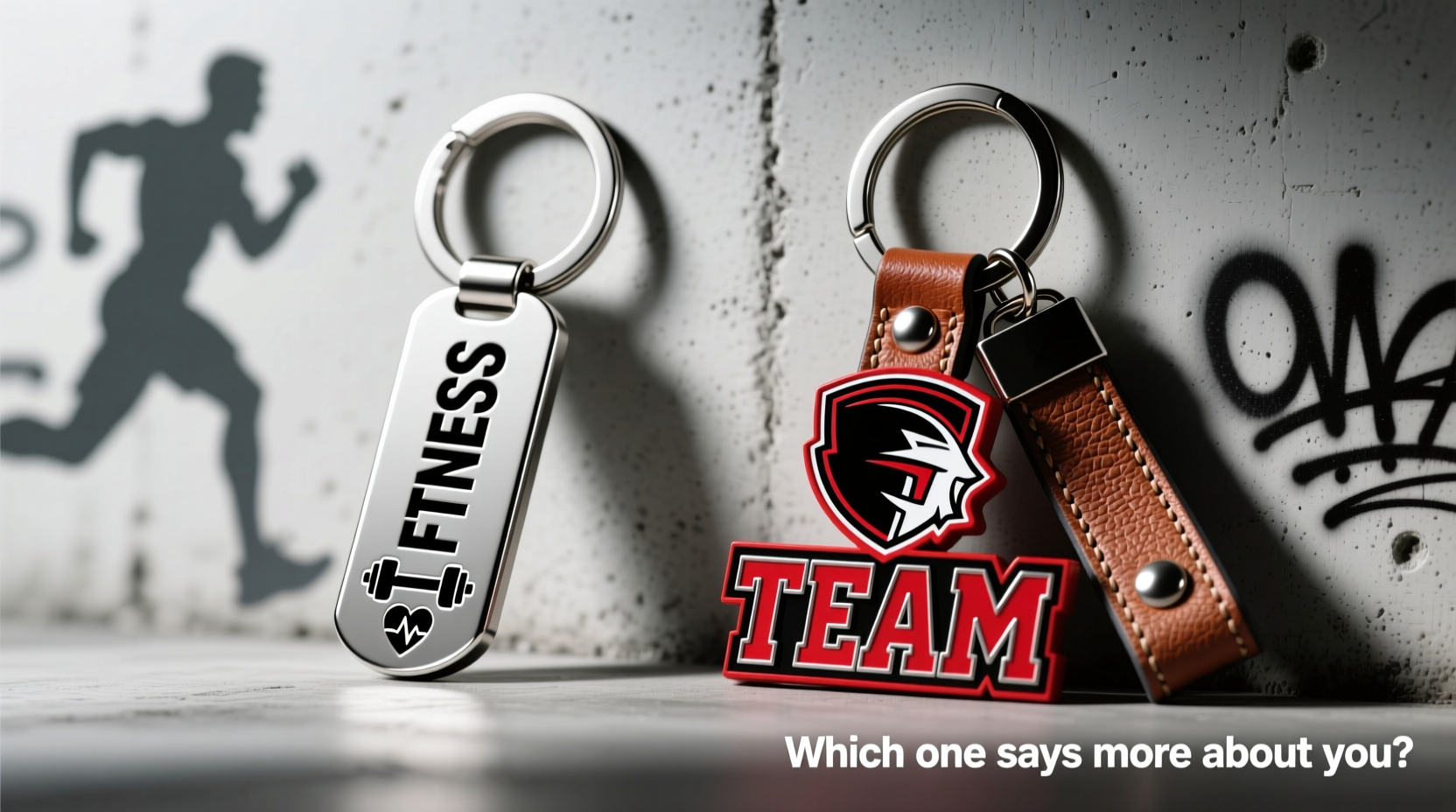
Accessories are rarely neutral. Psychologists have long studied how people use objects to express identity, signal belonging, or reinforce self-image. A keychain, though minor in size, is frequently visible during daily routines—unlocking cars, opening gym lockers, or jingling in a pocket during conversation. That visibility makes it a subtle but effective form of nonverbal communication.
Fitness keychains often feature dumbbells, running shoes, motivational phrases like “No Excuses,” or branded logos from gyms or fitness apps. They tend to reflect internal values: perseverance, health, routine, and self-improvement. In contrast, sports team keychains—emblazoned with team names, mascots, or colors—signal external affiliations: allegiance to a city, school, or cultural tradition. These represent shared experiences, emotional highs and lows, and group identity.
“Objects we choose to carry become extensions of our self-concept. A keychain isn’t just functional—it’s a micro-billboard for what we value.” — Dr. Lena Torres, Behavioral Psychologist, University of Austin
Fitness Keychains: A Statement of Self-Discipline
A fitness keychain is more than gym swag. For many, it’s a reminder of commitment. People who attach a squat rack charm or a Fitbit logo to their keys often do so to reinforce daily motivation. It’s a tactile prompt—something they see every time they reach for their car or apartment door—that keeps their goals top of mind.
These keychains appeal to individuals who prioritize control, progress, and measurable outcomes. They’re common among early risers who hit the gym before work, marathon trainees, or those navigating post-injury recovery. The symbolism here is inward-focused: growth, resilience, consistency.
Tip: If you're building a new habit, attaching a symbolic item like a fitness keychain can serve as an anchor for behavioral change.Fitness keychains also reflect a growing cultural shift toward wellness as a core life value. In an era where burnout is rampant and mental health awareness is rising, choosing a keychain that celebrates movement and vitality signals a conscious effort to live intentionally.
Sports Team Keychains: Loyalty and Belonging
On the other side of the spectrum lies the sports team keychain—a badge of pride, passion, and communal identity. Whether it’s a college football emblem, a professional basketball team’s logo, or a vintage baseball club medallion, these items connect wearers to something larger than themselves.
Supporting a team is rarely rational. Fans endure losing seasons, financial costs, and emotional volatility—all for the sake of belonging. A sports keychain becomes a token of that dedication. It says, “I stand with my city,” or “This team shaped my childhood,” or “My social circle revolves around game day rituals.”
Unlike fitness keychains, which emphasize individual achievement, sports memorabilia celebrate collective experience. Wearing a Lakers keychain isn’t about personal excellence—it’s about shared history, nostalgia, and tribal connection. It invites conversation, camaraderie, and sometimes rivalry.
Mini Case Study: Two Commuters, One Train
Consider two regulars on the 7:15 AM commuter train. Mark has a keychain with a tiny barbell and the word “GRIND.” He listens to fitness podcasts, packs a protein shake, and logs his steps religiously. His keychain mirrors his morning routine: disciplined, goal-oriented, solitary.
Jamal, seated across, has a faded Alabama Crimson Tide keychain—his father’s old one, passed down after a championship win in ’09. Jamal doesn’t attend games, but he wears it every day. It reminds him of tailgating with family, of Sunday calls with his brother to dissect plays. His keychain isn’t about performance; it’s about memory and continuity.
Both men carry meaning. One reflects aspiration. The other, heritage. Which says more about them? That depends on what you believe defines identity.
Comparative Breakdown: What Each Keychain Reveals
| Aspect | Fitness Keychain | Sports Team Keychain |
|---|---|---|
| Core Value | Self-improvement | Loyalty & tradition |
| Focus | Internal (personal goals) | External (group affiliation) |
| Motivation | Discipline, progress | Nostalgia, emotion |
| Social Signal | I am working on myself | I belong to something bigger |
| Lifespan of Relevance | Tied to current habits | Often lifelong |
When Context Changes Meaning
The message of a keychain isn’t fixed—it shifts with context. A fitness keychain on a personal trainer sends a professional signal. On a recovering patient, it’s a symbol of resilience. Similarly, a sports keychain worn during playoff season broadcasts excitement; worn year-round, it suggests deep-rooted identity.
Cultural background also influences interpretation. In regions where college sports dominate local culture—like Texas or Ohio—a team keychain may be nearly universal, reducing its distinctiveness. In cosmopolitan cities, a fitness keychain might stand out more, signaling a deliberate lifestyle choice amid fast-paced environments.
Tip: Consider rotating keychains based on life phases. A sports keychain during alumni season, a fitness one during a training cycle—your accessories can evolve with you.Which Says More About You? A Balanced Answer
There’s no definitive answer to which keychain “says more.” It depends on what dimension of identity you value most: personal agency or social connection.
A fitness keychain reveals intentionality. It suggests someone who sets goals, tracks progress, and invests in self-mastery. It speaks to modern ideals of autonomy and optimization. In a world increasingly focused on metrics and mindfulness, this keychain aligns with forward-thinking, proactive living.
A sports team keychain, meanwhile, reveals emotional depth and continuity. It shows that you carry memories, honor commitments, and find joy in shared narratives. In an age of digital isolation, such symbols of belonging are powerful reminders of human connection.
If forced to choose, consider this: a fitness keychain tells people what you’re trying to become. A sports keychain tells them where you’ve been. Both are essential parts of identity—one rooted in aspiration, the other in origin.
Checklist: Choosing the Right Keychain for Your Identity
- Ask yourself: Do I identify more with personal goals or group traditions?
- Reflect on what motivates you daily—is it progress or connection?
- Consider whether your keychain should inspire future behavior or honor past experiences.
- Evaluate how much visibility your accessory gets—will it spark conversations you want?
- Decide if you want a static symbol or one you can rotate with life changes.
FAQ
Can I have both a fitness and a sports team keychain?
Absolutely. Many people mix symbols of personal discipline and communal loyalty. Layering both reflects a balanced identity—one that values self-growth and emotional roots equally.
Do keychains influence how others perceive me professionally?
Subtly, yes. A fitness keychain might suggest diligence and health consciousness, traits valued in high-performance fields. A sports keychain could make you seem approachable and team-oriented, useful in collaborative environments. Be mindful of workplace culture when selecting visible accessories.
Is it shallow to judge someone by their keychain?
Judging is inevitable—but understanding is better. A keychain offers a clue, not a full portrait. Use it as a conversation starter, not a verdict.
Conclusion: Wear What Resonates, Not What’s Expected
In the end, the best keychain is the one that feels authentic. Whether you clip on a tiny kettlebell or a decades-old team charm, what matters is that it aligns with your truth. Symbols gain power not from popularity, but from personal meaning.
Rather than asking which keychain says more about you, ask which one helps you stay connected to what matters. If lifting weights grounds you, let your keys reflect that journey. If Sunday games with your dad shaped your heart, carry that legacy proudly.
🚀 Your turn: Look at your keychain right now. What does it say about you—and is it still the story you want to tell? Share your thoughts or swap your symbol. Identity isn’t fixed. Neither should your keys be.








