
Dry skin demands more than just a moisturizer. It requires thoughtful layering of hydration-focused products that replenish moisture, reinforce the skin barrier, and prevent transepidermal water loss. Two commonly used products in this routine—facial mists and toners—are often misunderstood or used interchangeably. While both deliver hydration, they differ significantly in formulation, function, and timing within a skincare regimen. For individuals with dry skin, understanding these differences is crucial to maximizing hydration and avoiding irritation.
This guide breaks down the science behind facial mists and toners, evaluates their hydrating efficacy, and provides actionable recommendations tailored specifically for dry skin types.
Understanding Dry Skin and Its Hydration Needs
Dry skin occurs when the stratum corneum—the outermost layer of the skin—lacks sufficient lipids and natural moisturizing factors (NMFs). This compromises the skin’s ability to retain water, leading to flakiness, tightness, redness, and increased sensitivity. Unlike dehydrated skin, which lacks water but can affect any skin type, dry skin is a skin type characterized by chronically underperforming oil production.
To combat dryness, hydration must be addressed at multiple levels:
- Surface hydration: Immediate water infusion to plump the skin.
- Barrier reinforcement: Strengthening lipid layers to lock in moisture.
- Occlusion: Sealing hydration with emollients and occlusives.
Facial mists and toners primarily contribute to surface hydration, but their roles diverge based on ingredients, pH, and application method.
Tip: Apply hydrating products to damp skin to trap moisture and enhance absorption.What Are Facial Mists? Function and Benefits
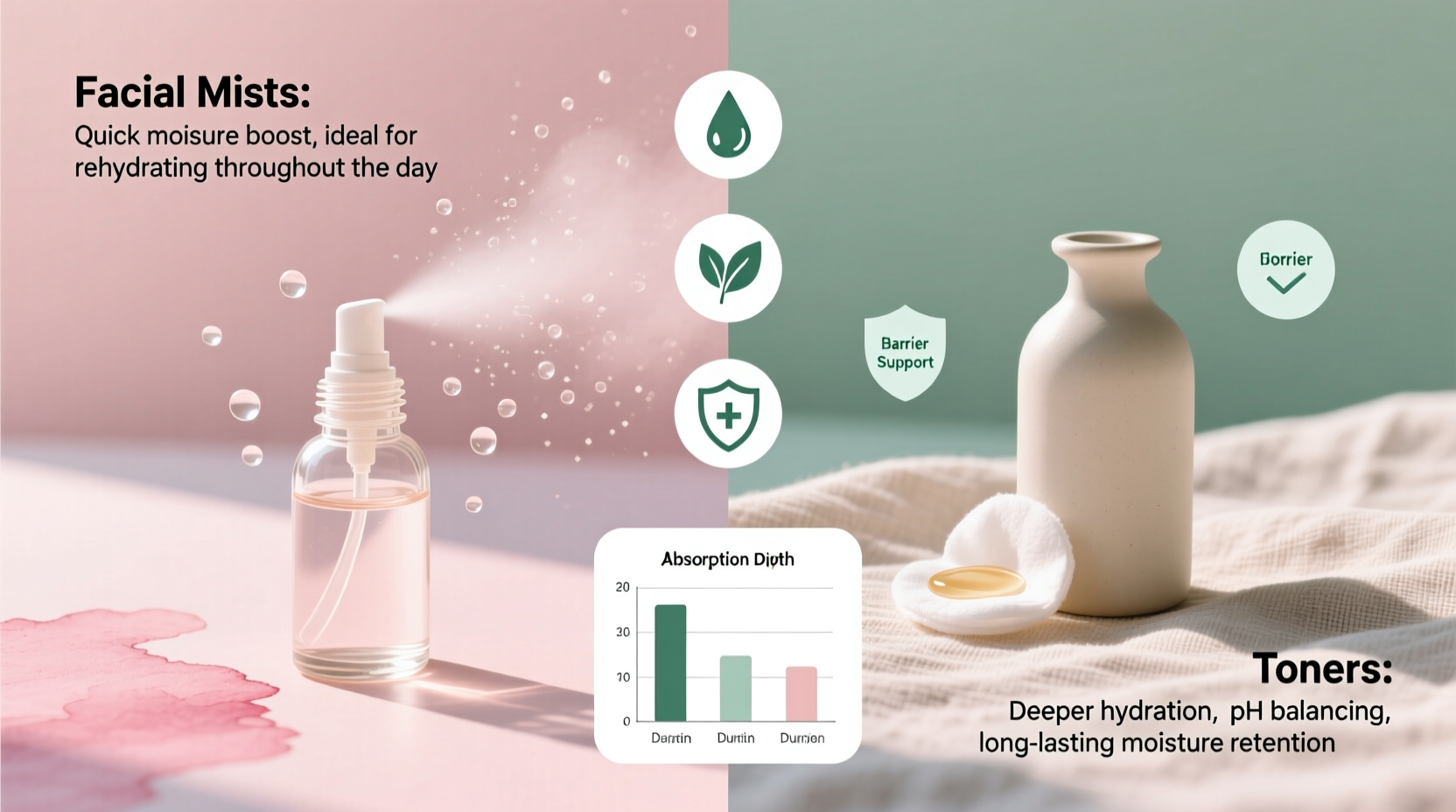
Facial mists are lightweight, water-based sprays typically packaged in fine mist bottles. They contain a blend of purified water, humectants (like glycerin or hyaluronic acid), soothing agents (such as aloe vera or chamomile), and sometimes antioxidants or plant extracts. Their primary purpose is instant refreshment and hydration.
For dry skin, facial mists serve several key functions:
- Immediate hydration boost: Deliver a burst of water to parched skin, especially useful in low-humidity environments.
- Pre-moisturizer prep: Used before serums or moisturizers, they create a damp canvas that enhances product penetration.
- Makeup setting aid: When applied over makeup, certain mists help meld foundation and reduce powderiness without disturbing coverage.
- Calm irritation: Soothing mists with thermal water or centella asiatica can alleviate redness and discomfort.
However, mists alone do not provide long-term hydration. Because they lack occlusive ingredients, the water they deliver evaporates quickly unless sealed with a moisturizer. This makes them excellent supportive tools but insufficient as standalone hydrators.
“Facial mists are like a drink of water for your skin—they’re refreshing and beneficial, but you still need a meal (moisturizer) to stay nourished.” — Dr. Lena Park, Board-Certified Dermatologist
Toners: Beyond Astringency – Modern Formulations for Dry Skin
The outdated perception of toners as harsh, alcohol-laden products meant to strip oil has largely been replaced by modern, skin-friendly formulations. Today’s toners—especially those designed for dry or sensitive skin—are potent hydrating treatments that bridge cleansing and moisturizing steps.
Hydrating toners typically contain:
- Hyaluronic acid: Binds up to 1,000 times its weight in water.
- Glycerin: A humectant that draws moisture into the epidermis.
- Ceramides: Help restore the skin barrier and prevent moisture loss.
- Niacinamide: Improves skin resilience and reduces inflammation.
- Panthenol (Provitamin B5): Soothes and supports healing.
Unlike facial mists, toners are usually applied with a cotton pad or hands after cleansing and before serums. Their slightly higher concentration of active ingredients allows deeper delivery and longer-lasting effects. Moreover, many hydrating toners have a balanced pH (around 4.5–5.5), which helps maintain the skin’s acid mantle—a critical defense mechanism compromised in dry skin.
In clinical terms, toners offer superior hydration because they remain on the skin longer, allowing active ingredients time to absorb. They also prepare the skin for subsequent products through a process known as “pre-conditioning,” improving the efficacy of serums and moisturizers.
When Toners Outperform Mists for Dry Skin
Toners excel in situations where sustained hydration and barrier support are needed. For example:
- After using a foaming cleanser that may disrupt pH balance.
- As part of a double-cleansing routine to ensure residue-free skin.
- During winter months when indoor heating accelerates moisture loss.
- When layering actives like retinoids or AHAs that increase skin sensitivity.
Direct Comparison: Facial Mists vs Toners for Dry Skin Hydration
| Feature | Facial Mists | Toners |
|---|---|---|
| Primary Purpose | Refresh, soothe, add surface moisture | Hydrate, balance pH, prep skin |
| Application Time | Throughout the day, post-cleansing, over makeup | Post-cleansing, pre-serum (AM/PM) |
| Key Ingredients | Water, humectants, botanical extracts | Hyaluronic acid, glycerin, ceramides, niacinamide |
| pH Level | Neutral to slightly alkaline | Acidic (4.5–5.5), skin-compatible |
| Hydration Duration | Short-term (evaporates quickly) | Longer-lasting (penetrates deeper) |
| Best For | On-the-go refreshment, midday hydration | Routine hydration, barrier repair, product layering |
| Occlusive Support | None – must be followed by moisturizer | Limited – still requires moisturizer seal |
While both products hydrate, toners offer more comprehensive benefits for dry skin due to their targeted formulation and role in maintaining skin health beyond surface-level moisture.
Real-World Example: Sarah’s Winter Skincare Transformation
Sarah, a 34-year-old office worker in Chicago, struggled with severely dry, flaky cheeks every winter. She relied on a basic moisturizer and occasionally spritzed a rosewater facial mist for relief. Despite this, her skin remained tight and irritated by midday.
After consulting a dermatologist, she replaced her mist-only approach with a hydrating toner containing hyaluronic acid and ceramides, applied immediately after cleansing. She continued using her facial mist—but only during lunch breaks and after washing her face, always followed by a rich cream.
Within three weeks, her skin felt noticeably softer, with reduced flaking and improved tolerance to indoor heating. The toner provided foundational hydration, while the mist served as a supplemental boost. This layered strategy exemplifies how combining both products effectively addresses dry skin needs.
Step-by-Step Routine for Optimal Hydration with Dry Skin
Maximizing hydration requires strategic sequencing. Here’s a proven routine that integrates both mists and toners appropriately:
- Cleanse gently: Use a sulfate-free, creamy cleanser to avoid stripping natural oils.
- Apply hydrating toner: Pour a small amount into palms or use a reusable pad; press onto face and neck. Allow to absorb for 30 seconds.
- Layer serum: Apply a hydrating serum with hyaluronic acid or glycerin to damp skin.
- Moisturize: Seal everything with a ceramide-rich or ointment-based moisturizer.
- Use facial mist strategically: Spritz throughout the day when skin feels tight or dry. Follow immediately with moisturizer if possible.
- Nighttime lock-in: Consider “slugging” (applying a thin layer of petroleum jelly) over moisturizer once or twice weekly for intense overnight repair.
This routine ensures hydration is delivered, absorbed, and retained—addressing dry skin at every stage.
Checklist: Choosing the Right Products for Dry Skin
Use this checklist when selecting facial mists and toners:
- ✅ Free from alcohol, fragrance, and essential oils (common irritants)
- ✅ Contains humectants: hyaluronic acid, glycerin, panthenol
- ✅ Includes barrier-supporting ingredients: ceramides, fatty acids, cholesterol
- ✅ Packaged to prevent contamination (airless pump or opaque bottle preferred)
- ✅ pH-balanced (especially important for toners)
- ✅ Non-comedogenic and dermatologist-tested
- ✅ Spray nozzle delivers a fine, even mist (for mists)
Avoid products labeled “astringent,” “clarifying,” or “oil-control”—these are formulated for oily or acne-prone skin and can worsen dryness.
Frequently Asked Questions
Can I use a facial mist instead of a toner?
No. While both add moisture, toners are formulated to balance pH, remove residual impurities, and enhance product absorption. Mists lack the functional depth and staying power of toners. Using a mist alone skips critical steps in hydration optimization.
Should I apply toner with a cotton pad or my hands?
For dry skin, applying with clean hands is preferable. Patting or pressing the toner into the skin retains more liquid and avoids friction. Cotton pads can absorb product and cause mild irritation if rubbed aggressively.
How often should I use a facial mist?
You can use a facial mist as often as needed—morning, midday, post-workout, or before bed. However, always follow with moisturizer if used outside your regular routine to prevent evaporation and dehydration.
Expert Insight: The Role of Layering in Dry Skin Care
“Dry skin doesn’t just need more moisture—it needs smarter moisture delivery. That means layering hydrators with different molecular weights and functions. A toner sets the stage; a mist maintains momentum. Neither replaces a good moisturizer, but together, they elevate your entire routine.” — Dr. Naomi Chen, Cosmetic Dermatologist & Skincare Researcher
Conclusion: Which Hydrates Better for Dry Skin?
When comparing facial mists and toners for hydration in dry skin types, toners emerge as the more effective option. Their targeted formulations, pH compatibility, and role in prepping the skin make them essential in a daily regimen. Facial mists, while refreshing and beneficial, serve best as supplementary tools—not replacements.
The ideal approach combines both: a hydrating toner as a non-negotiable step after cleansing, and a facial mist used strategically throughout the day for added comfort and moisture retention. Pair either or both with a robust moisturizer and consistent sun protection for truly resilient, hydrated skin.
🚀 Ready to transform your dry skin routine? Start tonight by swapping out harsh toners for a hydrating formula and keep a gentle facial mist nearby for instant relief. Your skin will thank you.








