For individuals with sensitive gums, choosing the right toothbrush isn’t just about cleaning teeth—it’s about protecting delicate gum tissue from irritation, bleeding, and recession. With electric toothbrushes now a staple in modern oral care, many consumers face a critical decision: Should they opt for a standard electric (rotational-oscillating) model or a sonic toothbrush? Both promise superior plaque removal over manual brushing, but their mechanisms, vibration patterns, and impact on gum health differ significantly. Understanding these differences is essential for maintaining oral hygiene without compromising gum comfort.
Understanding the Technology: How Each Brush Works
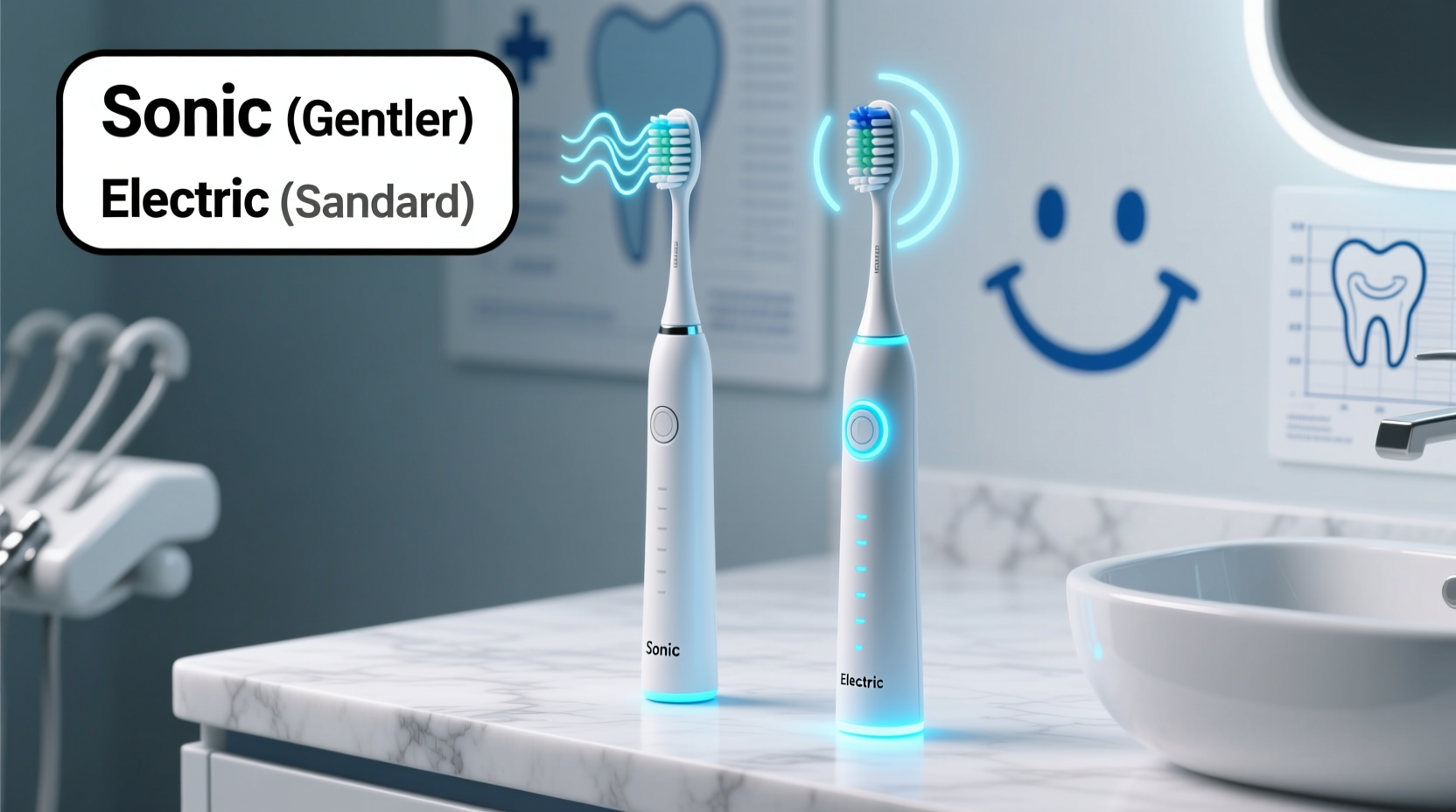
The fundamental distinction between electric and sonic toothbrushes lies in their motion and frequency of movement. While both fall under the broader category of powered toothbrushes, their cleaning mechanics vary in ways that directly affect gum sensitivity.
Rotational-Oscillating Electric Toothbrushes use a small, round brush head that rotates in one direction and then the other—typically at speeds between 3,000 to 7,500 movements per minute. The bristles sweep plaque away through direct contact, requiring users to guide the brush slowly across each tooth surface. This design has been widely studied and is endorsed by dental associations for its proven plaque reduction.
Sonic Toothbrushes, in contrast, operate at much higher frequencies—usually between 30,000 to 40,000 strokes per minute. Instead of rotating, the bristles vibrate side-to-side in a linear motion, creating fluid dynamics that help dislodge plaque not only where the bristles touch but also slightly below the gumline and between teeth. This phenomenon, known as hydrodynamic cleaning, allows sonic brushes to clean more broadly with less physical pressure.
Tip: If you have receding gums or gingivitis, look for models with pressure sensors and soft bristle modes to avoid over-brushing.Effectiveness: Plaque Removal and Gum Health Outcomes
When it comes to removing plaque—the primary cause of gum disease—both types of toothbrushes outperform manual brushing. However, clinical studies suggest nuanced differences in performance, particularly for those with pre-existing gum sensitivity.
A 2020 meta-analysis published in the Journal of Clinical Periodontology reviewed 18 randomized controlled trials comparing sonic and oscillating-rotating electric toothbrushes. The findings indicated that both reduced plaque and gingival inflammation significantly after four weeks, but sonic brushes demonstrated a slight edge in reducing gingival bleeding—by approximately 6% more than rotational models. Researchers attributed this to the non-contact cleaning effect of sonic vibrations, which minimizes mechanical abrasion while still disrupting biofilm.
Another study conducted at the University of Bern found that participants using sonic toothbrushes reported less gum discomfort during brushing, especially when brushing near exposed root surfaces or areas affected by periodontal treatment. The lower force required with sonic technology appears to play a key role in patient comfort and compliance.
However, it's important to note that effectiveness also depends on user technique. Rotational brushes require precise placement over each tooth, while sonic models benefit from gentle gliding along the gumline. Inconsistent use can diminish results regardless of technology.
Comparative Effectiveness Summary
| Metric | Rotational-Oscillating Electric | Sonic Electric |
|---|---|---|
| Plaque Reduction (4 weeks) | Up to 21% | Up to 23% |
| Gingival Bleeding Reduction | ~17% | ~23% |
| Interdental Cleaning Efficiency | Moderate (requires angle adjustment) | High (fluid dynamics assist) |
| User Pressure Tolerance | Lower (high risk if pressed too hard) | Higher (gentler motion) |
| Clinical Recommendation for Sensitive Gums | Conditional (with soft mode) | Preferred by many periodontists |
“Sonic technology offers a compelling advantage for patients with gingival recession or post-surgical healing. The micro-vibrations reduce reliance on manual pressure, which is often the culprit behind gum trauma.” — Dr. Lena Patel, Board-Certified Periodontist
Gentleness and Comfort: Which Is Kinder to Sensitive Gums?
Gentleness is not merely a matter of soft bristles; it involves how the brush interacts with fragile gum tissue. For people prone to bleeding, tenderness, or enamel erosion, minimizing mechanical stress is crucial.
Rotational-Oscillating Brushes can be effective but demand careful handling. Their scrubbing action, while efficient, may irritate inflamed gums if applied too aggressively. Many models now include pressure sensors that alert users when they’re pressing too hard—a valuable feature for sensitive users. Still, even with warnings, the physical rotation can feel abrasive, especially near exposed roots or orthodontic hardware.
Sonic Toothbrushes are generally perceived as smoother and quieter, with a pulsating rather than twisting sensation. Because they rely on high-frequency vibrations transmitted through fluid (saliva and toothpaste), they don’t need firm contact to clean effectively. This makes them ideal for individuals recovering from scaling, gum grafts, or those managing chronic gingivitis.
In real-world feedback collected from online dental forums and consumer reviews, users consistently describe sonic brushes as “softer,” “less jarring,” and “easier to tolerate daily” when dealing with gum sensitivity. Brands like Philips Sonicare and Waterpik Sonic-Fusion have developed specialized “gum care” modes that further reduce amplitude during the first 30 seconds of brushing to ease into the routine gently.
Mini Case Study: Managing Post-Gingivectomy Sensitivity
Sarah, a 42-year-old teacher, underwent a gingivectomy to treat localized periodontitis. After surgery, her dentist advised switching from her old rotational electric brush to a sonic model to prevent irritation during healing. She started using a mid-tier Sonicare with a sensitive brush head and the “Gum Health” mode.
Within two weeks, Sarah noticed significantly less bleeding and discomfort compared to her previous attempts with an oscillating brush. Her hygienist confirmed improved tissue reattachment at her six-week follow-up. “I was surprised how much difference the brush made,” she said. “It feels like it cleans without attacking my gums.”
This case illustrates how subtle technological differences translate into tangible patient outcomes—especially when recovery and sensitivity are priorities.
Choosing the Right Brush: A Practical Checklist
Selecting the best option depends on individual needs, oral health status, and brushing habits. Use this checklist to make an informed decision:
- Do you experience frequent gum bleeding? → Lean toward sonic for gentler cleaning.
- Have you had recent gum surgery or recession? → Sonic is typically recommended by specialists.
- Are you a heavy-handed brusher? → Choose any model with a pressure sensor; sonic may reduce damage risk.
- Do you wear braces or have tight spacing? → Sonic’s interdental reach gives it an edge.
- Is noise a concern? → Note that sonic brushes are often louder than rotational ones.
- Do you prefer structured guidance? → Rotational brushes often come with quadrant timers and position detection.
- What’s your budget? → Mid-range options exist in both categories; prioritize features over brand.
Step-by-Step Guide to Transitioning Safely to a Powered Brush
If you're switching from manual to electric or changing technologies, follow this timeline to protect sensitive gums:
- Week 1: Start on the lowest setting. Use the sensitive or gum-care mode, applying zero pressure. Let the brush do the work.
- Week 2: Focus on technique. Glide the brush slowly across teeth (2 seconds per tooth), holding it at a 45-degree angle to the gumline.
- Week 3: Monitor response. Track any changes in bleeding, tenderness, or gum texture. Adjust pressure or mode if needed.
- Week 4: Evaluate results. Schedule a dental checkup or self-assess improvements in plaque control and gum firmness.
- Ongoing: Maintain consistency. Pair your brush with fluoride toothpaste and daily flossing for maximum benefit.
Frequently Asked Questions
Can electric toothbrushes worsen gum recession?
Yes—if used improperly. Aggressive brushing with any toothbrush can accelerate gum recession. However, modern electric models with pressure sensors and soft modes greatly reduce this risk. Sonic brushes, due to their lower contact force, are less likely to contribute to abrasion-related recession.
Are sonic toothbrushes safe for dental implants?
Absolutely. In fact, they’re often recommended. The fluid dynamics help clean around implant crowns and abutments without scratching surfaces. Just ensure you use a soft brush head and avoid pointed angles near the gum attachment.
Which type lasts longer—sonic or electric?
Lifespan depends more on brand and maintenance than technology. Most quality brushes last 3–5 years. Sonic models sometimes have longer warranties due to advanced motor engineering, but proper charging and drying extend longevity for either type.
Final Considerations: It’s About Compatibility, Not Superiority
The debate between electric and sonic toothbrushes for sensitive gums doesn’t yield a universal winner. Instead, the best choice aligns with your specific oral anatomy, condition, and behavior. While sonic models demonstrate advantages in gentleness and subgingival cleaning, rotational-oscillating brushes remain clinically proven and highly effective when used correctly.
Ultimately, consistency and technique outweigh technology. No brush can compensate for rushed brushing or excessive force. That said, for those navigating gum sensitivity, inflammation, or recovery, the smoother, fluid-driven action of sonic toothbrushes often provides a more comfortable and sustainable path to long-term oral health.
“The right tool empowers better habits. For sensitive gums, reducing friction and force is half the battle—and sonic brushes are uniquely positioned to help.” — Dr. Marcus Lin, Dental Researcher, UCLA School of Dentistry
Take Action Today for Healthier Gums Tomorrow
Your gums deserve more than guesswork. Whether you choose a sonic or rotational electric toothbrush, commit to mindful brushing, regular professional care, and attentive monitoring of your gum response. Try sampling both types—many brands offer trial versions or money-back guarantees. Share your experience in the comments below and help others find relief and confidence in their daily routine.
💬 Have you switched from electric to sonic for sensitive gums? What changed? Join the conversation and let your journey help someone else make a smarter choice.








