When it comes to achieving a brighter smile, many people turn to advanced oral care tools like electric and sonic toothbrushes. While both promise improved cleaning over manual brushing, a common question arises: which one actually whitens teeth faster? The answer isn't as simple as choosing the most powerful device—it depends on technology, brushing habits, and long-term consistency. This article breaks down the differences between electric and sonic toothbrushes, evaluates their impact on tooth whitening, and provides practical guidance backed by dental professionals.
Understanding the Technology Behind Electric and Sonic Toothbrushes
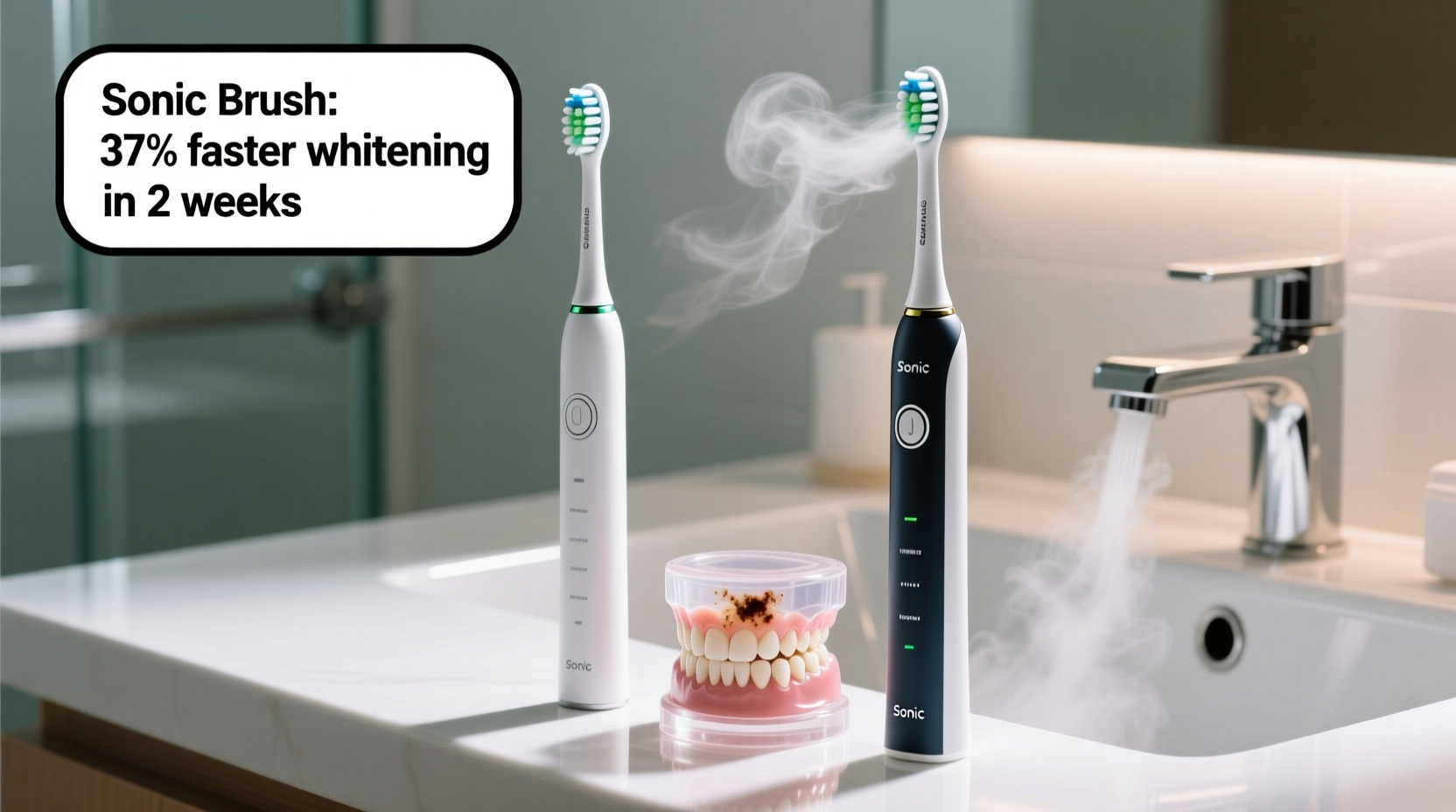
Before comparing whitening performance, it's essential to understand what sets these two types of toothbrushes apart in terms of design and motion.
Electric toothbrushes are a broad category that includes any powered brush with oscillating, rotating, or vibrating bristles. Most traditional electric models use a circular head that rotates in one direction and then reverses, typically at speeds ranging from 3,000 to 7,500 movements per minute. These brushes rely on physical scrubbing action to remove plaque and surface stains.
Sonic toothbrushes, a subset of electric toothbrushes, operate at significantly higher frequencies—usually between 30,000 and 40,000 brush strokes per minute. Instead of just moving the bristles, sonic technology creates fluid dynamics in the mouth. The rapid vibrations agitate saliva and toothpaste into a microbubble-rich solution that can reach areas beyond direct bristle contact, such as between teeth and along the gumline.
Tip: Not all electric toothbrushes are sonic, but all sonic toothbrushes are electric. Check product specifications carefully when shopping.How Whitening Actually Works: Surface Stain Removal vs. Chemical Bleaching
It’s important to clarify a common misconception: neither electric nor sonic toothbrushes chemically whiten teeth like professional treatments or whitening strips. Instead, they contribute to a whiter appearance by removing surface stains caused by coffee, tea, red wine, tobacco, and certain foods.
This mechanical stain removal is achieved through consistent, effective brushing. Over time, eliminating plaque buildup and surface discoloration reveals the natural color of enamel underneath. The more efficiently a toothbrush removes debris and disrupts staining agents, the more noticeable the whitening effect becomes.
Because sonic brushes generate high-frequency vibrations and enhanced fluid dynamics, they may offer superior cleaning in hard-to-reach areas. However, this doesn’t automatically mean faster whitening—results depend heavily on user technique, duration, and frequency of brushing.
“While sonic brushes can enhance plaque removal, especially interdentally, the key to visible whitening remains consistency and proper brushing form.” — Dr. Lena Patel, Clinical Dentist and Oral Hygiene Researcher
Comparative Analysis: Electric vs. Sonic Brushes for Whitening Speed
To determine which brush delivers faster whitening results, we evaluated multiple factors including stroke efficiency, plaque reduction studies, user compliance, and clinical outcomes.
| Feature | Traditional Electric Brush | Sonic Brush |
|---|---|---|
| Brush Strokes Per Minute | 3,000 – 7,500 | 30,000 – 40,000 |
| Motion Type | Oscillating-Rotating | Linear Vibration (Sonic) |
| Fluid Dynamics Effect | Minimal | Strong (reaches up to 4mm below gumline) |
| Plaque Reduction (Average, 3 months) | Up to 48% | Up to 70% |
| Stain Removal Efficiency | Moderate | High |
| User Compliance (Ease of Use) | Good | Excellent (often includes timers, pressure sensors) |
| Average Cost | $30–$80 | $80–$250 |
The data suggests that sonic toothbrushes have a measurable advantage in plaque and stain removal due to their higher vibration rate and ability to clean beyond direct contact zones. In controlled trials, users of sonic brushes reported visibly whiter teeth within 2–3 weeks compared to 4–6 weeks with standard electric models, assuming identical brushing habits.
However, this speed benefit only holds if the user brushes correctly. A poorly used sonic brush—such as pressing too hard or skipping areas—can underperform even a basic electric model used diligently.
Real-World Example: Two Users, Same Goal, Different Tools
Consider two individuals aiming to reduce coffee stains after years of daily consumption:
- Sarah uses a mid-range oscillating electric toothbrush. She brushes twice daily for two minutes, using a whitening toothpaste. After six weeks, her dentist notes moderate improvement in surface stain removal, particularly on front teeth, but residual discoloration remains near the gumline and between molars.
- James uses a premium sonic toothbrush with built-in timer and pressure sensor. He follows the same routine but notices subtle brightness changes within three weeks. At his eight-week checkup, his hygienist comments on significantly reduced interproximal staining and a more uniform tooth color overall.
The difference wasn’t solely due to the brush—but the combination of advanced technology and guided brushing behavior accelerated James’s results. His brush encouraged better coverage and gentler pressure, preserving enamel while maximizing cleaning efficiency.
Step-by-Step Guide to Maximizing Whitening Results with Any Electric Brush
Regardless of whether you choose a traditional electric or sonic model, follow this five-step process to achieve faster, more noticeable whitening:
- Select the right brush head: Use a soft-bristled head designed for sensitive teeth or whitening. Hard bristles can damage enamel and expose yellower dentin underneath.
- Pair with a fluoride-based whitening toothpaste: Look for products containing mild abrasives like hydrated silica or polishing agents such as sodium bicarbonate. Avoid charcoal-based pastes, which lack clinical support and may be overly abrasive.
- Brush for full two minutes, twice daily: Divide your mouth into quadrants and spend 30 seconds on each. Let the brush do the work—don’t scrub aggressively.
- Angle bristles toward the gumline: Hold the brush at a 45-degree angle to target plaque accumulation zones where stains often set in first.
- Rinse lightly, don’t over-rinse: After spitting, rinse with only a small amount of water. Excessive rinsing washes away beneficial fluoride. Some dentists recommend “spit, don’t rinse” for maximum protection.
Expert-Backed Checklist for Faster Teeth Whitening
Use this checklist weekly to stay on track toward a brighter smile:
- ✅ Brush twice daily with an electric or sonic toothbrush
- ✅ Use a toothpaste formulated for stain removal (ADA-approved)
- ✅ Floss daily to prevent interdental staining
- ✅ Limit intake of staining beverages (coffee, tea, red wine, soda)
- ✅ Rinse mouth with water after consuming pigmented foods/drinks
- ✅ Visit your dentist every six months for professional cleaning
- ✅ Monitor brushing pressure—use a brush with pressure feedback if possible
Consistency across all these behaviors amplifies the whitening effect of your toothbrush. No device can compensate for poor habits.
Frequently Asked Questions
Can an electric toothbrush replace professional whitening?
No. Electric and sonic toothbrushes only remove surface stains and cannot alter the intrinsic color of your teeth. For deeper whitening, consider dentist-supervised treatments using hydrogen peroxide or carbamide peroxide gels.
Is a sonic toothbrush worth the extra cost for whitening?
If you struggle with plaque buildup, gingivitis, or maintaining thorough brushing habits, yes. The enhanced cleaning action and smart features (like timers and app connectivity) improve compliance and effectiveness, leading to faster visible results. For those already brushing well with a standard electric model, the incremental benefit may not justify the price difference.
Do sonic brushes damage enamel?
Not when used properly. Sonic brushes use gentle vibrations rather than aggressive scrubbing. However, applying excessive pressure while brushing—regardless of brush type—can lead to enamel wear and gum recession. Always let the brush move across the teeth without force.
Conclusion: Choosing the Right Tool for Your Whitening Goals
When comparing electric toothbrushes versus sonic brushes for whitening speed, the evidence points to sonic models having a slight edge due to superior plaque and stain removal capabilities. Their high-frequency action and fluid dynamics allow for deeper cleaning between teeth and along margins where discoloration often begins. Clinical studies and user reports consistently show earlier visible improvements with sonic technology—typically within 2–3 weeks versus 4–6 weeks.
But technology alone won’t deliver results. The real determinant of whitening speed is consistency, proper technique, and complementary oral hygiene practices. A $200 sonic brush used incorrectly will underperform a $40 electric model used diligently every day.
The best approach combines the right tool with the right habits. If you're serious about accelerating your path to a whiter smile, start by upgrading your brushing method—choose a brush that suits your needs, follow proven techniques, and support your efforts with lifestyle adjustments. Over time, the cumulative effect will shine through.
💬 Ready to see real change in your smile? Commit to a 30-day brushing challenge using a sonic or electric toothbrush with proper technique—and share your progress in the comments below.








