
For people with sensitive gums, brushing teeth can be a balancing act—effective cleaning without causing irritation or bleeding. The debate between electric and manual toothbrushes often centers on this tension: how to remove plaque thoroughly while protecting delicate gum tissue. While both tools can deliver results, their mechanisms, user technique, and long-term impact differ significantly. Understanding these differences is essential for anyone prioritizing oral health without sacrificing comfort.
Sensitive gums are commonly caused by gingivitis, aggressive brushing, hormonal changes, or underlying conditions like periodontitis. When gums are inflamed or receding, even minor pressure can lead to discomfort. This makes the choice of toothbrush not just about convenience but about preserving gum integrity over time. The right tool, paired with proper technique, can reduce inflammation, prevent further recession, and maintain optimal oral hygiene.
How Sensitive Gums React to Brushing
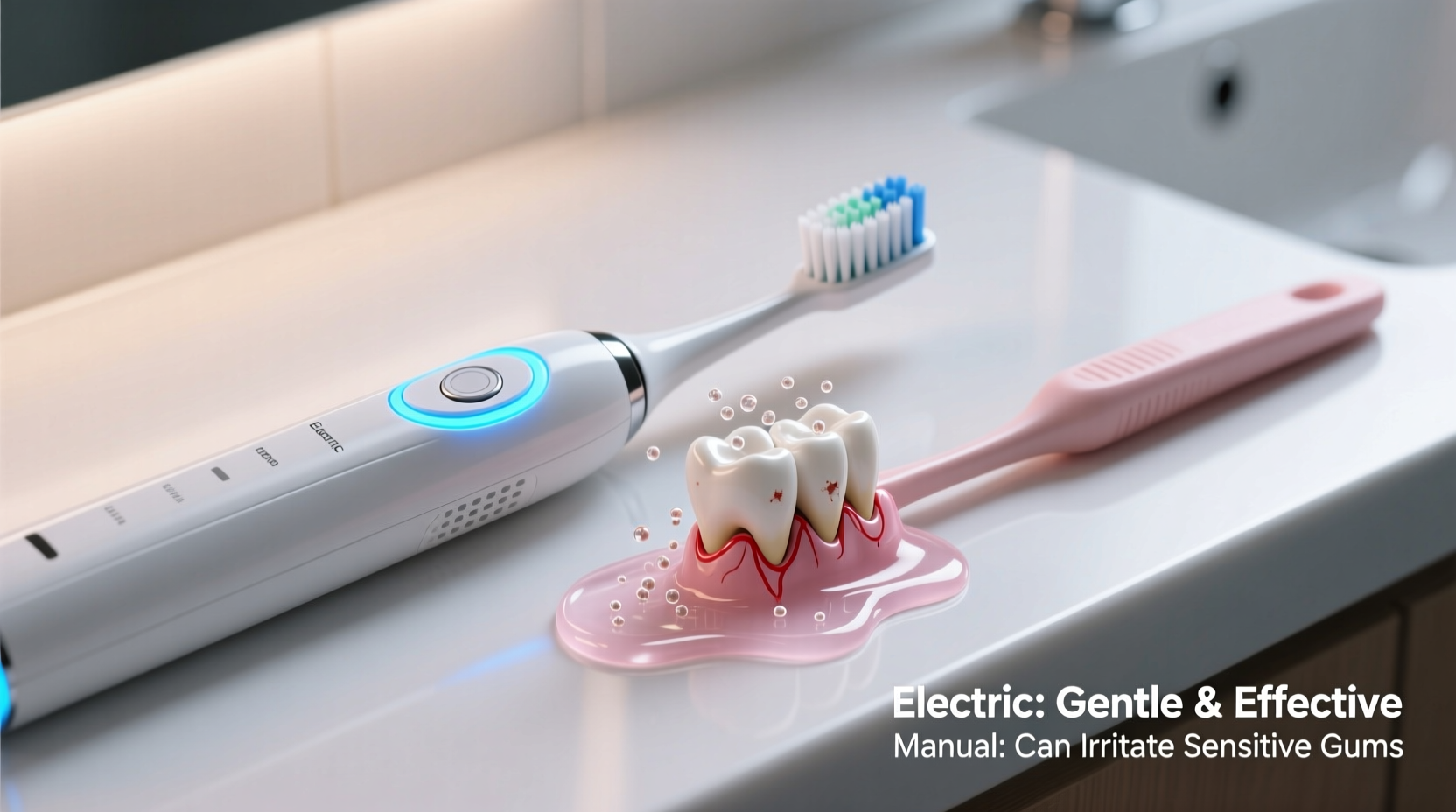
Gum sensitivity isn't merely a sensation—it's a sign of biological response. The gingival tissue becomes reactive when exposed to mechanical stress, bacteria, or chemical irritants. Over-brushing, especially with hard bristles or excessive force, damages the gum margin, leading to micro-tears and inflammation. This creates a cycle where soreness discourages thorough cleaning, allowing more plaque buildup, which worsens gum disease.
The key to managing sensitivity lies in minimizing trauma while maximizing bacterial removal. Plaque accumulates most heavily along the gumline, precisely where sensitivity is highest. Therefore, any brushing method must access this zone effectively without pressing into the soft tissue. This is where brush design, motion type, and user control become critical.
Tip: Use a soft-bristled brush regardless of type—hard bristles increase abrasion risk, especially on exposed root surfaces.Manual Toothbrushes: Control, Simplicity, and Risk of Overuse
Manual toothbrushes remain widely used due to accessibility, affordability, and portability. For individuals with sensitive gums, they offer complete control over pressure and angle. When used correctly—with gentle circular motions and light force—they can effectively clean teeth and stimulate gums without injury.
However, human behavior introduces inconsistency. Studies show that most people apply 300–400 grams of force while brushing, far exceeding the recommended 150–200 grams. This excess pressure, combined with horizontal scrubbing, accelerates gum recession and enamel wear. Even with soft bristles, improper technique turns a manual brush into a source of chronic trauma.
Another limitation is stroke efficiency. A typical two-minute brushing session involves around 200 strokes with a manual brush. In contrast, an electric toothbrush may deliver thousands of movements in the same time, increasing plaque disruption potential. Without disciplined timing and coverage, manual brushing risks missing areas—especially molars and lingual (tongue-side) surfaces.
Electric Toothbrushes: Precision, Consistency, and Built-in Protection
Modern electric toothbrushes are engineered to address many shortcomings of manual brushing. Their oscillating-rotating or sonic vibration mechanisms produce high-frequency movements—ranging from 8,000 to 40,000 strokes per minute—that dislodge plaque more efficiently than hand-powered motion.
For sensitive gums, the advantage lies not only in cleaning power but in consistency and safety features. Many models include:
- Pressure sensors that alert users when too much force is applied
- Timers ensuring even distribution across all quadrants
- Soft brush heads specifically designed for gum care
- Modes like “sensitive” or “gum care” that reduce speed and intensity
A landmark study published in the *Journal of Clinical Periodontology* found that after three months, users of oscillating-rotating electric toothbrushes showed significantly greater reductions in gingival bleeding and plaque compared to manual brush users—particularly among those with pre-existing gum sensitivity.
“Electric toothbrushes provide consistent motion and built-in safeguards that help patients with gum disease achieve better outcomes with less effort.” — Dr. Linda Chen, Periodontist and Oral Health Researcher
Direct Comparison: Electric vs Manual for Sensitive Gums
| Feature | Electric Toothbrush | Manual Toothbrush |
|---|---|---|
| Cleaning Efficiency | High – thousands of movements per minute disrupt plaque biofilm more effectively | Moderate – dependent on user technique and duration |
| Gentleness on Gums | High – especially with pressure sensors and sensitive modes | Variable – highly dependent on user behavior |
| User Technique Dependence | Low – automated motion reduces reliance on skill | High – improper angle or pressure causes damage |
| Built-in Safety Features | Yes – timers, pressure alerts, quadrant pacing | No – entirely user-managed |
| Cost Over Time | Higher initial cost + replacement heads (~$30–$60/year) | Lower – $10–$20/year for new brushes |
| Portability & Convenience | Requires charging; less travel-friendly | Highly portable; no maintenance needed |
The data suggests that while manual brushes can work well in skilled hands, electric models offer superior support for individuals struggling with sensitivity due to inconsistent habits or difficulty controlling pressure.
Real-World Example: Managing Sensitivity After Gum Treatment
Consider Maria, a 42-year-old patient diagnosed with early-stage periodontitis. Her dentist performed scaling and root planing and advised improved home care. Initially, she continued using her old manual brush with medium bristles, believing firmer bristles cleaned better. Within weeks, her gums bled daily, and she avoided brushing certain areas due to pain.
Her hygienist recommended switching to a sonic electric toothbrush with a soft-sensitive head and demonstrated proper use—holding the brush at a 45-degree angle, letting the vibrations do the work, and spending 30 seconds per quadrant. She also began using fluoride toothpaste for sensitivity.
After six weeks, Maria reported significantly less bleeding and discomfort. At her follow-up, her probing depths had improved, and plaque levels were reduced by nearly 60%. The combination of consistent, low-pressure cleaning and targeted technology made a measurable difference in her recovery.
Best Practices for Gentle, Effective Cleaning
Whether you choose electric or manual, technique determines success. Here’s a step-by-step guide to maximize cleanliness while protecting sensitive gums:
- Choose soft bristles – Always opt for soft or extra-soft bristles, regardless of brush type.
- Angle correctly – Hold the brush at a 45-degree angle toward the gumline to clean both tooth and gingival sulcus.
- Use minimal pressure – Let the brush do the work. On electric models, rest the head lightly against the tooth surface.
- Follow a routine – Spend 30 seconds in each quadrant (upper right, upper left, lower left, lower right) for a full two minutes.
- Replace regularly – Change brush heads (or entire manual brushes) every three months or sooner if bristles fray.
- Rinse, don’t scrub – Avoid back-and-forth sawing motions. Use small circles or allow oscillations to penetrate plaque.
- Complement with interdental tools – Use floss, interdental brushes, or water flossers to clean between teeth where gum sensitivity often originates.
Checklist: Choosing the Right Tool for Sensitive Gums
Use this checklist to evaluate whether an electric or manual toothbrush suits your needs:
- ✅ Do you tend to brush too hard or experience gum bleeding?
- ✅ Have you been diagnosed with gingivitis or gum recession?
- ✅ Are you looking for more consistent results with less effort?
- ✅ Can you invest in a higher-quality brush with replaceable heads?
- ✅ Do you travel frequently and need compact, no-charger options?
- ✅ Are you willing to learn and adapt your brushing technique?
If you answered “yes” to the first four questions, an electric toothbrush—especially one with a sensitive mode and pressure sensor—is likely the better option. If portability and simplicity are top priorities, a manual brush with excellent technique can still be effective.
Frequently Asked Questions
Can electric toothbrushes damage sensitive gums?
When used properly, electric toothbrushes are safe and often gentler than manual ones. However, pressing too hard—even with a soft head—can still cause irritation. Models with pressure indicators help prevent this by pausing or lighting up when excessive force is detected.
Is there a specific type of electric toothbrush best for sensitive gums?
Yes. Oscillating-rotating brushes (like Philips Sonicare or Oral-B) are clinically proven to reduce gingivitis and plaque. Look for models labeled “sensitive,” “gentle clean,” or “gum care,” and pair them with soft replacement heads. Sonic brushes, which use high-frequency vibrations, are also excellent for disrupting plaque without abrasive motion.
Can I switch between electric and manual brushes?
You can, but consistency matters more than variety. Frequent switching may disrupt routine and lead to inconsistent pressure or timing. Choose one method, master it, and stick with it unless your dental professional recommends a change.
Conclusion: Prioritizing Long-Term Gum Health
When comparing electric versus manual toothbrushes for sensitive gums, the evidence leans clearly toward electric models for superior plaque removal and reduced gum trauma. Their ability to deliver consistent, controlled cleaning with built-in safeguards makes them ideal for individuals prone to overbrushing or struggling with inflammation. That said, a manual brush in the hands of someone who uses proper technique, soft bristles, and disciplined timing can still support healthy gums.
The real takeaway isn’t about brand or mechanism—it’s about intentionality. Protecting sensitive gums requires mindfulness: choosing the right tools, applying gentle pressure, and maintaining daily habits that support healing rather than harm. Whether you reach for an electric rechargeable or a simple soft-bristled manual brush, what matters most is how you use it.
🚀 Ready to improve your gum health? Evaluate your current brushing method, consult your dentist, and consider upgrading to a tool that supports gentle, effective cleaning. Your gums will thank you in the long run.








