
For decades, the manual toothbrush reigned supreme in bathroom cabinets around the world. Today, electric models—especially smart brushes connected to apps—are gaining ground. With prices ranging from $10 for a basic manual to over $200 for high-end smart devices, consumers are asking: Is upgrading worth it? Does an app-controlled toothbrush actually improve oral health, or is it just tech for tech’s sake? The answer isn’t straightforward, but understanding the differences in performance, usability, and long-term outcomes can help you make a smarter decision.
The Core Differences: Electric vs Manual
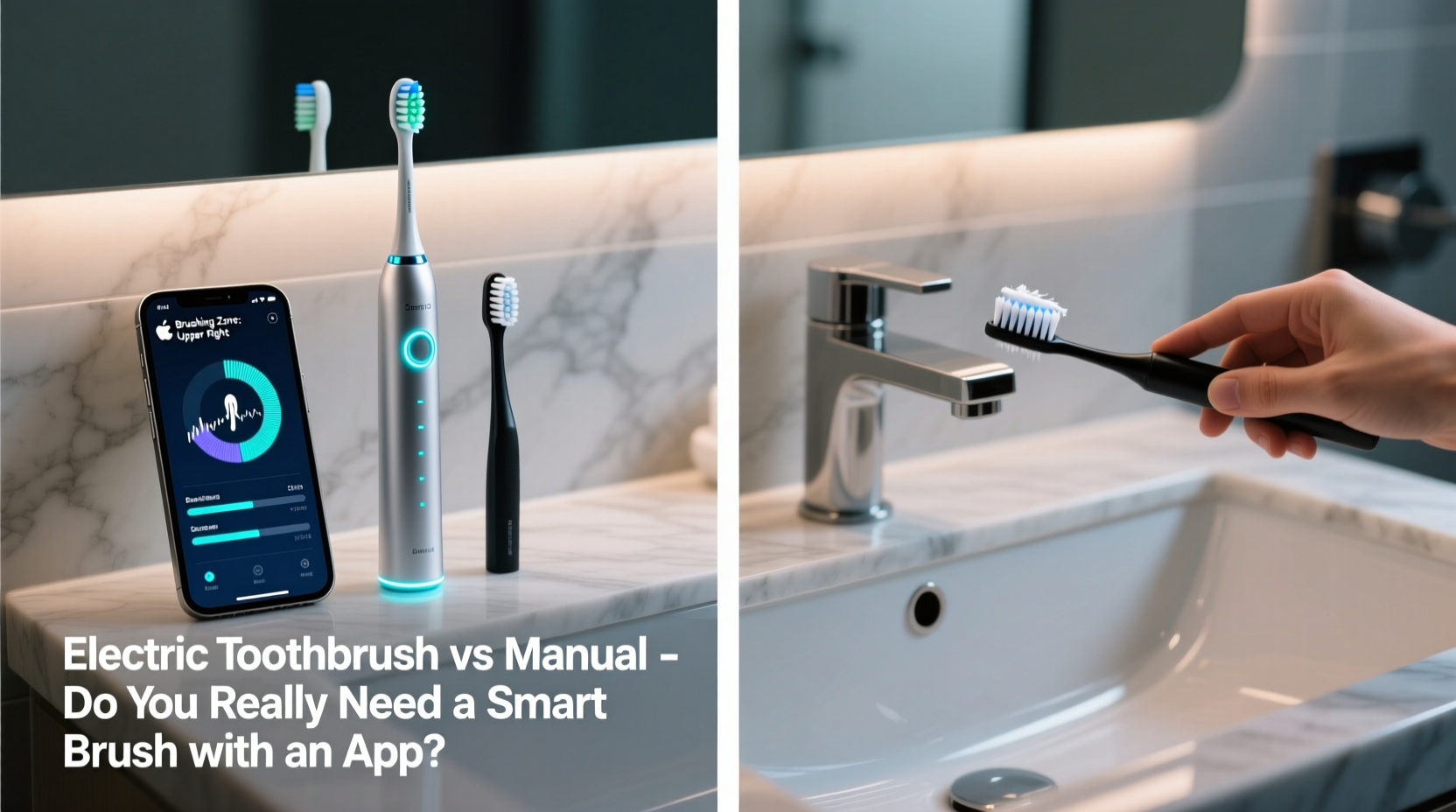
At first glance, both tools serve the same purpose: removing plaque, preventing gum disease, and keeping teeth clean. But how they achieve this varies significantly.
Manual toothbrushes rely entirely on user technique. Effective brushing requires proper angle (45 degrees to the gumline), consistent pressure, and coverage of all tooth surfaces for at least two minutes. Many people fall short due to rushed routines or incorrect form.
Electric toothbrushes automate much of that effort. Oscillating-rotating or sonic models move bristles thousands of times per minute, disrupting plaque more efficiently than hand motion alone. Studies consistently show that electric brushes reduce plaque and gingivitis more effectively than manual ones over time.
“Electric toothbrushes, particularly those with oscillating heads, provide superior plaque removal compared to manual brushing—especially for individuals who struggle with consistency or dexterity.” — Dr. Lena Patel, Preventive Dentistry Specialist
Do Smart Features Add Real Value?
Modern electric toothbrushes often come equipped with Bluetooth connectivity, pressure sensors, timers, and companion apps that track brushing habits. These features aim to improve compliance and technique, but their actual impact depends on the user.
Smart brushes typically offer:
- Real-time feedback via smartphone apps
- Brushing duration tracking
- Zone detection (ensuring all quadrants of the mouth are cleaned)
- Pressure alerts to prevent gum damage
- Custom coaching based on brushing patterns
While these capabilities sound impressive, their usefulness diminishes if the user doesn’t engage with the app regularly. For tech-savvy individuals, especially parents monitoring children’s brushing or caregivers assisting elderly relatives, the data can be motivating. However, for others, the app may become another notification to ignore.
Tip: If you're considering a smart brush, try using the app consistently for two weeks. If you stop checking it by week three, a simpler electric model might be a better fit.Comparative Breakdown: Features, Costs, and Outcomes
| Feature | Manual Toothbrush | Basic Electric | Smart Electric (with App) |
|---|---|---|---|
| Average Cost | $1–$5 per brush | $30–$100 (one-time) | $120–$250 (one-time) |
| Replacement Head Cost | N/A | $15–$30/year | $20–$40/year |
| Plaque Removal Efficacy | Moderate (user-dependent) | High (consistent motion) | Very High (guided brushing) |
| Battery/Lifespan | Limited by bristle wear (~3 months) | 2–5 years | 3–5 years |
| App Integration | No | No | Yes (tracking, coaching, reminders) |
| Best For | Budget users, travelers, minimalists | Most adults seeking better cleaning | Tech adopters, kids, caregivers, perfectionists |
The table illustrates that while smart brushes offer advanced functionality, the incremental benefit must be weighed against cost and complexity. For many, a mid-range electric toothbrush without app integration delivers 90% of the oral health benefits at half the price.
Who Actually Benefits From a Smart Brush?
Not every user needs a toothbrush that syncs to their phone. However, specific groups see measurable advantages:
- Children learning to brush: Gamified apps with rewards and timers make brushing fun. Parents report longer brushing sessions and improved consistency when kids interact with animated feedback.
- Individuals with limited dexterity: Those with arthritis, Parkinson’s, or recovering from stroke often struggle with manual brushing. Electric models reduce physical strain, and smart alerts help avoid excessive pressure.
- Perfectionists and data-driven users: People who track sleep, steps, and nutrition may appreciate brushing analytics as part of a holistic health dashboard.
- Caregivers: Monitoring an elderly parent’s brushing habits remotely can provide peace of mind and early warning of declining routine hygiene.
Mini Case Study: The Johnson Family Adopts a Smart Brush
The Johnsons, a family of four in Portland, Oregon, struggled with inconsistent brushing habits. Their 8-year-old son often brushed for less than one minute, while their teenage daughter skipped nights altogether. After purchasing a smart electric toothbrush with individual profiles and a family leaderboard feature, engagement shifted dramatically.
Within three weeks, average brushing time increased from 78 seconds to 112 seconds across all members. The son earned digital badges for full two-minute sessions, and the daughter responded well to gentle reminders sent through the app. Six months later, their dentist noted a 30% reduction in plaque buildup during checkups.
“It’s not magic,” said Sarah Johnson. “But having something that feels like a game made a real difference for our kids. Even I check my score now.”
Step-by-Step Guide: Choosing the Right Brush for You
Instead of defaulting to the latest gadget, follow this practical process to find your ideal match:
- Evaluate your current brushing habits. Are you brushing twice daily for two minutes? Do you frequently miss spots? A dental hygienist can assess plaque levels and identify problem areas.
- Assess your motivation level. If you’re highly disciplined, a manual brush may suffice. If you tend to skip or rush, automation helps.
- Consider physical limitations. Joint pain, tremors, or poor grip strength make electric brushes a practical upgrade.
- Determine your interest in tracking. Ask yourself: Will I open the app more than once? If not, skip the smart features.
- Set a budget. Factor in replacement heads and battery life. A $200 smart brush used inconsistently is a poor investment compared to a $50 electric used daily.
- Try before you commit. Some brands offer trial periods or in-store demos. Take advantage of return policies to test usability.
Common Misconceptions About Smart Brushes
Despite growing popularity, several myths persist:
- Myth: Smart brushes clean better than regular electric models. In reality, the motor and bristle action are nearly identical. The \"smart\" component enhances behavior, not cleaning power.
- Myth: You need an app to brush correctly. No. Proper technique with any brush yields excellent results. Apps assist, but don’t replace fundamentals.
- Myth: All electric brushes are the same. Not true. Sonic models (like Philips Sonicare) use high-frequency vibrations, while oscillating brushes (like Oral-B) rotate in small circles. Each has strengths depending on sensitivity and preference.
FAQ: Your Top Questions Answered
Is a smart toothbrush worth the extra cost?
Only if you actively use the app and respond to feedback. For most adults, a basic electric toothbrush offers comparable cleaning at a lower price. The added value lies in habit formation, not mechanical superiority.
Can a manual toothbrush be as effective as an electric one?
Yes—but only with perfect technique and discipline. Research shows that under real-world conditions, most people don’t brush long or thoroughly enough with manual brushes to match electric results. However, a well-used manual brush is still far better than no brushing at all.
Do dentists recommend smart toothbrushes?
Many do—for specific patients. Dentists often suggest electric brushes in general, citing better plaque control. Smart features are recommended selectively, such as for children, orthodontic patients, or those with periodontal disease needing improved home care.
Final Checklist: What to Consider Before Buying
Before making a purchase, ask yourself the following:
- ✅ Do I currently brush for two minutes, twice a day?
- ✅ Have I been told I miss certain areas during cleanings?
- ✅ Do I have difficulty holding or moving a manual brush?
- ✅ Am I likely to download and use a companion app regularly?
- ✅ Is there a child or dependent who needs brushing guidance?
- ✅ Can I afford replacement heads long-term?
If you answered “no” to most of the above, a manual or basic electric toothbrush is likely sufficient. If multiple answers were “yes,” investing in a smart model could support lasting improvements.
Conclusion: Technology Serves Habits—Not Replaces Them
The rise of smart toothbrushes reflects a broader trend: using technology to reinforce healthy behaviors. But no app, sensor, or algorithm can compensate for neglect. The best toothbrush—whether manual, electric, or app-connected—is the one you use consistently and correctly.
For some, a $3 manual brush with good technique is all they need. For others, the accountability of a smart device makes the difference between progress and plateau. The key is self-awareness: understanding your habits, challenges, and motivations.
Rather than chasing the latest gadget, focus on building a sustainable routine. If a smart brush helps you do that, it’s worth considering. But never forget—the most advanced brush in the world won’t work unless it’s in your hand, twice a day.
🚀 Ready to upgrade your oral care? Start by observing your current routine for one week. Then decide: Do you need better tools, or just better habits? Share your experience in the comments below.








