
Shaving is more than a routine—it’s a personal care decision that affects skin health, comfort, and long-term grooming outcomes. With rising awareness about skin irritation and ingrown hairs, many men are reevaluating their shaving tools. The debate between electric shavers and safety razors has intensified, especially around one key claim: that safety razors reduce or prevent ingrown hairs. But is this true? And if so, why? This article dives deep into the mechanics, dermatological effects, and real-world experiences behind both shaving methods to answer whether switching to a safety razor truly helps prevent ingrown hairs.
Understanding Ingrown Hairs: Causes and Triggers
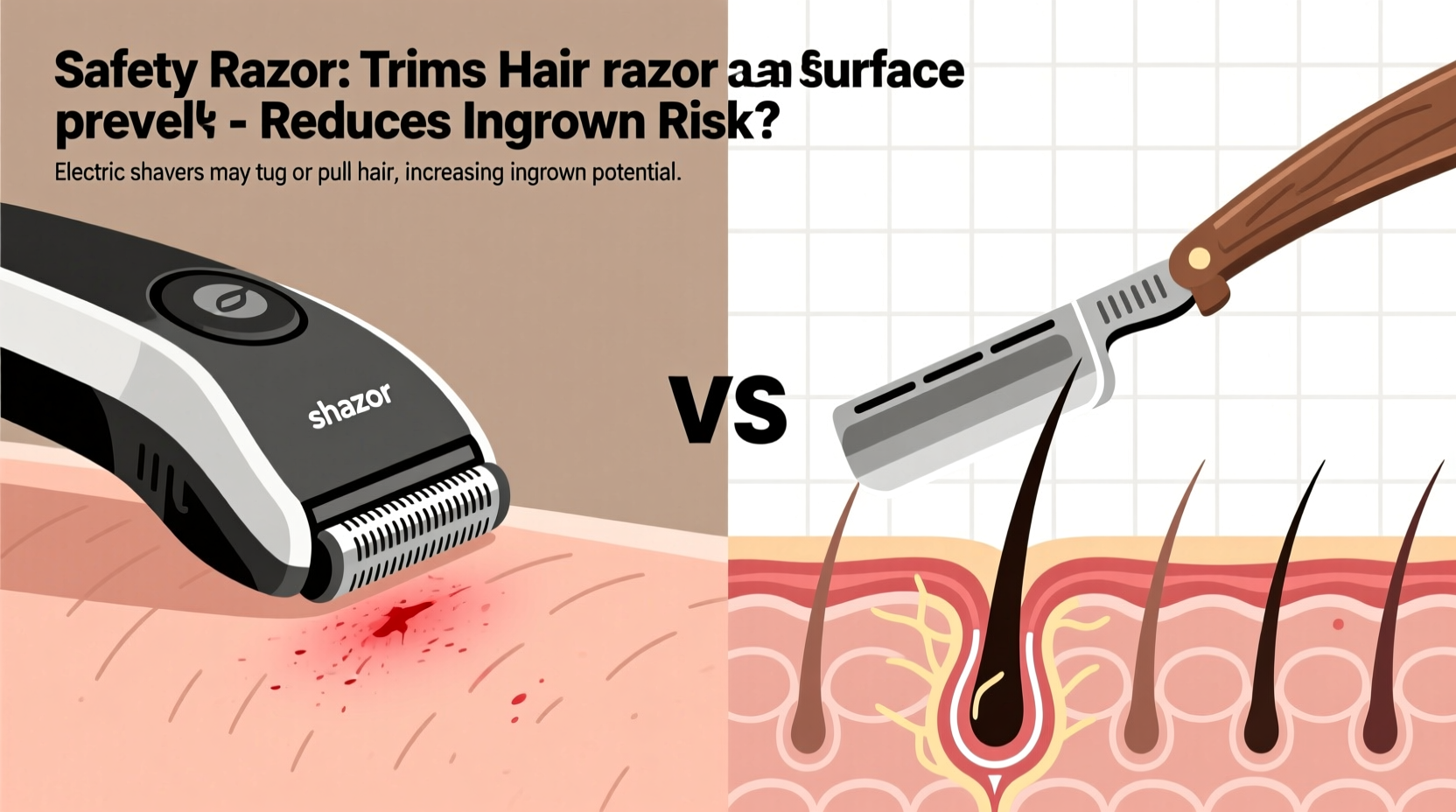
An ingrown hair occurs when a hair curls back or grows sideways into the skin instead of emerging from the follicle. This commonly happens after shaving, particularly in areas with coarse or curly hair like the face, neck, and underarms. The result is inflammation, redness, small bumps, and sometimes infection.
The primary causes include:
- Clogged follicles: Dead skin cells block the hair's path.
- Improper shaving technique: Shaving against the grain or too closely can encourage hair to retract beneath the skin.
- Dull blades: Tug at hair rather than cutting cleanly, increasing trauma.
- Curly hair texture: Naturally more prone to curling back into the skin post-cut.
Dermatologists emphasize that while genetics play a role, shaving method and aftercare significantly influence how often ingrown hairs occur. This makes the choice between an electric shaver and a safety razor more than cosmetic—it’s a matter of skin health.
How Electric Shavers Work—and Their Impact on Skin
Electric shavers operate using oscillating blades behind a protective foil or rotating heads that lift and cut hair just above the skin’s surface. They’re designed for speed, convenience, and minimal direct contact with the skin.
There are two main types:
- Foil shavers: Use a flat, perforated metal sheet to guide hair toward moving blades. Provide a close but not ultra-close shave.
- Rotary shavers: Feature circular heads that pivot to follow facial contours. Better for longer or uneven hair growth.
Because electric shavers don’t cut below skin level, they leave a slight stubble—often referred to as “lift and cut” technology. This design reduces immediate nicks and cuts, making them ideal for sensitive skin. However, it also means the hair ends remain slightly tapered or angled, which some experts argue may increase the likelihood of the tip re-entering the skin as it regrows.
Tip: Always clean your electric shaver after use to prevent bacterial buildup, which can exacerbate folliculitis and worsen ingrown hair conditions.Pros and Cons of Electric Shavers for Ingrown Hair Prevention
| Aspect | Advantages | Drawbacks |
|---|---|---|
| Skin Trauma | Minimal friction and no direct blade-skin contact reduce irritation. | Lifting action can pull hair before cutting, causing micro-trauma. |
| Closeness of Shave | Less likely to cut below skin surface, reducing risk of embedded hair. | Leaves short, angled stubble that may pierce skin during regrowth. |
| Maintenance | Low maintenance; easy to clean and travel-friendly. | Blades dull over time, leading to tugging and uneven cuts. |
| Suitability for Curly Hair | May be better for very sensitive or acne-prone skin. | Higher incidence of pseudofolliculitis barbae (razor bumps) in curly-haired individuals due to residual sharp tips. |
The Safety Razor Advantage: Why It Might Prevent Ingrown Hairs
A traditional double-edge safety razor uses a single, sharp blade positioned behind a protective guard. Unlike multi-blade cartridge razors, it cuts hair cleanly at skin level without pulling or tugging multiple times across the same follicle.
The key difference lies in precision and blade exposure. When used correctly—with proper angle, pressure, and direction—the safety razor provides a close shave while minimizing follicle disturbance. More importantly, it cuts hair straight across, creating a blunt end. As the hair regrows, this blunt tip is less likely to pierce the skin compared to the sharply angled tip left by electric or multi-blade systems.
“Single-blade razors produce a cleaner cut with less irritation and fewer ingrown hairs, especially in patients with curly or coarse hair.” — Dr. Lena Torres, Board-Certified Dermatologist
This mechanical advantage is supported by clinical observation. In a 2020 patient survey conducted by the American Academy of Dermatology, 68% of participants with recurrent ingrown hairs reported improvement after switching from electric or multi-blade razors to single-edge safety razors.
Real Example: James’ Experience with Chronic Razor Bumps
James, a 34-year-old software engineer with tightly curled facial hair, struggled with painful neck bumps for years. Diagnosed with pseudofolliculitis barbae, he tried everything—from medicated creams to laser hair reduction—but found only temporary relief. After his dermatologist suggested switching to a safety razor and adjusting his shaving habits, he made the change.
Within six weeks of using a well-maintained safety razor, shaving with the grain, and exfoliating twice weekly, James noticed a dramatic reduction in bumps. “It wasn’t instant,” he said, “but the more I got the technique right, the clearer my skin became. Now I rarely get ingrowns.” His experience reflects a growing trend among men seeking long-term solutions over quick fixes.
Step-by-Step Guide to Minimizing Ingrown Hairs with a Safety Razor
Switching to a safety razor isn’t enough on its own. Technique, preparation, and aftercare are equally important. Follow this timeline for best results:
- Day 1–7: Prep Your Skin
Begin gentle exfoliation with a soft washcloth or chemical exfoliant (like salicylic acid) every other day to remove dead skin cells clogging follicles. - Day 5: Test the Razor
Practice holding the safety razor at a 30-degree angle using minimal pressure. Use shaving soap or cream for lubrication. Start with sideburns or cheeks before tackling the neck. - Week 2: Establish Routine
Shave every other day, always with the grain first. Rinse blade frequently. Avoid stretching the skin tightly, which can cause hair to retract during the cut. - Week 3–4: Refine Technique
If needed, do a second pass—only after reapplying lather and waiting several hours or next day. Never go against the grain on irritated areas. - Ongoing: Maintain Hygiene
Rinse the blade thoroughly after each use. Replace blades every 5–7 shaves to ensure sharpness. Dull blades tug and increase irritation risk.
Checklist: Is a Safety Razor Right for You?
Before making the switch, consider these factors:
- ✅ Do you have curly, coarse, or tightly coiled facial hair? → High benefit potential.
- ✅ Are you willing to invest time in learning proper technique? → Essential for success.
- ✅ Do you currently suffer from frequent ingrown hairs or razor bumps? → Likely improvement.
- ✅ Can you commit to replacing blades regularly? → Critical for hygiene and performance.
- ❌ Are you looking for the fastest possible shave? → Electric may still win for speed.
- ❌ Do you travel frequently without access to sinks or mirrors? → Safety razors require more setup.
Comparative Analysis: Electric vs Safety Razor for Ingrown Hair Prevention
| Factor | Electric Shaver | Safety Razor |
|---|---|---|
| Ingrown Hair Risk | Moderate to high (due to angled stubble) | Low to moderate (with correct use) |
| Closeness of Shave | Close, but leaves visible stubble | Very close, near-zero stubble |
| Skin Irritation | Lower initial irritation | Higher learning curve; may irritate initially |
| Blade Sharpness | Gradual dulling; hard to monitor | Immediate feedback; replaceable blades stay sharp |
| Cost Over Time | High upfront, low recurring cost | Low upfront, ongoing blade cost (~$0.20 per blade) |
| Eco-Friendliness | Plastic components, batteries, non-recyclable parts | Metal construction, minimal waste |
| Best For | Speed, convenience, sensitive skin beginners | Long-term skin health, ingrown prevention, eco-conscious users |
FAQ: Common Questions About Ingrown Hairs and Shaving Tools
Does a safety razor eliminate ingrown hairs completely?
No tool can guarantee 100% elimination, especially if genetics or poor aftercare are involved. However, safety razors significantly reduce the occurrence when used correctly. The blunt-ended hair regrowth is less likely to penetrate the skin, and fewer passes mean less follicular stress.
Can I use a safety razor if I have sensitive skin?
Yes, but with caution. Sensitive skin benefits from the precision of a single blade, but improper technique—such as pressing too hard or shaving against the grain—can cause nicks and irritation. Start slowly, use soothing pre- and post-shave products, and focus on form over closeness.
Why do electric shavers seem gentler but still cause bumps?
While electric shavers reduce immediate cuts, their lifting mechanism can stretch hair before cutting it at an angle. This creates a sharp tip that, during regrowth, acts like a tiny needle piercing the skin. Additionally, repeated use on unexfoliated skin leads to clogged follicles, trapping hairs beneath the surface.
Conclusion: Making the Right Choice for Your Skin
The question isn’t whether safety razors *always* prevent ingrown hairs, but whether they offer a superior solution for most people prone to them. Evidence suggests they do—when combined with proper technique and skincare. While electric shavers provide convenience and reduced immediate irritation, they often fall short in long-term follicle health, particularly for those with curly or coarse hair.
A safety razor isn’t a magic fix, but it’s a powerful tool in the fight against ingrown hairs. Its ability to deliver a clean, single-pass cut with minimal follicle disruption gives it a clear edge. Add consistent exfoliation, correct shaving direction, and good hygiene, and you create a regimen that supports healthier skin over time.
💬 Ready to reduce ingrown hairs for good? Try a safety razor with mindful technique for four weeks. Track your skin’s response and share your journey. Small changes today can lead to smoother, bump-free skin tomorrow.








