When temperatures rise or physical activity pushes your core temperature higher, your body needs immediate and effective cooling to prevent discomfort, dehydration, or even heat-related illness. Whether you're recovering from a workout, enduring a heatwave, or managing symptoms like hot flashes, knowing how to lower your body temperature quickly—and sustainably—can make a significant difference in your well-being. This guide outlines proven, practical methods backed by physiology and expert insight to help you regain comfort and maintain balance.
Why Rapid Cooling Matters
Your body maintains an internal temperature of around 98.6°F (37°C). When this balance is disrupted—due to external heat, exertion, or medical conditions—your system activates natural cooling mechanisms like sweating and vasodilation. However, these processes can be overwhelmed, especially in humid environments where sweat doesn’t evaporate efficiently. Without timely intervention, elevated body temperature can lead to heat exhaustion or heat stroke, both serious conditions requiring urgent attention.
Rapid cooling isn’t just about comfort—it’s a protective strategy. By lowering core temperature effectively, you reduce strain on the cardiovascular system, preserve cognitive function, and support recovery. The most efficient techniques target areas rich in blood vessels close to the skin, allowing faster heat exchange with the environment.
Immediate Cooling Techniques That Work
When you need to cool down fast, focus on methods that deliver rapid results through direct physiological impact. These are not temporary fixes but targeted actions grounded in thermoregulation science.
- Cool the pulse points: Apply cold compresses or run cool water over wrists, neck, temples, and ankles. These areas have arteries near the surface, so cooling them lowers blood temperature quickly as it circulates.
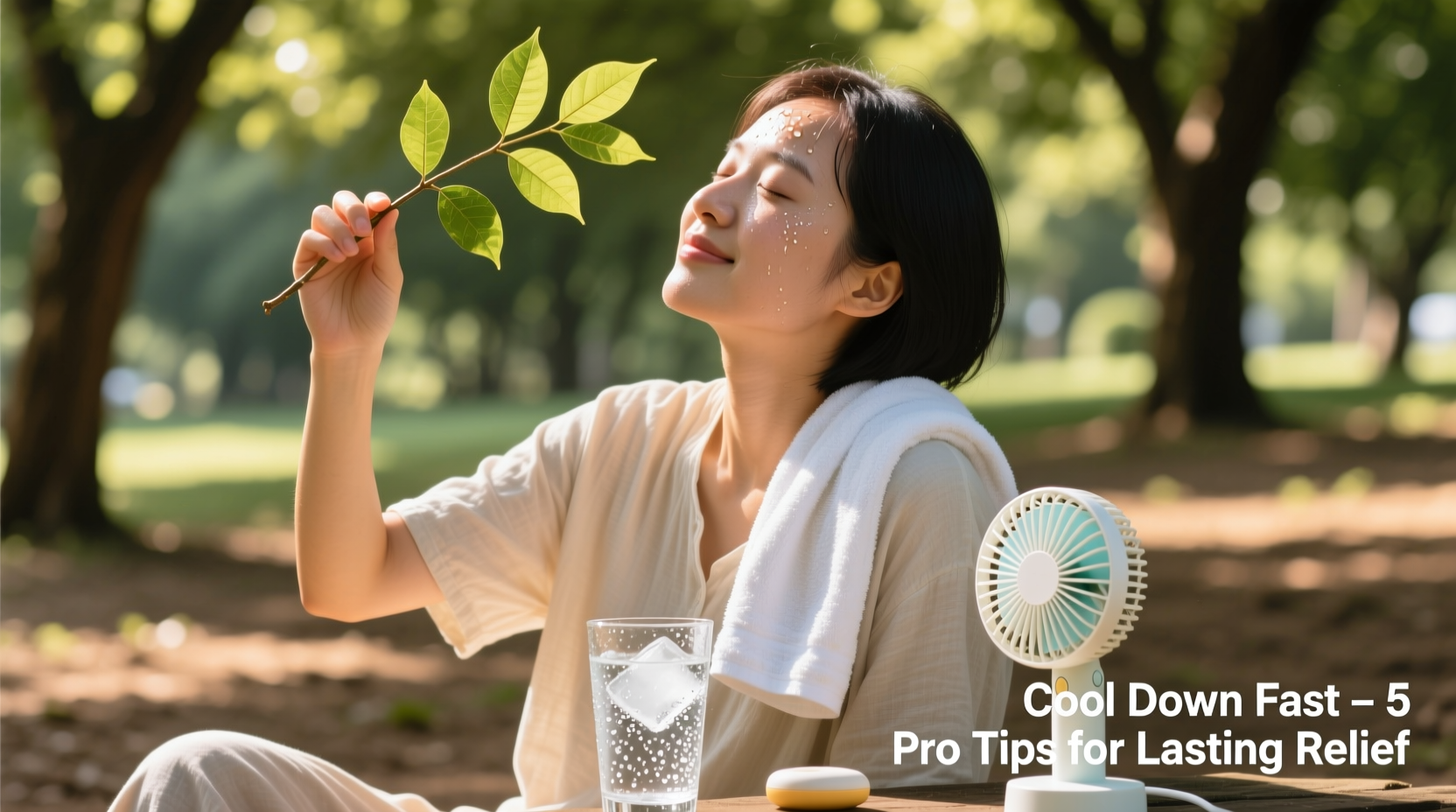
- Use damp cloths with fans: Wet a towel with cool (not ice-cold) water and drape it over your shoulders or forehead while sitting in front of a fan. Evaporation enhances cooling far more than dry air alone.
- Sip chilled fluids: Drinking cool water helps lower internal temperature from within. Avoid very cold beverages if you’re prone to headaches, but aim for 40–60°F (4–15°C) for optimal effect.
- Take a cool shower or bath: A brief 5–10 minute shower at lukewarm to cool temperature promotes rapid heat loss through conduction and evaporation.
- Soak feet in cool water: Submerging your feet triggers peripheral cooling and can provide surprisingly fast relief, especially when combined with airflow.
Step-by-Step Guide: How to Cool Down in Under 15 Minutes
Follow this sequence for maximum efficiency when feeling overheated:
- Move indoors or into shade – Immediately exit direct sunlight or hot environments to stop further heat gain.
- Remove excess clothing – Loosen or take off layers to improve air circulation and support natural sweating.
- Hydrate with electrolyte-balanced water – Drink 8–12 oz of water, optionally with a pinch of salt and lemon to replenish lost minerals.
- Apply cool compresses to wrists and neck – Use wet washcloths or commercial cooling wraps for 3–5 minutes per area.
- Sit in front of a fan with damp skin – Mist your arms and face with water or apply a damp towel; let the fan accelerate evaporation.
- Elevate feet slightly if dizzy – If experiencing lightheadedness, lie down with legs raised to support circulation.
This protocol leverages both conductive and evaporative cooling while supporting hydration and circulation—key components in restoring thermal balance swiftly.
Long-Term Strategies for Sustained Relief
While immediate techniques are essential, lasting comfort requires proactive habits. Incorporate these lifestyle adjustments to reduce heat sensitivity and improve resilience:
- Wear breathable fabrics: Choose loose-fitting clothes made of cotton, linen, or moisture-wicking materials. Light colors reflect sunlight better than dark ones.
- Adjust daily routines: Schedule outdoor activities during cooler hours—before 10 a.m. or after 6 p.m.—to avoid peak heat.
- Optimize your sleep environment: Use breathable bedding, set fans strategically, and consider cooling pillows or mattress pads.
- Stay hydrated throughout the day: Don’t wait until you’re thirsty. Aim for consistent fluid intake, adjusting for activity level and climate.
- Build heat acclimatization gradually: Regular exposure to moderate heat (e.g., saunas, warm workouts) can enhance your body’s cooling efficiency over time.
“Repeated, controlled heat exposure trains the body to sweat earlier and more efficiently, reducing heart rate strain and improving overall tolerance.” — Dr. Lena Patel, Environmental Physiologist, University of Colorado
Do’s and Don’ts of Body Cooling
| Do | Don’t |
|---|---|
| Drink water steadily throughout the day | Consume large amounts of alcohol or caffeine, which dehydrate |
| Use fans in conjunction with misting or damp cloths | Rely solely on fans when temperatures exceed 90°F (32°C) without humidity control |
| Cool major blood vessels via wrists, neck, and groin | Apply ice directly to the skin or overuse cryotherapy |
| Rest in shaded or air-conditioned spaces during heatwaves | Exercise intensely during peak heat hours without preparation |
| Monitor urine color as a hydration indicator (light = good) | Ignore early signs of overheating like nausea, headache, or dizziness |
Real Example: Cooling Down After a Summer Run
Mark, a 34-year-old runner in Austin, Texas, regularly trains in summer heat. After one particularly humid morning jog, he felt flushed, dizzy, and nauseous—classic signs of mild heat exhaustion. Instead of collapsing on the couch, he followed a structured cooldown:
- He immediately moved indoors and removed his sweaty shirt.
- Drank 12 oz of coconut water to restore electrolytes.
- Placed ice packs wrapped in towels on his neck and wrists for 4 minutes each.
- Used a spray bottle to mist his arms and face while sitting in front of a pedestal fan.
- Lay down with his feet elevated on a chair for 10 minutes.
Within 20 minutes, his symptoms subsided. By acting promptly with targeted cooling, Mark avoided escalation and was able to recover safely—demonstrating how simple tools and knowledge can prevent serious outcomes.
Frequently Asked Questions
Can drinking cold water cause stomach cramps?
For most people, cold water is safe and beneficial during heat exposure. However, some individuals may experience mild cramping if they drink very cold liquids too quickly. To minimize risk, sip slowly and allow the water to warm slightly in your mouth before swallowing.
Is it safe to use ice baths for cooling after exercise?
Short-duration ice baths (10–15 minutes at 50–59°F / 10–15°C) can be effective for athletes recovering from intense training, but they’re not necessary for general cooling. For non-athletes, a cool shower or rest in a fan-cooled room is safer and equally effective.
What are signs that I need medical help for overheating?
Seek emergency care if you experience confusion, vomiting, rapid pulse, absence of sweating despite heat, or loss of consciousness. These may indicate heat stroke—a life-threatening condition requiring immediate intervention.
Checklist: Stay Cool and Safe This Season
- ✅ Keep a reusable water bottle with you at all times
- ✅ Identify nearby cooled public spaces (libraries, malls) during heatwaves
- ✅ Pack a cooling towel or bandana for outdoor activities
- ✅ Install window shades or reflective film to block solar heat gain
- ✅ Learn your body’s early warning signs of overheating
- ✅ Share cooling strategies with elderly family members or young children, who are more vulnerable
Final Thoughts: Take Control of Your Thermal Comfort
Staying cool isn’t just about surviving hot weather—it’s about maintaining health, performance, and peace of mind. With the right combination of immediate actions and long-term habits, you can manage your body temperature effectively no matter the season. Heat doesn’t have to dictate your comfort or limit your activities. By applying these practical, science-supported techniques, you empower yourself to respond confidently and safely whenever your body starts to overheat.
💬 Have a personal tip that helps you cool down fast? Share your experience in the comments and help others beat the heat with real-world solutions!








