
A rotator cuff strain is one of the most common causes of shoulder pain, particularly among athletes, manual laborers, and aging adults. This group of four muscles and their tendons stabilizes the shoulder joint and enables overhead movement. When strained—whether from overuse, trauma, or degeneration—the result can be persistent pain, weakness, and restricted motion. The good news: most rotator cuff strains respond well to conservative treatment when managed properly. With targeted rehabilitation, lifestyle adjustments, and consistent effort, full function and strength can be restored.
Understanding Rotator Cuff Strains
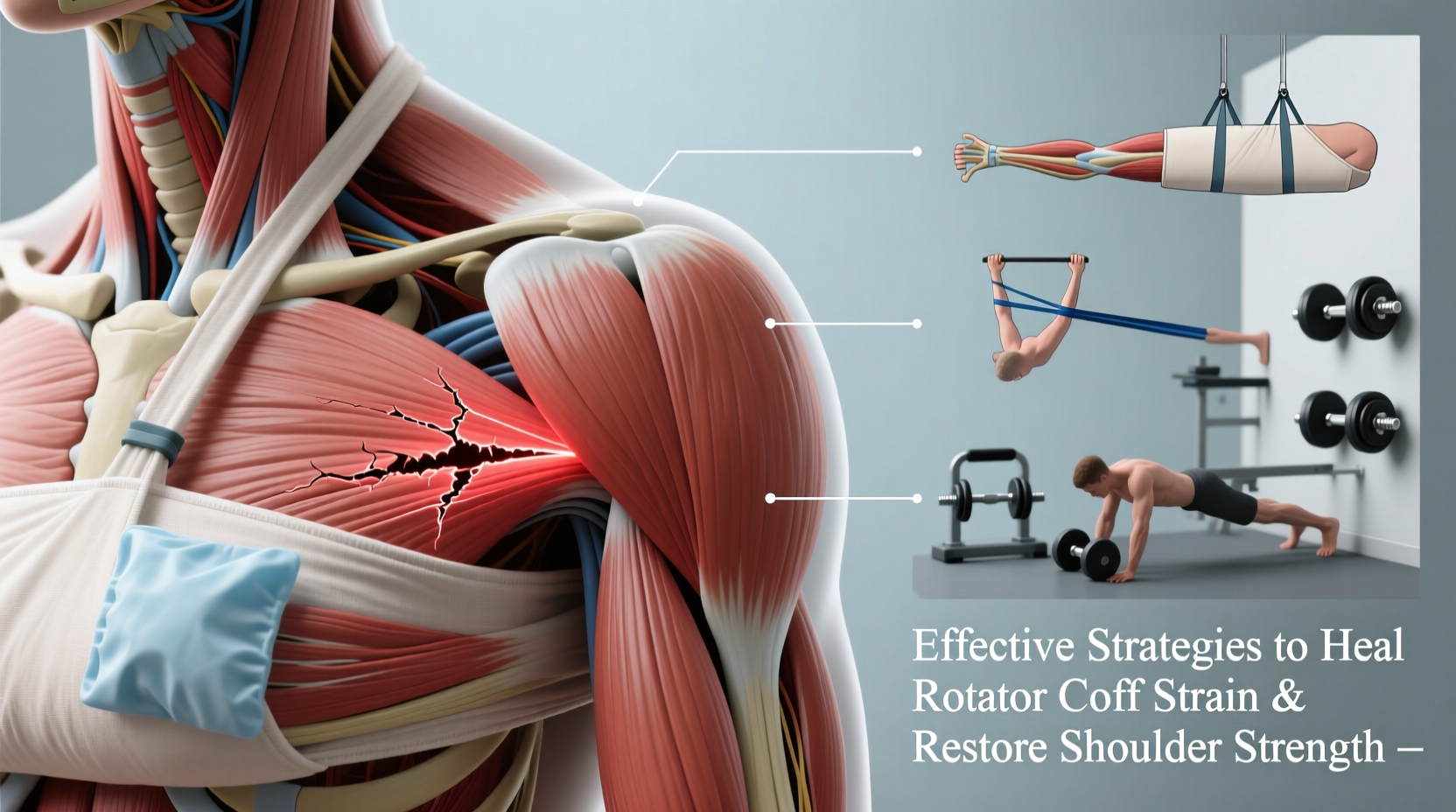
Rotator cuff strains are classified by severity: Grade I (mild), Grade II (moderate), and Grade III (severe, possibly involving a tear). Mild to moderate strains typically involve micro-tears in the tendon or muscle fibers without complete rupture. Symptoms include dull or sharp pain during arm movement, especially lifting or reaching behind the back, nighttime discomfort, and progressive weakness in the shoulder.
Healing begins with accurate diagnosis. While imaging like MRI or ultrasound confirms the extent of injury, clinical evaluation by a physical therapist or orthopedic specialist helps determine the appropriate treatment path. Most non-surgical cases resolve within 6 to 12 weeks with proper care, though full strength restoration may take several months.
Tip: Avoid sleeping on the injured shoulder—use a pillow between your arms to reduce pressure and improve alignment.Step-by-Step Recovery Timeline
Recovery should follow a phased approach that prioritizes healing before loading. Rushing into strengthening too early can delay progress or worsen damage.
- Phase 1: Protection & Pain Management (Days 1–14)
Focus on reducing inflammation and protecting the injured tissue. Use relative rest—avoid aggravating movements—but maintain gentle motion to prevent stiffness. Ice for 15–20 minutes every 2–3 hours during the first few days. Over-the-counter NSAIDs (e.g., ibuprofen) may help manage pain and swelling under medical guidance. - Phase 2: Restore Range of Motion (Weeks 2–6)
Begin controlled mobility exercises such as pendulum swings, passive shoulder flexion, and wall walks. These movements retrain neuromuscular control without straining healing tissues. A physical therapist can guide proper technique and progression. - Phase 3: Eccentric & Isometric Strengthening (Weeks 4–8)
Introduce low-load strengthening using isometric contractions (muscle activation without movement) followed by eccentric exercises (lengthening under tension). These stimulate tendon remodeling and prepare the cuff for functional demands. - Phase 4: Dynamic Stabilization & Functional Strength (Weeks 8–12+)
Progress to resistance band work, scapular stabilization drills, and compound movements like modified push-ups or rows. Emphasis shifts to restoring coordination between the rotator cuff and surrounding musculature. - Phase 5: Return to Activity (After 12 Weeks)
Gradually reintroduce sport-specific or job-related motions. Monitor for pain or fatigue. Full return depends on strength symmetry (compared to the uninjured side) and pain-free performance.
Evidence-Based Treatment Strategies
Successful recovery combines multiple modalities tailored to individual needs. Below are key interventions supported by clinical research.
Physical Therapy and Targeted Exercises
Manual therapy and guided exercise programs remain the cornerstone of rotator cuff rehabilitation. A 2022 study in the Journal of Orthopaedic & Sports Physical Therapy found that patients who adhered to a 12-week supervised program regained 92% of pre-injury strength and reported significantly lower pain scores.
Effective exercises include:
- Pendulum exercises (Codman’s swings)
- External rotation with resistance band (elbow at side)
- Scapular retractions (prone T, Y, W raises)
- Isometric internal/external rotation against a wall
- Shoulder blade squeezes in standing or prone positions
Nutrition and Tissue Healing Support
Tendon repair requires adequate protein, vitamin C, zinc, and collagen-supportive nutrients. Consuming 1.6–2.2g of protein per kg of body weight daily supports tissue regeneration. Collagen supplementation (10g taken 30–60 minutes before exercise) has shown promise in enhancing tendon adaptation, according to a 2020 review in Nutrients.
“Tendon healing is slow but predictable. Consistent loading at the right time stimulates collagen synthesis far more effectively than rest alone.” — Dr. Lena Torres, Sports Medicine Physician and Shoulder Rehabilitation Specialist
Do’s and Don’ts During Recovery
| Do’s | Don’ts |
|---|---|
| Perform prescribed rehab exercises daily | Ignore pain signals—sharp pain means stop |
| Sleep with a pillow supporting the arm | Sleep on the affected shoulder |
| Use ice after rehab sessions if sore | Apply heat during acute inflammation phase |
| Modify daily activities to avoid overhead strain | Lift heavy objects or reach overhead prematurely |
| Engage core and scapular muscles during movement | Compensate with neck or upper trap muscles |
Real-World Example: Recovery in Action
Mark, a 47-year-old carpenter, developed shoulder pain after installing ceiling fixtures for three consecutive days. He noticed difficulty lifting tools overhead and pain radiating down his arm. An MRI revealed a Grade II supraspinatus strain. Instead of opting for surgery, he began a structured physical therapy program.
His therapist started him on pendulum exercises and scapular setting drills. By week 4, Mark progressed to resistance band external rotations and isometrics. He adjusted his work routine to limit overhead tasks and used kinesiology tape for proprioceptive feedback. At 10 weeks, strength testing showed 85% symmetry between shoulders. By 14 weeks, he returned to full duties—with improved mechanics and reduced risk of recurrence.
Mark’s success hinged on consistency, adherence to phased rehab, and workplace modifications—proof that disciplined conservative management often avoids invasive procedures.
Checklist: Your Rotator Cuff Recovery Plan
- ✔️ Get a proper diagnosis from a healthcare provider
- ✔️ Begin Phase 1: Rest, ice, and gentle motion
- ✔️ Start physical therapy within the first two weeks
- ✔️ Perform daily prescribed exercises with correct form
- ✔️ Avoid overhead lifting and repetitive strain
- ✔️ Optimize protein intake and consider collagen support
- ✔️ Track progress with weekly range-of-motion checks
- ✔️ Gradually reintroduce strength and functional movements
- ✔️ Reassess readiness for full activity with a professional
Frequently Asked Questions
Can a rotator cuff heal on its own?
Mild to moderate strains often heal with conservative care, including rest, therapy, and gradual loading. However, complete tears or chronic degeneration may require surgical intervention. Healing potential decreases with age and poor blood supply to tendons, so timely action improves outcomes.
How long does it take to regain shoulder strength?
Most people see meaningful improvement in 6–8 weeks, but full strength restoration typically takes 3–6 months. Individual timelines depend on strain severity, compliance with rehab, and baseline fitness. Strength symmetry with the unaffected side is a key benchmark.
Are cortisone injections helpful for rotator cuff strains?
Corticosteroid injections can reduce inflammation and break cycles of pain, but they should be used sparingly. Research shows they may impair tendon healing with repeated use. They’re best reserved for short-term relief when physical therapy is hindered by severe pain.
Final Steps Toward a Stronger Shoulder
Healing a rotator cuff strain isn’t just about waiting for pain to fade—it’s an active process of rebuilding strength, stability, and confidence in movement. The most successful recoveries come from those who treat rehabilitation as non-negotiable, much like brushing their teeth or eating meals. Small, consistent actions compound into significant gains over time.
Whether you're an athlete, tradesperson, or someone managing daily life with shoulder discomfort, taking control now sets the foundation for long-term joint health. Don’t let fear of re-injury keep you from moving; instead, move wisely, progressively, and with purpose.
💬 Have questions about your recovery or want to share your progress? Join the conversation below—your experience could inspire someone else on their healing journey.








