Skincare trends often come with strong recommendations—some backed by science, others by marketing. One of the most debated practices in recent years is double cleansing: washing your face twice, first with an oil-based cleanser and then with a water-based one. Originally popularized in Korean beauty regimens, it’s widely promoted as essential for removing makeup and sunscreen. But what if you don’t wear either? Is double cleansing still worth the extra step?
The answer isn't a simple yes or no. It depends on your lifestyle, environment, skin type, and daily exposure to pollutants. While skipping makeup reduces one layer of residue, your skin still accumulates sebum, sweat, environmental toxins, and airborne particles throughout the day. Understanding what your skin actually encounters—and how to cleanse effectively without overdoing it—is key to making an informed decision.
What Is Double Cleansing, and Why Was It Created?
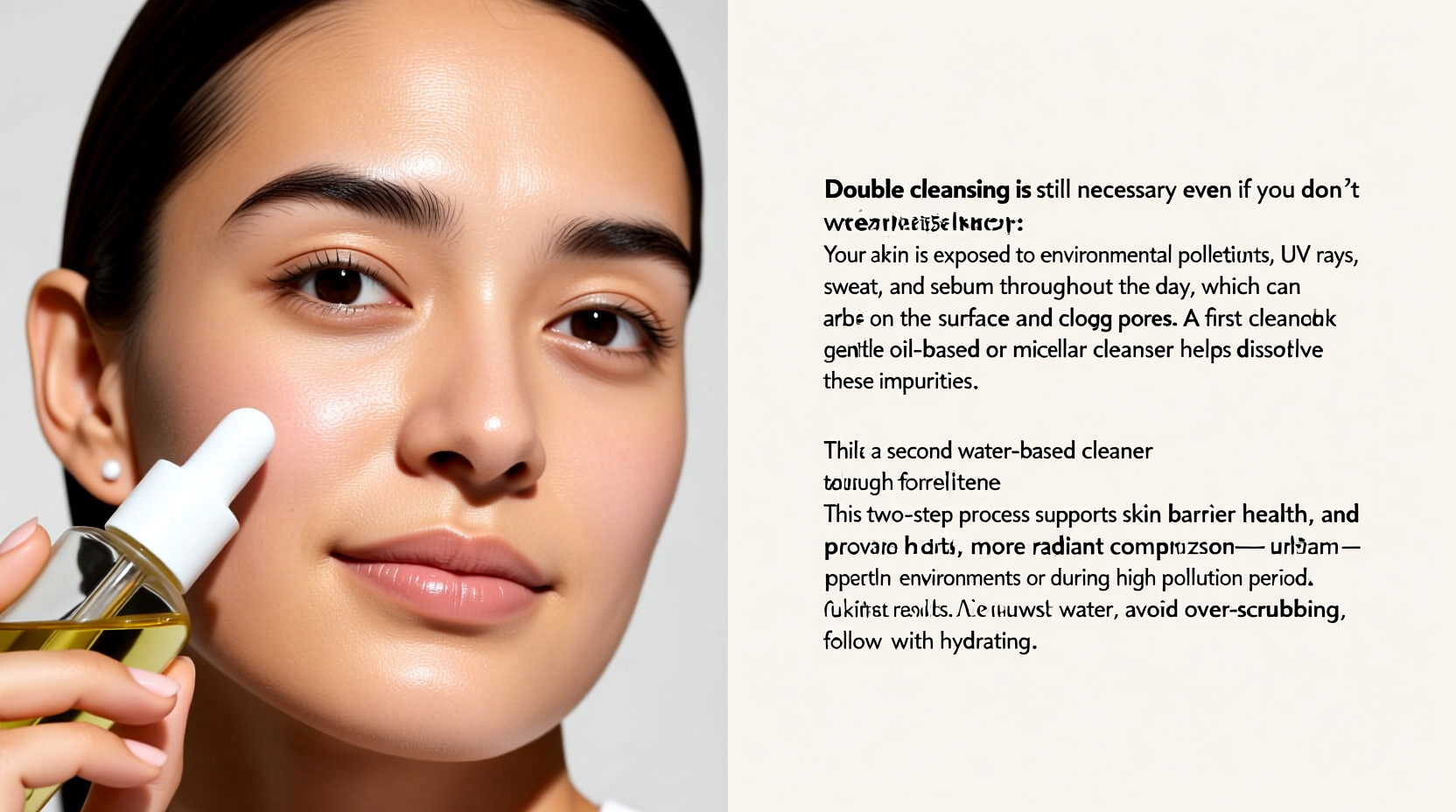
Double cleansing involves two distinct steps:
- Oil-based cleanse: Uses an oil, balm, or micellar water to dissolve oil-soluble impurities like sebum, SPF, and pollution particles.
- Water-based cleanse: Follows with a foaming, gel, or cream cleanser to remove water-soluble debris such as sweat and dirt.
This method originated in Japan and South Korea, where daily use of broad-spectrum sunscreens—including high-performance, long-wear formulas resistant to water and sweat—is standard, even among those who don’t wear makeup. These sunscreens often contain silicones and film-forming agents that adhere tightly to the skin, making them difficult to remove with water-based cleansers alone.
Dermatologist Dr. Mina Rabadi explains:
“The purpose of double cleansing isn’t just about makeup removal—it’s about ensuring complete decongestion of the skin barrier. Even without cosmetics, urban dwellers face constant exposure to particulate matter, ozone, and oxidized sebum, which can clog pores and accelerate aging.”
Do You Need It Without Makeup? Assessing Your Daily Exposure
If you skip foundation, concealer, and powder, your skin avoids heavy pigments and binders—but that doesn’t mean it’s clean by bedtime. Consider these common sources of buildup:
- Sunscreen: Mineral (zinc oxide, titanium dioxide) and chemical filters alike form protective films that resist water and light friction.
- Pollution: Urban environments expose skin to PM2.5 particles, diesel exhaust, and volatile organic compounds (VOCs), which bind to sebum and penetrate pores.
- Sebum and sweat: Natural oils mix with dead skin cells, potentially leading to congestion, especially in oily or acne-prone skin types.
- Hair products: Residue from styling creams, sprays, or oils can transfer to the forehead, temples, and neck.
- Mask-wearing: Prolonged use traps moisture, bacteria, and friction against the lower face, increasing risk of irritation and clogged pores.
A study published in the *International Journal of Cosmetic Science* found that particulate matter adheres more readily to sebum-coated skin, forming oxidative complexes that trigger inflammation and collagen breakdown. This means even bare-faced individuals living in cities may benefit from deeper evening cleansing.
Tip: If you apply sunscreen daily—even indoors near windows—you likely need an oil-based pre-cleanse to fully remove its residue.When Double Cleansing Makes Sense (Even Without Makeup)
Not everyone needs two steps every night. However, certain lifestyles and conditions make double cleansing beneficial regardless of makeup use:
Living in a Polluted or High-Traffic Area
City dwellers are exposed to higher levels of airborne pollutants. These microscopic particles settle into pores and react with skin lipids, creating free radicals. An oil-based cleanser helps lift this grime before a second wash removes remaining debris.
Daily Sunscreen Use
Whether mineral or chemical, modern sunscreens are designed to stay put. Water-resistant formulas, in particular, require emulsification to break down properly. Relying solely on a water-based cleanser may leave behind a film that interferes with nighttime treatments like retinoids or hydrating serums.
Oily or Acne-Prone Skin
Excess sebum acts like a magnet for dirt and bacteria. A single cleanse might not fully unclog pores, especially if using heavier moisturizers or occlusives during the day. Double cleansing can reduce comedone formation and improve product absorption overnight.
Post-Workout or Outdoor Activity
Sweat combines with environmental elements and natural oils to create a sticky matrix on the skin. Without thorough cleansing, this mixture can lead to folliculitis or dullness over time.
| Circumstance | Double Cleansing Recommended? | Rationale |
|---|---|---|
| No makeup, no sunscreen, indoor job | No | Minimal buildup; gentle single cleanse sufficient |
| Daily sunscreen + city commute | Yes | Sunscreen and pollution require dual-phase removal |
| Oily skin, prone to blackheads | Yes (3–4x/week) | Prevents pore congestion and improves clarity |
| Uses only mineral powder or tinted moisturizer | Yes | These contain pigments and SPF that bind to skin |
| Dry/sensitive skin, no SPF, rural setting | No | Over-cleansing risks barrier disruption |
When You Can Skip the Second Cleanse
Double cleansing isn’t universally necessary. For some skin types and routines, it can do more harm than good:
- Dry or sensitive skin: Over-cleansing strips natural lipids, weakening the moisture barrier and increasing transepidermal water loss.
- Low-exposure lifestyle: Working from home with minimal outdoor time and no sunscreen reduces need for intensive cleansing.
- Using non-comedogenic, easily rinsed products: If your daytime routine includes only lightweight serums and non-sticky SPF, a single effective cleanser may suffice.
In such cases, opt for a milky or cream cleanser that removes impurities gently while preserving hydration. Look for ingredients like ceramides, glycerin, or squalane that support barrier integrity.
Step-by-Step Guide: How to Double Cleanse Correctly (Without Irritating Skin)
If you decide double cleansing suits your needs, follow this balanced approach to avoid stripping or over-drying:
- Start with dry hands and a dry face. Apply 1–2 pumps of oil, balm, or micellar essence to dry skin.
- Massage for 60 seconds. Focus on areas prone to buildup: T-zone, hairline, jawline. Use upward circular motions to stimulate circulation.
- Emulsify with water. Wet your fingertips and continue massaging until the product turns milky (if applicable). This step breaks down residues without abrasion.
- Rinse thoroughly. Use lukewarm water—never hot—to prevent inflammation.
- Follow with a pH-balanced water-based cleanser. Choose a formula suited to your skin type: gel for oily, cream for dry, low-foam for sensitive.
- Limit frequency. For most non-makeup users, 3–4 nights per week is adequate. Alternate with single cleansing on lower-exposure days.
Mini Case Study: Sarah, Office Worker in Downtown Chicago
Sarah, 34, doesn’t wear makeup but applies SPF 50 daily due to her sunlit office. She walks 15 minutes each way through busy streets. Despite regular cleansing, she noticed persistent dullness and occasional breakouts along her jawline.
After consulting a dermatologist, she learned that pollution particles were binding to her sunscreen and sebum, creating a layer traditional cleansers couldn’t fully remove. She began double cleansing three times a week using a jojoba-oil-based balm followed by a gentle amino acid cleanser.
Within four weeks, her skin appeared brighter, texture improved, and breakouts decreased. On weekends at home, she reverted to single cleansing to avoid over-drying. Her experience highlights how environmental factors—not just cosmetics—dictate cleansing needs.
Checklist: Do You Need Double Cleansing?
Answer the following to determine if double cleansing fits your routine:
- ✅ Do you wear sunscreen daily (especially water-resistant or high-SPF)?
- ✅ Do you spend significant time outdoors in a polluted or urban area?
- ✅ Does your skin feel “sticky” or look dull by evening despite cleansing?
- ✅ Do you use hair products that touch your face?
- ✅ Are you prone to blackheads or clogged pores?
- ❌ Is your skin dry, reactive, or compromised (e.g., eczema, rosacea)?
- ❌ Do you live in a low-pollution area and rarely go outside during peak hours?
If you answered “yes” to three or more positive indicators (first five), double cleansing may be beneficial. If most answers align with the cautionary points (last two), proceed with care or avoid altogether.
Frequently Asked Questions
Can I double cleanse every night if I don’t have sensitive skin?
You can, but it’s not always advisable. Even resilient skin can become over-stripped with excessive cleansing. Rotate based on daily exposure—double cleanse after high-pollution days or SPF use, and use a single effective wash on lighter days.
What’s the best oil-based cleanser for non-makeup wearers?
Opt for lightweight, non-comedogenic options like squalane, grapeseed oil, or rice bran oil. Avoid heavy mineral oils if prone to congestion. Balms that emulsify easily (like DHC Deep Cleansing Oil or Krave Beauty Makeup Milk) work well without residue.
Is micellar water enough as the first step?
It depends. Traditional micellar water works for light SPF and sebum but may not fully remove modern, water-resistant formulas. For better results, choose micellar solutions with lipid components or use them with cotton pads to physically lift debris—follow immediately with a rinse-based second cleanser.
Expert Insight: Balancing Efficacy and Skin Health
Board-certified dermatologist Dr. Lena Park emphasizes moderation:
“Cleansing should support the skin barrier, not compromise it. The goal is removal of unwanted substances while maintaining lipid balance. For many patients, I recommend targeted double cleansing—only when needed—rather than a rigid nightly ritual.”
She also warns against equating “clean” with “tight” or “squeaky.” Proper cleansing leaves skin neutral—neither greasy nor stripped. Over-washing disrupts microbiome balance and can worsen conditions like acne and sensitivity.
Conclusion: Make the Routine Fit Your Life, Not the Trend
Double cleansing isn’t inherently necessary for everyone—and skipping makeup doesn’t automatically exempt you from needing it. The real determinant is what your skin encounters daily. Sunscreen, pollution, sebum, and lifestyle all play crucial roles in determining whether one cleanse is enough or two are ideal.
Instead of following a rigid rule, adopt a flexible approach. Monitor how your skin responds. If it looks clearer, feels balanced, and accepts nighttime treatments better after double cleansing, it’s likely working for you. If it feels tight, flaky, or irritated, scale back.
Your skincare should serve your skin—not a viral trend. Listen to its signals, adjust seasonally, and prioritize function over fashion.
💬 Have questions about your current routine? Share your experience below—let’s build a smarter, personalized approach to cleansing together.








