
In an era where social media is a primary outlet for personal expression, many turn to online platforms when overwhelmed by anger, sadness, or frustration. A bad day at work, a relationship conflict, or political outrage—each can prompt a flurry of status updates, tweets, or comment threads. But does this act of venting truly soothe our emotions, or does it deepen distress? The answer isn't as straightforward as \"yes\" or \"no.\" While expressing emotions online can offer temporary relief, its long-term impact on emotional regulation depends on how, why, and with whom we share.
Emotional regulation refers to the ability to manage and respond to emotional experiences in a healthy and adaptive way. It's not about suppressing feelings but navigating them constructively. Venting—defined as expressing strong emotions, typically negative ones, without necessarily seeking solutions—is often mistaken for emotional processing. However, research suggests that unstructured, repetitive venting may reinforce negative thought patterns rather than resolve them.
The Psychology Behind Online Venting
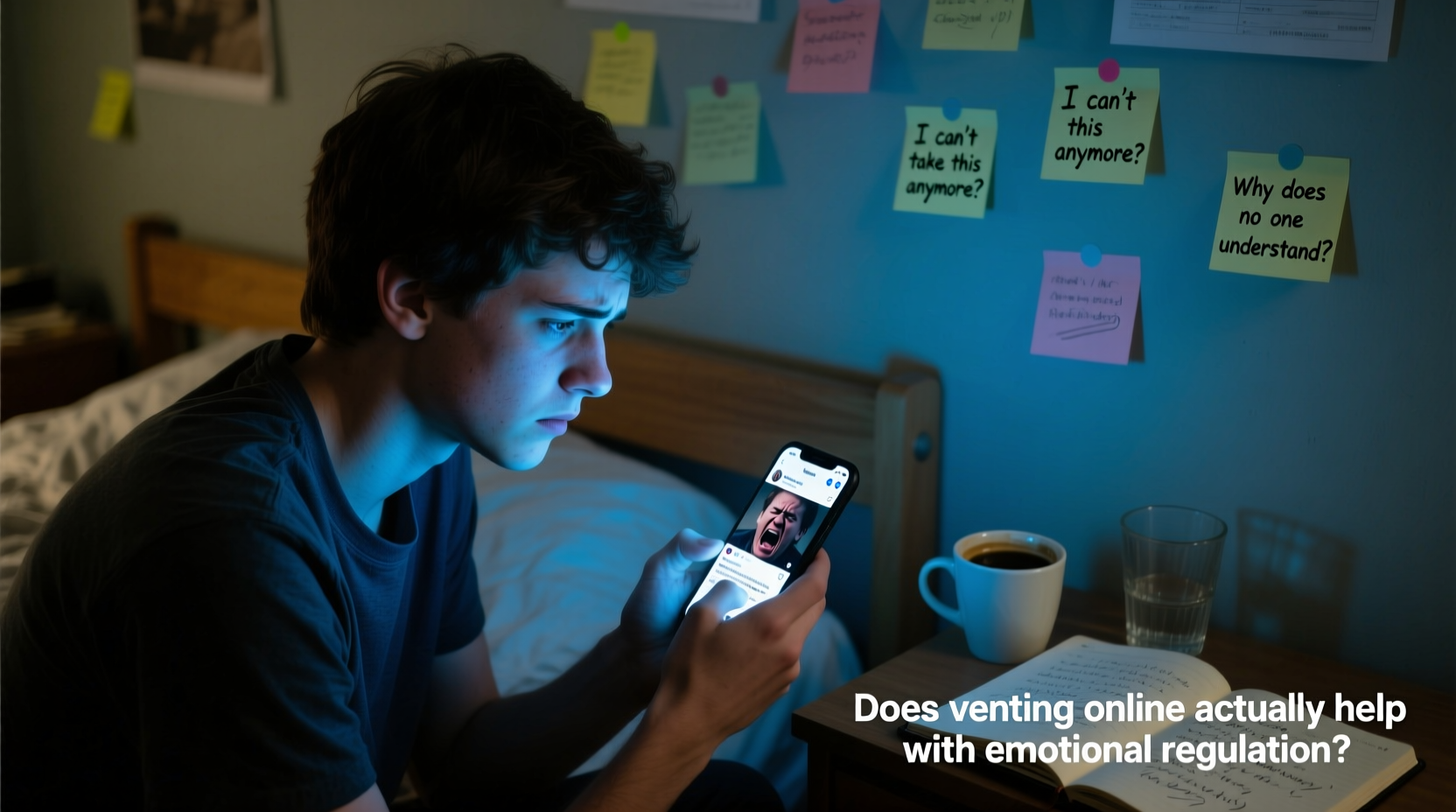
When people feel wronged or stressed, the brain’s limbic system activates, triggering emotional arousal. Expressing these emotions can create a sense of release, akin to a pressure valve. This explains why someone might feel momentarily better after posting a rant about their boss or a breakup. That brief relief is real—but fleeting.
Psychologists refer to this as \"emotional discharge,\" a process that mimics catharsis. Historically, catharsis theory suggested that releasing pent-up emotions reduced aggression and improved well-being. However, modern studies challenge this idea. A landmark study by Bushman (2002) found that participants who \"vented\" aggressively (e.g., hitting a punching bag while thinking about someone who angered them) actually became more hostile, not less.
Online venting operates under similar principles. When users post angry or frustrated content without reflection or resolution, they risk amplifying their emotional state. Each like, share, or supportive comment can validate their anger, reinforcing the emotional loop. Over time, this pattern can erode emotional resilience and skew perception toward negativity.
“Venting without reflection is like scratching an itch that gets worse the more you scratch. It feels good in the moment but delays real healing.” — Dr. Lena Torres, Clinical Psychologist and Emotion Regulation Specialist
When Venting Helps—and When It Hurts
The key difference lies in intent and context. Not all online emotional expression is harmful. In fact, sharing struggles in thoughtful, constructive ways can foster connection, insight, and even problem-solving. The distinction is between *venting* and *processing*.
- Venting: Focuses on blame, repetition, and emotional intensity. Often lacks self-awareness or openness to change.
- Processing: Involves reflection, curiosity about one’s emotions, and a desire to understand or grow from the experience.
For example, a tweet saying, “My manager humiliated me in front of the team today. I’m so sick of being disrespected!” is pure venting. It expresses pain but doesn’t invite growth. In contrast, a post like, “Had a tough moment at work today—got called out publicly. I’m reflecting on how I reacted and what I can do differently,” demonstrates emotional processing.
Tip: Before posting emotionally charged content, pause and ask: Am I seeking understanding, or just amplification?Positive Outcomes of Thoughtful Online Expression
When done mindfully, sharing emotions online can support emotional regulation through:
- Social validation: Receiving empathy from others reduces feelings of isolation.
- External perspective: Comments or messages may offer new insights or coping strategies.
- Accountability: Publicly naming a challenge can motivate constructive action.
- Narrative integration: Writing about difficult experiences helps organize thoughts and gain clarity.
Support communities on platforms like Reddit or Facebook groups often exemplify this benefit. Members share personal struggles with depression, grief, or anxiety, not to rage but to connect and heal. Moderated spaces with empathetic norms tend to promote healthier emotional expression.
Common Pitfalls of Digital Venting
Despite its appeal, unchecked online venting carries significant risks. These include:
| Risk | Description | Potential Consequence |
|---|---|---|
| Emotional rumination | Repeating negative thoughts online reinforces neural pathways linked to distress. | Increased anxiety, prolonged sadness |
| Public backlash | Posts can go viral or be screenshotted, leading to reputational harm. | Job loss, damaged relationships |
| Confirmation bias | Algorithms show content that aligns with your mood, deepening negativity. | Distorted worldview, increased polarization |
| Digital permanence | Even deleted posts may be archived or shared. | Lasting personal or professional consequences |
Moreover, venting in public forums often invites performative responses—outrage, sarcasm, or unsolicited advice—that escalate tension rather than diffuse it. Unlike private conversations with trusted friends, online interactions lack nonverbal cues and contextual nuance, increasing misinterpretation.
A Real Example: The Cost of Impulsive Posting
Consider Maya, a project manager who had a heated argument with a colleague during a team meeting. Frustrated, she posted on LinkedIn: “Some people pretend to care about teamwork but sabotage everything behind closed doors. Transparency matters.” Though she didn’t name anyone, several coworkers recognized the reference. The post received dozens of likes and comments fueling her anger. Within days, HR contacted her about a formal complaint. Her attempt to “let off steam” damaged workplace trust and triggered a performance review.
Maya later admitted she didn’t want to solve the conflict—she wanted to be seen as the victim. With therapy, she learned to journal privately first and discuss issues directly with her supervisor instead of broadcasting them. Her emotional regulation improved significantly once she separated expression from escalation.
How to Vent Online More Constructively
Abstaining from social media entirely isn’t necessary—or realistic—for most people. Instead, adopting intentional practices can transform online expression into a tool for emotional growth.
“Healthy emotional regulation online means using the platform as a mirror, not a megaphone.” — Dr. Rajiv Mehta, Digital Wellbeing Researcher
Step-by-Step Guide: The 24-Hour Reflection Rule
Before posting emotionally charged content, follow this timeline to ensure thoughtful expression:
- Step 1: Write freely (immediately)
Create a draft in your notes app or journal. Say everything you want to say without filtering. - Step 2: Wait 12–24 hours
Let time pass before revisiting the text. Sleep on it if possible. - Step 3: Reflect on intent
Ask: What do I hope to achieve? Validation? Advice? Change? Is this post helping that goal? - Step 4: Edit for tone and purpose
Remove accusatory language. Add context. Consider anonymizing details. - Step 5: Choose audience wisely
Post in private groups or send via direct message if appropriate. Avoid public shaming.
Checklist: Healthier Online Emotional Expression
- ☑ Pause before posting—delay impulse-driven sharing
- ☑ Identify the core emotion (anger, hurt, fear) and its root cause
- ☑ Avoid blaming language (“you always,” “they never”)
- ☑ Limit exposure to toxic comment sections after posting
- ☑ Seek offline support when emotions feel overwhelming
- ☑ Delete or archive posts that no longer serve you
Frequently Asked Questions
Is journaling online the same as venting?
Not necessarily. Journaling implies reflection and personal growth, while venting emphasizes emotional release. Blogging or using private social media accounts as a diary can be therapeutic—if done with self-awareness and not solely for attention or validation.
Can online venting ever be beneficial?
Yes, when it leads to meaningful dialogue, community support, or advocacy. For example, survivors sharing trauma stories can reduce stigma and inspire change. The difference lies in purpose: healing versus retaliation, connection versus isolation.
What are better alternatives to online venting?
Effective alternatives include talking to a therapist, writing in a private journal, practicing mindfulness or breathwork, engaging in physical activity, or discussing issues directly with the involved parties. These methods promote deeper emotional integration without the risks of public exposure.
Conclusion: Toward Smarter Emotional Expression
Online venting is neither inherently good nor bad—it’s a behavior shaped by intention, context, and self-awareness. While the urge to scream into the digital void is understandable, lasting emotional regulation comes not from amplification but from understanding. Platforms will continue to evolve, but human psychology remains grounded in reflection, connection, and growth.
The healthiest digital emotional habits don’t silence feelings—they channel them with wisdom. By pausing before posting, choosing supportive communities, and prioritizing resolution over revenge, we can use online spaces not to fuel fire, but to find light.
💬 Have you ever regretted or benefited from venting online? Share your experience in the discussion below—your story might help someone find balance in their own digital emotional life.








