For decades, women have debated whether wearing a bra to bed impacts breast shape, causes sagging, or even increases the risk of breast cancer. From whispered advice passed down through generations to viral social media claims, misinformation abounds. The truth is far less dramatic than the myths suggest. Medical research and expert opinions consistently show that sleeping in a bra has minimal long-term effects on breast structure. This article separates fact from fiction, explores the science behind breast support, and provides practical guidance for those concerned about comfort, health, and aesthetics.
The Origins of the Myth
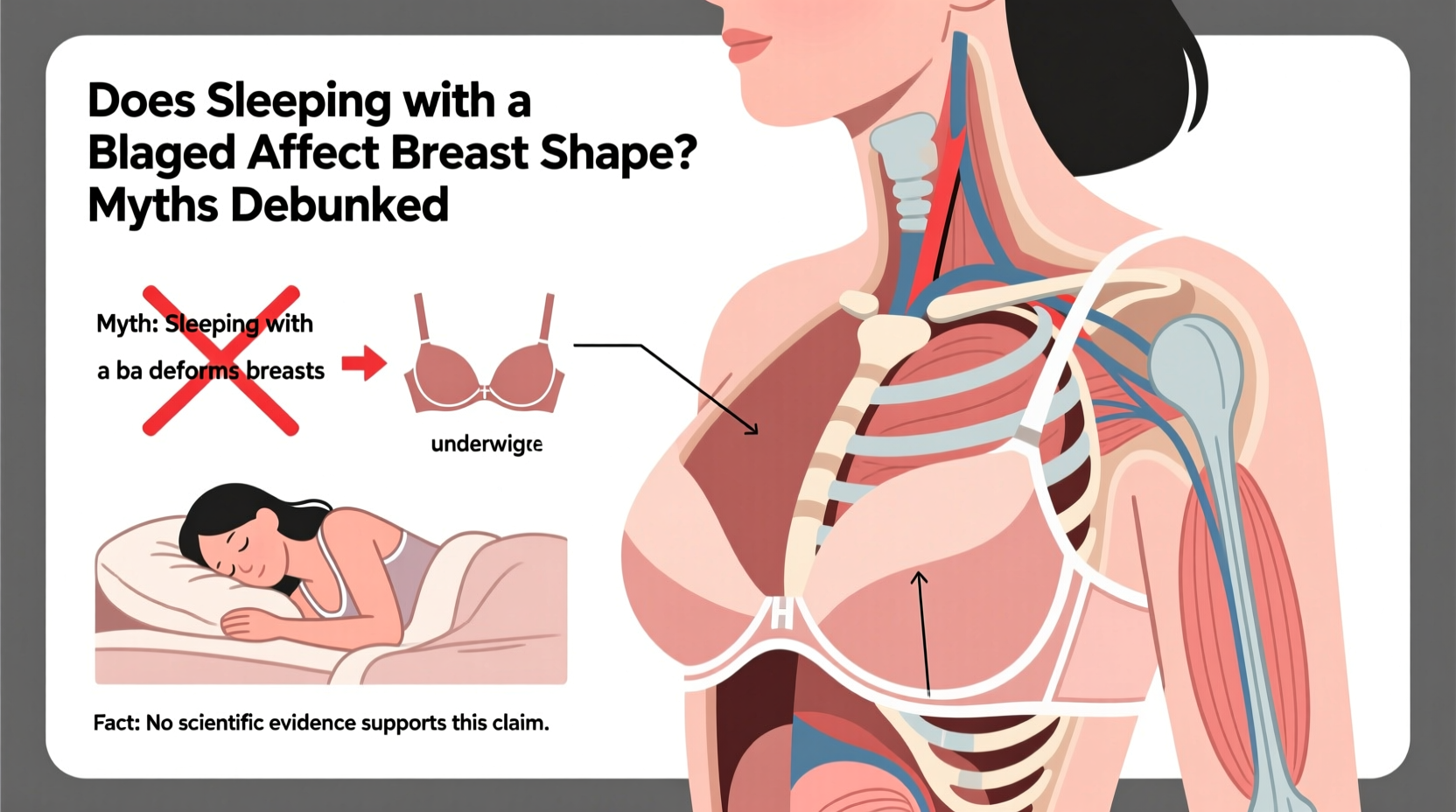
The belief that sleeping in a bra prevents sagging likely stems from a misunderstanding of how breasts are supported. Unlike organs with internal scaffolding, breasts rely primarily on skin elasticity and the Cooper’s ligaments—thin connective tissues that stretch over time due to aging, gravity, pregnancy, and weight fluctuations. Because bras provide external support during waking hours, it’s logical to assume continuous wear might \"train\" the breasts to stay lifted. However, this logic doesn’t hold up under scientific scrutiny.
There is no physiological mechanism by which overnight bra use strengthens ligaments or alters tissue composition. In fact, prolonged pressure from tight underwire or restrictive bands may do more harm than good, potentially affecting circulation or causing skin irritation. The idea that skipping nighttime support accelerates sagging is not supported by dermatologists or plastic surgeons.
“Breast ptosis, or sagging, is influenced by genetics, age, body mass index, and pregnancies—not whether you wear a bra at night.” — Dr. Laura Hernandez, Board-Certified Plastic Surgeon
Medical Evidence: What Research Says
A landmark study conducted at the University of Kentucky followed over 300 women for several years to assess the long-term impact of bra-wearing habits. Published in the Journal of Clinical Nursing, the findings revealed no significant difference in breast firmness or position between women who wore bras 24/7 and those who rarely wore them. In fact, some participants who went bra-free developed stronger pectoral muscles, which provided natural lift over time.
Similarly, the American Cancer Society has repeatedly dismissed claims linking bra use—including nighttime wear—to breast cancer. There is no credible evidence that bras block lymph flow or trap toxins. These theories originated from a now-discredited book published in the 1990s and have since been thoroughly refuted by oncologists and epidemiologists.
The consensus among healthcare professionals is clear: wearing a bra while sleeping does not alter breast shape, prevent sagging, or cause disease. Any changes in breast appearance are due to natural biological processes, not sleepwear choices.
Tip: If you choose to sleep in a bra for comfort, opt for a soft, wireless, breathable style made from cotton or moisture-wicking fabric.When Sleeping in a Bra Might Make Sense
While not necessary for structural support, some women find nighttime bra use beneficial in specific situations:
- Post-surgery recovery: After breast augmentation, reduction, or mastectomy, surgeons often recommend wearing a supportive surgical bra 24 hours a day for several weeks to minimize swelling and support healing tissues.
- Pregnancy and breastfeeding: Hormonal changes can lead to rapid breast growth and increased sensitivity. A lightweight sleep bra can reduce movement-related discomfort during sleep.
- Exercise-induced soreness: Women with larger busts may experience breast movement even while tossing and turning. A low-impact sports-style sleep bra can minimize discomfort.
- Personal preference: Some women feel more secure or comfortable with light support at night, especially if they're used to wearing bras during the day.
However, if the bra causes indentations, restricts breathing, or leads to overheating, it may be too tight or poorly suited for sleep. The key is prioritizing comfort over perceived aesthetic benefits.
What Actually Affects Breast Shape?
If nighttime bra use isn't the culprit behind changes in breast appearance, what is? Several well-documented factors play a role:
| Factor | Impact on Breast Shape | Can It Be Controlled? |
|---|---|---|
| Genetics | Determines baseline firmness, size, and ligament strength | No |
| Age | Natural loss of skin elasticity and collagen | Limited (slowed with skincare and hydration) |
| Pregnancy & Breastfeeding | Stretching of skin and tissue; volume changes post-weaning | Partially (managed with moisturizing and gradual weight changes) |
| Weight Fluctuations | Fat gain/loss affects breast volume and skin tautness | Yes (through stable nutrition and exercise) |
| Sun Exposure | UV damage reduces skin elasticity over time | Yes (with sun protection) |
| Smoking | Chemicals degrade collagen and impair circulation | Yes (by quitting) |
Maintaining overall skin health and managing lifestyle factors offer far greater influence over breast appearance than any bra-wearing habit. Regular exercise, particularly chest-strengthening routines like push-ups or resistance training, can improve posture and create the illusion of lift by toning underlying muscles.
Best Practices for Nighttime Comfort and Care
Whether or not you decide to sleep in a bra, here are evidence-based tips to support breast health and comfort:
- Choose the right fabric: Cotton, bamboo, or modal blends allow airflow and reduce moisture buildup, lowering the risk of fungal infections or clogged pores.
- Avoid underwire: Rigid wires can dig into sensitive tissue during sleep, disrupting circulation and causing discomfort or bruising.
- Ensure proper fit: A band that leaves red marks or rides up indicates poor sizing. Your sleep bra should feel barely noticeable.
- Wash regularly: Skin cells, sweat, and bacteria accumulate on fabric. Wash sleep bras every 1–2 days to maintain hygiene.
- Give your skin a break: Even if you prefer sleeping in a bra, consider going braless occasionally to let your skin breathe and reset.
Mini Case Study: Sarah’s Experience
Sarah, a 34-year-old nurse, began wearing a soft sports bra to bed after experiencing tenderness during her second pregnancy. At first, it was purely for comfort—but after giving birth, she continued the habit, believing it would help her breasts retain their pre-pregnancy shape. Two years later, despite consistent nighttime wear, she noticed natural drooping due to weight loss and hormonal shifts.
After consulting her OB-GYN, she learned that these changes were normal and unrelated to her bra habits. She switched to going braless at night and reported improved skin clarity and reduced shoulder tension. “I wasted so much energy worrying about something I couldn’t control,” she said. “Now I focus on staying healthy, and my body feels better for it.”
Common Misconceptions Debunked
Beyond the myth of shape preservation, several other falsehoods persist about sleeping in bras:
- Myth: Wearing a bra at night prevents stretch marks.
Truth: Stretch marks result from rapid skin expansion. Moisturizing and maintaining steady weight are more effective prevention strategies. - Myth: Bras stop breasts from growing or developing properly.
Truth: Breast development is hormonally driven and complete by early adulthood. Bras do not interfere with growth. - Myth: Not wearing a bra weakens breast tissue.
Truth: Breasts contain no muscle; they cannot be \"strengthened\" by lack of support. Ligaments adapt naturally to gravitational forces.
“The only proven way to significantly alter breast shape is surgery. Everything else—brassieres, creams, exercises—offers temporary or cosmetic effects at best.” — Dr. Anita Patel, M.D., General Surgeon specializing in Women’s Health
FAQ
Can sleeping in a bra cause back pain?
Yes, if the bra is ill-fitting or too tight. A band that digs into the ribcage or straps that pull on the shoulders can strain muscles and disrupt spinal alignment. Choose a design with wide, adjustable straps and a flexible band to minimize risk.
Is it unhygienic to sleep in the same bra every night?
Yes. Repeated use without washing traps sweat, oils, and bacteria against the skin, potentially leading to folliculitis or yeast infections. Rotate at least two or three bras and launder them frequently using mild detergent.
Do sports bras double as good sleep bras?
Not ideally. While some women find compression-style sports bras comfortable, most are designed for high-impact activity and may be too restrictive for extended wear. Look for dedicated sleep bras with seamless construction and soft encapsulation instead.
Checklist: Choosing a Safe and Comfortable Sleep Bra
- ✅ Made from breathable, hypoallergenic fabric (e.g., organic cotton)
- ✅ Wireless design to avoid pressure points
- ✅ Adjustable or stretchable band for a custom fit
- ✅ Wide, padded straps (if applicable) to reduce shoulder strain
- ✅ No visible seams or tags that could irritate skin
- ✅ Easy to wash and quick-drying
- ✅ Fades gradually rather than losing shape after few washes
Conclusion
The decision to sleep in a bra should be based on personal comfort—not fear of sagging or misinformation. Science confirms that breast shape evolves naturally over time due to genetics, life stages, and lifestyle, not nighttime clothing choices. Whether you go braless or prefer gentle support, what matters most is listening to your body and making informed decisions grounded in facts, not folklore.
💬 Have questions or experiences to share? Join the conversation below and help others navigate breast health with confidence and clarity.








