Fidgeting—tapping your foot, bouncing your leg, drumming your fingers, or shifting in your seat—is often dismissed as a nervous habit or a sign of restlessness. But what if those small, unconscious movements were quietly contributing to your daily energy expenditure? Could something as subtle as fidgeting actually play a role in weight management? The answer, supported by scientific research, is a nuanced but compelling yes. While fidgeting alone won’t replace exercise, it contributes to a concept called non-exercise activity thermogenesis (NEAT), which can add up over time and influence long-term weight outcomes.
The Science Behind Fidgeting and Calorie Expenditure
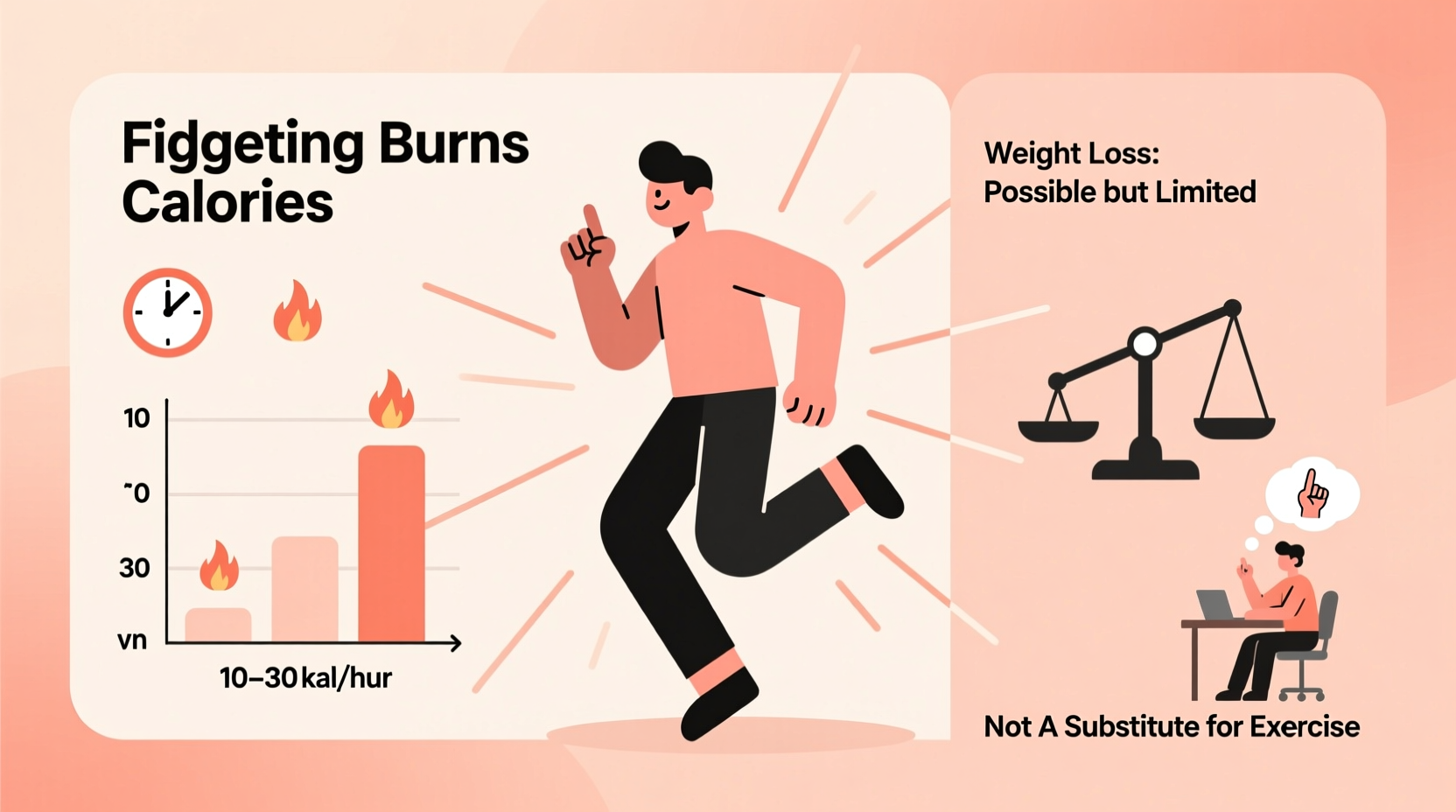
Calories are burned not just during structured workouts but through all physical activities, including those so minor they’re easy to overlook. This includes standing instead of sitting, walking to the printer, pacing while on the phone, and yes—fidgeting. These actions fall under NEAT, a term coined by Dr. James Levine of the Mayo Clinic, referring to the energy expended for everything we do that isn’t sleeping, eating, or sports-like exercise.
Studies have shown that individuals who naturally fidget burn significantly more calories throughout the day than those who remain still. In one landmark study published in the journal Science, researchers observed that lean individuals spent two more hours per day standing or moving compared to their obese counterparts. This difference accounted for an extra 350 calories burned daily—roughly equivalent to a 45-minute brisk walk—without formal exercise.
Fidgeting increases muscle activation, particularly in the legs and core, even when seated. Small contractions stimulate blood flow and metabolic activity. Though each movement burns only a fraction of a calorie, repetition across hours amplifies the effect. Over a week, this could mean burning an additional 2,000 to 2,500 calories—nearly enough to lose half a pound of fat, assuming no increase in food intake.
“People who are naturally restless tend to be leaner, not because they work out more, but because they move more throughout the day.” — Dr. James A. Levine, Endocrinologist and NEAT Researcher, Mayo Clinic
How Many Calories Does Fidgeting Actually Burn?
The exact number varies based on body weight, intensity, and duration. However, researchers have developed general estimates using metabolic equivalents (METs), a measure of energy cost. Sitting quietly has a MET value of about 1.0, while light fidgeting may raise that to 1.2–1.5. Standing and shifting increases it further.
Here’s a realistic breakdown of calorie expenditure for different fidgeting behaviors:
| Activity | Duration | Estimated Calories Burned (150 lb person) |
|---|---|---|
| Foot tapping while seated | 1 hour | 20–30 kcal |
| Leg bouncing or knee jiggling | 1 hour | 30–45 kcal |
| Arm drumming or finger tapping | 30 minutes | 15–20 kcal |
| Shifting posture frequently while seated | 2 hours | 60–80 kcal |
| Standing and swaying lightly | 1 hour | 100–120 kcal |
While these numbers seem small individually, they accumulate. Someone who fidgets consistently for five hours a day could burn an extra 150–200 calories daily—over 7,000 calories a month. That’s nearly two pounds of fat annually, without changing diet or adding gym sessions.
Tip: If you tend to sit still, set a reminder every 30 minutes to shift positions, stretch, or tap your feet—even subtly.Can Fidgeting Help With Weight Loss?
Fidgeting is not a standalone weight-loss strategy, but it can support broader efforts. Weight management hinges on energy balance: calories in versus calories out. While diet remains the most powerful lever, increasing output—even slightly—improves sustainability.
For people prone to sedentary lifestyles (e.g., desk workers, remote employees), intentional fidgeting introduces low-effort calorie expenditure. It’s especially valuable for those who struggle with traditional exercise due to time, injury, or motivation. Unlike intense workouts, fidgeting requires no preparation, equipment, or recovery. It’s accessible and sustainable.
Moreover, research suggests a behavioral link: people who fidget more often report higher overall activity levels. They’re more likely to take stairs, walk during calls, or stand while reading. Fidgeting may act as a gateway behavior—a small habit that reinforces a mindset of movement.
However, relying solely on fidgeting won’t lead to significant weight loss. Burning 200 extra calories a day would take about 17 days to lose one pound of fat. For meaningful results, fidgeting should complement other strategies like strength training, cardiovascular exercise, and mindful eating.
A Real-Life Example: Sarah’s Office Routine
Sarah, a 34-year-old graphic designer, worked 8-hour days at her computer. Despite eating well, she noticed gradual weight gain over two years. After reading about NEAT, she decided to experiment. She replaced her office chair with a stability ball to encourage subtle core engagement, placed a small pedal exerciser under her desk, and set hourly reminders to stand, stretch, or pace for two minutes.
She also became more aware of her natural fidgeting tendencies—she’d always tapped her foot when thinking. Now, she leaned into it intentionally. Within three months, without changing her diet or starting a formal workout routine, Sarah lost six pounds. Her energy improved, and she felt less stiff. A wearable fitness tracker estimated she was burning an extra 180–220 calories daily through increased non-exercise movement.
Sarah’s case illustrates how small changes, amplified by consistency, can yield real results—not overnight, but sustainably.
How to Increase Fidgeting and NEAT Intentionally
You don’t need to become a constant motion machine. Instead, integrate subtle movement into your existing routine. The goal is to disrupt prolonged sitting and activate muscles throughout the day.
- Use unstable seating: Sit on a stability ball or wobble stool. These require micro-adjustments to maintain balance, increasing muscle engagement.
- Add under-desk tools: Pedal exercisers or resistance bands allow leg movement while working.
- Stand during phone calls: Even swaying side to side boosts energy expenditure.
- Walk short distances: Go to a distant water cooler, bathroom, or colleague’s desk instead of messaging.
- Tap or bounce rhythmically: Set a gentle beat with your foot or hand during meetings or TV time.
- Shift positions frequently: Alternate between sitting, standing, and perching every 20–30 minutes.
- Engage hands: Use stress balls, fidget cubes, or even knitting to keep fingers active.
Checklist: Boost Your Daily Movement Naturally
- ✅ Replace static sitting with dynamic seating options
- ✅ Install a pedal exerciser under your desk
- ✅ Stand or pace during phone conversations
- ✅ Take a two-minute movement break every hour
- ✅ Tap your feet or fingers during screen time
- ✅ Choose stairs over elevators when possible
- ✅ Park farther from entrances to add steps
- ✅ Use a standing desk or convertible workstation
FAQ: Common Questions About Fidgeting and Weight Loss
Can fidgeting replace exercise?
No. While fidgeting contributes to daily calorie burn, it doesn’t provide the cardiovascular, muscular, or metabolic benefits of structured exercise. Aerobic activity improves heart health, and resistance training builds muscle mass, both of which elevate resting metabolism. Fidgeting complements—but doesn’t substitute—for these essential components.
Do some people naturally fidget more than others?
Yes. Genetics, temperament, and neurology influence fidgeting tendencies. People with ADHD, for example, often fidget more as a way to regulate attention and energy. Some individuals are simply more restless by nature, which may partly explain why they stay leaner despite similar diets. However, even naturally still individuals can learn to increase movement habits over time.
Is fidgeting harmful or a sign of anxiety?
Not necessarily. While excessive fidgeting can be linked to anxiety or hyperactivity disorders, mild movement is normal and healthy. In fact, suppressing natural movement may be more detrimental—leading to stiffness, poor circulation, and increased sedentary risk. If fidgeting causes distress or interferes with daily life, consult a healthcare provider. Otherwise, embrace it as a sign your body wants to move.
Conclusion: Small Movements, Big Impact Over Time
Fidgeting does burn calories—and while the amount per minute seems negligible, the cumulative effect over weeks and months can meaningfully influence weight maintenance. More importantly, it reflects a broader principle: movement matters, in all its forms. The human body evolved to move constantly, not sit for hours on end. By reintroducing small bursts of activity throughout the day, you align with your biology and support long-term health.
You don’t need to overhaul your lifestyle to benefit. Start by noticing when you’re still and asking: “Can I shift, stand, or tap right now?” Build awareness, then intention. Over time, these micro-movements become second nature—and part of a sustainable, active life.
💬 Ready to move more—without trying harder? Share your favorite fidgeting trick or NEAT hack in the comments below. Let’s inspire each other to stay in motion!








