
Curly hair demands special care. Its natural texture and structure make it more prone to dryness, frizz, and breakage than straight hair types. As a result, many people with curls turn to convenience products like dry shampoo to extend time between washes and maintain volume. But as usage increases, so do concerns: Does dry shampoo cause buildup? Can you use it every day without damaging your curls? The answer isn’t a simple yes or no—it depends on how you use it, what ingredients are in the product, and your hair’s unique needs.
Dry shampoo has become a staple in modern haircare routines, especially for those trying to preserve moisture and reduce manipulation. However, frequent application—particularly without proper cleansing—can lead to unintended consequences. Understanding the balance between convenience and scalp health is essential for anyone relying on dry shampoo regularly.
How Dry Shampoo Works on Curly Hair
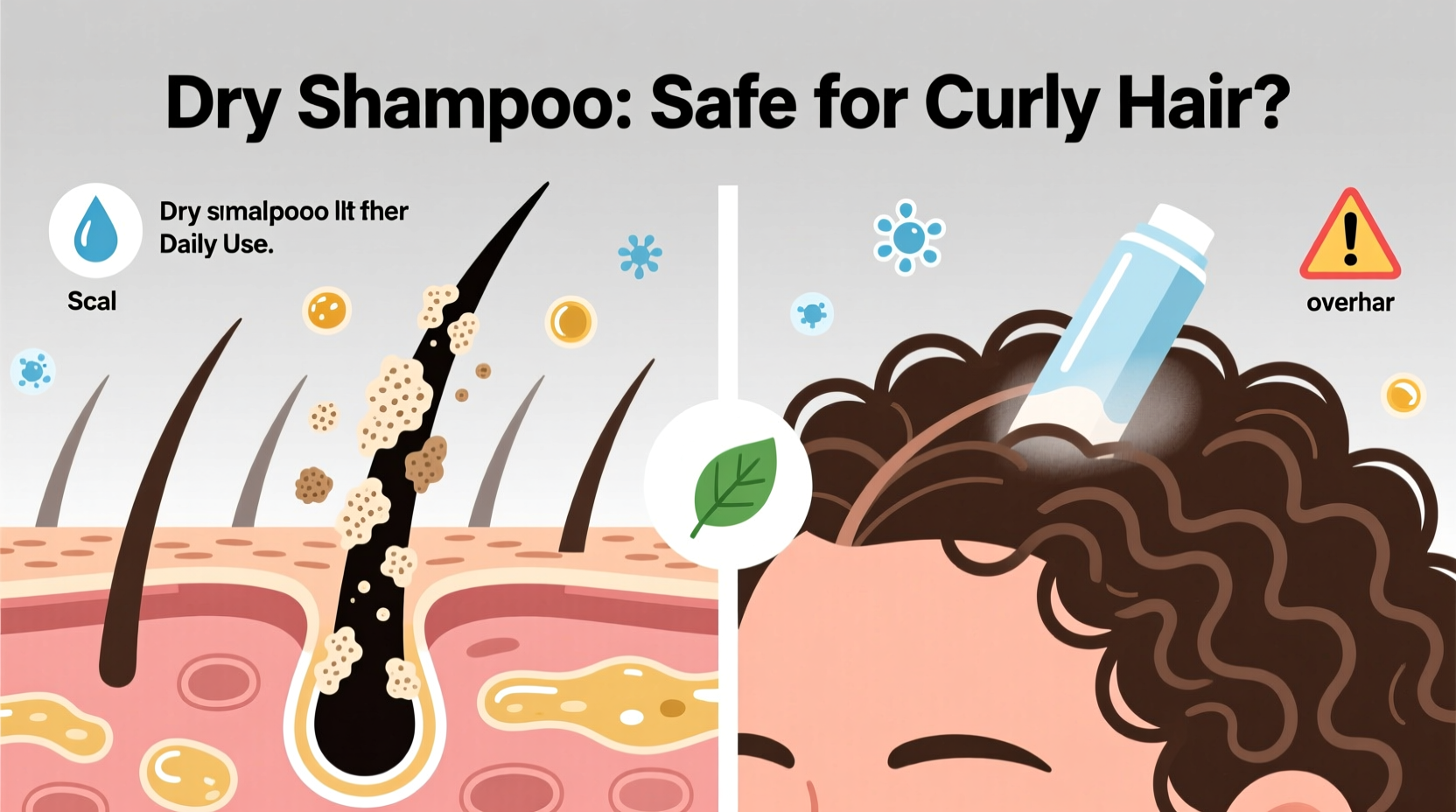
Dry shampoo typically contains absorbent ingredients such as starch, alcohol, or silica that bind to oil and sweat at the roots. When sprayed or applied near the scalp, it lifts excess sebum, giving hair a refreshed appearance without water. For curly hair, which tends to be drier due to the difficulty of natural oils traveling down the curl pattern, this can seem like a godsend—especially during busy weeks when washing isn’t feasible.
However, unlike traditional shampoo, dry shampoo doesn’t remove dirt, dead skin cells, or environmental pollutants. It masks greasiness rather than cleanses. Over time, repeated use without thorough washing allows residue from the product itself, combined with natural oils and debris, to accumulate on both the scalp and hair shaft.
This accumulation is what we refer to as “buildup.” In curly hair, where definition and bounce rely heavily on hydration and minimal interference, buildup can dull curls, weigh them down, and even trigger scalp irritation or dandruff-like symptoms.
Tip: Apply dry shampoo only at the roots and allow it to sit for 2–3 minutes before massaging gently into the scalp to maximize absorption and minimize residue.The Buildup Problem: Why It Matters for Curls
Buildup from dry shampoo manifests in several ways: flattened roots, lack of curl definition, increased frizz, and an itchy or flaky scalp. These signs are often mistaken for dryness, prompting users to apply more leave-in conditioners or oils—exacerbating the issue by adding yet another layer to already congested hair.
The primary culprits behind buildup are:
- Aerosol propellants and butane/propane: Common in spray formulas, these can leave a filmy coating.
- Starch-based powders: Especially cornstarch or rice starch, which attract moisture and may clump over time.
- Silicones: Some dry shampoos include dimethicone or cyclomethicone for smoothness, which build up quickly and resist removal without sulfates.
- Fragrance and dyes: Add unnecessary chemicals that don’t contribute to cleaning and can irritate sensitive scalps.
For curly hair, which thrives on clarity and lightweight products, even small amounts of residue can disrupt curl formation. Tightly coiled textures (Type 4) are particularly vulnerable because their dense structure traps particles more easily.
“Many patients come in complaining of ‘dry scalp’ when in fact they’re experiencing product accumulation from overuse of dry shampoo. A clarifying wash often resolves the issue.” — Dr. Nina Patel, Board-Certified Trichologist
Is Daily Use Safe? Evaluating Frequency and Risk
Using dry shampoo daily is not inherently dangerous, but it should be approached with caution—especially for curly hair. Occasional use (1–2 times per week) poses little risk if followed by a full wash within a few days. However, daily reliance without regular shampooing creates a cycle where cleansing never fully occurs.
Consider this timeline:
- Day 1: Apply dry shampoo after second-day curls start to look flat.
- Day 3: Reapply because roots feel oily again.
- Day 5: Curls appear limp; scalp feels tight or itchy.
- Day 7: No shampoo used yet—only dry alternatives applied.
By Day 7, multiple layers of product have settled into the scalp. Without a proper wash, pores may become clogged, potentially leading to folliculitis or inhibited hair growth over time.
The safety of daily use hinges on three factors:
- Wash frequency: If you’re still washing your hair weekly (or bi-weekly), moderate dry shampoo use between washes is acceptable.
- Product formulation: Alcohol-heavy sprays dry out curls; powder versions may be gentler but harder to distribute evenly.
- Scalp sensitivity: Those prone to dermatitis, psoriasis, or fungal acne should avoid prolonged use.
Real Example: Sarah’s Experience with Overuse
Sarah, a 32-year-old with 3C curls, began using dry shampoo four times a week to stretch her wash routine from twice to once every 10 days. At first, results were positive—her curls stayed bouncy, and she saved time. But after six weeks, she noticed persistent itching and white flakes that didn’t improve with conditioner.
She consulted a trichologist who examined her scalp under magnification and found compacted product layers around hair follicles. After switching to a sulfate-free clarifying shampoo and limiting dry shampoo to once every five days, her symptoms resolved within two weeks. Her curls regained definition, and her scalp felt balanced again.
Sarah’s case illustrates how subtle the onset of buildup can be—and how easily it’s misdiagnosed as dryness or dandruff.
Choosing the Right Dry Shampoo for Curly Hair
Not all dry shampoos are created equal. For curly textures, ingredient selection is critical. Avoid heavy aerosols and opt for formulas designed specifically for textured or coily hair. Look for key characteristics:
| Feature | Recommended | Avoid |
|---|---|---|
| Base Formula | Arrowroot powder, oat flour | Cornstarch, talc |
| Propellant | Pump or aerosol with natural propellants | Butane, propane, isobutane |
| Added Moisture | Aloe vera, glycerin (low concentration) | Heavy silicones, mineral oil |
| Fragrance | Fragrance-free or essential oil-based | Synthetic fragrances |
| Alcohol Content | Low or denatured alcohol only at base | High ethanol/isopropyl alcohol |
Brands like Not Your Mother’s Clean Freak, Amika Perk Up, and Pattern Beauty Scalp Refresh offer options tailored to curly and coily hair with fewer harsh additives. These tend to absorb oil effectively while being easier to rinse out during the next wash.
Tip: Shake powder-based dry shampoos well before use, and apply sparingly. You can always add more if needed.Best Practices for Safe Use on Curly Hair
To enjoy the benefits of dry shampoo without compromising curl health, follow these guidelines:
- Lift sections before applying: Part your hair into quadrants and spray only at the roots. This ensures even distribution and prevents oversaturation.
- Wait before brushing: Let the product sit for 2–3 minutes to absorb oil before massaging or combing through.
- Use a boar bristle brush: Gently brush from roots to ends to help distribute any remaining powder and reactivate natural oils.
- Limit consecutive use: Never go more than 3–4 days without washing if using dry shampoo daily.
- Incorporate a scalp massage: Before washing, use fingertips to loosen residue and stimulate circulation.
- Clarify monthly: Use a gentle clarifying shampoo every 3–4 weeks to dissolve accumulated product.
Checklist: Using Dry Shampoo Safely on Curly Hair
- ☐ Choose a formula made for curly or textured hair
- ☐ Apply only at the roots, not along the lengths
- ☐ Limit use to 2–3 times per week maximum
- ☐ Wash hair within 5–7 days of last dry shampoo application
- ☐ Monitor scalp for itchiness, flaking, or odor
- ☐ Clarify with a sulfate-free chelating shampoo monthly
- ☐ Detangle gently post-application to avoid breakage
Frequently Asked Questions
Can dry shampoo damage curly hair?
Yes, if used excessively without proper cleansing. The buildup can clog follicles, weaken hair shafts, and disrupt moisture balance. Alcohol-heavy formulas may also dry out curls, increasing brittleness and frizz.
How do I remove dry shampoo buildup from curly hair?
Use a clarifying shampoo formulated for curly hair. Wet your hair thoroughly, apply the shampoo directly to the scalp, and massage in circular motions. Rinse completely and follow with a deep conditioner to restore hydration. For stubborn residue, consider a pre-wash oil treatment to lift buildup.
Are there natural alternatives to commercial dry shampoos?
Yes. Arrowroot powder or cocoa powder (for darker hair) can be applied sparingly to the roots with a makeup brush. These absorb oil without synthetic additives. Mix with a pinch of cinnamon or lavender for scent if desired. Always brush out thoroughly after 10–15 minutes.
Conclusion: Balancing Convenience and Curl Health
Dry shampoo can be a helpful tool in a curly hair routine when used mindfully. It extends wash days, reduces manipulation, and refreshes volume—benefits that shouldn’t be dismissed. But treating it as a substitute for cleansing sets the stage for long-term issues like buildup, scalp irritation, and diminished curl pattern.
The key lies in moderation and maintenance. Pair occasional dry shampoo use with consistent, hydrating wash routines. Listen to your scalp—if it feels tight, itchy, or looks flaky, it’s likely signaling that it’s time to reset with a clarifying wash.
Healthy curls thrive on balance: enough cleansing to stay fresh, enough moisture to stay defined, and enough protection to stay strong. With the right approach, you can enjoy the convenience of dry shampoo without sacrificing the integrity of your natural texture.
💬 Have you experienced buildup from dry shampoo? What solutions worked for your curls? Share your story in the comments—your insight could help others find balance too!








