
Red wine has long occupied a curious space in health discourse: celebrated in Mediterranean diet studies, glamorized as a “heart-healthy indulgence,” and quietly whispered about as a secret weapon for shedding pounds. Headlines tout “the red wine weight-loss effect” or “how a glass a day melts fat.” Yet millions of adults who’ve added a nightly pour to their routine—and seen no change on the scale—know something doesn’t add up. The truth isn’t buried in vineyards or boutique wellness blogs. It’s in peer-reviewed metabolic research, longitudinal cohort data, and decades of clinical nutrition science. This article cuts through the noise—not to vilify red wine, but to clarify exactly what it does (and doesn’t) do for body composition, energy balance, and sustainable weight management.
The Origin of the Myth: Resveratrol, Rodents, and Media Amplification
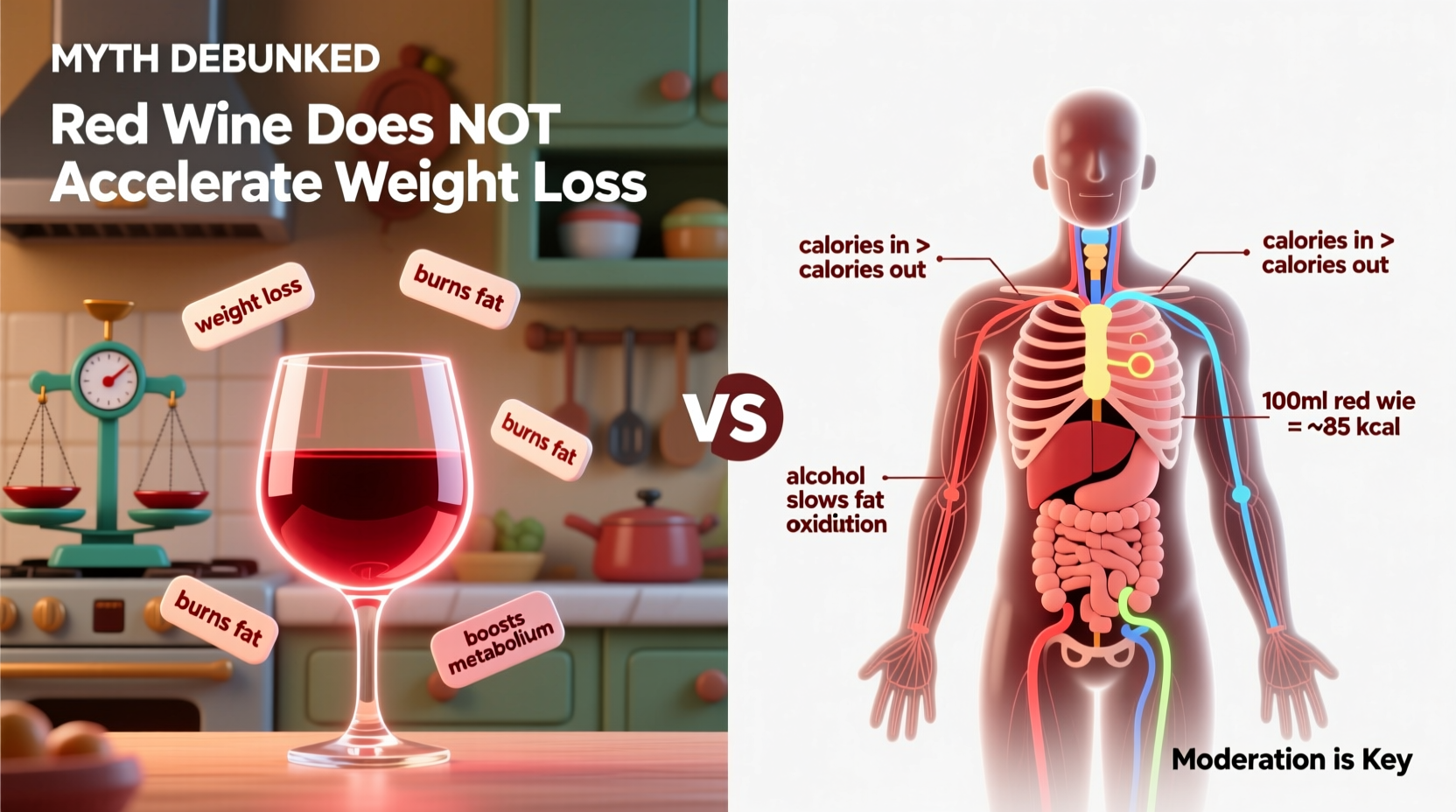
The belief that red wine aids weight loss traces largely to early 2000s studies on resveratrol—a polyphenol found in grape skins, peanuts, and Japanese knotweed. In one landmark 2006 study published in Nature, mice fed a high-fat diet *plus* high-dose resveratrol (equivalent to ~1,000 mg/day for a human) showed improved insulin sensitivity, reduced fat accumulation, and extended lifespan compared to controls. Crucially, these mice received purified resveratrol—not red wine—and at doses 100–1,000 times higher than what’s achievable through dietary intake. A 5-ounce glass of red wine contains approximately 0.2–1.8 mg of resveratrol—far below the threshold needed for measurable metabolic effects in humans.
Media outlets quickly conflated “resveratrol in lab settings” with “red wine in real life.” Headlines omitted critical context: dose equivalence, species differences in metabolism, and the absence of human trials showing fat loss. As Dr. David Jenkins, Professor of Nutritional Sciences at the University of Toronto, explains:
“Resveratrol research is fascinating—but translating mouse data to human dietary advice is like using airplane blueprints to build a bicycle. The compound’s bioavailability in humans is extremely low, and its effects are diluted by alcohol, sugar, and caloric load in wine itself.” — Dr. David Jenkins, MD, PhD, DSc, FRCPC
This foundational misstep set the stage for a cascade of oversimplifications—each reinforcing the myth while obscuring the physiological reality.
Calories Don’t Negotiate: The Alcohol-Energy Equation
Weight loss fundamentally requires a sustained energy deficit: burning more calories than you consume. Red wine contradicts this principle in two direct ways: it adds empty calories and impairs fat oxidation.
A standard 5-ounce (148 mL) serving of red wine contains approximately 125 calories—nearly all from ethanol (7 calories per gram) and residual sugars. That’s comparable to a small granola bar or half a banana. But unlike nutrient-dense foods, those calories deliver no protein, fiber, vitamins, or minerals to support satiety or metabolic function.
More critically, alcohol metabolism hijacks your body’s fat-burning priority. When ethanol enters the liver, it’s converted to acetaldehyde, then acetate, and finally carbon dioxide and water. During this process, the liver temporarily halts fatty acid oxidation—the primary mechanism for burning stored body fat. A 2019 study in The American Journal of Clinical Nutrition demonstrated that even moderate alcohol consumption (2 drinks) suppressed whole-body fat oxidation by 73% for up to 12 hours post-consumption. In practical terms: if you drink wine with dinner, your body prioritizes metabolizing alcohol over burning fat—even if you’re fasting or exercising the next morning.
Tip: Track wine calories honestly—not as “healthful antioxidants,” but as discretionary energy. One extra glass daily adds ~45,600 calories annually: enough to gain nearly 13 pounds of fat, assuming no compensatory changes.What the Human Evidence Actually Shows
Large-scale, long-term human studies tell a consistent story—one that diverges sharply from anecdotal claims.
A 2022 meta-analysis in Obesity Reviews examined 27 prospective cohort studies involving over 420,000 adults. It found no association between moderate red wine consumption and weight loss. Instead, researchers observed a modest but statistically significant increase in BMI among regular wine drinkers compared to non-drinkers—particularly in women over age 45. Why? Because “moderate” intake (up to one drink/day for women, two for men) rarely occurs in isolation. Wine often accompanies high-calorie meals, reduces inhibitory control around food choices, and disrupts sleep architecture—impairing leptin and ghrelin regulation.
Even more telling is the Nurses’ Health Study II, which followed 19,220 women for 12 years. Researchers controlled for diet quality, physical activity, smoking, and socioeconomic factors. Result: women who increased their alcohol intake—including red wine—over time gained significantly more weight than those whose intake remained stable or decreased. The association held regardless of baseline BMI or exercise habits.
Crucially, no randomized controlled trial (RCT)—the gold standard for causal inference—has ever demonstrated that adding red wine to a person’s diet leads to greater weight loss than placebo or abstinence, when calories and lifestyle variables are rigorously matched.
Do’s and Don’ts: Navigating Wine in a Weight-Conscious Lifestyle
Enjoying red wine doesn’t preclude healthy weight management—but it requires intentionality, not justification. The following table distills evidence-based guidance for integrating wine without undermining goals:
| Action | Evidence-Based Rationale | Practical Application |
|---|---|---|
| DO: Pair wine with protein/fiber-rich meals | Slows gastric emptying and blunts blood alcohol spikes, reducing appetite dysregulation later in the evening. | Choose grilled salmon + roasted vegetables before pouring—not chips or breadsticks. |
| DO: Measure pours precisely | Most people underestimate serving size by 40–60%. A “glass” at home often equals 8–12 oz—2–3x the standard portion. | Use a 5-oz wine measure or marked glass; avoid drinking straight from the bottle. |
| DON’T: Drink wine “to relax” before bed | Alcohol fragments REM sleep and suppresses melatonin, elevating cortisol and hunger hormones the next day. | Switch to herbal tea (e.g., tart cherry or chamomile) 90 minutes before bedtime. |
| DON’T: Use wine as a “reward” after workouts | Exercise-induced calorie burn is often overestimated; alcohol also impedes muscle protein synthesis and recovery. | Hydrate with electrolyte water and eat a 3:1 carb-to-protein snack instead. |
Mini Case Study: Sarah’s “Heart-Healthy” Experiment
Sarah, 47, was diagnosed with prediabetes and advised to lose 25 pounds. Her doctor suggested adopting elements of the Mediterranean diet—including “a daily glass of red wine for heart health.” For six months, Sarah drank one 6-ounce glass of Cabernet Sauvignon every evening with dinner. She tracked food meticulously, exercised four days/week, and slept 7 hours nightly. Yet she lost only 3 pounds—and gained 2 back during holiday weeks. Confused, she consulted a registered dietitian who reviewed her food log. Key findings emerged: Sarah consistently added wine *on top* of her planned calories (not within them), chose higher-fat cheeses and crackers to accompany it, and reported increased late-night snacking after her glass. When she switched to measured 5-oz servings, paired wine only with vegetable-forward meals, and eliminated it on three non-consecutive weeknights, she lost 14 pounds in the next 10 weeks—without changing anything else. Her HbA1c dropped from 5.8% to 5.4%.
Sarah’s experience reflects a common pattern: wine isn’t inherently fattening—but how, when, and why we drink it often amplifies behaviors that stall progress.
Step-by-Step: Reassessing Your Relationship with Red Wine
If you enjoy red wine but want to align it with weight goals, follow this clinically grounded sequence:
- Baseline Audit (Week 1): Log every sip—time, volume, food pairings, hunger cues before/after, and sleep quality. Use a free app like MyFitnessPal or Cronometer.
- Pattern Analysis (Week 2): Identify triggers: Is wine tied to stress relief? Social habit? Post-dinner ritual? Note whether it precedes cravings or disrupts sleep.
- Strategic Reduction (Weeks 3–4): Replace 2–3 weekly servings with non-alcoholic alternatives (e.g., dealcoholized wine, sparkling pomegranate water). Keep one “intentional” serving—measured, savored slowly, with a balanced meal.
- Metabolic Reset (Weeks 5–6): Eliminate wine entirely for 14 days. Observe changes in energy, hunger rhythm, sleep depth, and waistband comfort. Many report reduced bloating and steadier energy—clues to alcohol’s subtle metabolic burden.
- Informed Reintegration (Week 7+): If you choose to resume, do so with full awareness: one 5-oz serving, max 3x/week, never on an empty stomach, and never as compensation for exercise or “virtuous” eating.
FAQ
Can resveratrol supplements help with weight loss?
No high-quality human trial supports this. A 2021 RCT in Diabetes Care gave 500 mg/day resveratrol to obese adults for 24 weeks—no difference in weight, waist circumference, or insulin resistance versus placebo. Supplements also lack the synergistic compounds found in whole foods and carry potential drug interactions.
Is red wine “better” than other alcoholic drinks for weight management?
Not meaningfully. While red wine has marginally more polyphenols than white or rosé, its alcohol and sugar content remain comparable. Spirits mixed with soda have fewer calories per serving—but the risk of overconsumption is higher. Beer’s carbohydrate load makes it less favorable for some. Ultimately, the type matters less than total ethanol intake and behavioral context.
Why do some people lose weight while drinking wine regularly?
They’re likely succeeding *despite* the wine—not because of it. Their overall calorie control, physical activity, sleep hygiene, and stress management are strong enough to offset wine’s metabolic interference. Attributing success to wine is a classic case of confusing correlation with causation.
Conclusion: Clarity Over Comfort
Debunking the red wine weight-loss myth isn’t about moralizing alcohol—it’s about honoring the complexity of human metabolism. Resveratrol is a compelling molecule in labs, but it doesn’t survive digestion intact or act independently in our bodies. Calories from ethanol are metabolically active and physiologically disruptive—not neutral or beneficial in the context of fat loss. And the rituals surrounding wine—late-night sipping, social pressure, emotional substitution—often erode the very habits that drive sustainable results.
You don’t need to give up red wine to achieve a healthier weight. You do need to see it clearly: not as medicine, not as magic, but as a choice with measurable consequences. When you measure your pours, honor your hunger signals, prioritize restorative sleep, and anchor wine in nourishment rather than novelty—you reclaim agency. That’s where real progress begins.
💬 Your experience matters. Have you adjusted your wine habits and noticed shifts in energy, weight, or well-being? Share your honest insight in the comments—your story could help someone else move past myth and toward meaningful change.








