
For decades, the phrase “alcohol kills brain cells” has echoed in classrooms, health pamphlets, and cautionary talks to teenagers. It’s simple, memorable—and profoundly misleading. While heavy, chronic drinking undeniably harms the brain, the reality is far more nuanced than wholesale neuronal slaughter. Modern neuroscience reveals that alcohol doesn’t erase neurons like an eraser on a chalkboard. Instead, it disrupts communication, impairs plasticity, damages supporting structures, and—under extreme conditions—triggers cell death through indirect mechanisms. Understanding this distinction matters: it shifts the conversation from fatalism to prevention, from myth to measurable risk, and from oversimplification to informed personal choice.
What Science Actually Shows: Neurons vs. Neural Networks
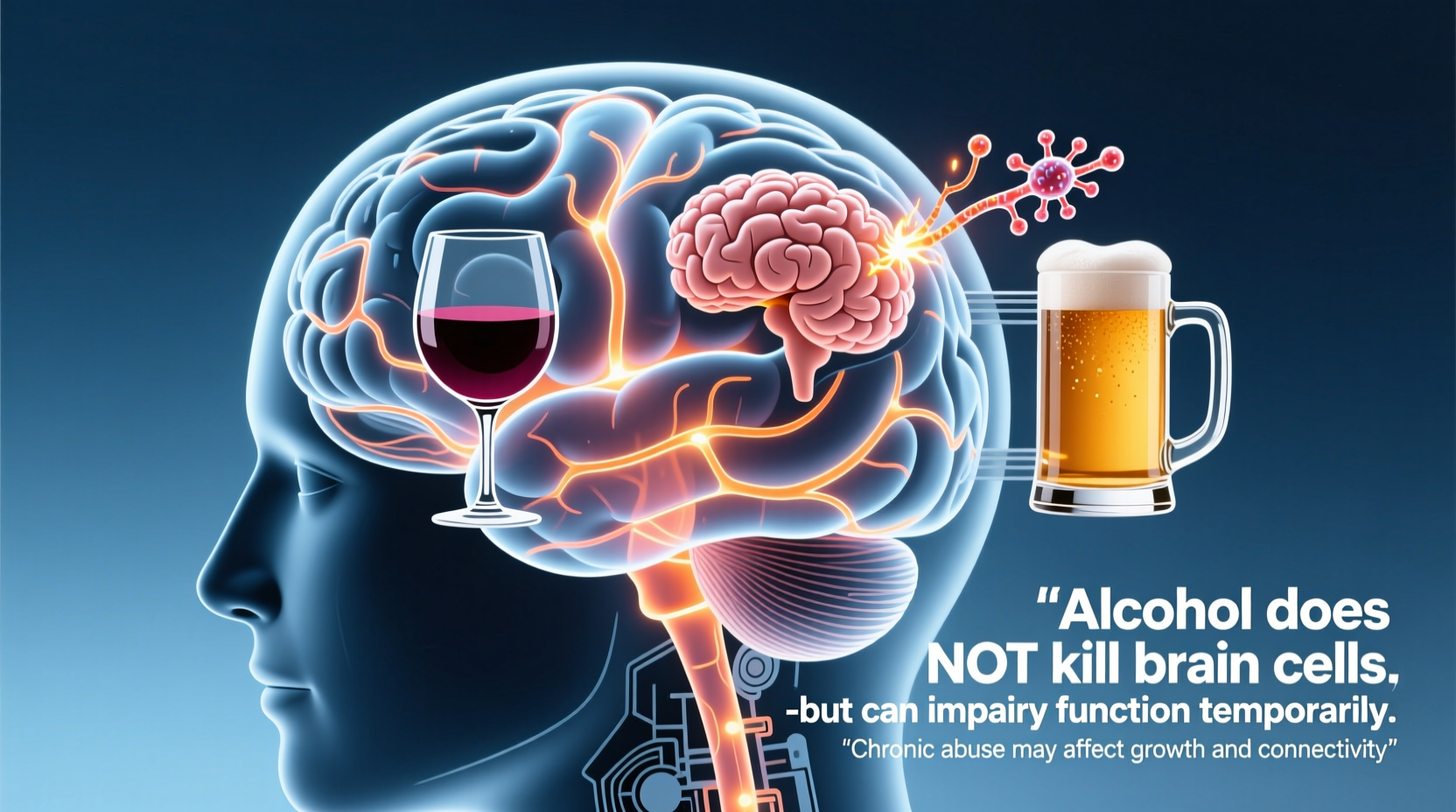
The human brain contains roughly 86 billion neurons—specialized cells that process and transmit information via electrical and chemical signals. Early studies in the 1970s and ’80s, often conducted on rodents given extremely high doses of ethanol or on postmortem tissue from individuals with severe alcohol use disorder (AUD), observed reduced brain volume and neuronal loss in regions like the frontal cortex and hippocampus. These findings were widely misinterpreted as evidence that “one drink = dead brain cells.” But newer, longitudinal human imaging studies tell a different story.
Functional MRI and diffusion tensor imaging show that while chronic heavy drinking correlates with shrinkage in gray and white matter, much of this change reflects dendritic retraction, synaptic loss, myelin degradation, and glial cell dysfunction—not irreversible neuron death. In fact, research published in Nature Communications (2022) tracked over 500 adults for 30 years and found no significant correlation between moderate drinking (up to 7 drinks/week) and accelerated neuronal loss. However, those consuming 14+ drinks weekly showed measurable thinning in the prefrontal cortex—a region critical for judgment, impulse control, and working memory.
The key insight: alcohol primarily injures the *connections* between neurons and the infrastructure that supports them—not the neurons themselves, at least not initially. When connections weaken or break, cognition falters—even if the cell bodies remain intact.
Tip: Think of your brain like a city: alcohol doesn’t demolish buildings (neurons) outright—it disables traffic signals, potholes roads (myelin), and shuts down power grids (synaptic transmission). Recovery begins when the infrastructure is repaired.How Alcohol *Does* Harm the Brain: Four Verified Pathways
Alcohol’s neurotoxicity operates through well-documented biological mechanisms—none of which involve indiscriminate cell murder, but all of which pose real, cumulative risk.
- Neuroinflammation and Oxidative Stress: Ethanol metabolism generates reactive oxygen species (ROS) and activates microglia—the brain’s immune cells. Chronic activation triggers inflammation that damages neuronal membranes and mitochondria, impairing energy production.
- Thiamine (Vitamin B1) Deficiency: Heavy drinkers often suffer from poor nutrition and impaired thiamine absorption. Thiamine is essential for glucose metabolism in neurons. Its deficiency causes Wernicke-Korsakoff syndrome—a devastating condition marked by confusion, ataxia, and profound memory deficits due to damage in the thalamus and mammillary bodies.
- Disruption of Neurotransmitter Systems: Alcohol enhances GABA (inhibitory) signaling and suppresses glutamate (excitatory) activity. With repeated exposure, the brain compensates—leading to hyperexcitability during withdrawal and long-term imbalance that affects learning, mood regulation, and stress response.
- Hippocampal Neurogenesis Suppression: The hippocampus continuously generates new neurons throughout life—a process vital for memory formation and emotional resilience. Studies in both animals and humans confirm that even binge drinking episodes (4+ drinks for women, 5+ for men in ~2 hours) can suppress neurogenesis for up to two weeks. This effect is reversible with abstinence—but repeated suppression may impair long-term cognitive flexibility.
Real-World Impact: A Mini Case Study
Consider Maya, a 38-year-old graphic designer who averaged 8–10 drinks per week for 12 years—mostly wine with dinner and cocktails on weekends. She noticed subtle changes: forgetting names mid-conversation, struggling to retain instructions during client calls, and needing twice as long to recover focus after weekend drinking. At her annual physical, her physician ordered neuropsychological testing. Results showed mild but statistically significant deficits in verbal fluency, processing speed, and delayed recall—consistent with early prefrontal-hippocampal network inefficiency. An MRI revealed no gross atrophy, but functional scans indicated reduced connectivity between the dorsolateral prefrontal cortex and hippocampus.
Maya committed to abstinence for six months. Follow-up testing showed measurable improvement in processing speed and working memory—though verbal fluency remained slightly below baseline. Her neurologist explained: “Your neurons didn’t die. But their wiring got sluggish, their energy supply dipped, and their ability to form new links weakened. Six months gave your brain time to rebuild synapses, reduce inflammation, and restore mitochondrial function.” Maya now limits alcohol to ≤3 drinks/month and practices daily cognitive engagement—proof that harm is often functional, not structural, and frequently reversible.
Do’s and Don’ts: Evidence-Based Guidelines for Brain Health
Public health recommendations have evolved beyond “just don’t drink.” Today’s guidance emphasizes dose, pattern, and individual vulnerability. Below is a distilled summary of what peer-reviewed research consistently supports.
| Action | Evidence Summary | Risk Level |
|---|---|---|
| Abstain if under age 25 | Brain development—especially prefrontal cortex maturation—continues until ~25. Alcohol exposure during this window increases risk of long-term executive function deficits. | High |
| Avoid binge drinking (≥4/5 drinks in 2 hrs) | Single episodes trigger acute neuroinflammation, suppress BDNF (brain-derived neurotrophic factor), and impair memory consolidation for up to 72 hours. | High |
| Limit to ≤7 standard drinks/week | Large cohort studies (e.g., UK Biobank, 2023) associate this level with lowest dementia risk and stable cognitive trajectories over 10+ years. | Low |
| Never drink on an empty stomach | Fasting accelerates ethanol absorption and intensifies oxidative stress. Eating protein/fat first slows gastric emptying and buffers metabolic strain. | Moderate |
| Pair alcohol with thiamine-rich foods | Legumes, pork, sunflower seeds, and nutritional yeast support neuronal energy metabolism and mitigate deficiency-related damage. | Preventive |
Expert Insight: What Leading Neuroscientists Say
“The ‘brain cell death’ myth distracts from what we know is truly harmful: disruption of synaptic plasticity, chronic neuroinflammation, and nutrient depletion. We’ve seen remarkable recovery in patients who stop heavy drinking—even after decades—because neurons are resilient when given the right conditions: rest, nutrition, sleep, and cognitive stimulation.”
— Dr. Lena Rodriguez, Director of the Center for Addiction Neuroscience, Stanford University School of Medicine
“If you’re worried about your brain, ask not ‘How many cells did I lose?’ but ‘How well are my networks communicating today?’ That’s where the science—and the solutions—live.”
— Dr. Arjun Patel, Cognitive Neurologist, Massachusetts General Hospital
FAQ: Clearing Up Common Misconceptions
Does one night of heavy drinking kill brain cells?
No—acute binge drinking does not cause widespread neuronal death in healthy adults. However, it *does* impair synaptic function, elevate inflammatory markers for 48–72 hours, and disrupt sleep architecture critical for memory consolidation. Repeated binges compound these effects and increase long-term risk.
Can the brain fully recover after stopping alcohol?
Yes—substantially. Within 2 weeks of abstinence, cerebral blood flow improves and neuroinflammatory markers decline. By 3–6 months, hippocampal volume often increases, and cognitive tests show measurable gains in attention and executive function. Full recovery depends on duration and severity of use, age, nutrition, sleep quality, and engagement in mentally stimulating activities.
Is red wine ‘good for the brain’ because of resveratrol?
No credible clinical evidence supports neuroprotective benefits from drinking red wine. While resveratrol shows antioxidant properties in lab settings, human trials fail to demonstrate cognitive benefit at dietary intake levels—and any potential upside is negated by ethanol’s neurotoxic effects. The American Heart Association explicitly states: “No one should start drinking alcohol for health benefits.”
Your Brain’s Resilience Timeline: What Happens When You Stop
Recovery isn’t linear—but neuroscience offers a reliable framework for what unfolds when alcohol intake ceases. This timeline reflects average outcomes across large-scale longitudinal studies (e.g., the National Institute on Alcohol Abuse and Alcoholism’s COMBINE trial follow-ups).
- 24–48 hours: GABA/glutamate balance begins rebalancing; anxiety and insomnia may peak as the brain exits acute suppression.
- Day 3–7: Microglial activation decreases; oxidative stress markers fall by ~30%; short-term memory encoding improves noticeably.
- Week 2–4: Sleep architecture normalizes; BDNF levels rise; hippocampal neurogenesis resumes at near-baseline rates.
- Month 3: White matter integrity (measured by fractional anisotropy) improves significantly; processing speed and working memory test scores increase by 12–18% on average.
- 6–12 months: Prefrontal-hippocampal functional connectivity approaches pre-use levels; subjective reports of mental clarity, emotional regulation, and focus align with objective metrics.
Practical Steps to Protect and Restore Your Brain Health
Knowledge becomes power only when translated into action. Here’s a concise, clinically grounded checklist you can implement starting today:
- ✅ Track your intake honestly—use a journal or app for 2 weeks to identify patterns (e.g., “I drink most on stressful days” or “I always exceed my limit on weekends”).
- ✅ Introduce two alcohol-free days per week—this reduces tolerance, lowers inflammation, and resets reward circuitry.
- ✅ Optimize sleep hygiene: Prioritize 7–8 hours nightly; avoid screens 90 minutes before bed; keep bedroom temperature at 60–67°F—sleep is when glymphatic clearance removes neurotoxic waste.
- ✅ Support brain metabolism: Eat omega-3s (fatty fish, walnuts), antioxidants (berries, leafy greens), and B vitamins (nutritional yeast, lentils); consider a high-quality B-complex supplement if diet is inconsistent.
- ✅ Stimulate neuroplasticity daily: 20 minutes of aerobic exercise (brisk walking counts), 15 minutes of focused learning (language app, instrument practice), and 5 minutes of mindful breathing—all shown to boost BDNF and synaptic density.
Conclusion: Rethinking Risk, Reclaiming Agency
The myth that “alcohol kills brain cells” persists because it offers a satisfyingly simple cause-and-effect narrative. But the human brain defies simplicity. It’s not a static organ of fixed parts—it’s a dynamic, adaptive system shaped by behavior, environment, and time. What alcohol *does* do is interfere with that adaptability: slowing repair, taxing resources, and narrowing cognitive margins. The good news? Those margins can widen again. Every alcohol-free day strengthens synaptic resilience. Every nutrient-dense meal fuels neural repair. Every bout of deep sleep clears metabolic debris. Your brain isn’t fragile—it’s fiercely responsive. And responsiveness means agency.
You don’t need perfection to protect your cognition. You need consistency, curiosity, and compassion—for yourself and your neurobiology. Start small: skip tonight’s glass of wine. Choose water instead of a cocktail at tomorrow’s gathering. Notice how your focus feels 48 hours later. That’s not magic—that’s your brain doing exactly what it evolved to do: heal, adapt, and thrive.
💬 Your experience matters. Have you noticed cognitive shifts after changing your alcohol habits? Share what worked—or what surprised you—in the comments. Real stories help others feel less alone and more empowered.








