
In an era where convenience often trumps caution, weight loss patches have emerged as a tempting shortcut in the battle against excess body fat. Marketed with bold promises—“melt fat while you sleep,” “burn calories through your skin,” ��no dieting required”—these adhesive patches claim to deliver slimming ingredients directly into the bloodstream. But do they actually work, or are they simply another cleverly disguised gimmick capitalizing on desperation and misinformation?
The truth lies somewhere between marketing hype and marginal biological possibility. While transdermal delivery systems are legitimate in medicine (think nicotine or hormone patches), applying that same principle to fat loss is far more complicated. This article dives deep into the science, scrutinizes ingredient lists, evaluates clinical evidence, and separates fact from fiction so you can make an informed decision.
How Weight Loss Patches Claim to Work
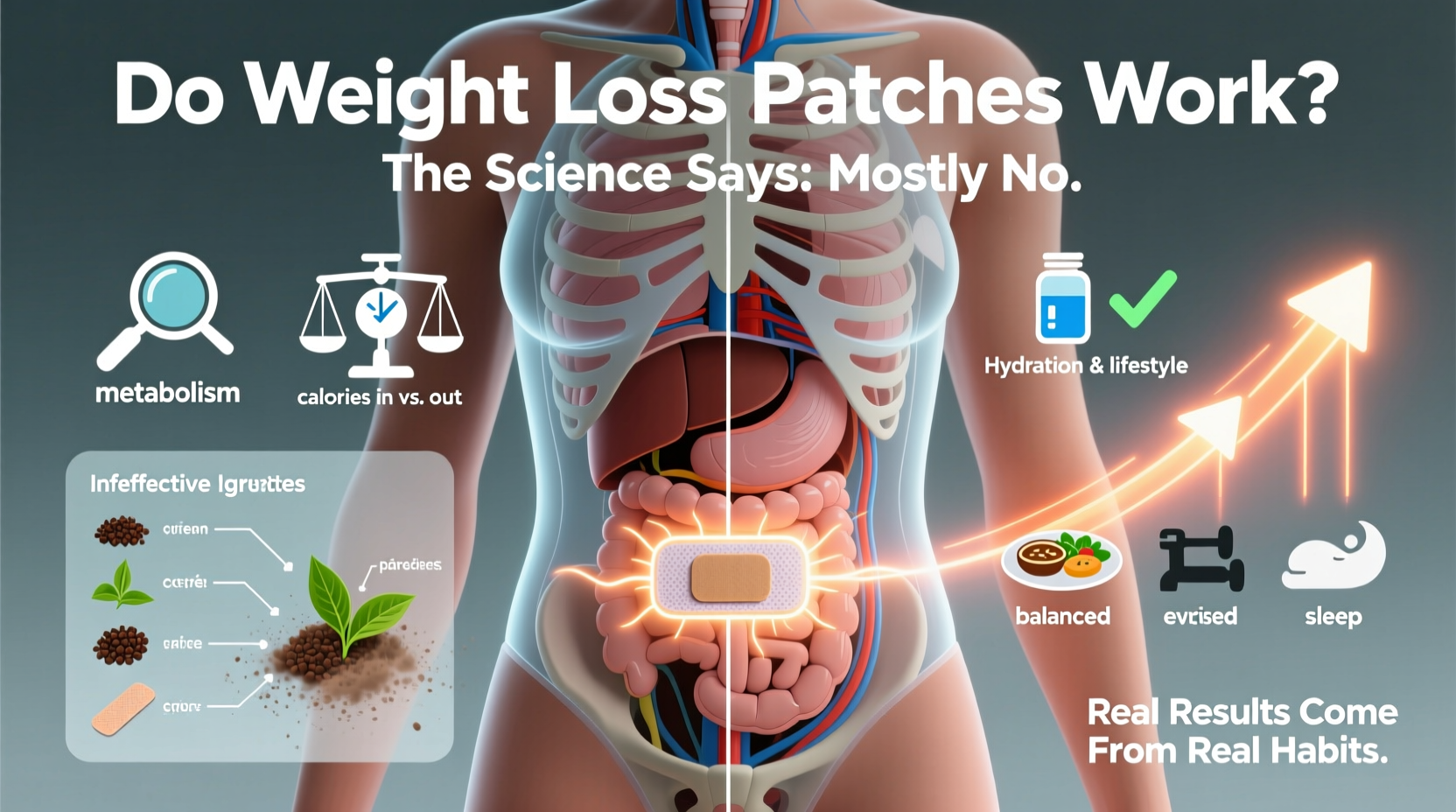
Manufacturers of weight loss patches typically assert that their products use transdermal technology to deliver active ingredients—such as green tea extract, caffeine, garcinia cambogia, or forskolin—through the skin and into the bloodstream. Once absorbed, these compounds allegedly boost metabolism, suppress appetite, or increase fat oxidation, leading to gradual weight loss without the need for strict diets or intense exercise.
The appeal is obvious: apply a patch before bed or in the morning, go about your day, and let your body “passively” burn fat. No meal prep, no calorie counting, no sweat. But does this mechanism hold up under scientific scrutiny?
Transdermal delivery is effective for certain molecules—especially small, lipid-soluble ones like nicotine or estrogen. However, many of the herbal extracts touted in weight loss patches are large-molecule compounds that struggle to penetrate the skin’s protective barrier. Even if some absorption occurs, the concentration reaching systemic circulation is often too low to produce any meaningful physiological effect.
“Transdermal delivery works well for pharmaceuticals with proven pharmacokinetics, but most weight loss patch ingredients lack both adequate skin penetration and clinical validation.” — Dr. Lena Patel, Pharmacologist & Metabolic Researcher
Examining the Ingredients: What’s Inside and Does It Matter?
To assess efficacy, we need to look at what’s actually in these patches. Below is a breakdown of common ingredients found in popular brands and what science says about them.
| Ingredient | Purported Benefit | Scientific Support | Skin Absorption Likelihood |
|---|---|---|---|
| Caffeine | Stimulates metabolism, increases energy | Moderate (oral intake) | Low to moderate (patch form unproven) |
| Green Tea Extract (EGCG) | Boosts fat oxidation | Some evidence (with high oral doses) | Very low (poor dermal penetration) |
| Garcinia Cambogia | Suppresses appetite, blocks fat production | Weak to none (studies show minimal effect) | Negligible |
| Forskolin | Activates fat breakdown enzymes | Limited human data | Unlikely via patch |
| Guarana | Energy boost, appetite suppression | Due to caffeine content (oral only) | Minimal absorption |
The table reveals a consistent pattern: while some ingredients may have modest effects when ingested orally, there is little to no evidence supporting their effectiveness when delivered through the skin. Moreover, even if absorbed, the dosages in patches are typically far below the thresholds used in clinical studies.
Tip: Always check the ingredient list and dosage information. If the patch contains less than 5% of the effective oral dose, it's unlikely to have any measurable impact.The Reality of Clinical Evidence
Despite aggressive marketing, independent clinical trials on weight loss patches are scarce. Most available studies are either industry-funded, poorly designed, or published in low-impact journals with questionable peer review standards.
A 2020 review published in the Journal of Obesity & Metabolic Syndrome analyzed 12 studies on transdermal weight loss products. The conclusion? None provided robust evidence of efficacy beyond placebo. In fact, participants using placebo patches reported similar weight changes as those using \"active\" ones, suggesting psychological influence rather than biochemical effect.
One frequently cited study involved a patch containing caffeine and L-carnitine. While researchers reported a 3% reduction in body fat over eight weeks, the trial lacked a control group, had a tiny sample size (n=24), and did not monitor diet or physical activity—key confounding factors. Independent experts criticized the methodology, calling the results “inconclusive at best.”
Contrast this with well-established weight loss interventions: lifestyle modification programs consistently achieve 5–10% weight loss over six months, and FDA-approved medications like semaglutide demonstrate up to 15% loss in clinical trials. Weight loss patches, by comparison, offer no comparable data.
Why Placebo Might Be Doing the Heavy Lifting
Psychology plays a powerful role in perceived success. When someone believes they’re using a cutting-edge fat-burning tool, they may unconsciously adopt healthier behaviors—eating slightly less, walking more, paying attention to portion sizes. These subtle shifts, not the patch itself, could explain minor weight changes.
This phenomenon is known as the placebo effect, and it’s particularly strong in weight management. A person wearing a patch might feel “supported” in their journey, increasing motivation. But if the patch were removed, would the progress continue? Often, the answer is no—because the real driver was behavioral change, not transdermal chemistry.
Real-World Example: Sarah’s Experience with Fat-Burning Patches
Sarah, a 38-year-old office worker from Austin, tried a popular weight loss patch after seeing influencer endorsements online. She applied it daily for six weeks, followed her normal routine, and tracked her weight weekly.
She lost 4 pounds during that time—but upon reflection, she realized she’d also started drinking more water, reduced late-night snacking, and walked 20 minutes each lunch break. When she stopped using the patch but maintained the habits, she continued losing weight. When she resumed old patterns, the scale crept back up.
“I thought the patch was helping,” she said. “But really, I was just paying more attention to my health because I felt like I was ‘doing something.’ The patch was a catalyst, not a cure.”
Sarah’s story illustrates a common narrative: the patch didn’t cause weight loss, but it prompted awareness. That’s valuable—but it doesn’t validate the product’s mechanism.
Red Flags and Marketing Tactics to Watch For
The weight loss patch industry thrives on ambiguity and emotional appeal. Here are warning signs that a product may be more gimmick than science:
- Claims of effortless results: “Lose 20 pounds in 30 days without diet or exercise” is biologically implausible.
- Vague or proprietary blends: If exact dosages aren’t listed, you can’t assess potency.
- Before-and-after photos with no context: Lighting, angles, and water weight can create false impressions.
- No third-party testing: Reputable supplements undergo independent lab verification for purity and content.
- Overuse of scientific jargon: Terms like “lipotropic action” or “thermogenic transdermal infusion” sound impressive but mean little without proof.
Regulatory oversight is also limited. In the U.S., the FDA does not approve dietary supplements before they hit the market. Companies can sell weight loss patches without proving safety or efficacy, as long as they include a disclaimer: “These statements have not been evaluated by the Food and Drug Administration. This product is not intended to diagnose, treat, cure, or prevent any disease.” That disclaimer should raise eyebrows, not reassure.
What Actually Works for Sustainable Weight Loss
If weight loss patches fall short, what approaches are scientifically supported? The answer isn’t flashy, but it’s reliable.
- Nutrition: Focus on whole foods—vegetables, lean proteins, healthy fats, and fiber-rich grains. Calorie deficit remains the cornerstone of fat loss.
- Physical Activity: Combine strength training and cardio to preserve muscle and burn calories.
- Sleep and Stress Management: Poor sleep and chronic stress disrupt hormones like cortisol and leptin, which regulate hunger and fat storage.
- Consistency Over Time: Gradual, sustainable changes outperform extreme diets every time.
- Medical Guidance (when needed): For individuals with obesity or metabolic conditions, prescription treatments and professional supervision can be game-changers.
Checklist: Evaluating Any Weight Loss Product
- ✅ Is there peer-reviewed research supporting its effectiveness?
- ✅ Are ingredient dosages clearly listed?
- ✅ Is the company transparent about manufacturing and testing?
- ✅ Does it promise rapid results without lifestyle changes?
- ✅ Have independent organizations (like ConsumerLab or NSF) tested it?
- ✅ Does it rely heavily on testimonials instead of data?
Use this checklist before spending money on any supplement or device. If a product fails two or more criteria, proceed with caution—or better yet, skip it entirely.
Frequently Asked Questions
Can weight loss patches cause side effects?
Yes. Some users report skin irritation, redness, or rashes at the application site. Systemic effects are possible if stimulants like caffeine are absorbed—even in small amounts—leading to jitteriness, insomnia, or increased heart rate. People with sensitive skin or cardiovascular conditions should be especially cautious.
Are there any FDA-approved weight loss patches?
No. As of now, the FDA has not approved any transdermal patch for weight loss. Prescription weight loss medications are available in oral or injectable forms (e.g., phentermine, semaglutide), but none are delivered via patch.
Do celebrity endorsements prove these patches work?
No. Celebrities often promote products for payment, not personal experience. Many have access to personal trainers, chefs, and medical teams that contribute to their appearance. Their results are rarely representative of what the average consumer can achieve.
Conclusion: Skip the Patch, Focus on Proven Strategies
Weight loss patches may seem like a modern miracle, but they fail the test of scientific credibility. While transdermal technology has legitimate medical applications, extending it to fat loss without evidence is misleading. The ingredients lack sufficient absorption, the dosages are too low, and the clinical data is either absent or deeply flawed.
That doesn’t mean the idea is entirely without merit. Future advancements in nanotechnology or permeation enhancers could one day make topical fat-burning agents viable. But we’re not there yet.
For now, the most effective path to weight loss remains unchanged: balanced nutrition, regular movement, adequate sleep, and patience. These aren’t sold in sleek packaging with dramatic before-and-after images, but they work—consistently, safely, and sustainably.
🚀 Your body responds to habits, not hacks. Instead of chasing shortcuts, invest in routines that build long-term health. Share this article to help others see through the hype and make smarter choices.








