Thin, patchy eyebrows are a common concern for many people—whether due to over-plucking, aging, hormonal shifts, or genetic factors. In recent years, eyebrow serums have surged in popularity as a go-to solution for fuller brows. But with countless products flooding the market, often at premium prices, a critical question remains: do these serums actually stimulate new hair growth, or are they simply advanced moisturizers that make existing hairs look healthier?
The answer isn't black and white. While some serums deliver measurable results through scientifically backed ingredients, others rely more on conditioning agents that enhance appearance without altering the hair growth cycle. Understanding the difference requires a closer look at how eyebrow growth works, what active ingredients truly matter, and what consumers can realistically expect.
How Eyebrow Hair Grows: The Biological Basics
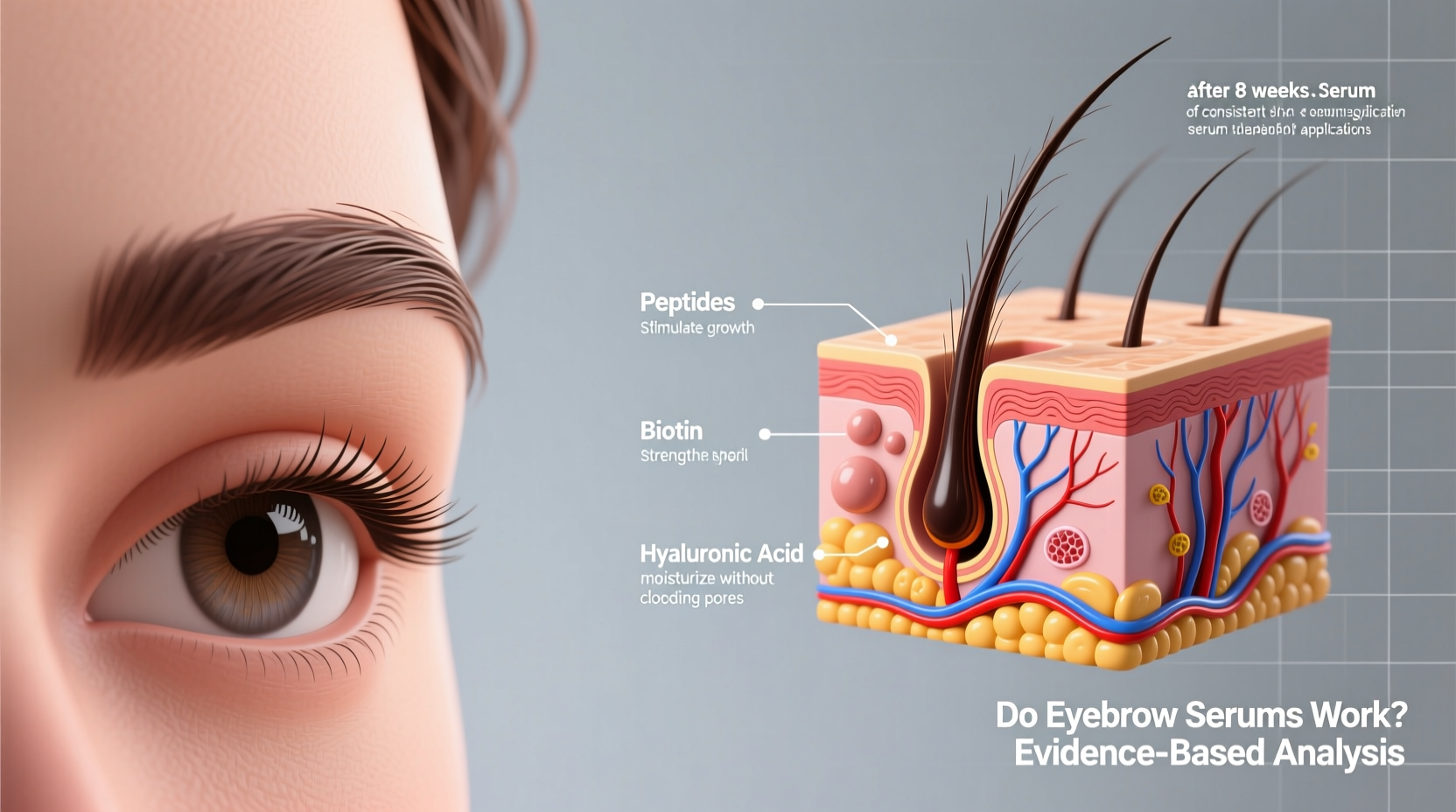
Eyebrow hair follows the same growth cycle as scalp hair but operates on a much shorter timeline. This cycle consists of three phases:
- Anagen (growth phase): Lasts 30–45 days. During this time, hair follicles actively produce new hair.
- Catagen (transition phase): A brief 2–3 week period where growth stops and the follicle shrinks.
- Telogen (resting phase): Lasts about 90 days. The old hair rests before eventually shedding to make room for new growth.
Unlike scalp hair, which can stay in the anagen phase for years, eyebrow hairs spend far less time growing. This biological limitation is why natural brow regrowth is slow and often sparse after damage or thinning.
For a serum to genuinely promote growth, it must extend the anagen phase, strengthen follicles, or stimulate dormant ones. Simply improving the texture or luster of existing hairs won’t increase density or length in a meaningful way.
Active Ingredients That Promote Growth vs. Those That Moisturize
Not all eyebrow serums are created equal. The key differentiator lies in their formulation. Here’s a breakdown of ingredients commonly found in these products and what they actually do:
| Ingredient | Purpose | Growth-Promoting? |
|---|---|---|
| Bimatoprost (prescription) | Originally developed for glaucoma, it prolongs the anagen phase | Yes – clinically proven |
| Panthenol (Pro-Vitamin B5) | Conditions hair, improves flexibility and shine | No – cosmetic enhancement only |
| Peptides (e.g., myristoyl pentapeptide-17) | May signal follicles to enter growth phase | Potentially – limited but promising studies |
| Biotin | Supports keratin infrastructure; often deficient in brittle hair | Indirectly – only if deficiency exists |
| Hyaluronic Acid | Hydrates skin and hair, reduces flakiness | No – moisturizing only |
| Niacinamide (Vitamin B3) | Improves blood flow to follicles, may support growth | Possibly – supportive role in healthy follicles |
| Castor Oil | Ricinoleic acid may reduce inflammation; thickens appearance | Debatable – mostly anecdotal evidence |
The presence of bimatoprost—a prescription ingredient used in Latisse—is the only compound with FDA approval for increasing hair growth, specifically for eyelashes. Some eyebrow serums now use prostaglandin analogs or derivatives in lower concentrations, though efficacy varies.
In contrast, most over-the-counter serums rely heavily on conditioning agents like panthenol, glycerin, and plant oils. These improve the look and feel of brows by reducing brittleness and adding sheen, but they don’t initiate new growth.
Tip: Check the ingredient list before buying. If the first five ingredients are oils or humectants (like glycerin or hyaluronic acid), the product likely focuses on moisture, not growth.What Science Says: Clinical Evidence Behind Brow Serums
A 2020 study published in the Journal of Cosmetic Dermatology evaluated a peptide-based serum applied daily to thinning eyebrows over 16 weeks. Results showed a statistically significant increase in hair count (average +28%) and thickness (average +19%) compared to placebo. Participants reported improved fullness, though results took at least 8 weeks to become visible.
However, the study was funded by a cosmetics company, raising questions about bias. Independent research on non-prescription brow serums remains limited. Most claims are based on in-house testing with small sample sizes and subjective assessments.
Dr. Lena Patel, a board-certified dermatologist specializing in hair disorders, explains:
“True regrowth requires influencing the follicular cycle. While peptides and certain botanicals show promise in early trials, we don’t yet have large-scale, long-term data proving over-the-counter serums reliably grow new eyebrow hairs. What we *do* know is that they can protect existing hairs from breakage and improve skin health around follicles.”
This distinction is crucial. Many users report “fuller” brows after using serums—but this may be due to reduced shedding, better hydration, and enhanced pigmentation rather than actual neogenesis (new hair formation).
Realistic Expectations: A Case Study
Samantha, a 34-year-old graphic designer, had struggled with sparse brows since her teenage years of over-tweezing. After seeing influencer ads, she invested in a popular $80 peptide serum. She applied it nightly for four months, documenting changes weekly.
After six weeks, she noticed her remaining brow hairs appeared thicker and less prone to falling out when brushed. By week 10, fine, lighter-colored hairs began filling in the tail of her left brow—areas previously bare for over a decade. However, no new growth appeared in the central arch, where follicles may have been permanently damaged.
At the four-month mark, Samantha’s brows looked significantly fuller, but a dermatologist confirmed during a consultation that most improvement came from retained hairs and improved condition, not widespread regeneration.
Her experience reflects a common outcome: modest regrowth in areas with dormant but viable follicles, combined with enhanced appearance due to conditioning. Complete restoration of over-plucked brows remains unlikely without medical intervention.
Step-by-Step Guide to Choosing and Using an Effective Serum
If you're considering an eyebrow serum, follow this practical timeline to maximize your chances of success:
- Week 1: Assess Your Brows
Take close-up photos in natural light. Note areas of thinning, breakage, or complete absence. This helps track progress objectively. - Week 2: Research Ingredients
Look for serums containing peptides, niacinamide, or caffeine. Avoid those listing fragrance, alcohol, or parabens high on the list, as these can irritate the delicate eye area. - Week 3: Patch Test
Apply a small amount to your inner forearm or behind the ear. Wait 24 hours to rule out allergic reactions before using near eyes. - Week 4 Onward: Consistent Application
Apply the serum once daily, preferably at night, using the provided brush. Draw a single stroke along the brow line, focusing on sparse areas. Do not over-apply. - Month 2–3: Monitor Changes
Check weekly photos. Look for reduced shedding, increased hair retention, and emergence of fine vellus hairs. - Month 4+: Evaluate Results
If no visible improvement occurs by 12–16 weeks, discontinue use. Consider consulting a dermatologist for alternative treatments like PRP therapy or prescription options.
Checklist: How to Maximize Serum Effectiveness
- ✅ Use daily for at least 3–4 months before judging results
- ✅ Choose a formula with growth-supportive ingredients (peptides, biotin, caffeine)
- ✅ Avoid touching or tugging brows throughout the day
- ✅ Discontinue tweezing, waxing, or threading during treatment
- ✅ Store the serum in a cool, dark place to preserve ingredient stability
- ✅ Pair with a balanced diet rich in protein, iron, and vitamins A, C, D, and E
Frequently Asked Questions
Can eyebrow serums work if I’ve over-plucked for years?
Prolonged over-plucking can damage hair follicles permanently, especially if scarring occurs. In such cases, serums may improve the look of remaining hairs but won’t revive dead follicles. Early intervention offers the best chance for recovery.
Are there side effects to using eyebrow serums?
Most serums are safe, but some users report redness, itching, or darkening of the skin along the brow line. Products containing prostaglandin analogs (even in low doses) may cause iris pigmentation changes with prolonged eye exposure—though rare with proper application.
Do natural oils like castor or coconut oil really grow brows?
These oils are excellent moisturizers and may reduce breakage, but there’s no strong clinical evidence they stimulate new growth. Any perceived thickening is likely due to coating hairs, making them appear fuller.
Conclusion: Separating Hype from Hope
Eyebrow serums sit at the intersection of skincare and haircare, offering varying degrees of benefit depending on their formulation. The truth is, not all serums promote actual hair growth—many excel instead at conditioning and protecting existing brow hairs, giving the illusion of fullness.
Products with clinically studied ingredients like peptides or those mimicking prostaglandins offer the best chance of stimulating new growth, particularly in areas where follicles are dormant but not destroyed. However, results take time, consistency, and realistic expectations.
Moisturizing serums aren’t useless—they play an important role in maintaining healthy brows and preventing further thinning. But if your goal is true regrowth, focus on ingredient potency, proven mechanisms, and patience. For stubborn cases, professional treatments may be necessary.
💬 Have you tried an eyebrow serum that worked—or didn’t? Share your experience in the comments to help others navigate this crowded market with confidence.








