Essential oil diffusers have become a staple in modern homes, praised for their calming scents, mood-enhancing properties, and supposed ability to \"clean\" the air. But behind the soothing mist and lavender aroma lies a critical question: Are these devices actually purifying your indoor air, or are they simply masking unwanted smells with fragrance? Understanding the difference is vital for anyone concerned about indoor air quality, allergies, or respiratory health.
While essential oils do possess certain antimicrobial and aromatic qualities, equating diffusion with air purification can be misleading. True air purification involves removing pollutants like dust, mold spores, bacteria, viruses, and volatile organic compounds (VOCs). Masking odors, on the other hand, merely covers up smells without addressing their source or improving air safety. This article examines the science, separates myth from fact, and helps you make informed decisions about using essential oil diffusers in your home.
How Essential Oil Diffusers Work
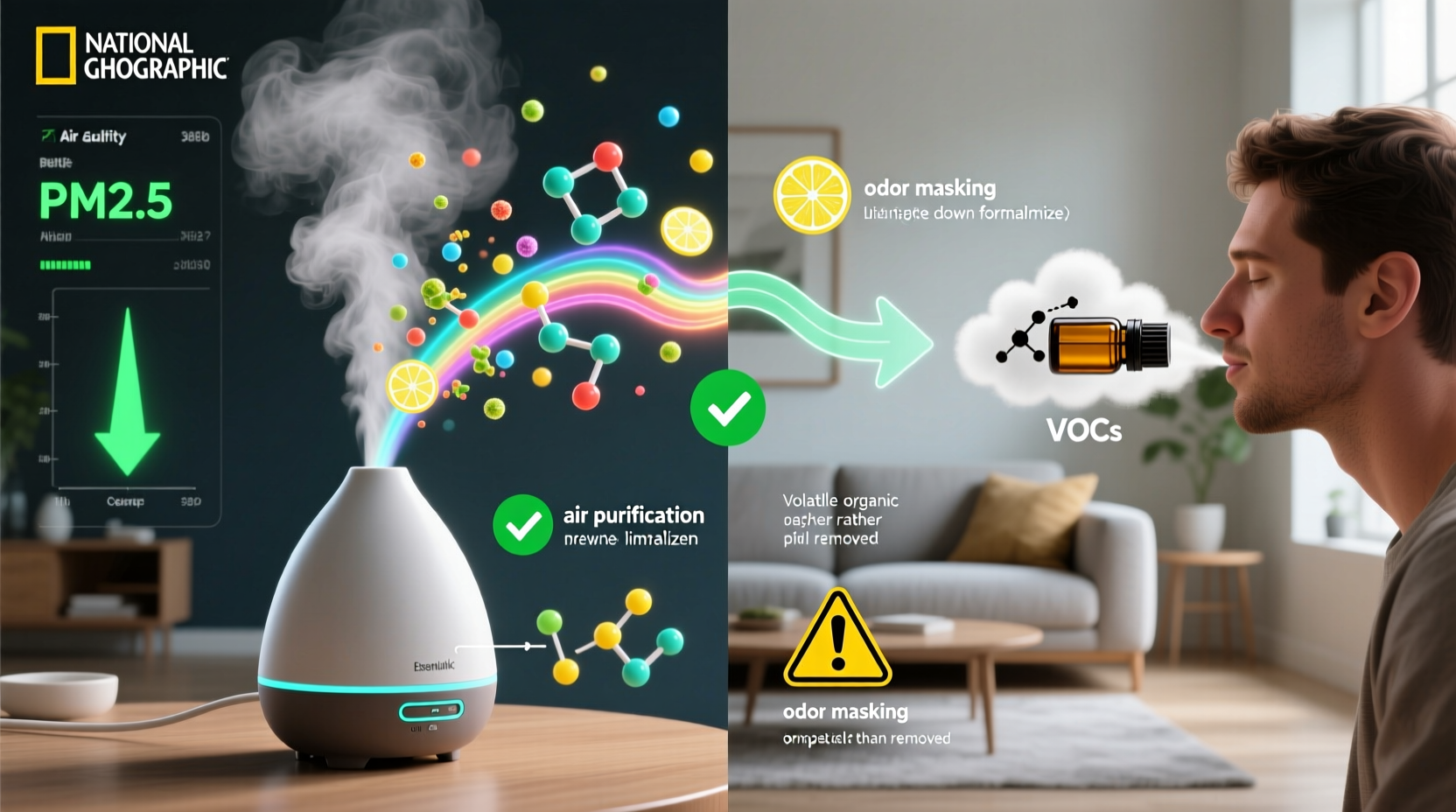
Essential oil diffusers disperse microscopic oil particles into the air using various methods—ultrasonic vibration, heat, nebulization, or fan-based evaporation. The most common type, ultrasonic diffusers, use water and high-frequency vibrations to create a fine mist infused with essential oils. This mist carries the scent throughout a room, providing immediate olfactory impact.
The key function of a diffuser is aromatic dispersion. It’s designed to release the volatile compounds in essential oils—such as linalool in lavender or limonene in citrus—into the breathing space. These compounds interact with the olfactory system and may influence mood, stress levels, and even cognitive performance. However, their role in altering the chemical or biological composition of the air is limited and often misunderstood.
Unlike HEPA filters or UV-C air purifiers, diffusers do not trap particulates or neutralize airborne pathogens through physical filtration or irradiation. They add substances to the air rather than remove them. In some cases, this addition can even contribute to indoor air pollution, especially if low-quality oils or excessive use is involved.
Tip: Use diffusers intermittently (30–60 minutes at a time) and ensure good ventilation to minimize potential buildup of airborne compounds.The Science Behind Air Purification vs. Odor Masking
Air purification refers to the removal or deactivation of contaminants in the air. Effective air purifiers use technologies such as:
- HEPA filters – capture 99.97% of particles 0.3 microns or larger (dust, pollen, mold spores).
- Activated carbon filters – absorb gases, VOCs, and odors at a molecular level.
- UV-C light – disrupts the DNA of bacteria, viruses, and mold spores.
- Ionizers – charge particles so they stick to surfaces or are captured by filters.
In contrast, odor masking introduces a stronger, more pleasant scent to override an unpleasant one. This is exactly what many commercial air fresheners—and by extension, essential oil diffusers—do. While the new scent may make a room feel fresher, it doesn’t eliminate the root cause of the odor, such as pet dander, cooking residue, or mold growth.
Some essential oils, like tea tree, eucalyptus, and peppermint, have demonstrated antimicrobial properties in laboratory settings. However, these studies typically involve concentrated oil exposure in controlled environments—not the diluted, airborne dispersion achieved by a typical home diffuser. The concentration required to significantly reduce airborne microbes is far higher than what is safe or practical for continuous human exposure.
“While certain essential oils show promise in reducing microbial load in vitro, there's insufficient evidence that diffusing them in homes leads to meaningful air purification.” — Dr. Lena Patel, Environmental Health Scientist, Harvard T.H. Chan School of Public Health
Can Essential Oils Actually Purify the Air?
The answer is nuanced. Certain essential oils contain compounds with biocidal activity. For example:
- Tea Tree Oil (Melaleuca): Known for antifungal and antibacterial effects; effective against airborne molds in lab studies.
- Eucalyptus Oil: Contains 1,8-cineole, which has shown antiviral and antimicrobial properties.
- Lemon and Orange Oils: High in limonene, which may oxidize and neutralize some indoor pollutants—but can also form secondary pollutants like formaldehyde when reacting with ozone.
However, real-world effectiveness depends on concentration, exposure time, room size, ventilation, and oil quality. A 2018 study published in Atmospheric Environment found that while diffused lemon oil reduced some bacterial counts in a sealed chamber, the effect was short-lived and did not compare to mechanical filtration.
Moreover, diffusing oils does nothing to remove allergens like pet hair, dust mites, or PM2.5 particles. If your goal is cleaner air for allergy relief or asthma management, a true air purifier remains the only reliable solution.
That said, diffusers can complement air purification strategies. For instance, using tea tree oil alongside regular cleaning and HEPA filtration might help suppress mold spores in damp areas like bathrooms. But it should never replace proper moisture control or ventilation.
Comparing Diffusers and Air Purifiers: What Each Can (and Can't) Do
| Feature | Essential Oil Diffuser | True Air Purifier |
|---|---|---|
| Removes dust, pollen, pet dander | No | Yes (with HEPA filter) |
| Reduces airborne bacteria/viruses | Potentially minimal, under ideal conditions | Yes (with HEPA + UV-C) |
| Eliminates VOCs and smoke | No | Yes (with activated carbon) |
| Masks or covers bad odors | Yes | Only if equipped with carbon filter |
| Adds moisture to air | Yes (ultrasonic models) | No (unless combined with humidifier) |
| Potential to irritate lungs or trigger asthma | Yes (especially with synthetic oils or overuse) | Rare (if properly maintained) |
| Improves mood or relaxation | Yes (aromatherapy benefit) | No direct effect |
This comparison underscores a fundamental distinction: diffusers are primarily tools for aromatherapy and ambiance, not air cleaning. They offer psychological and sensory benefits but lack the engineering to remove physical contaminants.
Real-World Example: Managing Kitchen Odors
Sarah lives in a small apartment where cooking smells—especially garlic and fish—tend to linger. She initially relied on her lavender essential oil diffuser to \"freshen\" the air after dinner. While the scent was pleasant, she noticed that guests still commented on residual odors hours later, and her cat began sneezing more frequently.
After consulting an indoor air quality specialist, Sarah learned that the diffuser was merely layering fragrance over existing particles and VOCs from cooking. She switched to a two-pronged approach: using a range hood during cooking and running a HEPA air purifier with activated carbon in the kitchen. She reserved her diffuser for evenings, using it for 30 minutes with high-quality eucalyptus oil to promote relaxation—never as a substitute for ventilation.
Within a week, the persistent smells diminished, her cat’s symptoms improved, and she felt more confident about her indoor air quality. This case illustrates how diffusers can play a supportive role—but only when paired with actual air-cleaning methods.
Best Practices for Using Essential Oil Diffusers Responsibly
If you enjoy using essential oil diffusers, you don’t need to stop—but optimizing how and when you use them can maximize benefits and minimize risks. Follow this checklist to use diffusers wisely:
Checklist: Safe & Effective Diffuser Use- Choose 100% pure, therapeutic-grade essential oils—avoid synthetic fragrances.
- Diffuse in well-ventilated rooms to prevent compound buildup.
- Limit sessions to 30–60 minutes, followed by a break.
- Keep diffusers away from pets, infants, and individuals with asthma or chemical sensitivities.
- Clean your diffuser weekly to prevent mold and oil residue accumulation.
- Never leave a diffuser running unattended or overnight.
- Use distilled water in ultrasonic models to reduce mineral dust emission.
Additionally, avoid using diffusers as a fix for underlying air quality issues. Lingering odors often indicate poor ventilation, moisture problems, or inadequate cleaning. Address the root cause first—then consider scent enhancement as a final touch.
Frequently Asked Questions
Can diffusing tea tree oil kill mold in the air?
Tea tree oil has antifungal properties and may inhibit mold growth in lab settings. However, the concentration released by a typical diffuser is too low to effectively kill airborne mold spores. To combat mold, fix moisture sources, clean affected areas with proper disinfectants, and use a HEPA air purifier.
Are essential oil diffusers safe for people with asthma?
Not always. The fine mist and volatile organic compounds in essential oils can irritate sensitive airways. Some oils, like eucalyptus and peppermint, contain strong terpenes that may trigger bronchial constriction. Asthma sufferers should consult a doctor before regular diffuser use and consider fragrance-free air purification instead.
Do diffusers help with allergies?
No. Diffusers do not remove allergens like pollen, dust, or dander. In fact, adding oil particles to the air may worsen symptoms for some. For allergy relief, use a HEPA air purifier, vacuum regularly with a HEPA-filtered vacuum, and maintain low humidity to deter dust mites.
Conclusion: Know the Difference, Use Wisely
Essential oil diffusers are excellent tools for enhancing mood, promoting relaxation, and creating a pleasant atmosphere in your home. Their aromatic benefits are backed by both tradition and emerging science in aromatherapy. However, they do not purify the air in the way that mechanical air purifiers do. At best, they offer mild antimicrobial effects under specific conditions; at worst, overuse or poor-quality oils can degrade indoor air quality.
The truth is, diffusers mask odors effectively—but they rarely eliminate the pollutants causing them. For genuinely cleaner air, invest in proven solutions like HEPA filtration, activated carbon, and proper ventilation. Use your diffuser to complement these systems, not replace them.
🚀 Take action today: Assess your indoor air needs. If you're relying on a diffuser to \"clean\" the air, consider adding a true air purifier to your space. Share this insight with others who might confuse fragrance with freshness—and breathe easier knowing the facts.








