
Cavities remain one of the most common dental issues worldwide, affecting people of all ages. While diet, fluoride use, and regular dental visits play crucial roles in prevention, brushing technique and tool choice are foundational. Among the most debated topics in modern oral hygiene: do electric toothbrushes offer a measurable advantage over manual ones in preventing tooth decay?
The answer isn't simply yes or no—it depends on how you brush, your consistency, and the technology behind the tool. However, growing evidence from clinical studies, dental associations, and long-term patient outcomes suggests that electric toothbrushes can indeed reduce cavity risk more effectively—when used correctly.
How Cavities Form and How Brushing Prevents Them
Cavities develop when bacteria in dental plaque metabolize sugars from food, producing acids that erode enamel. Over time, this demineralization leads to holes in the teeth. Effective brushing disrupts plaque buildup, especially along the gumline and between teeth—areas where decay often begins.
Manual brushing relies entirely on user motion and pressure. In contrast, electric toothbrushes use oscillating, rotating, or sonic movements to remove plaque with less effort. This mechanical advantage is key to understanding their potential superiority in cavity prevention.
“Plaque control is the cornerstone of cavity prevention. The more consistently and thoroughly plaque is removed, the lower the risk of decay.” — Dr. Linda Chen, Preventive Dentistry Specialist
Scientific Evidence: Electric vs. Manual Brushes
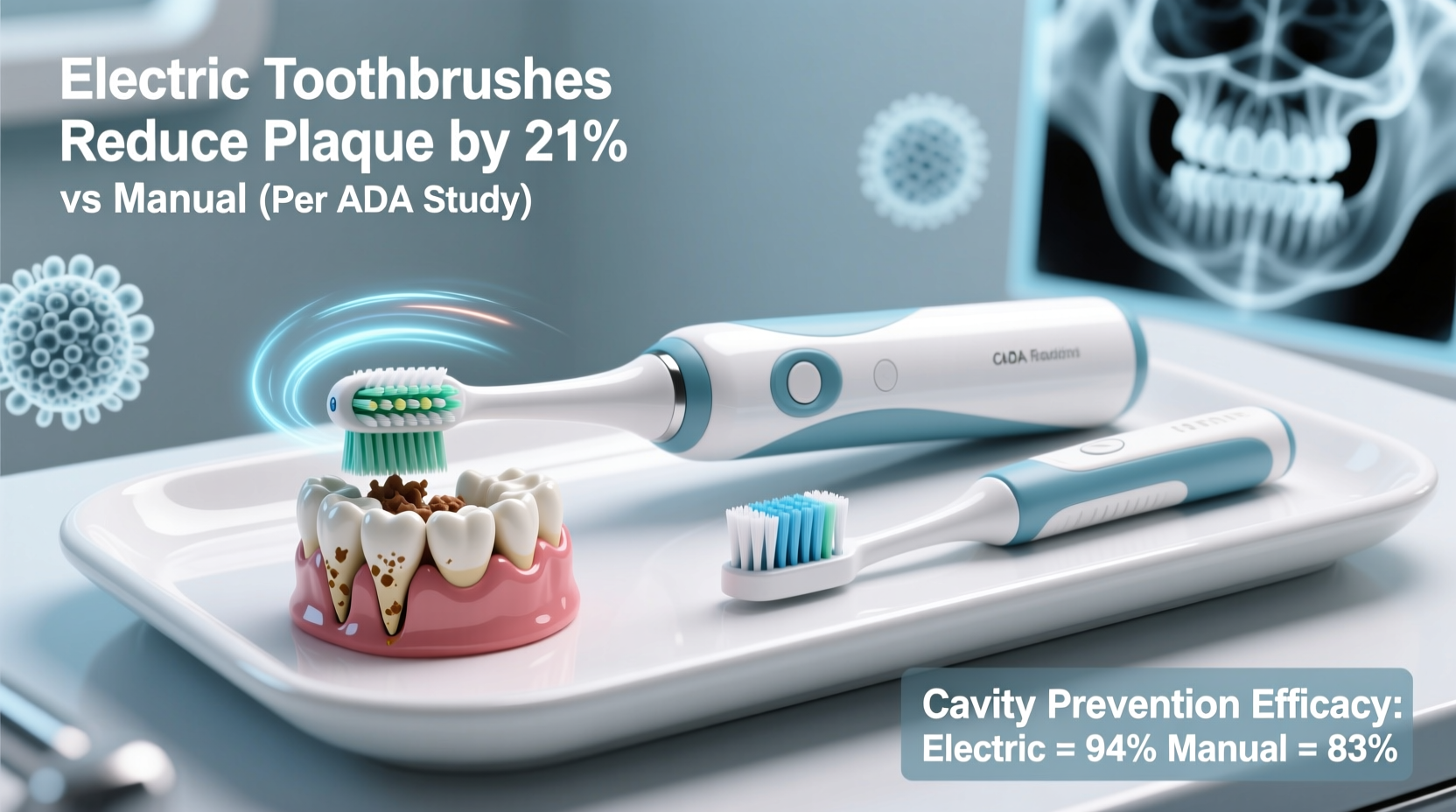
A 2014 Cochrane Review analyzed data from 56 randomized controlled trials involving over 5,000 participants. The findings were clear: electric toothbrushes with oscillating-rotating heads reduced plaque by 21% and gingivitis by 11% more than manual brushes after three months of use. While the study focused on plaque and gum disease, both are direct precursors to cavities.
Another longitudinal study published in the *Journal of Clinical Periodontology* followed patients for two years. Those using electric brushes had significantly fewer new cavities, particularly in hard-to-reach molars and along the gumline. Researchers attributed this to improved cleaning consistency and reduced user fatigue.
It's important to note that not all electric brushes are equal. Models with timers, pressure sensors, and multi-directional motion outperform basic vibrating models. Similarly, improper use—such as pressing too hard or skipping areas—can negate any technological benefit.
Tip: Look for an electric toothbrush with a built-in timer and pressure sensor to maximize effectiveness and protect your gums.Key Advantages of Electric Toothbrushes for Cavity Prevention
- Consistent Motion: Electric brushes deliver thousands of strokes per minute, far exceeding what’s possible manually. This helps dislodge plaque even with suboptimal technique.
- Timer Function: Most models include a 2-minute timer, encouraging users to brush longer. Many people using manual brushes fall short of the recommended duration.
- Pressure Sensors: These alert users if they’re brushing too hard, reducing the risk of gum recession—a factor that exposes root surfaces to decay.
- Better Access to Tight Spaces: Oscillating heads can clean around braces, crowns, and molars more effectively than flat manual bristles.
- Motivation and Habit Formation: Features like app connectivity and progress tracking help users stay consistent, which is critical for long-term cavity prevention.
When Manual Brushes Can Be Just as Effective
Electric toothbrushes aren’t inherently superior for everyone. A manual brush used with proper technique—angling at 45 degrees to the gums, using gentle circular motions, and brushing for a full two minutes—can achieve excellent results. The American Dental Association (ADA) states that both types are effective when used correctly.
For individuals who travel frequently, have limited dexterity, or prefer simplicity, a manual brush may be more practical. However, adherence to optimal technique is harder to maintain without feedback mechanisms.
Comparison Table: Electric vs. Manual Toothbrushes
| Feature | Electric Toothbrush | Manual Toothbrush |
|---|---|---|
| Plaque Removal Efficiency | High (especially oscillating-rotating) | Moderate (depends on technique) |
| Brushing Duration Compliance | High (built-in timer) | Low to moderate |
| Ease of Use for Children & Elderly | Easier (less hand strength needed) | More challenging |
| Cost Over Time | Higher (initial cost + replacement heads) | Lower |
| Travel Convenience | Less convenient (needs charging) | Highly portable |
| Cavity Risk Reduction (Long-Term) | Moderate to high | Moderate (with perfect use) |
Real-World Example: A Family’s Oral Health Transformation
The Thompson family of four struggled with recurring cavities despite daily brushing. Two children had multiple fillings by age 10. Their dentist suggested switching to electric toothbrushes and demonstrated proper technique.
After six months, plaque scores dropped across the family. The youngest child, who previously resisted brushing, enjoyed the “vibrating game” and brushed longer. Within a year, no new cavities were detected during checkups. The parents noted that the automatic timers helped them finally meet the two-minute standard consistently.
This case illustrates how behavior change—supported by better tools—can lead to real improvements in cavity prevention, especially in households where brushing habits were inconsistent.
Step-by-Step Guide to Maximizing Cavity Protection
- Choose the Right Brush: Select an electric toothbrush with oscillating-rotating or sonic action and ADA approval. Replace heads every 3–4 months.
- Use Fluoride Toothpaste: Apply a pea-sized amount. Fluoride strengthens enamel and reverses early decay.
- Brush for Two Minutes, Twice Daily: Let the brush do the work. Divide your mouth into quadrants and spend 30 seconds on each.
- Angle at 45 Degrees: Position the brush head where teeth meet gums to target plaque-prone zones.
- Floss Daily: No brush, electric or manual, reaches between teeth. Flossing removes up to 40% of plaque missed by brushing alone.
- Rinse Lightly: After brushing, spit but avoid rinsing with water immediately. This preserves protective fluoride on the teeth.
- Schedule Regular Cleanings: Professional cleanings remove tartar and allow early detection of weak spots.
Common Misconceptions About Electric Brushes
Some believe that electric toothbrushes are “too harsh” or “unnecessary.” Others assume that because they brush daily, their method doesn’t matter. These myths persist despite evidence to the contrary.
One widespread myth is that electric brushes damage enamel. In reality, studies show no significant difference in enamel wear between electric and manual brushes when used properly. In fact, many electric models include pressure sensors that reduce force automatically—something a manual brush cannot do.
Another misconception is that only older adults or those with arthritis benefit from electric brushes. On the contrary, children as young as three can use kid-friendly electric models under supervision, often with greater engagement and effectiveness.
Expert Insight on Long-Term Outcomes
“Our data shows that patients using electric toothbrushes have fewer interproximal cavities and less root surface decay over a 5-year period. It’s not magic—it’s consistency powered by design.” — Dr. Raj Mehta, Clinical Director at Metro Dental Wellness Group
Dental professionals increasingly recommend electric brushes, especially for patients with a history of gum disease, braces, or recurrent cavities. The combination of motion efficiency and behavioral support makes them a powerful preventive tool.
FAQ
Can a manual toothbrush be as effective as an electric one?
Yes, but only if used with near-perfect technique, proper timing, and consistent pressure. Most people don’t brush long enough or cover all areas evenly, which gives electric brushes a practical edge in real-world use.
Are electric toothbrushes worth the extra cost?
For most people, yes. The initial investment ranges from $50 to $200, with replacement heads costing $10–$30 annually. Compared to the cost of a single filling ($100–$300+), preventing just one cavity pays for years of electric brush use.
Do kids benefit from electric toothbrushes?
Absolutely. Many children find electric brushes more fun to use, and parental controls or apps can encourage better habits. Pediatric dentists often recommend them for kids with braces or developmental coordination challenges.
Final Checklist for Optimal Cavity Prevention
- ✅ Use an ADA-approved electric or manual toothbrush
- ✅ Brush for two full minutes, twice daily
- ✅ Floss or use interdental cleaners every day
- ✅ Use fluoride toothpaste
- ✅ Replace brush head or manual brush every 3–4 months
- ✅ Visit your dentist every six months
- ✅ Limit sugary snacks and drinks, especially between meals
Conclusion
While both electric and manual toothbrushes can prevent cavities when used correctly, electric models offer measurable advantages in plaque removal, user compliance, and long-term dental health. They reduce reliance on perfect technique and help bridge the gap between intention and action—a critical factor in oral hygiene.
The best brush is the one you’ll use consistently and effectively. For many, that’s an electric toothbrush. By combining advanced technology with disciplined habits, you can significantly lower your risk of cavities and enjoy stronger, healthier teeth for years to come.
🚀 Ready to upgrade your oral care routine? Try an electric toothbrush for one month and track your gum health and brushing consistency. Share your experience in the comments below!








