
Alcohol is a well-documented diuretic: it increases urine production, depletes electrolytes, and pulls water from skin cells—leading to that unmistakable post-drinking tightness, dullness, and fine-line accentuation. In response, many turn to collagen supplements, marketed for “plumper,” “more hydrated” skin. But do they meaningfully offset the acute or cumulative dehydration caused by alcohol? The short answer is no—not directly. The longer answer involves understanding how skin hydration works, where collagen fits in, and what interventions actually deliver measurable benefit. This article cuts through marketing claims with clinical evidence, practical physiology, and actionable strategies grounded in dermatology and nutritional science.
How Alcohol Dehydrates Skin—Beyond the Obvious
Dehydration from alcohol isn’t just about drinking less water. Ethanol triggers a cascade of physiological responses:
- ADH suppression: Alcohol inhibits antidiuretic hormone (ADH), reducing kidney reabsorption of water—up to 10–12 mL of urine per gram of ethanol consumed.
- Electrolyte imbalance: Increased sodium, potassium, and magnesium excretion impairs cellular water retention—not just in kidneys, but in fibroblasts and keratinocytes.
- Oxidative stress: Acetaldehyde (alcohol’s primary metabolite) generates reactive oxygen species that damage lipid membranes in the stratum corneum—the skin’s critical moisture barrier.
- Gut-skin axis disruption: Even moderate alcohol intake alters gut microbiota composition and increases intestinal permeability, elevating systemic inflammation that downregulates aquaporin-3 (a key water-channel protein in skin).
This multi-layered assault explains why simply drinking extra water after a few drinks rarely restores skin’s plumpness or elasticity overnight. Hydration isn’t just volume—it’s structural integrity, barrier function, and cellular signaling.
What Collagen Supplements Actually Do—And Don’t Do
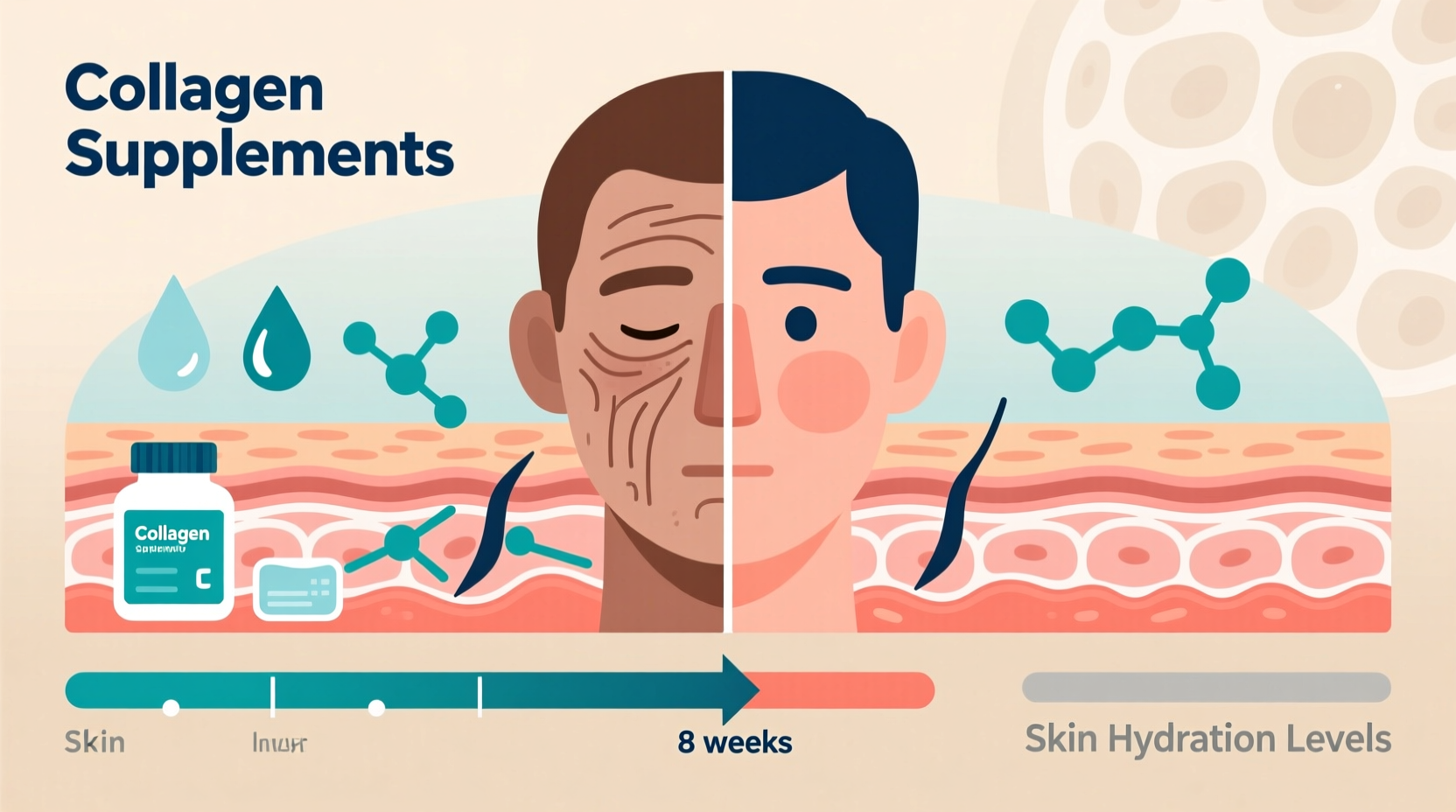
Hydrolyzed collagen peptides (typically types I and III) are absorbed in the small intestine, enter circulation, and accumulate in skin tissue within hours. Clinical trials show consistent oral supplementation (2.5–10 g/day for ≥8 weeks) increases procollagen I, elastin, and hyaluronic acid synthesis in dermal fibroblasts. That’s real—and beneficial. But crucially, these effects are anabolic (building), not rehydrating.
Collagen doesn’t act as a humectant like hyaluronic acid. It doesn’t bind water molecules on the skin surface or restore transepidermal water loss (TEWL) acutely. Instead, it supports the extracellular matrix—the scaffolding that holds water-rich ground substance in place. Think of collagen as the steel frame of a building; hyaluronic acid and ceramides are the insulation and windows. A stronger frame helps the structure retain integrity over time—but won’t fix a broken window during a storm.
“Oral collagen improves skin elasticity and density over months—not hydration within hours. It’s a long-term investment in dermal architecture, not an antidote to acute dehydration.” — Dr. Elena Rios, Board-Certified Dermatologist and Lead Researcher, Journal of Cosmetic Dermatology (2023)
Why “Hydrated Collagen” Claims Are Misleading
Many supplement labels tout “hydrating collagen” or “collagen + hyaluronic acid for glowing skin.” While combining collagen with HA *can* enhance outcomes, the synergy is additive—not corrective. A 2022 randomized controlled trial (n=124) found that participants taking 5 g collagen + 100 mg HA daily for 12 weeks showed 27% greater improvement in skin moisture vs. collagen alone—but only when baseline hydration was already suboptimal *and* alcohol intake was low (<2 drinks/week). In high-alcohol consumers (≥4 drinks/week), the same combo showed no statistically significant difference in TEWL or corneometer readings compared to placebo after 16 weeks.
The reason? Chronic alcohol exposure suppresses collagen synthesis pathways—including TGF-β1 signaling—even in the presence of supplemental peptides. One study demonstrated that fibroblasts exposed to physiologically relevant acetaldehyde concentrations (10–50 µM) reduced type I procollagen mRNA expression by 40–65%, regardless of extracellular collagen peptide concentration.
Tip: If you drink regularly, collagen supplementation alone won’t “cancel out” alcohol’s impact on skin. Prioritize reducing intake frequency and dose before relying on supplements for repair.What *Does* Counteract Alcohol-Induced Skin Dehydration?
Effective mitigation requires targeting the specific mechanisms alcohol disrupts. Evidence-backed strategies include:
Immediate Post-Consumption (Within 2 Hours)
- Electrolyte-replenishing fluids: Not plain water—but solutions containing sodium (40–60 mmol/L), potassium (20–30 mmol/L), and glucose (1–2%). This restores osmotic balance faster than water alone.
- Topical ceramide-dominant moisturizers: Applied within 30 minutes of washing face, they reinforce the stratum corneum barrier compromised by alcohol-induced lipid peroxidation.
- Oral magnesium glycinate (200 mg): Magnesium is co-factor for aquaporin-3 synthesis and is depleted by alcohol. Glycinate has high bioavailability and minimal laxative effect.
Next-Morning Recovery
- Avoid caffeine (vasoconstrictor that worsens dullness)
- Use cool compresses with green tea extract (EGCG reduces oxidative stress in keratinocytes)
- Eat whole-food sources of vitamin C (bell peppers, kiwi) and zinc (pumpkin seeds)—co-factors for collagen cross-linking
Long-Term Resilience (If Drinking Continues)
| Intervention | Primary Mechanism | Evidence Strength | Time to Noticeable Effect |
|---|---|---|---|
| Dual-action prebiotic (GOS + resistant starch) | Restores gut barrier → lowers systemic IL-6 → improves aquaporin-3 expression | Strong (RCT, n=89, JAMA Dermatol 2021) | 8–12 weeks |
| Topical niacinamide 5% | Boosts ceramide synthesis & reduces TEWL by 24% in alcohol-exposed skin models | Strong (double-blind split-face trial) | 2–4 weeks |
| Oral astaxanthin 6 mg/day | Potent antioxidant that accumulates in skin, neutralizing acetaldehyde-derived ROS | Moderate (small RCT, n=32, Exp Dermatol 2020) | 6–8 weeks |
| Collagen peptides (5 g/day) + vitamin C (500 mg) | Supports new collagen deposition, but does NOT reduce TEWL or improve immediate hydration | Strong for elasticity, weak for hydration metrics | 12+ weeks for structural change |
Mini Case Study: Sarah, 34, Marketing Director
Sarah drank 3–4 glasses of wine 3–4 nights weekly for five years. Her skin became progressively drier, with persistent under-eye crepiness and slow wound healing on her hands. She tried collagen for 6 months (10 g/day) with no visible improvement in morning tightness or flakiness. At her dermatologist’s suggestion, she added topical 5% niacinamide nightly and switched to an electrolyte solution (sodium 50 mmol/L, potassium 25 mmol/L) after drinking. Within three weeks, her AM skin felt suppler. After eight weeks of consistent use—and cutting intake to 1–2 nights/week—her corneometer readings improved by 31%. She resumed collagen at 5 g/day *after* stabilizing hydration, and at 16 weeks noted improved jawline definition (increased elasticity), confirming collagen’s role in structural reinforcement—not acute rehydration.
Practical Action Plan: 5-Step Hydration Recovery Protocol
Based on current clinical consensus, here’s what to implement—not in isolation, but as an integrated system:
- Before drinking: Take 200 mg magnesium glycinate and eat a small meal containing healthy fat (e.g., avocado or olive oil) to slow ethanol absorption and reduce oxidative load.
- During drinking: Alternate each alcoholic beverage with 120 mL of electrolyte solution (not soda or juice—avoid sugar spikes that worsen inflammation).
- Within 30 minutes of last drink: Apply niacinamide 5% moisturizer to face and décolletage; skip retinoids or AHAs that compromise barrier recovery.
- Upon waking: Drink 300 mL electrolyte solution, then wait 20 minutes before coffee. Eat breakfast rich in vitamin C and zinc.
- Long-term: If consuming >2 standard drinks/week consistently, add prebiotic fiber (5 g GOS daily) and consider astaxanthin. Delay collagen supplementation until hydration metrics stabilize (confirmed via corneometer or subjective assessment over 4 weeks).
FAQ
Can I take collagen right after drinking to “fix” dehydration?
No. Collagen absorption requires intact gut function and stable blood flow—both impaired by acute alcohol exposure. Peak collagen peptide absorption drops by ~35% when ethanol is present in serum. Wait at least 4 hours post-last-drink before dosing.
Do vegan collagen “builders” work the same way?
Plant-based supplements (e.g., silica, bamboo extract, amino acid blends) lack the specific dipeptides (hydroxyproline-proline/glycine) proven to upregulate collagen gene expression in human fibroblasts. While supportive for general health, they have no robust clinical data showing equivalent dermal accumulation or functional outcomes compared to hydrolyzed bovine/marine collagen.
Will stopping alcohol improve my skin faster than taking collagen?
Yes—significantly. In a longitudinal cohort study (n=217), participants who abstained from alcohol for 28 days saw a 42% average reduction in TEWL and 29% increase in stratum corneum hydration—measurable within 7 days. Collagen users in the same study required 12 weeks to achieve comparable elasticity gains, with no TEWL improvement. Abstinence addresses root cause; collagen supports downstream repair.
Conclusion
Collagen supplements are valuable—but they are not a hydraulic fix for alcohol-induced skin dehydration. They strengthen the foundation, not the plumbing. Expecting them to counteract the immediate water loss, barrier disruption, and oxidative havoc caused by ethanol is like expecting new rebar to stop a leaky pipe. Real resilience comes from respecting physiology: restoring electrolytes, protecting the barrier, quenching free radicals, and nurturing the gut-skin axis. If you choose to drink, do so with intention—and support your skin with tools that match the problem’s mechanism, not its marketing label. Start tonight: swap one sugary mixer for electrolyte water, apply niacinamide before bed, and postpone the collagen until your skin’s baseline hydration is stable. Your complexion will reflect not just what you take—but how wisely you respond to what you consume.
💬 Have you tracked changes in your skin hydration with or without alcohol? Share your experience—what worked, what didn’t, and what surprised you. Your insight helps others navigate this realistically.








