
Yes—alcohol calories absolutely count toward your daily energy intake. A gram of ethanol delivers 7 calories, more than carbohydrate (4 cal/g) or protein (4 cal/g), and only slightly less than fat (9 cal/g). Yet treating them like “just another calorie” is one of the most common, costly oversights in weight management. The body metabolizes alcohol with metabolic priority—shutting down fat oxidation, altering hormone signaling, and disrupting satiety cues in ways that food calories simply don’t. This isn’t semantics. It’s physiology. And it explains why many people stall on weight loss despite meticulous food tracking—while regularly consuming even modest amounts of wine, beer, or spirits.
Why Alcohol Calories Are Metabolically Unique
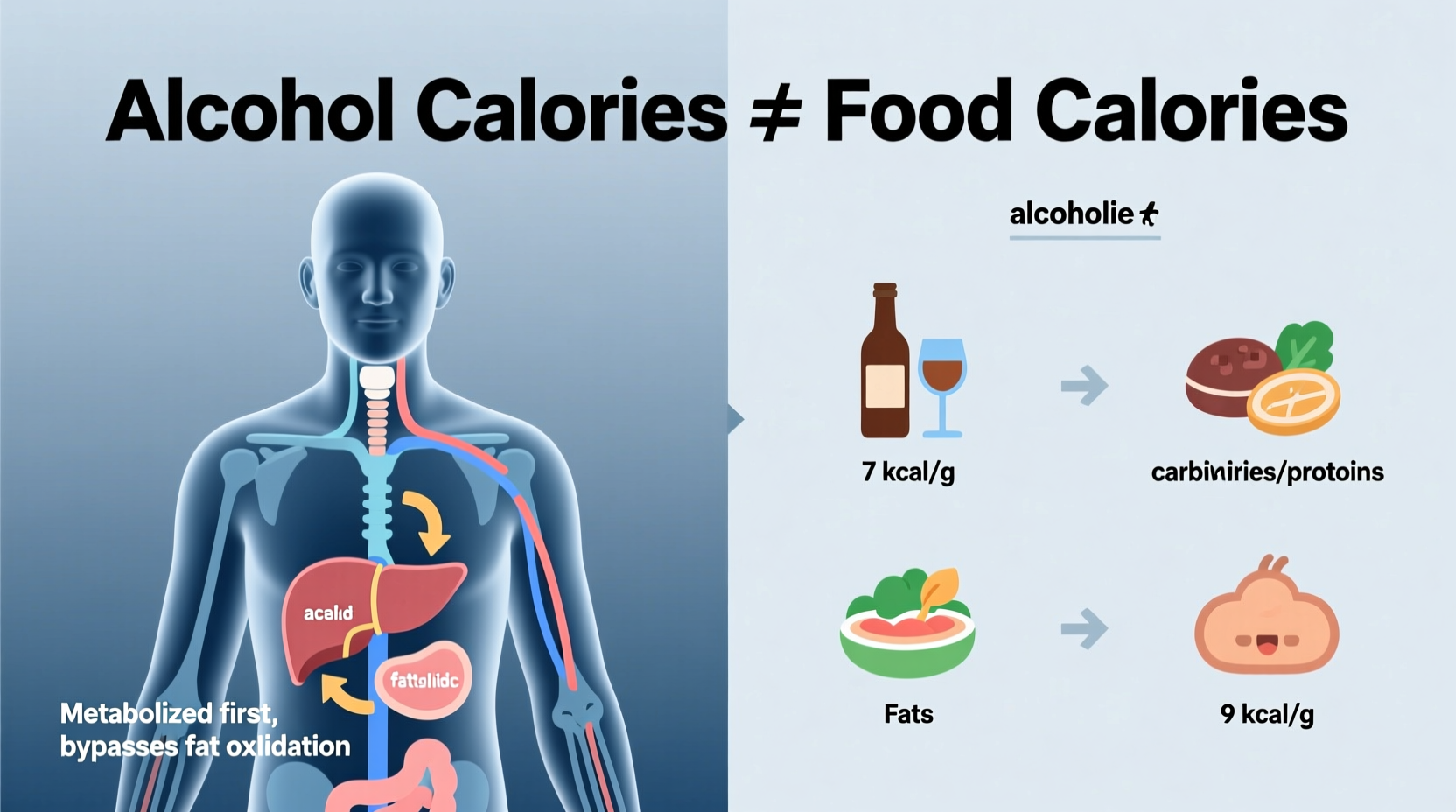
Unlike food, alcohol isn’t stored. The liver treats ethanol as a toxin—and prioritizes its breakdown over all other metabolic processes. When you drink, your body immediately halts fat burning to process alcohol first. This doesn’t mean fat stops entering your cells—it means the fat already circulating (from meals or adipose tissue) gets temporarily sidelined, increasing the likelihood it will be re-stored.
Research published in the American Journal of Clinical Nutrition shows that just 24 grams of alcohol (roughly two standard drinks) suppresses whole-body fat oxidation by up to 73% for several hours post-consumption—even when consumed alongside a balanced meal. That suppression persists longer than most realize: a 2022 longitudinal study found participants who drank ≥3 times weekly had significantly lower 24-hour respiratory quotient (RQ) variability—indicating chronically reduced fat utilization—compared to abstainers, independent of total caloric intake.
Additionally, alcohol stimulates ghrelin (the “hunger hormone”) and blunts leptin signaling, often leading to increased caloric intake *after* drinking—not just from the drink itself. In controlled trials, subjects consumed an average of 20–35% more calories at subsequent meals following alcohol consumption versus placebo, even when told the drinks were non-alcoholic.
Tip: If you choose to drink while losing weight, consume alcohol *with* a protein- and fiber-rich meal—not on an empty stomach—to blunt blood sugar spikes and reduce compensatory eating later.Calorie Comparison: Alcohol vs. Common Foods
It’s easy to underestimate how quickly alcohol adds up—especially because liquid calories rarely trigger the same satiety signals as solid food. A single 5-ounce glass of red wine contains ~125 calories—equivalent to a small apple plus 1 tsp of olive oil. But unlike that apple-and-oil combo, the wine delivers no fiber, minimal micronutrients, and zero protein to support fullness or muscle maintenance.
| Drink (Standard Serving) | Approx. Calories | Food Equivalent (Calorie-Matched) | Key Nutritional Difference |
|---|---|---|---|
| 12 oz light beer | 100 | 1 small banana (105 cal) | Banana provides 3g fiber, 422mg potassium, vitamin B6; beer offers trace B vitamins but no fiber or meaningful minerals |
| 5 oz red wine | 125 | ½ cup cooked quinoa + 1 tsp olive oil (126 cal) | Quinoa/oil combo delivers 4g protein, 2g fiber, magnesium, and monounsaturated fat; wine provides resveratrol (in trace amounts) but negligible macronutrients |
| 1.5 oz 80-proof whiskey | 100 | 10 raw almonds (98 cal) | Almonds supply 2.5g protein, 1.2g fiber, vitamin E, and healthy fats; whiskey supplies zero nutrients beyond ethanol |
| 12 oz craft IPA | 220 | 1 slice whole-wheat toast + 2 tbsp almond butter (225 cal) | Toast/almond butter offers 8g protein, 5g fiber, and sustained satiety; IPA delivers rapid glucose response and no satiety signal |
This table reveals a critical truth: alcohol calories are *nutritionally barren*. They occupy caloric real estate without delivering the protein, fiber, or micronutrients essential for preserving lean mass, stabilizing blood sugar, or supporting metabolic health during weight loss.
The Hidden Calorie Multipliers: Mixers, Timing, and Behavior
Most people track only the base spirit—but the real caloric burden comes from what’s added to it. A vodka soda with lime clocks ~100 calories. Swap the soda for cranberry juice cocktail? You’ve added 130+ calories—and 32g of sugar. A mojito made with store-bought mint syrup can exceed 250 calories before the rum is even poured.
Timing matters just as much. Drinking in the evening—when insulin sensitivity naturally declines and activity levels drop—means those calories are far more likely to be stored as fat. A 2021 cohort analysis in Obesity found that individuals who consumed >70% of their weekly alcohol after 8 p.m. had 2.3× higher odds of abdominal weight gain over 3 years than those who drank earlier, even when total weekly intake was identical.
Behavioral effects compound the problem. Alcohol lowers inhibitory control and impairs interoceptive awareness—the ability to recognize internal cues like fullness or fatigue. In lab settings, participants under mild alcohol influence (BAC ~0.04%) selected higher-calorie snack options 68% more often and underestimated portion sizes by an average of 22% compared to sober controls.
A Real-World Example: Sarah’s Plateau Breakthrough
Sarah, 38, tracked her food meticulously using a popular app and maintained a consistent 500-calorie deficit for 10 weeks—yet lost only 2.2 pounds. Her log showed 3–4 glasses of wine nightly, plus weekend cocktails. She believed “wine is healthy,” so she didn’t log it consistently—and assumed her 125-calorie glasses “didn’t count the same.”
Her dietitian reviewed her pattern: 4 glasses × 125 cal = 500 extra calories/day. That’s a 3,500-calorie surplus per week—effectively erasing her entire deficit. More importantly, Sarah admitted she often ate takeout or late-night snacks after drinking, adding another 400–600 calories most nights.
She implemented two changes: (1) limited alcohol to 2 drinks maximum, 3 nights/week—and logged every sip; (2) committed to a 30-minute walk within 90 minutes of her last drink to restore fat oxidation. Within 4 weeks, her scale loss accelerated to 1.8 lbs/week. Crucially, she reported better sleep, fewer cravings, and improved focus—evidence that metabolic restoration mattered as much as the calorie math.
Expert Insight: What Physiology Tells Us
“Alcohol doesn’t just add calories—it hijacks your metabolic hierarchy. While your body burns carbs and fat flexibly, it burns alcohol *immediately*, pausing lipolysis and shifting substrate use toward glucose and acetate. That acetate then gets preferentially converted to fatty acids in the liver—especially when insulin is elevated from concurrent carb intake. So yes, the calories count—but the metabolic cost is higher than the number on the label suggests.” — Dr. Elena Rodriguez, MD, Endocrinologist & Metabolic Researcher, Stanford University
Dr. Rodriguez’s point underscores a key nuance: alcohol doesn’t merely contribute to energy surplus—it actively promotes fat storage *at the cellular level*. Acetate, the primary metabolite of ethanol, serves as a preferred substrate for de novo lipogenesis (new fat creation) in hepatocytes. When paired with dietary carbohydrates—which elevate insulin—this process accelerates. That’s why “low-carb cocktails” (e.g., vodka + diet soda) still impair fat loss: acetate remains, and insulin may still rise from the stress response or residual glycogen depletion.
Practical Action Plan: Managing Alcohol During Weight Loss
Abstinence isn’t required for success—but intentionality is. Use this step-by-step framework to align alcohol consumption with your goals:
- Assess honestly: Log *every* drink for one week—including mixers, garnishes, and tasting portions. Note time of day, hunger level pre-drink, and food choices afterward.
- Calculate the true cost: Multiply weekly drink count by average calories per serving. Compare that total to your weekly deficit target (e.g., 3,500 cal = 1 lb). Is alcohol consuming your entire deficit?
- Set non-negotiable boundaries: Choose *one* of these: (a) No alcohol on weight-loss days (e.g., Mon–Fri); (b) Max 2 drinks, max 2x/week; or (c) Alcohol only with a meal containing ≥20g protein and ≥8g fiber.
- Optimize metabolism: Consume 10–15g of protein within 30 minutes of finishing your last drink to mitigate muscle catabolism and stabilize blood sugar.
- Reassess monthly: Weigh and measure waist circumference. If progress stalls for >2 consecutive weeks *and* alcohol intake exceeds your boundary, pause for 3 weeks—then reintroduce mindfully.
FAQ: Addressing Common Misconceptions
Does “light” or “low-calorie” alcohol help with weight loss?
Not meaningfully. Light beers save ~20–30 calories per serving—but often contain more refined carbs and preservatives that may worsen insulin response. “Skinny” cocktails frequently rely on artificial sweeteners, which some research links to altered gut microbiota and increased appetite regulation dysregulation. The calorie difference rarely offsets the metabolic disruption.
Is red wine really “heart-healthy” enough to justify the calories?
Resveratrol benefits observed in cell and rodent studies require doses equivalent to *hundreds of glasses* of wine per day—far beyond safe human intake. Population studies showing cardiovascular benefit from moderate wine consumption suffer from the “abstainer bias”: former heavy drinkers who quit for health reasons are grouped with lifelong nondrinkers, making moderate drinkers appear healthier by comparison. For weight loss, the net metabolic cost outweighs unproven benefits.
Can I “work off” alcohol calories with extra exercise?
Technically yes—but inefficiently. Burning 125 calories requires ~15 minutes of vigorous cycling or 25 minutes of brisk walking. More critically, exercise *after* drinking doesn’t reverse alcohol’s suppression of fat oxidation, nor does it mitigate its impact on sleep architecture or next-day hunger hormones. Prioritizing sleep and protein intake delivers greater metabolic ROI than chasing calories on the treadmill.
Conclusion: Calories Count—But Context Counts More
Alcohol calories aren’t “fake” calories. They’re real, dense, and metabolically disruptive. They count fully toward your energy balance—but they also count *against* your metabolic efficiency, hormonal harmony, and behavioral control in ways food calories rarely do. The most effective approach isn’t moralizing or rigid restriction—it’s informed agency. Know the numbers. Respect the physiology. Design boundaries that honor both your goals and your humanity.
If you’ve been overlooking alcohol in your weight-loss strategy, this isn’t failure—it’s data. Start tonight: pour your usual drink, calculate its calories, and ask yourself: *Is this worth displacing nutrient-dense food, restorative sleep, or metabolic momentum?* The answer will guide your next step far more reliably than any app or algorithm.
💬 Your experience matters. Have you broken through a plateau by adjusting alcohol habits? Share your insight in the comments—your story could help someone else reconnect with what truly moves the needle.








