Walk into any home goods store or scroll through a wellness influencer’s feed, and you’ll find dozens of “antibacterial” or “germ-fighting” room sprays boasting high alcohol content—often labeled 70% or even 90% ethanol or isopropyl alcohol. Many consumers assume these sprays double as surface disinfectants: freshen the air *and* sanitize the room. But that assumption carries real consequences—especially during cold and flu season, post-illness recovery, or in shared living spaces where airborne and surface pathogens matter. The truth is more nuanced—and far less forgiving than marketing suggests. Alcohol-based room sprays are overwhelmingly designed for olfactory impact, not microbial control. Understanding why requires unpacking how disinfection actually works—not just what’s in the bottle.
How Disinfection Actually Works (and Why Spray Form Fails)
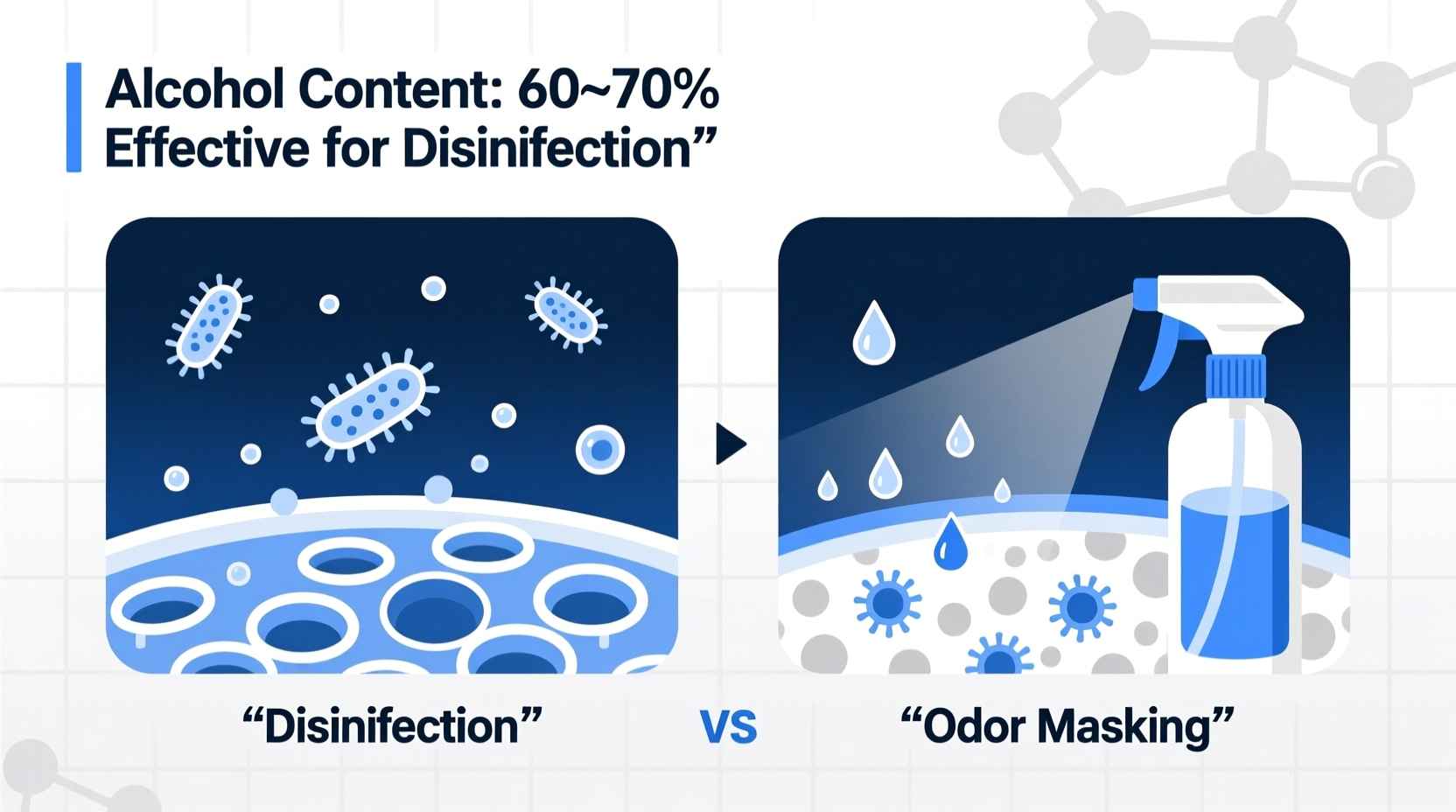
Disinfection isn’t about alcohol concentration alone. It hinges on three interdependent variables: concentration, contact time, and surface exposure. The U.S. Environmental Protection Agency (EPA) and Centers for Disease Control and Prevention (CDC) define a disinfectant as a product that kills ≥99.9% of specified bacteria and viruses *on hard, non-porous surfaces*—when used exactly as directed. Crucially, that includes leaving the product wet on the surface for a specified duration: typically 30 seconds to 10 minutes, depending on the pathogen and formulation.
Room sprays fail at all three points:
- Concentration drops on contact: Even if a spray contains 75% alcohol by volume, it atomizes into fine droplets that rapidly evaporate upon hitting air or fabric. On porous surfaces like upholstery, carpet, or drywall, alcohol wicks away or absorbs before meaningful microbial contact occurs.
- No sustained contact time: A mist lingers in the air for seconds—not minutes. It never “sits” on a doorknob, light switch, or countertop long enough to disrupt viral envelopes or bacterial membranes.
- Non-targeted delivery: Room sprays disperse broadly, diluting active ingredients across cubic feet of air rather than concentrating them where contamination lives—on high-touch surfaces.
This isn’t theoretical. In a 2022 study published in Infection Control & Hospital Epidemiology, researchers tested 12 popular alcohol-based air fresheners on stainless steel inoculated with Staphylococcus aureus and influenza A virus. None achieved >50% reduction after 5 minutes—even those labeled “disinfecting.” By contrast, an EPA-registered 70% isopropyl alcohol wipe reduced pathogens by 99.99% in 60 seconds when applied with friction and dwell time.
Tip: If you need surface disinfection, skip the spray entirely. Use an EPA-registered disinfectant wipe or solution—and follow the label’s required contact time to the second.What Alcohol-Based Sprays *Do* Well: Odor Masking vs. Odor Neutralization
Odors arise from volatile organic compounds (VOCs) released by bacteria, mold, food decay, pet waste, or smoke. Alcohol itself has mild deodorizing properties—it can denature some odor-causing proteins and dissolve certain VOCs—but its primary role in room sprays is as a solvent and carrier for fragrance oils.
Most commercial sprays rely on two strategies:
- Masking: Overpowering unpleasant smells with stronger, pleasant scents (e.g., “ocean breeze,” “vanilla orchid”). This does nothing to eliminate the source—it simply adds sensory competition.
- Neutralizing (limited): Some formulas include cyclodextrins or zinc ricinoleate, which trap odor molecules physically or chemically. These work best on airborne or lightly deposited odors—not deep-seated biological sources like mildew behind baseboards or urine residue in carpet padding.
Crucially, masking creates a dangerous illusion of cleanliness. A freshly sprayed bathroom may smell like eucalyptus, but if the grout harbors Pseudomonas aeruginosa biofilm—or the trash can lid is coated in E. coli from raw chicken prep—the scent offers zero protection. In fact, it may delay necessary cleaning.
The Critical Role of Alcohol Concentration and Type
Not all alcohols disinfect equally—and concentration matters in non-linear ways. Here’s what the data shows:
| Alcohol Type | Optimal Disinfecting Range | Why Outside This Range Fails |
|---|---|---|
| Isopropyl alcohol (IPA) | 60–90% | Below 60%: Too dilute to disrupt membranes. Above 90%: Evaporates too fast; needs water to penetrate cells. |
| Ethanol | 70–90% | Same principle—water content is essential for protein denaturation. Pure (100%) ethanol coagulates surface proteins too quickly, shielding inner microbes. |
| Methanol or denatured alcohol | Not recommended for disinfection | Highly toxic; poor virucidal activity; unsafe for consumer use on surfaces or skin. |
Now consider typical room sprays: many list “alcohol denat.” (denatured ethanol) at 5–20%—well below the 60% minimum needed for reliable disinfection. Even “70% alcohol” sprays often mean 70% *by weight* in the concentrate, not the final aerosolized product. Once diluted with propellants (butane, propane), water, and fragrance, the delivered dose rarely exceeds 15–25% alcohol on any given surface.
“Alcohol sprays marketed for ‘air purification’ or ‘germ protection’ without EPA registration are making claims unsupported by regulatory science. True disinfection requires validated testing against specific pathogens under real-use conditions—not just lab-grade alcohol in a bottle.” — Dr. Lena Torres, Microbiologist and EPA Antimicrobials Division Reviewer (ret.)
A Real-World Example: The Post-Flu Home Dilemma
After her 7-year-old recovered from influenza, Maya cleaned her home thoroughly—vacuuming, washing linens, wiping toys. She also sprayed “Lemon Zest Disinfecting Mist” daily in the living room and bedroom, believing it would “kill lingering germs in the air.” Two days later, her husband developed fever and body aches. When he tested positive for the same flu strain, their pediatrician reviewed their cleaning routine. “That spray doesn���t disinfect air,” she explained. “Influenza spreads via respiratory droplets that land on surfaces—not floating freely for minutes. You need targeted disinfection of light switches, remotes, and faucet handles—not ambient misting.”
Maya switched tactics: she used EPA List N-approved hydrogen peroxide wipes on high-touch surfaces twice daily for five days, opened windows for cross-ventilation (which *does* dilute airborne viral load), and ran a HEPA air purifier—not a fragrance diffuser. No one else in the household fell ill. Her mistake wasn’t negligence—it was trusting marketing over microbiology.
When and How to Use Alcohol-Based Sprays Responsibly
Alcohol-based room sprays aren’t inherently harmful—if used with clear expectations. They excel at quick refreshment between deeper cleanings, especially in low-risk settings like guest bedrooms or closets. To maximize benefit and minimize risk, follow this evidence-informed sequence:
- Identify the odor source: Is it temporary (spilled coffee) or persistent (pet accidents, damp carpet)? Address the root cause first—clean, dry, repair.
- Clean before you spray: Wipe surfaces with soap and water or appropriate cleaner. Disinfect high-touch areas separately with registered products.
- Choose wisely: Opt for sprays with no added parabens, phthalates, or synthetic musks—these VOCs contribute to indoor air pollution and may trigger respiratory irritation.
- Spray strategically: Target the air *above* the source—not directly onto fabrics or electronics. Avoid spraying near open flames or oxygen sources (alcohol is highly flammable).
- Ventilate: Open windows for 5–10 minutes post-spray to disperse residual alcohol vapor and fragrance compounds.
FAQ: Clearing Common Misconceptions
Can I disinfect my phone or keys by spraying them with alcohol room spray?
No. Room sprays lack the concentration, dwell time, and targeted application needed. They may leave residue that attracts dust or damage oleophobic coatings. Use 70% isopropyl alcohol on a microfiber cloth instead—wipe gently, let air-dry for 30 seconds, and avoid ports or buttons.
Does “alcohol-free” on a room spray label mean it’s safer or more natural?
Not necessarily. Many alcohol-free sprays replace ethanol with benzalkonium chloride (BAC) or other quaternary ammonium compounds—some of which carry emerging concerns about antimicrobial resistance and respiratory sensitization. “Alcohol-free” is a marketing term, not a safety certification. Always check full ingredient lists and third-party certifications (e.g., EPA Safer Choice).
If I mix my own spray with 91% isopropyl alcohol and water, will it disinfect the air?
No—mixing won’t solve the core problem. Airborne disinfection remains scientifically unproven for consumer alcohol sprays. Diluting 91% IPA to 70% creates a better surface disinfectant, but spraying it into the air still fails on contact time and surface targeting. Save homemade alcohol solutions for wiping countertops—not misting bedrooms.
Conclusion: Smell Good, Stay Safe, Think Critically
Alcohol-based room sprays serve a legitimate purpose: they make spaces smell pleasant, support mood and ambiance, and offer psychological comfort during stressful times. But conflating scent with sanitation undermines real infection prevention—and risks complacency where vigilance matters most. Disinfection is a precise, context-dependent process—not a side effect of lavender mist. When flu circulates, when immunocompromised loved ones visit, or when preparing for newborns, reach for tools proven to work: EPA-registered disinfectants, mechanical cleaning, HEPA filtration, and consistent hand hygiene. Reserve room sprays for moments of ritual and renewal—not frontline defense.
Your home deserves both beauty and science. Choose products that honor both—without asking fragrance to do the job of physics, chemistry, and microbiology. Start today: check the EPA List N database for approved disinfectants, audit your current sprays for registered establishment numbers, and commit to one high-touch surface you’ll disinfect properly this week—not sprayed, but wiped, timed, and verified.
💬 Have you discovered a room spray that actually improved air quality—or uncovered a misleading claim? Share your experience in the comments. Real stories help others navigate the fine line between freshness and false security.








