
Dogs don’t understand fireworks. To them, the sudden booms, flashes, and vibrations are terrifying—like an unpredictable storm that strikes without warning. For pet owners, watching a dog tremble under the bed or pace anxiously during Fourth of July or New Year’s Eve is heartbreaking. As interest in natural solutions grows, two options have risen to the forefront: CBD oil and anxiety chews. But which one truly works better for fireworks fear?
This isn’t just about calming a dog—it’s about choosing a safe, effective, and reliable method that respects your pet’s physiology. While both CBD oil and anxiety chews claim to reduce stress, their mechanisms, onset times, ingredients, and suitability vary significantly. Understanding these differences is key to making an informed decision.
How Fireworks Fear Affects Dogs
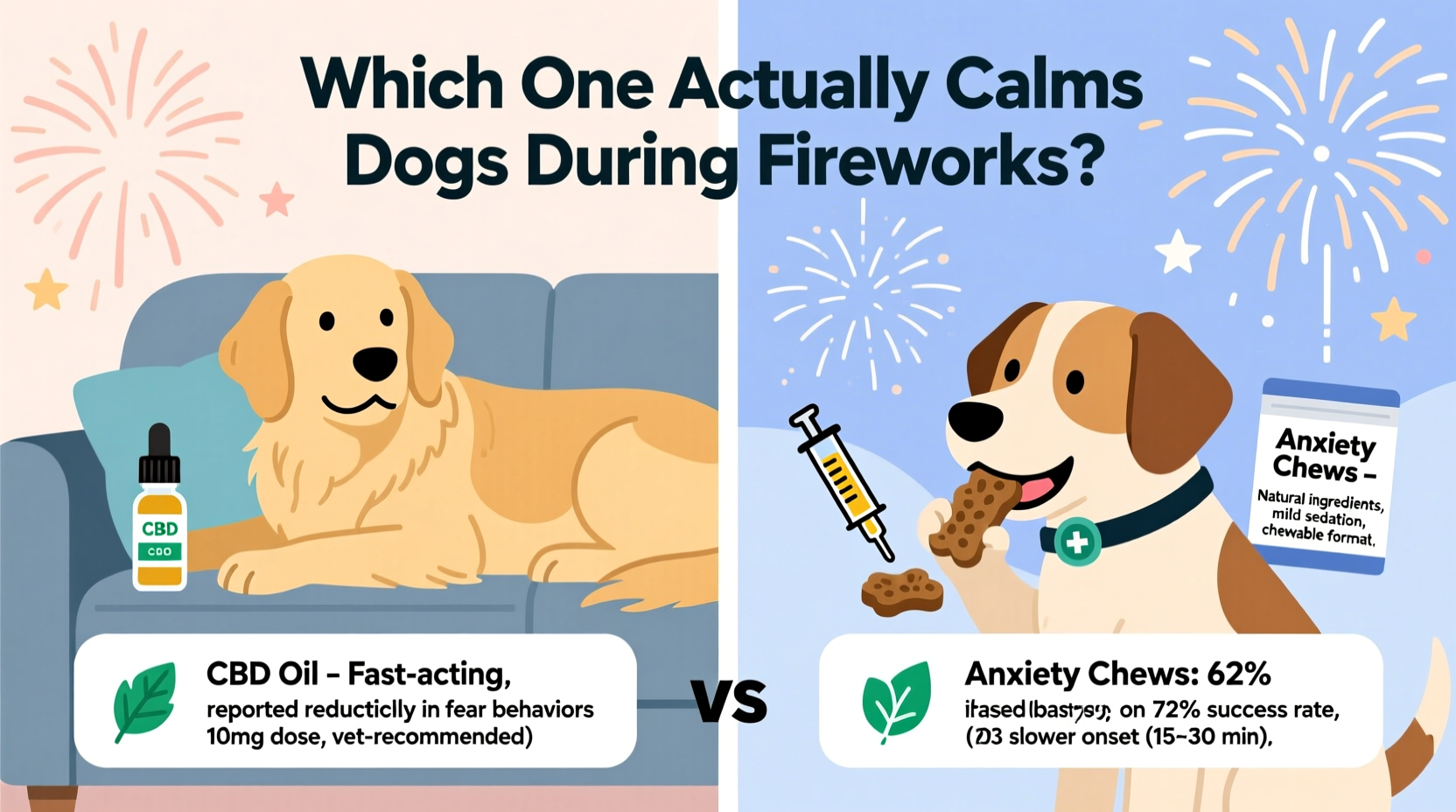
Fireworks trigger a primal fear response in dogs. The loud, irregular noises mimic threats in the wild, activating the sympathetic nervous system—the same “fight-or-flight” pathway humans experience during danger. This leads to elevated heart rate, trembling, panting, hiding, and even destructive behavior.
Chronic exposure to such stress can lead to long-term anxiety disorders. According to Dr. Karen Overall, a board-certified veterinary behaviorist, “Noise aversion isn’t just a temporary nuisance. It can escalate into generalized anxiety if left unmanaged.”
Because fireworks are episodic but intense, the ideal calming solution must act quickly, be easy to administer during high-stress moments, and not cause drowsiness or side effects that linger after the event.
CBD Oil for Dogs: How It Works and What Science Says
Cannabidiol (CBD) is a non-psychoactive compound derived from hemp. In dogs, it interacts with the endocannabinoid system (ECS), which regulates mood, sleep, pain, and stress responses. By influencing CB1 and CB2 receptors, CBD may help modulate emotional reactivity and reduce hyperarousal.
A 2019 study published in *Frontiers in Veterinary Science* found that dogs given CBD oil showed a statistically significant reduction in anxiety-related behaviors during simulated fireworks exposure. Notably, the effects were observed within 30–45 minutes of administration.
CBD oil is typically administered orally via a dropper, allowing for precise dosing. Most formulations are mixed with carrier oils like MCT oil to improve absorption. Because it bypasses digestion and enters the bloodstream relatively quickly, especially when placed under the tongue, it offers faster action than chewables.
Tip: For best results with CBD oil, administer it 30–45 minutes before expected fireworks. Start with a low dose (0.1–0.2 mg per pound) and adjust based on your dog’s response.Pros and Cons of CBD Oil
| Advantage | Consideration |
|---|---|
| Faster onset (30–60 mins) | Taste may be unpleasant for some dogs |
| Precise dosage control | Requires consistent shaking and measuring |
| May support long-term anxiety regulation | Quality varies widely between brands |
| No THC (if hemp-derived and properly formulated) | Not FDA-regulated; third-party testing is essential |
“CBD has shown promise in modulating fear circuits in the canine brain, particularly in noise aversion. But quality and consistency matter more than marketing claims.” — Dr. Gary Landsberg, Diplomate, American College of Veterinary Behaviorists
Anxiety Chews: Ingredients, Mechanism, and Effectiveness
Anxiety chews are functional treats infused with calming ingredients such as L-theanine, melatonin, chamomile, valerian root, and sometimes hemp extract. Unlike prescription medications, they are marketed as nutraceuticals—blending nutrition and pharmaceutical benefits.
These ingredients work through various pathways:
- L-theanine: Increases GABA and dopamine, promoting relaxation without sedation.
- Melatonin: Regulates sleep-wake cycles and reduces cortisol spikes during stress.
- Chamomile & Valerian: Natural sedatives with mild anxiolytic properties.
However, because chews must be digested before active compounds enter the bloodstream, their onset time is slower—typically 60–90 minutes. This makes them less ideal for sudden fireworks events unless given proactively.
A 2021 survey by the American Kennel Club found that 68% of dog owners reported moderate improvement in noise anxiety using calming chews. However, results were inconsistent across breeds and severity levels. Mildly anxious dogs responded better than those with severe phobias.
Real Example: Max, the Border Collie During Fireworks Season
Max, a 4-year-old Border Collie from Colorado, began showing signs of fireworks fear at age 2. His owner, Sarah, tried several anxiety chews labeled for stress relief. She gave him one two hours before a neighborhood fireworks display. Max remained alert, paced the living room, and eventually whined under the stairs.
The following year, Sarah switched to a full-spectrum CBD oil, administering 2 mg (based on Max’s 45-pound weight) 40 minutes before the event. This time, Max lay on his bed, occasionally looking up at the window but not trembling. He didn’t fall asleep but remained visibly relaxed. “It wasn’t a miracle,” Sarah said, “but it was the first time he didn’t panic.”
The difference? Timing and bioavailability. The chew took too long to act, while the CBD oil peaked just as the fireworks started.
Direct Comparison: CBD Oil vs Anxiety Chews for Fireworks
When evaluating these two options for acute stress like fireworks, several factors come into play: speed, reliability, ease of use, and ingredient transparency.
- Onset Time
- CBD oil acts in 30–60 minutes; chews take 60–90+ minutes due to digestion.
- Dosing Accuracy
- CBD allows milligram-level precision; chews offer fixed doses, which may not suit all sizes.
- Flexibility
- Oil can be adjusted daily; chews are convenient but less adaptable.
- Long-Term Use
- CBD may support overall nervous system balance; chews are often used situationally.
Checklist: Choosing the Right Option for Your Dog
- Assess your dog’s anxiety level—is it mild restlessness or full-blown panic?
- Determine how much advance notice you have before fireworks begin.
- Check product labels for third-party lab testing (especially for CBD).
- Consult your vet, especially if your dog is on medication (e.g., seizure drugs).
- Start with a trial run weeks before the event to gauge response.
- Combine with behavioral strategies: sound desensitization, safe spaces, white noise.
- Keep a log of what works—timing, dose, behavior changes.
Step-by-Step Plan for Fireworks Night
Regardless of which supplement you choose, timing and environment are critical. Follow this timeline for optimal results:
- 7 Days Before: Begin sound desensitization training using low-volume firework recordings. Pair with treats and calm activities.
- 24 Hours Before: Administer a baseline dose if using CBD daily, or confirm chew supply is ready.
- 2 Hours Before: Give anxiety chew if that’s your chosen method. Close curtains, set up cozy den space.
- 45 Minutes Before: Administer CBD oil sublingually or in food. Turn on TV or music to mask outside noise.
- During Event: Stay calm. Avoid reinforcing fearful behavior (e.g., excessive petting). Offer puzzle toys or frozen Kongs.
- After Event: Monitor for delayed reactions. Note effectiveness for future planning.
Common Misconceptions and Risks
Not all calming products are created equal. Some anxiety chews contain fillers, artificial flavors, or ineffective doses of active ingredients. Similarly, low-quality CBD oils may include residual solvents or inaccurate labeling.
One major misconception is that “natural” means “safe.” Melatonin, while helpful, can cause lethargy or gastrointestinal upset in some dogs. Valerian root may interact with sedatives. Always read ingredient lists carefully.
Another risk is over-reliance on supplements without addressing underlying behavior. As Dr. Nicholas Dodman, former professor at Tufts University, notes: “Supplements can take the edge off, but they’re not a substitute for behavior modification in severe cases.”
FAQ: Common Questions About CBD and Anxiety Chews
Can I give my dog CBD oil and anxiety chews together?
Yes, but with caution. Some chews already contain hemp extract. Combining multiple calming agents increases the risk of oversedation. Start with one, assess the effect, and consult your vet before stacking.
Will CBD make my dog high?
No. High-quality CBD oil for pets contains less than 0.3% THC—the psychoactive component in cannabis. As long as you use a reputable, hemp-derived product, your dog will not experience intoxication.
Are there side effects?
Mild side effects can include drowsiness, dry mouth, or temporary drop in blood pressure. With chews, watch for digestive upset from herbal ingredients. Discontinue use if adverse reactions occur.
Conclusion: Making the Right Choice for Your Dog
When it comes to managing fireworks fear, CBD oil generally outperforms anxiety chews in speed, dosing accuracy, and real-world effectiveness—especially during sudden or unpredictable events. Its faster onset and direct interaction with the endocannabinoid system make it a strong candidate for acute noise anxiety.
That said, anxiety chews can still play a role, particularly for dogs with mild stress or as part of a longer pre-event routine. Their palatability and ease of use make them a good option for proactive care.
The truth is, no single solution works for every dog. What matters most is understanding your pet’s needs, using high-quality products, and combining supplementation with environmental and behavioral support.
💬 Have you tried CBD oil or anxiety chews for your dog’s fireworks fear? Share your experience in the comments—your insights could help another pet parent find peace for their furry friend.








