
Vitamin C serum and retinol are two of the most powerful ingredients in modern skincare. Both have earned their reputations for improving skin texture, reducing signs of aging, and promoting a brighter, more even complexion. However, because they are both active compounds, many people wonder whether it's safe or effective to use them together. The answer isn't a simple yes or no—it depends on how you use them, your skin type, and your skincare goals.
Understanding the science behind these ingredients and learning how to incorporate them into your routine strategically can help you achieve visible results without compromising your skin barrier. This guide breaks down everything you need to know about combining vitamin C and retinol, including optimal timing, application order, and real-world strategies for success.
How Vitamin C and Retinol Work on the Skin
Vitamin C (L-ascorbic acid) is a potent antioxidant that neutralizes free radicals caused by UV exposure and pollution. It plays a crucial role in collagen synthesis, helping to firm the skin and reduce fine lines. Additionally, vitamin C inhibits melanin production, making it highly effective at fading dark spots and preventing hyperpigmentation.
Retinol, a derivative of vitamin A, works at the cellular level to accelerate skin cell turnover. This process helps unclog pores, smooth rough texture, and diminish acne and wrinkles over time. Unlike vitamin C, which primarily protects and brightens, retinol actively renews the skin—making it one of the most researched anti-aging ingredients available.
While both deliver impressive benefits, they operate under different mechanisms and pH requirements. Vitamin C performs best in an acidic environment (pH around 3.0–3.5), while retinol is most stable in a slightly neutral to alkaline setting. Using them simultaneously in high concentrations can destabilize their formulas and lead to reduced efficacy or increased irritation.
Tip: Always patch test new products containing vitamin C or retinol. Apply a small amount behind the ear or on the jawline for three nights before full-face use.Can You Use Vitamin C Serum with Retinol?
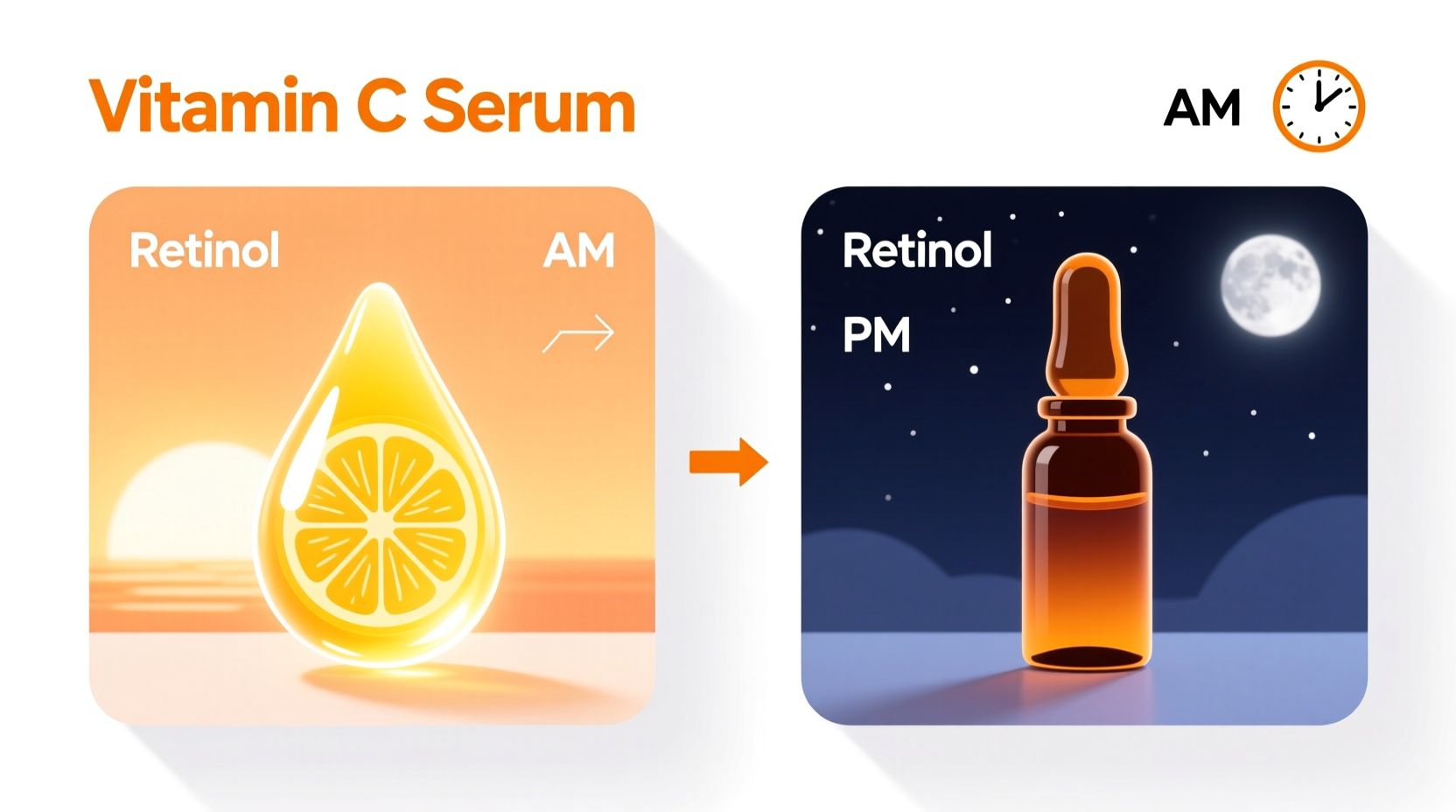
Yes—you can use vitamin C serum and retinol together, but not necessarily at the same time. The safest and most effective approach is to separate their application, typically using vitamin C in the morning and retinol at night.
This separation leverages the natural rhythm of your skin’s needs throughout the day. In the morning, your skin faces environmental aggressors like UV rays and pollution. Vitamin C acts as a shield, boosting protection when layered under sunscreen. At night, your skin shifts into repair mode, making it the ideal time for retinol to stimulate renewal without interference from sunlight or oxidative stress.
Using both ingredients daily—but at different times—creates a synergistic effect. Morning vitamin C helps prevent damage, while nightly retinol corrects existing concerns like uneven tone and texture. Over weeks and months, this dual approach often leads to significantly improved skin clarity, firmness, and youthfulness.
“Combining antioxidants like vitamin C with retinoids offers comprehensive anti-aging benefits—one prevents damage, the other repairs it.” — Dr. Lindsey Zubritsky, Board-Certified Dermatologist
When to Apply Each: A Strategic Skincare Timeline
The key to maximizing results lies in timing. Here’s a step-by-step breakdown of how to integrate both ingredients into your routine based on circadian skincare principles.
Morning Routine: Defense-Focused with Vitamin C
- Cleanse: Use a gentle, non-stripping cleanser to remove overnight buildup.
- Vitamin C Serum: Apply 3–5 drops to damp skin. Allow 1–2 minutes to absorb fully.
- Moisturizer: Follow with a lightweight moisturizer to support the skin barrier.
- Sunscreen: Finish with broad-spectrum SPF 30 or higher. This is non-negotiable—vitamin C increases photosensitivity slightly, and sun exposure degrades its potency.
Night Routine: Repair-Oriented with Retinol
- Cleanse: Double cleanse if wearing makeup or sunscreen to ensure a clean canvas.
- Toner (optional): Use alcohol-free toners to balance pH.
- Retinol: Apply a pea-sized amount evenly across the face. Start 1–2 times per week, gradually increasing frequency.
- Moisturizer: Seal in hydration with a richer cream to buffer potential dryness or flaking.
During the adjustment phase (first 2–4 weeks), consider applying moisturizer before retinol (“buffering”) to minimize irritation. Avoid using other exfoliants like AHAs or BHAs on retinol nights unless your skin is well-acclimated.
What If You Want to Use Both in One Session?
Some advanced users attempt to layer vitamin C and retinol in a single routine, either in the morning or evening. While possible under specific conditions, this method carries risks.
If attempted, follow this strict protocol:
- Wait until your skin has built tolerance to both ingredients individually.
- Use lower concentrations (e.g., 10% vitamin C, 0.3% retinol).
- Apply vitamin C first, wait 15–20 minutes, then apply retinol.
- Follow with a nourishing moisturizer.
Even then, the risk of stinging, redness, or peeling increases significantly. Most dermatologists recommend avoiding simultaneous application, especially for sensitive, dry, or reactive skin types. Stability of the formulations may also be compromised due to pH conflict.
| Factor | Vitamin C Serum | Retinol |
|---|---|---|
| Best Time to Apply | Morning | Night |
| pH Level | Acidic (3.0–3.5) | Neutral to Slightly Alkaline |
| Main Benefit | Antioxidant protection, brightening, collagen boost | Cell turnover, wrinkle reduction, acne control |
| Sun Sensitivity | Slight increase; requires SPF | High increase; must use SPF daily |
| Start Frequency | Daily (if tolerated) | 2–3x/week, build up slowly |
Common Mistakes to Avoid
Even well-intentioned routines can backfire if common errors aren’t addressed. Below are pitfalls to watch for when using vitamin C and retinol:
- Applying both at night: This overwhelms the skin and reduces vitamin C’s protective benefit when it’s needed most—in daylight.
- Skipping sunscreen: Both ingredients make skin more vulnerable to UV damage. Daily SPF is mandatory.
- Overusing retinol: More is not better. Starting too aggressively leads to barrier disruption and inflammation.
- Using expired or improperly stored serums: Vitamin C oxidizes quickly when exposed to light and air. Store in a cool, dark place and replace every 3–6 months.
- Layering incompatible products: Avoid mixing retinol with benzoyl peroxide or strong acids unless guided by a professional.
Real-World Example: Sarah’s Journey to Clearer Skin
Sarah, a 34-year-old teacher with combination skin and post-acne marks, wanted to improve her dull complexion and early signs of fine lines. She had tried various products but experienced breakouts and irritation whenever she added actives.
After consulting a dermatology nurse, she adopted a split routine:
- Morning: Gentle cleanser → 15% vitamin C serum → moisturizer → SPF 50
- Night: Oil cleanser + foam cleanser → hydrating toner → 0.2% retinol (every other night) → ceramide cream
Within six weeks, Sarah noticed her dark spots began fading and her skin felt smoother. By week ten, colleagues commented on her “glow.” She credits the gradual introduction and clear separation of ingredients for her success. Now, she uses retinol four times a week and has upgraded to 0.5% strength without issues.
Your Step-by-Step Checklist for Success
To safely incorporate both vitamin C and retinol into your regimen, follow this actionable checklist:
- ✔️ Confirm your skin is not currently irritated or undergoing treatment (e.g., chemical peel, laser).
- ✔️ Introduce one ingredient at a time—start with vitamin C in the AM for 2 weeks.
- ✔️ Begin retinol slowly: 1–2 nights per week, always at night.
- ✔️ Use a non-comedogenic moisturizer to support your barrier.
- ✔️ Wear broad-spectrum SPF 30+ every single morning—even on cloudy days.
- ✔️ Monitor for signs of over-exfoliation: tightness, redness, flaking.
- ✔️ Wait 4–6 weeks before increasing retinol frequency or concentration.
- ✔️ Replace vitamin C serum if it turns yellow or brown (sign of oxidation).
Frequently Asked Questions
Can I use vitamin C and retinol if I have sensitive skin?
Yes, but proceed cautiously. Opt for gentler forms such as magnesium ascorbyl phosphate (a stable vitamin C derivative) and encapsulated retinol. Start with lower frequencies and always buffer retinol with moisturizer. Many with sensitive skin succeed using vitamin C daily and retinol just 1–2x/week.
Is it okay to use retinol in the morning?
No. Retinol degrades rapidly in sunlight, reducing its effectiveness. It also increases photosensitivity, raising the risk of sun damage. Always reserve retinol for nighttime use and pair it with diligent daytime sun protection.
What should I do if my skin becomes irritated?
Pause retinol immediately. Rebuild your moisture barrier with soothing ingredients like ceramides, squalane, and centella asiatica. Resume retinol only after irritation resolves, and consider reducing concentration or frequency. Never push through persistent redness or peeling.
Final Thoughts: Building a Smarter Skincare Routine
Using vitamin C serum with retinol isn’t just possible—it’s one of the most effective combinations for achieving healthy, youthful-looking skin. The secret lies in strategic timing and mindful layering. By applying vitamin C in the morning to defend against environmental damage and reserving retinol for nighttime renewal, you give your skin the best of both worlds.
Patience and consistency matter more than speed. Allow your skin time to adapt, respect its limits, and prioritize protection with daily sunscreen. These habits compound over time, leading to long-term improvements that go beyond surface-level fixes.
💬 Ready to optimize your routine? Start tonight: apply retinol after cleansing and see how your skin responds. Share your journey or questions in the comments below—your experience could help someone else find their perfect balance.








