
Retinol and vitamin C are two of the most researched and effective ingredients in skincare. Both offer powerful benefits: retinol boosts cell turnover, reduces fine lines, and clears acne, while vitamin C brightens tone, fades dark spots, and protects against environmental damage. Given their popularity, it’s natural to wonder whether using them together enhances results—or risks irritating or harming the skin.
The answer isn’t a simple yes or no. Mixing retinol with vitamin C serum can be done safely under the right conditions, but doing so incorrectly may lead to redness, dryness, peeling, or compromised skin barrier function. Understanding how each ingredient works, their pH requirements, and optimal application timing is key to harnessing their combined power without damaging your skin.
How Retinol and Vitamin C Work on Skin
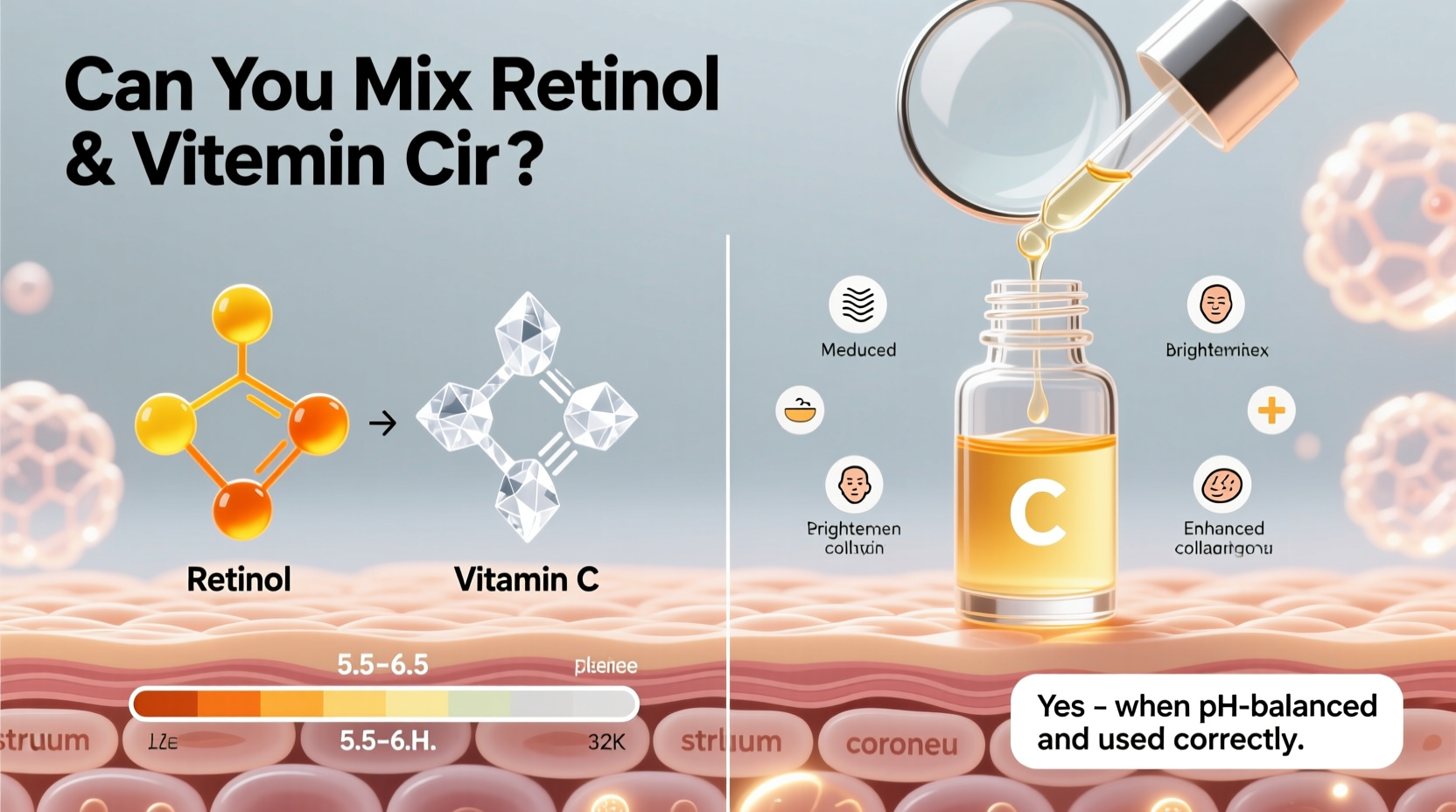
Before combining any actives, it’s essential to understand what they do at a biochemical level.
Retinol, a derivative of vitamin A, accelerates skin cell renewal by binding to retinoic acid receptors in the dermis. This process stimulates collagen production, smooths texture, and helps unclog pores. However, retinol is notoriously unstable and can be irritating, especially when introduced too quickly or layered with other potent ingredients.
Vitamin C (L-ascorbic acid) is a water-soluble antioxidant that neutralizes free radicals caused by UV exposure and pollution. It also inhibits melanin production, leading to a more even complexion. For maximum efficacy, vitamin C must be formulated at a low pH—typically between 2.0 and 3.5—to remain active and penetrate the skin effectively.
The challenge arises from this difference in pH needs. Retinol performs best in a more neutral environment (pH ~5.5–6.5), whereas vitamin C requires high acidity. When mixed directly, the opposing pH levels can destabilize both compounds, reducing their effectiveness and increasing the risk of irritation.
Tip: Always patch test new combinations on a small area of skin (like behind the ear) for 2–3 nights before applying to your entire face.Can You Mix Them in the Same Routine?
While mixing retinol and vitamin C in the same product or layering them simultaneously isn’t recommended due to pH conflicts and potential irritation, many dermatologists agree that using both—just not at the same time—is safe and beneficial.
The consensus among skincare experts is to **use vitamin C in the morning and retinol at night**. This approach leverages the strengths of each ingredient while minimizing risk.
- Morning: Apply vitamin C serum after cleansing. Its antioxidant properties protect your skin throughout the day, especially when followed by sunscreen.
- Night: Use retinol after cleansing and toning. Nighttime application allows retinol to work without interference from sunlight, which can degrade its potency.
This separation prevents formulation conflicts and gives your skin time to process each ingredient independently, reducing the likelihood of adverse reactions.
What If You Want to Use Both in One Session?
If you're determined to use both in a single routine—perhaps to save time or boost anti-aging effects—there are strategies to minimize risk.
- Wait at least 20–30 minutes between applying vitamin C and retinol to allow the acidic environment to neutralize slightly.
- Use a buffered or stabilized form of vitamin C (like magnesium ascorbyl phosphate or sodium ascorbyl phosphate), which operates at a higher pH and is less likely to destabilize retinol.
- Opt for a gentle, encapsulated retinol formula rather than prescription-strength tretinoin if combining with any acidic product.
Even with these precautions, simultaneous use increases the chance of sensitivity, particularly for those with dry, reactive, or compromised skin barriers.
Expert Insight: What Dermatologists Say
“Layering retinol and pure L-ascorbic acid serums without proper spacing can compromise both ingredients’ stability and trigger inflammation. I recommend separating them by time of day unless using gentler derivatives.” — Dr. Lena Patel, Board-Certified Dermatologist
“Think of your skin like a sponge. Overloading it with high-potency actives at once doesn’t speed up results—it just causes damage. Patience and consistency yield better long-term outcomes.” — Dr. Marcus Reed, Clinical Skincare Researcher
These insights highlight a recurring theme in dermatology: more isn't always better. Strategic sequencing often outperforms aggressive layering.
Step-by-Step Guide to Safely Using Retinol and Vitamin C
To get the best results without compromising your skin health, follow this structured routine:
- Start Slowly: Introduce one active at a time. Begin with vitamin C every morning for two weeks, then add retinol two nights per week.
- Morning Routine:
- Cleanse with a mild facial wash.
- Apply vitamin C serum (preferably below 15% concentration if new to the ingredient).
- Follow with moisturizer and broad-spectrum SPF 30+.
- Night Routine:
- Cleanse thoroughly to remove sunscreen and debris.
- Tone (optional; avoid alcohol-based toners).
- Apply retinol to dry skin, starting with pea-sized amount for the entire face.
- Motion: Use upward motions; avoid the eye area unless product specifies safety.
- Moisturize immediately after (this is called \"buffering\" and helps reduce irritation).
- Monitor Your Skin: Watch for signs of over-exfoliation: tightness, flaking, redness, stinging. If these occur, pause retinol for 3–5 days and focus on barrier repair.
- Gradually Increase Frequency: After 4–6 weeks, increase retinol use to every other night, then nightly if tolerated.
Do’s and Don’ts: Quick Reference Table
| Do’s | Don’ts |
|---|---|
| Use vitamin C in the morning for antioxidant protection | Mix pure L-ascorbic acid and retinol in the same step |
| Apply retinol at night on clean, dry skin | Use both actives daily if you’re a beginner |
| Buffer retinol with moisturizer to reduce irritation | Combine with physical scrubs or other exfoliants daily |
| Choose stable vitamin C forms (e.g., SAP, THD ascorbate) if layering | Ignore signs of barrier damage (tightness, burning, peeling) |
| Wear sunscreen daily—even when using only retinol | Expect immediate results; both ingredients take 6–12 weeks to show visible changes |
Mini Case Study: Sarah’s Experience with Combined Actives
Sarah, a 34-year-old marketing executive, began using a 10% L-ascorbic acid serum in the morning and applied a 0.5% retinol cream every night. Eager for faster results, she started layering both in her evening routine after reading about “double-duty” regimens online.
Within a week, she noticed persistent redness around her cheeks and jawline. Her skin felt tight and flaky, and her foundation began clinging to dry patches. Concerned, she consulted a dermatologist who diagnosed early-stage barrier disruption caused by pH conflict and over-exfoliation.
After pausing all actives for five days and focusing on hydration with ceramide-rich creams and squalane oil, Sarah reintroduced the products separately. She now uses vitamin C in the AM and retinol three times a week in the PM. After eight weeks, her skin is clearer, brighter, and more resilient—with no recurrence of irritation.
Her experience underscores a critical lesson: even effective ingredients require thoughtful integration into a skincare regimen.
Frequently Asked Questions
Can I use vitamin C and retinol on the same day?
Yes, but not at the same time. Use vitamin C in the morning and retinol at night. This timing maximizes benefits while minimizing irritation and chemical instability.
Will mixing retinol and vitamin C make my skin worse?
Potentially. Combining low-pH vitamin C (especially L-ascorbic acid) with retinol can destabilize both compounds and increase the risk of redness, peeling, and sensitivity—particularly in beginners or sensitive skin types.
Are there any vitamin C formulas safe to use with retinol?
Yes. Derivatives like magnesium ascorbyl phosphate, sodium ascorbyl phosphate, or tetrahexyldecyl ascorbate are less acidic and more compatible with retinol. These are gentler and can sometimes be used in the same routine with proper spacing.
Checklist: Safe Integration of Retinol and Vitamin C
- ☐ Start with one active at a time to assess tolerance
- ☐ Use vitamin C in the morning, retinol at night
- ☐ Choose non-acidic vitamin C derivatives if layering
- ☐ Wait 20–30 minutes between applying actives
- ☐ Always apply sunscreen during the day
- ☐ Moisturize well, especially when using retinol
- ☐ Discontinue use if persistent irritation occurs
- ☐ Give products at least 6–8 weeks to evaluate results
Conclusion: Smart Layering Leads to Better Skin
You can use retinol and vitamin C serum without damaging your skin—but success depends on timing, formulation, and individual tolerance. Rather than mixing them haphazardly, adopt a strategic approach that respects their chemistry and your skin’s limits.
By separating application times, choosing compatible formulations, and listening to your skin’s feedback, you’ll unlock the full anti-aging, brightening, and protective benefits of both ingredients. Remember, skincare is a marathon, not a sprint. Consistency, patience, and intelligent choices will deliver healthier, more radiant skin in the long run.
💬 Have you tried combining retinol and vitamin C? Share your routine and results in the comments—your experience could help others find their ideal balance!








