Retinol and vitamin C are two of the most celebrated ingredients in skincare. One is a gold-standard anti-aging agent; the other, a powerful antioxidant that brightens and protects. But when it comes to using both in your routine, many wonder: can they be combined without triggering redness, dryness, or sensitivity?
The answer isn’t a simple yes or no. While retinol and vitamin C offer complementary benefits—boosting collagen, evening tone, and defending against environmental damage—their potency means that improper use can lead to irritation. However, with the right approach, you can harness their full potential without compromising your skin barrier.
This guide breaks down the science behind these actives, explores compatibility concerns, and delivers proven strategies to layer them effectively. Whether you're a skincare novice or refining an advanced regimen, this information will help you make informed decisions for healthier, more radiant skin.
The Science Behind Retinol and Vitamin C
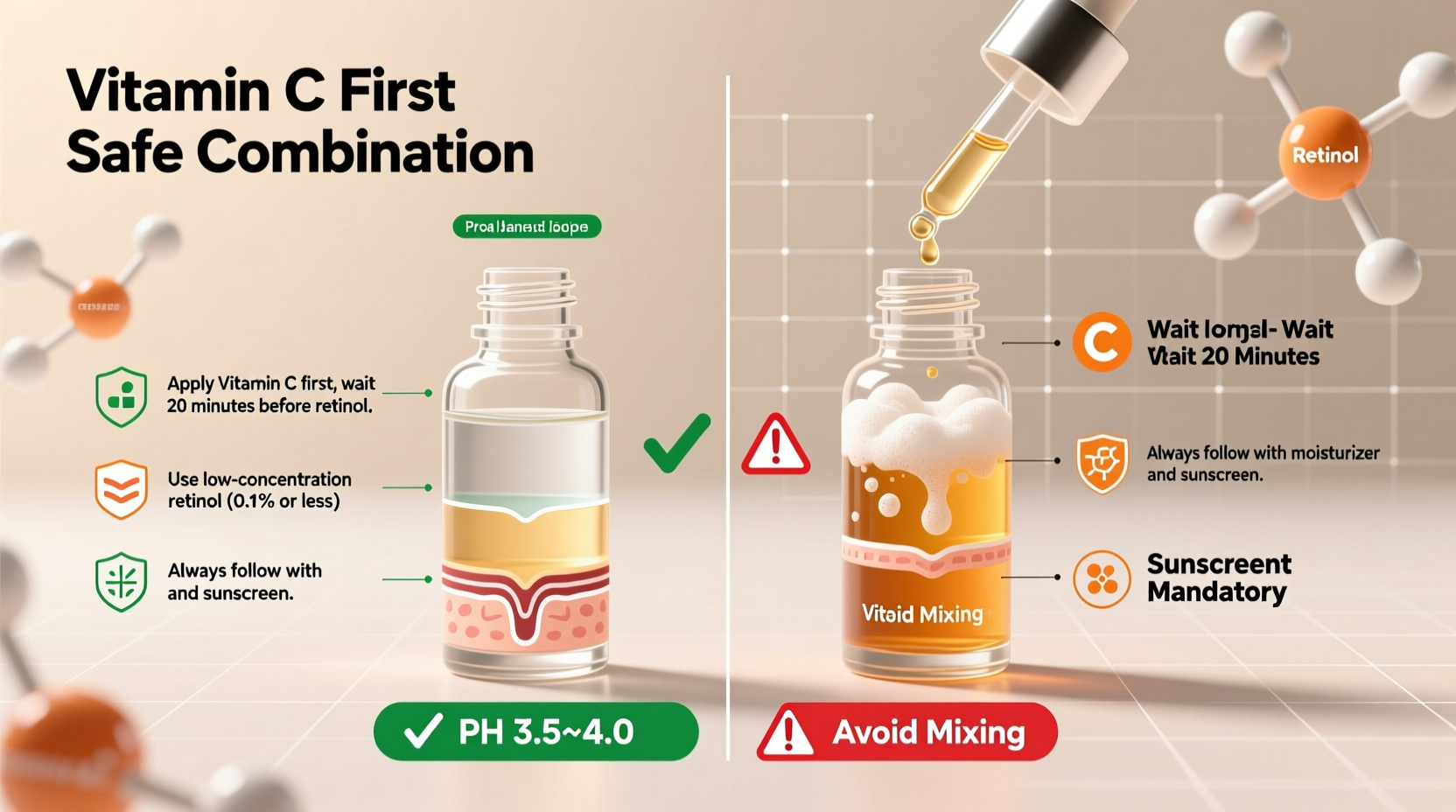
Understanding how each ingredient works is essential before combining them. Both are effective but function differently and operate best under specific conditions.
Retinol, a derivative of vitamin A, accelerates cell turnover, stimulates collagen production, and helps unclog pores. It’s widely used to reduce fine lines, improve texture, and treat acne. However, retinol is notoriously unstable and can degrade when exposed to light and air. More importantly, it increases photosensitivity, which is why it's recommended for nighttime use.
Vitamin C (L-ascorbic acid) is a potent antioxidant that neutralizes free radicals from UV exposure and pollution. It also inhibits melanin production, helping fade dark spots, while boosting collagen synthesis for firmer skin. Unlike retinol, vitamin C thrives in daylight—it’s most effective when applied in the morning as part of your sun protection strategy.
The primary concern with mixing them lies in their pH requirements. Most stable forms of vitamin C work best at a low pH (around 3.0–3.5), while retinol performs optimally at a more neutral pH (5.5–6.0). When combined incorrectly, this mismatch can destabilize both ingredients and compromise efficacy—or worse, disrupt your skin’s natural barrier, leading to stinging, peeling, or inflammation.
“Combining high-strength actives like retinol and vitamin C requires strategic timing and formulation awareness. Skin tolerance varies widely, so personalization is key.” — Dr. Lena Patel, Board-Certified Dermatologist
Can You Mix Them Safely? What Research Says
There is no clinical evidence proving that combining retinol and vitamin C causes harm when used correctly. In fact, some studies suggest synergistic effects when both are used in a well-balanced routine. A 2019 review published in the *Journal of Clinical and Aesthetic Dermatology* highlighted that topical antioxidants like vitamin C may actually help mitigate early signs of retinoid-induced irritation by reducing oxidative stress.
However, real-world results depend heavily on concentration, formulation, frequency, and individual skin resilience. For example:
- Using a 20% L-ascorbic acid serum alongside 1% prescription retinoid cream is far more likely to cause irritation than pairing gentle derivatives like magnesium ascorbyl phosphate (vitamin C) with encapsulated retinol.
- Buffering agents, moisturizers, and proper application order can significantly reduce adverse reactions.
The takeaway? Yes, you *can* use both—but not necessarily at the same time or every day. Strategic separation and gradual introduction are critical to avoiding irritation.
Tip: Always patch test new combinations on a small area of your jawline for 48 hours before applying to your entire face.Step-by-Step Guide to Using Retinol and Vitamin C Without Irritation
If you want to incorporate both powerhouses into your routine, follow this structured timeline to build tolerance and maximize benefits.
- Start with one active at a time. Begin by introducing retinol or vitamin C alone for 2–3 weeks. This allows your skin to adapt and helps identify any underlying sensitivities.
- Choose gentler formulations initially. Opt for lower concentrations (e.g., 0.25%–0.5% retinol or buffered vitamin C like sodium ascorbyl phosphate) and slow-release delivery systems.
- Separate application by time of day. Apply vitamin C in the morning after cleansing and before sunscreen. Use retinol at night after cleansing and before moisturizing.
- Introduce layering cautiously. If you prefer using both in one session, wait 20–30 minutes between applications to minimize pH disruption and allow absorption.
- Always moisturize. Apply a hydrating moisturizer either before (buffering method) or after your actives to reinforce the skin barrier.
- Limit frequency during adjustment. Start with retinol 2–3 nights per week and vitamin C every other morning. Gradually increase as tolerated.
- Monitor for signs of over-exfoliation. Flaking, tightness, burning, or persistent redness means you’re moving too fast. Scale back and focus on repair.
When (and How) to Layer Them Together
Some users successfully layer retinol and vitamin C in the same routine—if done carefully. Here’s how:
- Use a water-based vitamin C serum first, let it dry completely (about 1–2 minutes).
- Wait 20–30 minutes before applying retinol to allow the acidic environment to neutralize slightly.
- Alternatively, use a moisturizer between steps (the “sandwich method”) to buffer potential irritation.
- Avoid combining with other exfoliants (like AHAs/BHAs) on the same day.
Note: This method is best suited for experienced users with resilient skin. Beginners should stick to AM/PM separation.
Do’s and Don’ts: Quick Reference Table
| Do’s | Don’ts |
|---|---|
| Use vitamin C in the morning with broad-spectrum SPF | Mix high-potency vitamin C and retinol immediately |
| Apply retinol at night, starting 2–3 times weekly | Use both actives daily without building tolerance |
| Moisturize before or after actives to reduce irritation | Combine with alcohol-based toners or harsh scrubs |
| Choose stabilized, pH-appropriate formulations | Store serums in direct sunlight or humid bathrooms |
| Listen to your skin—scale back if irritation occurs | Ignore signs of over-exfoliation like peeling or stinging |
Real Example: How Sarah Balanced Both Actives After Sensitivity Issues
Sarah, a 34-year-old marketing executive, began experiencing flaking and redness after adding a 15% vitamin C serum and 0.5% retinol cream to her routine within the same week. She assumed both products were “clean” and safe to use together, applying them nightly after cleansing.
After two weeks, her skin felt raw and sensitive, especially around her cheeks and nose. She consulted a dermatology nurse who advised her to stop both actives for five days and switch to a soothing routine with ceramide cream and squalane oil.
Once her barrier recovered, she reintroduced them gradually: vitamin C every other morning, followed by SPF. At night, she started retinol just twice a week, applying moisturizer first to buffer the formula. She waited four weeks before increasing frequency and never applied both on the same day.
Within three months, Sarah noticed improved radiance, reduced hyperpigmentation, and smoother texture—without irritation. Her success came not from using stronger products, but from pacing and respecting her skin’s limits.
Tip: If your skin feels tight or looks red after applying an active, skip the next application and focus on hydration for 1–2 days.Expert Tips for Minimizing Irritation
Even with careful planning, some trial and error is normal. These professional-recommended strategies can further reduce risk:
- Check ingredient lists: Avoid products with added fragrances, denatured alcohol, or essential oils if you have sensitive skin.
- Look for encapsulated retinol: These formulas release retinol slowly, minimizing irritation while maintaining effectiveness.
- Opt for non-acidic vitamin C derivatives: Ascorbyl glucoside, magnesium ascorbyl phosphate, or tetrahexyldecyl ascorbate are less irritating than pure L-ascorbic acid.
- Double-cleanse at night: Remove all traces of morning vitamin C residue before applying retinol to prevent interaction buildup.
- Use a humidifier: Dry indoor air exacerbates retinol side effects. Adding moisture to your bedroom can support recovery.
“Patients often think more is better, but skincare is about balance. I recommend spacing out potent ingredients unless formulated to work together.” — Dr. Alicia Kim, Cosmetic Dermatologist
Frequently Asked Questions
Can I use vitamin C in the morning and retinol at night?
Yes, this is the safest and most effective way to use both. Vitamin C provides antioxidant protection during the day, while retinol repairs skin overnight. Just remember to apply sunscreen daily when using either ingredient.
Will mixing retinol and vitamin C make my skin darker?
No, neither ingredient causes skin darkening. However, irritation from overuse can trigger post-inflammatory hyperpigmentation, especially in darker skin tones. This is why gentle introduction is crucial.
Are there products that combine retinol and vitamin C safely?
Some brands formulate combined serums using stable, pH-balanced versions of both ingredients. Look for those with time-release technology or non-acidic derivatives. However, even these should be introduced slowly to assess tolerance.
Final Checklist Before Combining Retinol and Vitamin C
- ✅ Patch test each product individually
- ✅ Confirm your skin has adapted to each active separately
- ✅ Choose well-formulated, non-irritating versions of both
- ✅ Plan your routine: AM for vitamin C, PM for retinol
- ✅ Include a gentle cleanser and rich moisturizer
- ✅ Always wear sunscreen during the day
- ✅ Monitor your skin’s response weekly
Conclusion: Smart Pairing Leads to Better Results
You don’t have to choose between retinol and vitamin C. With thoughtful integration, you can enjoy the anti-aging, brightening, and protective benefits of both—without the burn. The key lies in understanding your skin’s needs, respecting its limits, and following a phased, science-backed approach.
Start slow, separate when necessary, and prioritize barrier health above speed. Over time, consistent and intelligent use will yield clearer, firmer, more even-toned skin. Skincare isn’t about shortcuts; it’s about sustainability. Make these habits part of your long-term plan, and your future complexion will thank you.
💬 Have experience combining retinol and vitamin C? Share your tips or questions in the comments—your insight could help others find their perfect routine!








