Mashed potatoes are a staple on dinner tables across the world—creamy, comforting, and deeply satisfying. But for those monitoring their calorie intake, a simple question arises: just how many calories are in a serving of mashed potatoes? The answer isn't as straightforward as it seems. Calorie counts vary dramatically depending on preparation methods, ingredients used, and portion size. Understanding these variables is essential not only for nutritional awareness but also for making informed choices in everyday cooking. Whether you're preparing a holiday feast or a weeknight side dish, knowing what drives the calorie content in mashed potatoes allows you to enjoy them mindfully without sacrificing taste.
Definition & Overview
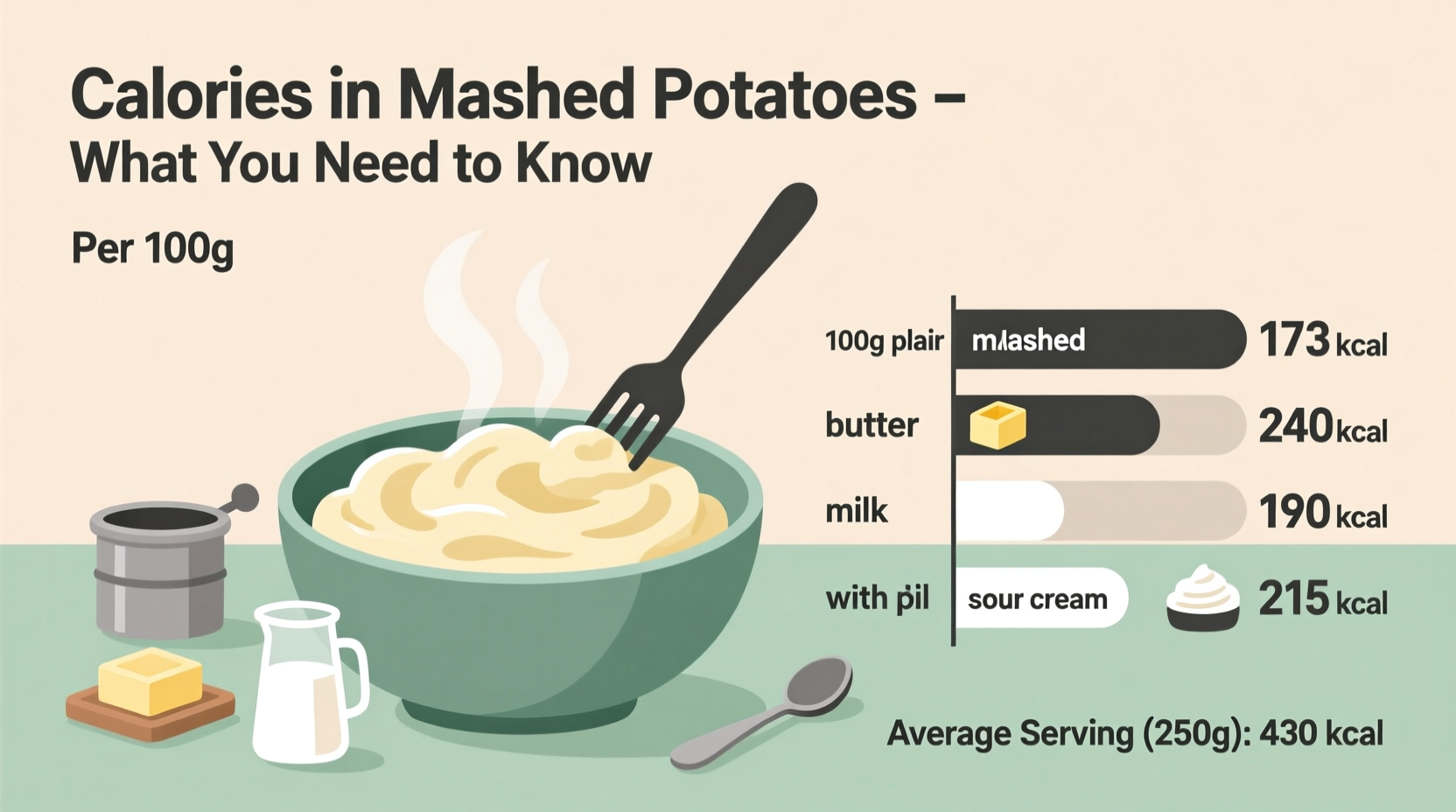
Mashed potatoes are a cooked and mashed preparation of boiled potatoes, typically blended with liquids and fats to achieve a smooth, creamy texture. Originating in Europe—most likely Germany or France—they have become a global comfort food, adapted into countless regional variations. At their core, mashed potatoes serve as a neutral canvas that absorbs flavors from added dairy, herbs, and seasonings. While often associated with indulgence, they can be prepared in both rich, restaurant-style forms and lighter, health-conscious versions.
The base ingredient—potatoes—is naturally low in fat and high in complex carbohydrates, potassium, and vitamin C. However, the transformation from boiled spuds to silky mash introduces additional components that significantly influence the final nutritional profile. It’s not the potato itself that elevates the calorie count; it’s what’s added during preparation.
Key Characteristics of Mashed Potatoes
- Flavor: Mild and earthy from the potatoes, enhanced by butter, cream, garlic, or herbs.
- Aroma: Rich and warm, especially when made with butter, roasted garlic, or warmed cream.
- Texture: Smooth, creamy, and velvety when properly prepared; lumpy if under-mixed or overworked.
- Color: Pale ivory to light yellow, depending on the potato variety and amount of butter used.
- Culinary Function: Serves as a side dish, base for shepherd’s pie, or accompaniment to proteins like roast chicken or beef.
- Shelf Life: Lasts 3–5 days refrigerated; can be frozen for up to 3 months (texture may degrade slightly).
How Ingredients Affect Calorie Content
The caloric value of mashed potatoes is primarily determined by the type and quantity of added ingredients. A basic breakdown of common components reveals how quickly calories accumulate:
| Ingredient (per 1/4 cup or 4 tbsp) | Calories | Fat (g) | Carbohydrates (g) |
|---|---|---|---|
| Potato, boiled (100g) | 87 | 0.1 | 20 |
| Whole milk | 38 | 1 | 5 |
| Heavy cream | 135 | 14 | 1 |
| Butter (unsalted) | 102 | 11.5 | 0.1 |
| Sour cream | 59 | 6 | 1 |
| Chicken broth (low-sodium) | 10 | 0 | 1 |
| Plain Greek yogurt (non-fat) | 35 | 0 | 4 |
From this data, it's evident that fat-rich ingredients like butter and heavy cream contribute disproportionately to the total calorie count. For example, a standard recipe using 1 pound of potatoes, 4 tablespoons of butter, and 1/2 cup of whole milk yields approximately 320–350 calories per serving (about 1 cup). Swap in heavy cream and extra butter, and that number can easily exceed 450 calories per cup.
Practical Usage: Making Mashed Potatoes at Home
Creating mashed potatoes that balance flavor and nutrition begins with smart ingredient selection and technique. Here’s a step-by-step guide to preparing a classic batch—with options to reduce calories:
- Choose the right potato: Russet or Yukon Gold varieties work best. Russets yield fluffier results; Yukon Golds are naturally buttery and hold more moisture.
- Peel (optional) and cut evenly: Uniform pieces ensure even cooking. Peeling removes fiber but improves texture; leaving skins on adds nutrients and rustic character.
- Boil gently: Start in cold, salted water and bring to a simmer. Over-boiling leads to waterlogged potatoes, diluting flavor and requiring more fat to compensate.
- Drain and dry: Return potatoes to the hot pot for 1–2 minutes over low heat to evaporate excess moisture—this prevents a gluey texture.
- Warm your liquids: Cold milk or cream cools the mixture and can cause uneven incorporation. Heat dairy before adding.
- Mash with care: Use a potato ricer or hand masher for smooth results. Avoid blenders or food processors, which release too much starch and create a gummy consistency.
- Incorporate fats gradually: Add butter first, then liquid. This helps emulsify the mixture for maximum creaminess with minimal ingredients.
Pro Tip: Replace half the butter with unsweetened applesauce or pureed cauliflower to cut fat while maintaining body. For a protein boost, substitute 1/3 of the dairy with non-fat Greek yogurt.
Variants & Types of Mashed Potatoes
Mashed potatoes come in many forms, each suited to different dietary needs and culinary contexts. Recognizing these variations helps you choose—or create—the version that fits your goals.
1. Classic Creamy Mashed Potatoes
The traditional version uses butter, whole milk or cream, and salt. High in flavor and calories, ideal for special occasions. Approximately 350–450 calories per cup.
2. Garlic Mashed Potatoes
Roasted or sautéed garlic is blended into the mash, adding depth without significant calories. One clove of garlic adds only about 4 calories. Flavor impact far outweighs caloric cost.
3. Loaded Mashed Potatoes
Topped with cheese, bacon bits, chives, and sour cream—common in diners and fast-casual restaurants. A single serving can exceed 500 calories due to high-fat toppings.
4. Health-Conscious (Light) Mashed Potatoes
Uses low-fat or non-dairy substitutes such as skim milk, vegetable broth, or plant-based milk. Often includes pureed cauliflower or white beans for volume and creaminess. Calories range from 150–220 per cup.
5. Vegan Mashed Potatoes
Substitutes butter with olive oil or vegan margarine, and dairy with almond, oat, or soy milk. Nutritional yeast can add a cheesy flavor without animal products. Calories depend on oil quantity but typically fall between 200–300 per cup.
6. Instant Mashed Potatoes
Dehydrated and reconstituted with hot water or milk. Convenient but often contains additives, preservatives, and sodium. A typical 1/2-cup dry serving has 150–180 calories when prepared with water; with milk and butter, it reaches 250+.
| Type | Approx. Calories (per 1-cup serving) | Best Use Case |
|---|---|---|
| Classic Creamy | 350–450 | Holiday meals, restaurants |
| Garlic-Infused | 360–460 | Steakhouse sides, gourmet dinners |
| Loaded (with toppings) | 500+ | Casual dining, indulgent treats |
| Light / Healthy | 150–220 | Diet-conscious meals, daily sides |
| Vegan | 200–300 | Plant-based diets, allergen-sensitive |
| Instant (prepared) | 200–280 | Quick meals, camping, dorm cooking |
Comparison with Similar Side Dishes
Mashed potatoes are often compared to other starchy sides. Understanding the differences helps contextualize their nutritional standing.
| Side Dish | Calories (per 1 cup) | Key Differences |
|---|---|---|
| Mashed Potatoes (classic) | 350–450 | Creamy texture, high in saturated fat if made traditionally |
| Rice (white, cooked) | 205 | Lower fat, higher glycemic index, less satiating |
| Quinoa (cooked) | 222 | Higher protein, complete amino acid profile, nuttier flavor |
| Polenta (cream-style) | 150–200 | Maize-based, lower glycemic load, gluten-free |
| Macaroni and Cheese | 400–500 | Higher in fat and sodium, more processed |
While mashed potatoes are not the lowest-calorie option, they offer greater satiety than refined grains due to their fiber and resistant starch content—especially when cooled and reheated, which increases resistant starch levels by up to 50%.
Practical Tips & FAQs
How many calories are in a typical restaurant serving of mashed potatoes?
Restaurant portions are often larger and richer. A standard 1.5-cup serving made with heavy cream and generous butter can contain 500–700 calories. Always ask about preparation if ordering at a health-focused establishment.
Can I make mashed potatoes without butter?
Yes. Substitute with olive oil, avocado, or pureed cannellini beans. These provide richness and healthy fats while reducing saturated fat intake.
Are instant mashed potatoes less healthy?
They’re more processed and often contain sodium, preservatives, and anti-caking agents. However, they can be part of a balanced diet when prepared with low-fat milk and limited butter. Check labels for clean ingredients.
Do sweet potatoes have fewer calories than regular mashed potatoes?
Boiled sweet potato has about 90 calories per 100g—slightly more than white potato—but offers more fiber, vitamin A, and antioxidants. Mashed sweet potatoes made with butter and marshmallows (as in casseroles) can exceed 400 calories per cup.
How can I store and reheat mashed potatoes safely?
Cool within two hours of cooking and refrigerate in an airtight container. Reheat gently on the stove with a splash of milk to restore moisture. Do not reheat multiple times.
What’s the best way to reduce calories without losing flavor?
Use a 50/50 blend of cauliflower and potatoes. Cauliflower adds volume with only 25 calories per cup. Roast the cauliflower first for deeper flavor. Add roasted garlic, fresh herbs, or a dash of Dijon mustard to enhance taste without adding fat.
Expert Insight: \"The key to flavorful, lower-calorie mashed potatoes is maximizing umami and aroma. A small amount of aged Parmesan, smoked paprika, or miso paste can elevate the dish far more than extra butter ever could.\" — Chef Elena Torres, Culinary Nutrition Instructor
Summary & Key Takeaways
Mashed potatoes are a beloved dish whose calorie content hinges almost entirely on preparation. A basic understanding of ingredients empowers home cooks to tailor recipes to their dietary preferences without sacrificing satisfaction.
- The potato itself is relatively low in calories—about 87 per 100g—but added fats like butter and cream drive the total count upward.
- A standard homemade serving ranges from 350–450 calories; lighter versions can be made for under 200 calories per cup.
- Substitutions such as Greek yogurt, broth, or pureed vegetables allow for reduced fat and increased nutrition.
- Restaurant and instant versions often contain hidden sodium, fats, and additives—read labels or inquire about preparation.
- Mashed potatoes offer better satiety than many refined starches, especially when made with skin-on potatoes or mixed with cauliflower.
- Variations like vegan, garlic-infused, or loaded styles serve different culinary roles—from health-focused sides to indulgent centerpieces.
Ultimately, mashed potatoes don’t need to be avoided for caloric reasons. With mindful ingredient choices and proper technique, they can be a delicious, balanced part of any meal. The goal isn’t elimination—it’s intelligent adaptation. Whether you’re feeding a family or cooking for one, understanding the science behind the spoon lets you enjoy comfort food with confidence.
Want to try a lighter version? Start with a 1:1 mix of Yukon Gold potatoes and steamed cauliflower—season with roasted garlic and a touch of olive oil. Taste the difference without missing a bite.









