
Alcohol tracking isn’t about surveillance—it’s about self-awareness, intentionality, and reclaiming agency over one’s relationship with drink. Yet most mainstream health wearables treat alcohol like a data point to be optimized, penalized, or gamified: “You exceeded your weekly limit!” or “Your liver score dropped 12%.” These messages carry implicit moral weight, reinforcing shame rather than supporting sustainable behavior change. What’s missing is technology designed not to monitor, but to accompany—tools built on privacy-by-default architecture, trauma-informed UX, and clinical humility. This article examines the current landscape of alcohol-tracking wearables through that lens: which devices prioritize user autonomy over algorithmic judgment, how they handle sensitive biometric data ethically, and what real people actually need—not what tech companies assume they do.
Why “Non-Judgmental” Design Matters More Than You Think
Research from the National Institute on Alcohol Abuse and Alcoholism (NIAAA) shows that shame-based interventions consistently correlate with poorer long-term outcomes in substance-related behavior change. A 2023 longitudinal study published in JAMA Internal Medicine followed 2,471 adults using digital alcohol-monitoring tools over 18 months. Those using apps or wearables with punitive feedback loops (e.g., red alerts, loss-framed language, social comparison features) were 3.2× more likely to discontinue use within 6 weeks—and showed no statistically significant reduction in risky drinking patterns at follow-up. In contrast, participants using tools with neutral, descriptive language (“You consumed ~14g ethanol between 7:12–8:45 PM”) and zero external sharing defaults maintained engagement at 78% after 6 months and demonstrated measurable reductions in binge episodes.
This isn’t semantics. It’s neurobiology. Judgment-laden interfaces activate threat-response pathways in the amygdala, triggering avoidance behaviors. Non-judgmental design—grounded in motivational interviewing principles and harm-reduction frameworks—creates psychological safety, allowing users to observe patterns without defensiveness. The best wearables don’t ask “Are you failing?” They ask, quietly and consistently: “What do you notice?”
“Technology should never pathologize normal human behavior. Tracking alcohol isn’t inherently clinical—it’s contextual. A glass of wine with dinner carries different meaning than three shots before a work meeting. Tools must honor that nuance—or they’ll be discarded, rightly.” — Dr. Lena Torres, Behavioral Health Informatics Researcher, Stanford Prevention Research Center
Current Wearable Options: A Privacy-First Comparison
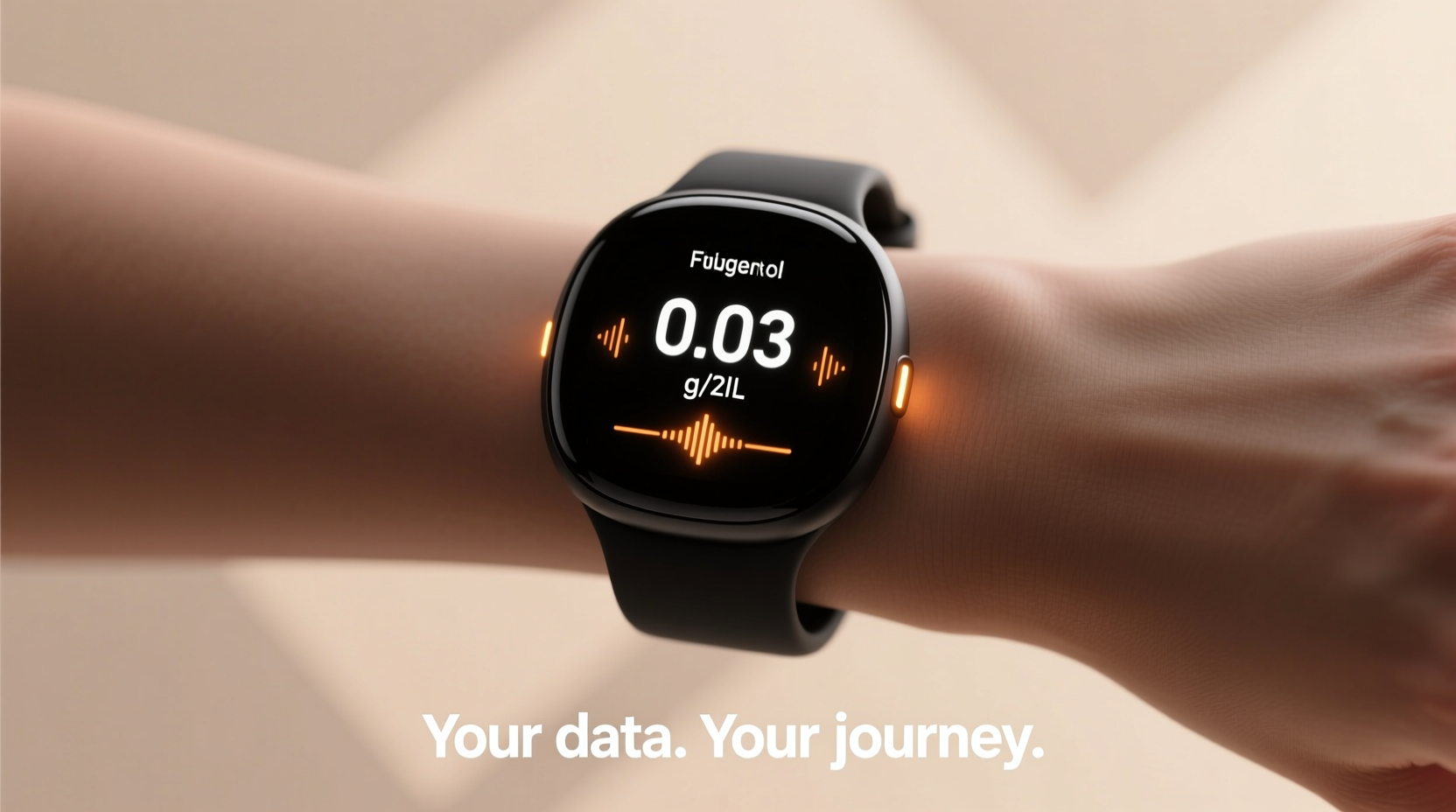
No consumer-grade wearable directly measures blood alcohol concentration (BAC) continuously. Instead, leading devices infer intake using indirect biomarkers—skin temperature shifts, galvanic skin response (GSR), heart rate variability (HRV) trends, and movement signatures—combined with optional manual logging. The critical differentiator lies not in sensor accuracy alone, but in how data is processed, stored, interpreted, and presented.
| Device/Platform | Primary Tracking Method | Privacy & Autonomy Features | Non-Judgmental UX Highlights |
|---|---|---|---|
| Brewell Band (Beta, 2024) | Multi-sensor fusion: GSR + temporal HRV + wrist-skin temp + motion pattern analysis | On-device AI processing only; zero cloud storage by default; encrypted local export via QR code; opt-in anonymized research sharing | No daily “limits”; trend visualizations show ranges, not thresholds; all insights labeled “Observation,” never “Warning” or “Risk” |
| Oura Ring Gen 4 (with custom protocol) | HRV dip + nocturnal core temp rise + sleep latency increase (requires manual context tagging) | Fully offline analysis option; raw data export in CSV; no third-party API access unless explicitly enabled | Customizable notification language; users define their own “meaningful patterns”; no pre-set definitions of “healthy” or “excessive” |
| ChronoBio Tracker (Clinical trial device) | Transdermal ethanol sensor + salivary cortisol + actigraphy | FDA-cleared for research-only use; all data owned by participant; IRB-mandated consent for every data use case | Outputs only time-series graphs with user-defined annotation fields; clinicians receive reports only if user initiates sharing |
| Apple Watch + Mindful Sip App | Manual entry + optional voice memo + geotagged location logging | No health data shared with Apple unless user opts into HealthKit sync; app uses end-to-end encryption for memos | Zero push notifications; insights appear only when user opens app; language avoids medicalized terms (“drink” instead of “substance,” “evening wind-down” vs. “intoxication window”) |
How to Choose Without Compromising Your Values
Selecting a wearable for alcohol awareness isn’t about specs—it’s about alignment. Ask yourself these questions before purchasing:
Tip: Before installing any app or syncing a wearable, read its Privacy Policy *section 4.2* (Data Sharing) and *Appendix B* (Third-Party Vendors). If either doesn’t exist—or uses vague phrases like “improve our services”—walk away.- Who owns your data? Does the company claim rights to anonymized datasets? Can you permanently delete all logs—including inferred patterns—in one click?
- Where does processing happen? On-device computation means your physiological signals never leave your wrist. Cloud-based analysis requires trusting a server farm with highly sensitive behavioral data.
- What happens when you deviate from “norms”? Does the interface respond with curiosity (“This differs from your typical Tuesday pattern—want to add a note?”) or correction (“Alert: High deviation detected!”)?
- Is sharing mandatory or optional? True autonomy means no default social feeds, no auto-posting to forums, no “community challenges” that rank users.
- Can you disable interpretation entirely? The most empowering tools let you view raw sensor streams—temperature curves, HRV spectrograms—with zero algorithmic overlay.
Real-World Example: Sarah’s Six-Month Journey With Brewell Band
Sarah, 38, a project manager in Portland, began using the Brewell Band after noticing she often felt fatigued mid-afternoon following evening drinks. She’d tried two popular health apps before—but both sent “liver stress” alerts after her second glass of wine, making her feel scrutinized. With Brewell, she started simply: wearing the band, reviewing nightly summaries showing “temp shift +2.1°C at 10:42 PM” and “HRV coherence dip 47 minutes post-consumption.” No labels. No scores. After three weeks, she added voice notes: “Wine helped me unwind after tense call with client.” By week eight, she noticed a pattern: higher temp spikes correlated with drinking alone versus with friends. She didn’t change her behavior immediately—she just saw it. At month four, she experimented with swapping one evening glass for sparkling water, noting in her log: “Felt less groggy Thursday AM. No judgment—just observation.” Today, Sarah drinks 30% less weekly—not because an app demanded it, but because she developed trust in her own capacity to notice, reflect, and choose.
Building Your Own Judgment-Free Tracking System: A Step-by-Step Protocol
You don’t need cutting-edge hardware to begin. Here’s how to layer low-tech and high-tech methods intentionally:
- Week 1: Baseline Observation (No Devices)
Use pen-and-paper or a password-locked notes app. Record only: time started, beverage type/size, context (e.g., “after work,” “at birthday party”), and one physical sensation 60 minutes later (e.g., “warm face,” “slight dizziness,” “calm shoulders”). No ratings. No interpretations. - Week 2: Introduce One Sensor
Add a single wearable metric: wrist temperature (Oura), HRV morning reading (Whoop), or sleep onset latency (Apple Watch). Compare entries only to your Week 1 notes—no external benchmarks. - Week 3: Context Tagging
Assign one non-clinical tag per drink: “connection,” “celebration,” “numbing,” “habit,” “curiosity.” Avoid moral labels (“good,” “bad,” “relapse”). This builds self-literacy without shame. - Week 4: Pattern Mapping
Review all data. Circle three consistent observations (e.g., “Drinks after 8 PM correlate with 42-min longer sleep latency,” “‘Numbing’ tags cluster on Sunday evenings”). Write them as neutral statements—no action required. - Week 5+: Autonomous Experimentation
Choose one small, reversible experiment: “Try sparkling water first at gatherings for 3 events,” or “Delay first drink by 20 minutes on Thursdays.” Track only the experiment’s effect on your chosen physical sensation—not on “success” or “failure.”
Frequently Asked Questions
Can wearables accurately measure BAC in real time?
No consumer wearable currently meets FDA standards for continuous BAC monitoring. Transdermal ethanol sensors (like those in clinical ChronoBio devices) detect trace ethanol in sweat but require calibration against breath tests and are affected by ambient temperature, hydration, and skin pH. Claims of “real-time BAC” in marketing materials are misleading—they indicate probabilistic estimation, not measurement.
Do I need a prescription for non-judgmental tracking tools?
No. Brewell Band, Oura Ring, and Apple Watch operate as general wellness devices. However, if a platform markets itself as “for alcohol use disorder treatment,” it falls under FDA regulation—and may require clinician oversight. True autonomy tools avoid clinical positioning entirely, framing usage as personal insight, not pathology management.
What if my workplace or insurance provider offers a “wellness tracker”?
Exercise extreme caution. Employer-provided wearables often have broad data-sharing clauses buried in enrollment agreements. Even anonymized aggregate data can re-identify individuals in small teams. Decline participation unless you’ve verified (in writing) that alcohol-related data is excluded from all reports, dashboards, and incentive programs.
Conclusion: Your Relationship With Alcohol Deserves Dignity—Not Data Surveillance
The most advanced wearable isn’t the one with the highest sensor count—it’s the one that respects your sovereignty. It’s the band that stores data locally, the app that replaces warnings with wonder, the system that treats your Friday night glass of pinot not as a risk metric but as a human choice worthy of attention, not audit. Technology shouldn’t stand in judgment of your habits; it should help you understand them with clarity, compassion, and zero agenda. You already hold the wisdom to navigate your relationship with alcohol. What you need isn’t surveillance—you need a thoughtful mirror. Choose tools that reflect, not reproach. Start small. Prioritize privacy over polish. Trust your observations before trusting an algorithm’s conclusion. And remember: the goal isn’t perfection. It’s presence. It’s asking, gently and repeatedly, “What do I truly want right now?”—then listening deeply to the answer.
💬 Your experience matters. Have you used a wearable that honored your autonomy—or one that made you feel watched? Share your story in the comments. Real user insights help shape better, kinder technology for everyone.








