Fine hair often walks a delicate line between luminous and limp. While many seek the glossy finish that hair oils provide, traditional formulas can leave fine strands flat, greasy, and lifeless. The solution lies in lightweight, fast-absorbing oils specifically formulated to nourish without residue. These oils penetrate the hair shaft rather than coating it, delivering hydration, protection, and brilliance—without sacrificing volume or texture.
The key is understanding which oils are molecularly small enough to absorb quickly, which ingredients enhance shine without buildup, and how to apply them correctly. With the right choices and techniques, even the finest hair can enjoy the benefits of oil: reduced frizz, improved elasticity, and a healthy, reflective sheen.
Why Fine Hair Needs Specialized Oils
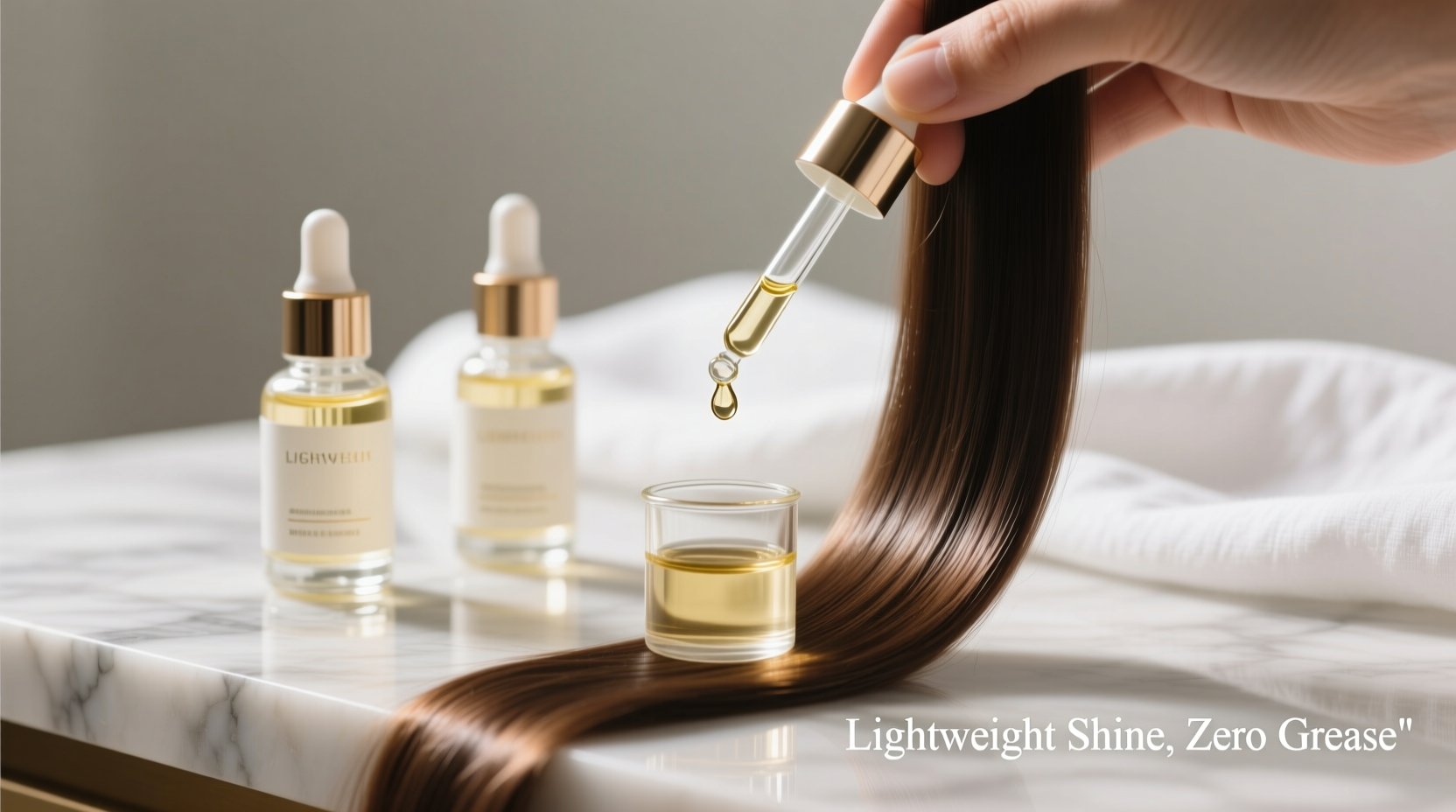
Fine hair has a smaller diameter than medium or coarse hair, meaning it has less structural mass and fewer cuticle layers. This makes it more vulnerable to damage but also more prone to being overwhelmed by heavy products. When an oil is too rich or applied incorrectly, it sits on top of the hair instead of absorbing into it, leading to a greasy appearance and flattened roots.
Additionally, fine hair tends to produce and show oil more readily due to its density and proximity to the scalp. A poorly chosen oil can exacerbate this, making hair look dirty within hours of washing. That’s why selecting a non-greasy formula isn’t just about preference—it’s essential for maintaining balance, volume, and long-term hair health.
“Fine hair doesn’t need less care—it needs smarter care. Lightweight oils with high linoleic acid content are ideal because they mimic the scalp’s natural sebum and absorb rapidly.” — Dr. Lena Torres, Trichologist & Hair Formulation Scientist
Top 5 Non-Greasy Hair Oils for Fine Hair
Not all oils are created equal. Below are five of the most effective, scientifically backed options that deliver shine and strength without heaviness. Each has been vetted for absorption rate, molecular weight, and user feedback from those with fine or thinning hair.
- Jojoba Oil – Technically a liquid wax, jojoba closely resembles human sebum. It absorbs quickly, balances scalp oil production, and adds subtle shine without residue.
- Grapeseed Oil – High in linoleic acid and antioxidants, this oil is exceptionally light. It strengthens hair, protects against heat damage, and evaporates excess moisture to prevent limpness.
- Squalane (Derived from Sugarcane) – A biocompatible, plant-based version of squalene naturally found in skin. It’s odorless, colorless, and absorbs instantly, leaving hair soft and glossy.
- Argan Oil (Fractionated) – While regular argan can be heavy, fractionated versions remove longer-chain triglycerides, resulting in a lighter, faster-absorbing oil ideal for fine strands.
- Sunflower Oil (High-Linoleic Variant) – Cold-pressed, high-linoleic sunflower oil is far lighter than standard versions. It improves hair smoothness and provides UV protection without buildup.
How to Apply Oil Without Weighing Down Fine Hair
Even the best oil can ruin fine hair if applied incorrectly. The goal is targeted delivery—not saturation. Follow this step-by-step method to maximize benefits while preserving volume.
Step-by-Step Guide: Light Application for Maximum Shine
- Determine Your Hair’s Porosity – Low-porosity hair resists moisture and benefits from pre-wash treatments. High-porosity hair absorbs quickly but may need sealing. Use a strand test: drop a clean strand in water. If it sinks quickly, porosity is high; if it floats, it's low.
- Choose the Right Time – For daily shine, apply post-wash to damp ends. For deep conditioning, use as a pre-shampoo treatment 20–30 minutes before washing.
- Use the Correct Amount – Start with 3–5 drops for short to medium hair, up to 1/2 teaspoon for long hair. Warm between palms before applying.
- Focus on Ends Only – Avoid the roots and mid-lengths unless treating dryness. Concentrate on the last 2–3 inches where hair is most damaged.
- Style After Application – Let the oil absorb for 5–10 minutes, then proceed with styling. Blow-drying on low heat helps lock in shine without greasiness.
“Less is more with fine hair. One pump too much can undo volume. I recommend applying oil only to second-day hair to refresh ends and tame flyaways.” — Maya Chen, Celebrity Stylist
Comparison Table: Key Properties of Lightweight Hair Oils
| Oil Type | Weight | Absorption Speed | Shine Level | Best For |
|---|---|---|---|---|
| Jojoba Oil | Light | Fast (1–2 min) | Moderate | Balancing scalp, daily use |
| Grapeseed Oil | Very Light | Very Fast (<1 min) | High | Heat protection, shine boost |
| Sugarcane Squalane | Ultra-Light | Instant | High | All-over gloss, frizz control |
| Fractionated Argan | Light | Fast | High | Split ends, styling prep |
| High-Linoleic Sunflower | Light | Fast | Moderate | UV protection, strength |
Avoid These Common Mistakes
Even experienced users fall into traps when using oils on fine hair. Steering clear of these errors ensures better results and prevents frustration.
- Applying to Wet Hair – Water dilutes oil and slows absorption, increasing the chance of residue. Apply to damp, not soaking, hair.
- Using Too Much – Over-application is the most common cause of flat hair. Start with half the amount you think you need.
- Ignoring Scalp Sensitivity – Some oils, like coconut, can clog follicles in fine-haired individuals. Stick to non-comedogenic options like jojoba or squalane.
- Skipping Cleanser Adjustment – If you use oil regularly, ensure your shampoo can remove buildup. Clarifying shampoos every 2–3 weeks help maintain balance.
- Using Heated Tools Immediately – Allow oil to absorb for at least 5 minutes before blow-drying or flat-ironing to avoid frying the product onto the hair.
Real-World Example: Reviving Limp, Dull Hair
Sarah, a 32-year-old graphic designer with shoulder-length fine hair, struggled with dullness and static after switching to a sulfate-free shampoo. Her hair lost its bounce and looked flat by noon. She tried several oils but found them too heavy—until she discovered sugarcane-derived squalane.
She began using 3 drops on towel-dried ends after every wash, avoiding the roots entirely. Within a week, her hair felt softer and looked noticeably shinier under office lighting. On day three, instead of looking oily, her ends appeared polished. She now uses it as a midday refresher on second-day hair, applying a single drop to tame flyaways. Her stylist commented on the improved condition during her next cut, noting stronger ends and less breakage.
Sarah’s success came from choosing a truly lightweight oil and applying it with precision—proof that technique matters as much as product choice.
Checklist: Choosing and Using Non-Greasy Oils
Follow this checklist to ensure you’re getting the most out of your hair oil routine:
- ✅ Confirm the oil is cold-pressed and unrefined (unless fractionated)
- ✅ Check ingredient labels for added silicones or mineral oils
- ✅ Start with 3–5 drops for short to medium hair
- ✅ Apply only to mid-lengths and ends, never directly to roots
- ✅ Use on damp, not wet, hair for optimal absorption
- ✅ Wait 5–10 minutes before styling with heat
- ✅ Wash with a clarifying shampoo once every 2–3 weeks
- ✅ Store oils in dark glass bottles away from sunlight
Frequently Asked Questions
Can I use hair oil every day on fine hair?
Yes, but sparingly. A single drop of ultra-light oil like squalane or jojoba can be used daily on ends to combat dryness and add shine. Avoid daily root application to prevent buildup and greasiness.
Is argan oil too heavy for fine hair?
Traditional argan oil can be heavy for very fine or oily hair types. However, fractionated argan oil—where heavier molecules are removed—is significantly lighter and safe for regular use. Always opt for the fractionated version if you have fine strands.
How do I know if an oil is non-greasy?
Non-greasy oils absorb within 1–2 minutes and don’t leave a visible residue. Test by applying a small amount to your hand—if it feels slick after 60 seconds, it’s likely too heavy for fine hair. Look for oils high in linoleic acid (like grapeseed) rather than oleic acid (like olive), which tend to be heavier.
Final Thoughts: Shine Shouldn’t Sacrifice Volume
Healthy, shiny hair is achievable for fine textures—but it requires thoughtful product selection and precise application. The best non-greasy hair oils for fine hair work invisibly: strengthening, smoothing, and reflecting light without altering the hair’s natural movement. By choosing lightweight, fast-absorbing formulas like jojoba, squalane, or fractionated argan, and applying them with restraint, you unlock radiance without compromise.
Remember, fine hair isn’t fragile—it’s refined. Treat it with the same precision you’d apply to a delicate fabric or fine jewelry. With consistent care and intelligent choices, your hair can glow with vitality, resilience, and effortless elegance.
💬 Have a favorite lightweight oil that works for your fine hair? Share your experience in the comments and help others find their perfect shine match!








