
Sleep is not a luxury—it's a biological necessity. Yet millions struggle to fall asleep or stay asleep, often turning to medications or supplements when simpler, more natural solutions exist. Among the most effective and overlooked tools for better sleep is controlled breathing. By engaging the body’s parasympathetic nervous system, deliberate breathwork can reduce heart rate, lower blood pressure, and quiet mental chatter—creating the ideal internal environment for rest.
Unlike sleep aids, which come with side effects and dependency risks, breathing techniques are free, accessible, and safe. With consistent practice, they can retrain your body’s response to stress and significantly improve both sleep onset and sleep continuity. This guide explores the science behind breath-based relaxation, presents five of the most effective techniques, and offers practical steps to integrate them into your nightly routine.
The Science Behind Breathing and Sleep
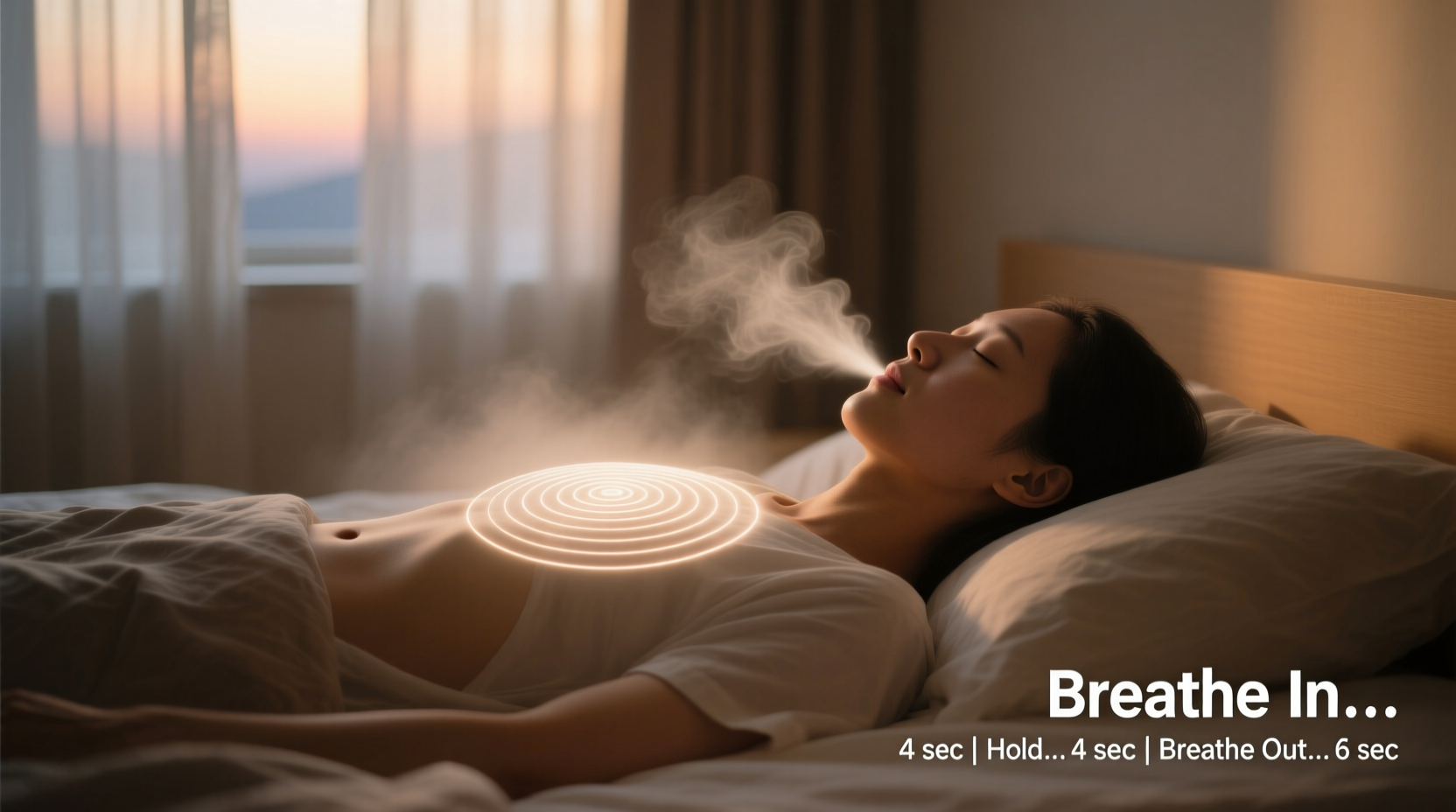
Breathing is unique among bodily functions: it operates automatically, yet can be consciously controlled. This dual nature makes it a powerful bridge between the mind and body. When you slow and regulate your breath, you send direct signals to the brain that danger has passed and it’s safe to relax.
The vagus nerve, a major component of the parasympathetic nervous system, responds strongly to changes in respiration. Slow, deep breathing stimulates this nerve, increasing heart rate variability (HRV)—a key marker of resilience and relaxation. High HRV correlates with better emotional regulation and improved sleep quality.
“Controlled breathing is one of the fastest ways to shift from fight-or-flight mode to rest-and-digest mode.” — Dr. Andrew Weil, Integrative Medicine Specialist
Studies have shown that practicing slow breathing at a rate of 5–6 breaths per minute can significantly reduce cortisol levels and subjective feelings of anxiety. For people with insomnia or nighttime arousal, this physiological shift can shorten the time it takes to fall asleep and reduce nocturnal awakenings.
Top 5 Breathing Techniques for Better Sleep
Not all breathing methods are equally effective for sleep. The following techniques have been validated through clinical research, anecdotal success, and centuries of traditional use in meditation and yoga. Each one targets different aspects of the relaxation response—from calming the mind to slowing heart rate to releasing physical tension.
1. 4-7-8 Breathing (Relaxing Breath)
Developed by Dr. Andrew Weil, the 4-7-8 method is designed to calm the nervous system quickly. It uses a specific count to extend exhalation, which naturally activates the parasympathetic response.
- Inhale quietly through your nose for 4 seconds.
- Hold your breath for 7 seconds.
- Exhale completely through your mouth for 8 seconds, making a whooshing sound.
- Repeat for 4 cycles, gradually increasing to 8 as you build tolerance.
This technique is especially useful if you're lying in bed with racing thoughts. The extended exhale forces your heart rate to drop and distracts the mind from repetitive worries.
2. Diaphragmatic (Belly) Breathing
Also known as deep abdominal breathing, this method emphasizes using the diaphragm rather than shallow chest breathing, which dominates during stress.
To practice:
- Lie on your back with knees bent or sit comfortably.
- Place one hand on your chest, the other on your abdomen.
- Inhale slowly through your nose, allowing your belly to rise while keeping your chest still.
- Exhale gently through pursed lips, feeling your abdomen fall.
- Aim for 6–10 breaths per minute over 5–10 minutes.
Regular practice improves oxygen exchange, reduces muscle tension, and helps break the cycle of hyperventilation linked to anxiety and insomnia.
3. Box Breathing (Square Breathing)
Favored by Navy SEALs and elite performers, box breathing promotes mental clarity and composure under pressure—ideal for those whose minds remain “on” long after bedtime.
| Phase | Duration | Action |
|---|---|---|
| Inhale | 4 seconds | Through the nose |
| Hold | 4 seconds | Lungs full |
| Exhale | 4 seconds | Through the mouth |
| Hold | 4 seconds | Lungs empty |
The equal-length segments create a predictable rhythm that anchors attention and interrupts rumination. Practice in bed with eyes closed, focusing solely on the count and sensation of air moving in and out.
4. Alternate Nostril Breathing (Nadi Shodhana)
An ancient yogic practice, alternate nostril breathing balances the left and right hemispheres of the brain and calms the nervous system.
- Sit upright or lie down comfortably.
- Use your right thumb to close your right nostril.
- Inhale slowly through the left nostril.
- Close the left nostril with your ring finger, release the right, and exhale through the right.
- Inhale through the right, then switch sides and exhale through the left.
- This completes one cycle. Repeat for 5–10 minutes.
A 2017 study published in the *Journal of Clinical and Diagnostic Research* found that just 10 minutes of Nadi Shodhana significantly reduced perceived stress and improved autonomic balance in participants.
5. Resonance Breathing (Coherent Breathing)
This technique involves breathing at your body’s natural resonance frequency—typically around 5–6 breaths per minute—to maximize heart rate variability and induce deep relaxation.
To find your optimal pace:
- Breathe in for 5 seconds.
- Breathe out for 5 seconds.
- Maintain this rhythm for at least 10 minutes before bed.
Apps or metronomes can help maintain timing. Over time, resonance breathing trains your autonomic nervous system to recover faster from stress and transition smoothly into sleep.
Step-by-Step Guide: Building a Nightly Breathing Routine
Technique alone isn’t enough—you need consistency and integration. Follow this timeline to make breathwork a reliable part of your sleep hygiene.
Week 1: Foundation
- Choose one technique (e.g., 4-7-8 or box breathing).
- Practice for 4 minutes each night in bed, lights off, phone away.
- Focus on smoothness, not perfection.
Week 2: Integration
- Extend sessions to 6–8 minutes.
- Pair breathing with a cue like dimming the lights or applying lotion.
- Notice how your body feels before and after.
Week 3–4: Refinement
- Add a second technique if desired (e.g., diaphragmatic breathing earlier in the evening).
- Practice mindfulness: notice distractions without judgment, return to breath.
- Track sleep quality in a journal or app to observe changes.
Common Mistakes and How to Avoid Them
Even well-intentioned breathwork can backfire if done incorrectly. Below are frequent pitfalls and corrections:
| Mistake | Why It’s Problematic | How to Fix |
|---|---|---|
| Forcing the breath | Triggers tension instead of relaxation | Breathe gently; imagine fogging a mirror |
| Holding breath too long | Causes lightheadedness or anxiety | Shorten holds; prioritize comfort over count |
| Practicing while sitting upright | May encourage alertness | Lie down or recline slightly |
| Expecting instant results | Leads to frustration | Treat it like training—a skill that improves over time |
“Breathwork isn’t about achieving a perfect state. It’s about showing up consistently and letting go.” — Sarah Thompson, Mindfulness Coach
Real-Life Example: From Insomnia to Restful Nights
Mark, a 42-year-old software engineer, struggled with chronic insomnia for over three years. Despite trying melatonin, white noise machines, and strict screen curfews, he routinely lay awake for hours, his mind replaying work emails and deadlines.
After reading about the 4-7-8 technique, he decided to give it a try. At first, he found the 7-second hold uncomfortable and gave up after two nights. But encouraged by a sleep therapist, he adjusted the count to 4-4-6 and committed to five minutes nightly.
Within ten days, Mark noticed he was falling asleep 20–30 minutes faster. After four weeks, he averaged only one brief awakening per night, compared to three or four previously. He now uses box breathing during stressful days and 4-7-8 at bedtime—without any supplements.
“It’s not magic,” he says. “But it gives me something to focus on besides my thoughts. My body finally gets the signal that it’s okay to shut down.”
Checklist: Optimizing Your Breathing Practice for Sleep
- ✅ Choose one primary technique to start with
- ✅ Practice in bed, lying down, in a dark room
- ✅ Keep sessions between 5–10 minutes
- ✅ Breathe through the nose when possible (unless technique specifies otherwise)
- ✅ Maintain a relaxed facial expression and jaw
- ✅ Avoid checking the clock; use a silent timer if needed
- ✅ Be patient—notice subtle shifts over time, not overnight change
- ✅ Combine with other sleep hygiene habits (consistent bedtime, cool room, no screens)
FAQ
Can breathing techniques really help with chronic insomnia?
Yes. While they are not a standalone cure, studies show that regular breathwork improves sleep latency (time to fall asleep) and reduces nighttime awakenings. When combined with cognitive behavioral therapy for insomnia (CBT-I), breathing exercises can be a powerful complementary tool.
Is it normal to feel lightheaded when starting?
Some people experience mild dizziness, especially with techniques involving breath retention. This usually passes as your body adjusts. If discomfort persists, shorten the counts or switch to simple diaphragmatic breathing until you build tolerance.
Should I breathe through my nose or mouth?
Nasal breathing is generally preferred—it filters and warms air, increases nitric oxide (which supports oxygen uptake), and promotes slower, deeper breaths. However, techniques like 4-7-8 specifically use mouth exhalation to enhance the calming effect. Follow the method’s guidelines.
Conclusion: Breathe Your Way to Better Sleep
Sleep doesn’t have to be a battle. By harnessing the power of your breath, you gain immediate access to a tool that costs nothing, requires no equipment, and works with your biology—not against it. Whether you’re dealing with occasional restlessness or long-term insomnia, consistent breathwork can recalibrate your nervous system and restore your ability to drift into sleep naturally.
The key is not perfection, but persistence. Start small. Be kind to yourself when your mind wanders. Celebrate progress, not milestones. Over time, these moments of intentional breathing will become a sanctuary—a daily ritual that signals safety, surrender, and readiness for rest.
🚀 Ready to transform your sleep? Pick one technique tonight and practice it for just five minutes. That single breath could be the beginning of deeper, more restorative rest.








