Sleep is foundational to health—impacting everything from cognitive function to immune resilience. As awareness grows, so does reliance on technology to monitor it. Wearables like Fitbit, Apple Watch, and Oura Ring promise detailed insights into sleep duration, quality, and stages. But behind the sleek dashboards and colorful graphs lies a critical question: Are these devices delivering medical-grade data, or are they little more than step counters with bedtime guesses?
The answer isn’t binary. While modern sleep trackers have made remarkable strides in usability and trend detection, their accuracy varies widely depending on the metric, device, and individual physiology. Understanding where they excel—and where they fall short—is essential for anyone using them to improve sleep.
How Sleep Trackers Work: The Science Behind the Sensors
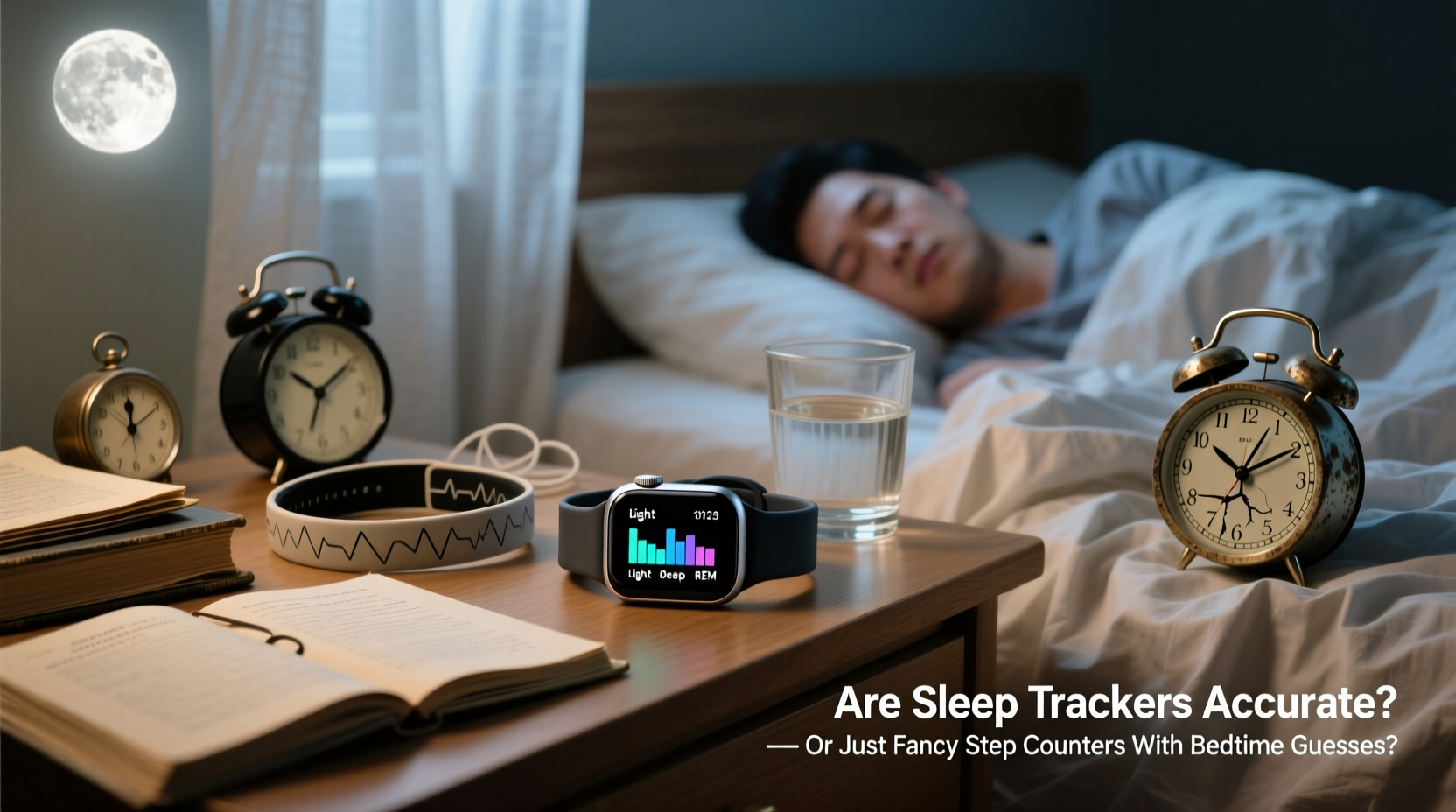
Most consumer-grade sleep trackers rely on a combination of motion detection (accelerometry), heart rate monitoring (via photoplethysmography or PPG), and sometimes body temperature or respiratory rate. These inputs are fed into proprietary algorithms that estimate when you fell asleep, how long you stayed asleep, and which sleep stages you experienced—light, deep, and REM.
Unlike clinical polysomnography (PSG), the gold standard for sleep analysis, wearables don’t measure brainwave activity (EEG), eye movements (EOG), or muscle tone (EMG). Instead, they infer sleep states based on movement and physiological signals. For example, prolonged stillness combined with a lowered heart rate might be interpreted as deep sleep, while brief awakenings could be flagged by increased movement or heart rate variability.
This indirect approach introduces inherent limitations. One study published in the Journal of Clinical Sleep Medicine found that while some trackers were reasonably accurate in detecting total sleep time (within 10–15 minutes of PSG), their ability to distinguish between sleep stages was significantly less reliable—especially for REM and light sleep.
“Consumer sleep trackers are useful for identifying trends over time, but they should not be used to diagnose sleep disorders.” — Dr. Rebecca Robbins, Sleep Scientist, Harvard Medical School
Accuracy by Metric: What They Get Right (and Wrong)
Not all sleep data is created equal. Some metrics are more reliably captured than others. Here's a breakdown of key sleep measurements and how well current devices perform:
| Metric | Typical Accuracy | Notes |
|---|---|---|
| Total Sleep Time | High (±10–15 min vs. PSG) | Generally reliable for tracking consistency and duration trends. |
| Sleep Onset Latency | Moderate | Tends to overestimate how long it takes to fall asleep due to sensitivity to micro-movements. |
| Wake After Sleep Onset (WASO) | Moderate to Low | Frequent misclassification of brief awakenings; may miss short arousals or falsely detect them. |
| Light Sleep | Low | Often overestimated; difficult to differentiate from quiet wakefulness. |
| Deep Sleep | Moderate | Better detected due to clear physiological markers (low HR, high HRV). |
| REM Sleep | Low to Moderate | Algorithms struggle without EEG input; often underreported or delayed in timing. |
| Resting Heart Rate & HRV | High (on newer devices) | PPG sensors have improved significantly; useful for recovery insights. |
The takeaway? Devices are best at measuring what they can directly sense—like movement and heart rate—and weakest when inferring complex neurological states. This means your \"90 minutes of REM\" reading might be a plausible estimate, but it’s not a definitive measurement.
Tip: Use sleep tracker data to spot patterns—not precise numbers. A consistent drop in deep sleep over several nights matters more than whether last night was 58 or 63 minutes.Real-World Limitations: Why Your Data Might Be Misleading
Even with advanced sensors, real-world conditions introduce variables that degrade accuracy. Consider the following scenarios:
- Lying still while awake: Reading in bed before sleep can be misclassified as actual sleep onset.
- Restless legs or tossing: Movement during deep sleep may cause the tracker to label it as light sleep or wakefulness.
- Irregular heart rhythms: Conditions like atrial fibrillation can interfere with PPG readings, skewing HRV and sleep stage estimates.
- Device fit: A loose band leads to motion artifacts, especially during REM when subtle eye movements occur.
- Algorithm opacity: Each brand uses secret algorithms, making cross-device comparisons unreliable.
A mini case study illustrates this well: Sarah, a 34-year-old software developer, noticed her Oura Ring consistently reported only 20 minutes of REM sleep per night, despite feeling well-rested. Concerned, she underwent a home sleep test. The clinical device recorded an average of 75 minutes of REM—over three times higher. Further investigation revealed that her ring was slightly loose, causing signal noise during REM’s characteristic rapid eye movements. After tightening the fit, her REM readings improved, though still not matching clinical results.
This highlights a crucial point: sleep trackers are highly personalized tools. Their output depends not just on biology, but on hardware fit, user behavior, and algorithmic assumptions.
When Trackers Help—and When They Harm
Used wisely, sleep trackers can promote better habits. Seeing a correlation between late caffeine intake and reduced deep sleep might motivate someone to shift their coffee cutoff time. Noticing frequent nighttime awakenings could prompt a check for sleep apnea symptoms.
But there’s a darker side: orthosomnia, a condition where individuals become obsessively focused on optimizing sleep metrics, leading to increased anxiety and worse sleep. A 2017 study in Journal of Clinical Sleep Medicine described patients who developed insomnia-like symptoms not from poor sleep, but from stress over inaccurate tracker data.
One such case involved Mark, a 42-year-old fitness enthusiast. His Garmin watch showed “poor sleep scores” three nights in a row due to “excessive light sleep.” Despite sleeping seven hours and feeling alert, he began restricting screen time, cutting out wine, and even trying melatonin—all because his device suggested he wasn’t recovering well. After consulting a sleep specialist, he learned his natural sleep architecture simply included more light sleep than average. His obsession with the tracker had caused more harm than good.
“The danger isn’t the device—it’s misinterpreting its data as absolute truth. Sleep is subjective. If you feel rested, that’s more important than any number on a screen.” — Dr. Michael Grandner, Director, Sleep and Health Research Program, University of Arizona
How to Use Sleep Trackers Wisely: A Practical Checklist
To get the most benefit while avoiding pitfalls, follow these evidence-based practices:
- ✅ Calibrate your device occasionally with subjective experience. Did you feel rested? That’s a better indicator than stage breakdowns.
- ✅ Focus on trends over time, not single-night data. Look at weekly averages for total sleep and deep sleep.
- ✅ Ensure proper fit. The sensor should be snug but comfortable, typically on the index or middle finger for rings.
- ✅ Pair tracker data with a sleep diary. Note caffeine, alcohol, stress, and bedtime routine to identify real-world influences.
- ❌ Don’t chase perfect scores. A “100” sleep score doesn’t mean optimal health, nor does a “70” mean failure.
- ❌ Avoid adjusting habits based on one-off anomalies. One bad night of tracked data rarely indicates a problem.
- ✅ Consult a professional if your tracker shows persistent disruptions AND you feel tired. Don’t self-diagnose sleep apnea or insomnia.
Comparing Top Devices: Who Leads in Accuracy?
Not all trackers are equal. Independent studies and lab comparisons suggest differences in performance:
| Device | Total Sleep Accuracy | Sleep Stage Accuracy | Best For |
|---|---|---|---|
| Oura Ring (Gen 3) | High | Moderate | Trend tracking, recovery insights, comfort |
| Fitbit Sense 2 | High | Moderate | Detailed sleep staging, user-friendly app |
| Apple Watch Series 9 | Moderate | Low to Moderate | Integration with iOS, breathing rate tracking |
| Whoop 4.0 | High | Moderate | Athletes, HRV and strain monitoring |
| Garmin Venu 3 | Moderate | Low | Fitness users, multi-day battery |
Devices like the Oura Ring and Fitbit tend to lead in validation studies due to longer development cycles focused on sleep science. Apple Watch, while powerful, prioritizes general health features over sleep-specific optimization. Meanwhile, Whoop excels in recovery metrics but lacks FDA clearance or extensive peer-reviewed validation.
FAQ: Common Questions About Sleep Tracker Accuracy
Can I trust my smartwatch to diagnose sleep apnea?
No. While some devices (like Withings and Apple Watch) offer notifications for potential breathing disturbances, they are not diagnostic tools. Only a clinical sleep study can confirm sleep apnea. Use alerts as prompts to consult a doctor, not as proof of a condition.
Why do different devices show different sleep stages?
Each company uses proprietary algorithms trained on different datasets. Without standardized definitions or open-source models, results vary significantly. One device may classify a period as REM, another as light sleep, based solely on algorithmic interpretation.
Should I stop using my sleep tracker if it’s not 100% accurate?
Not necessarily. Even imperfect data can reveal meaningful patterns. The key is understanding its role: a guide, not a verdict. If it causes stress or obsessive behavior, however, taking a break is wise.
Conclusion: Tools, Not Truths
Sleep trackers are not medical devices. They are consumer gadgets designed to encourage healthier habits through feedback. While they’ve evolved beyond simple step counters, calling them “bedtime guessers” isn’t entirely unfair—especially when it comes to sleep stages.
Yet dismissing them entirely would overlook their value. When used with context, skepticism, and self-awareness, they can highlight patterns invisible to subjective recall. The danger lies not in the technology, but in treating its outputs as gospel.
The most accurate sleep metric remains how you feel in the morning. Are you alert? Focused? Emotionally balanced? If yes, your sleep is likely sufficient—even if your tracker says otherwise. Let the data inform, not dictate, your choices.
🚀 Ready to make smarter use of your sleep data? Start by comparing your tracker’s report with how you actually feel for a week. Share your findings in the comments—your experience could help others navigate the gap between numbers and reality.








