
Resistance bands have exploded in popularity over the past decade. From home workouts to physical therapy clinics, they’re everywhere. But amid the fitness trends and influencer endorsements, a critical question remains: Are resistance bands actually effective for building muscle, or are they just a convenient substitute with minimal real-world impact?
The short answer: Yes, resistance bands can build muscle—when used correctly. But like any training tool, their effectiveness depends on how they're applied, not just whether they exist in your workout routine.
To understand their true potential, we need to go beyond marketing claims and examine the science of muscle growth, the mechanics of resistance training, and how bands compare to traditional weights.
The Science Behind Muscle Growth
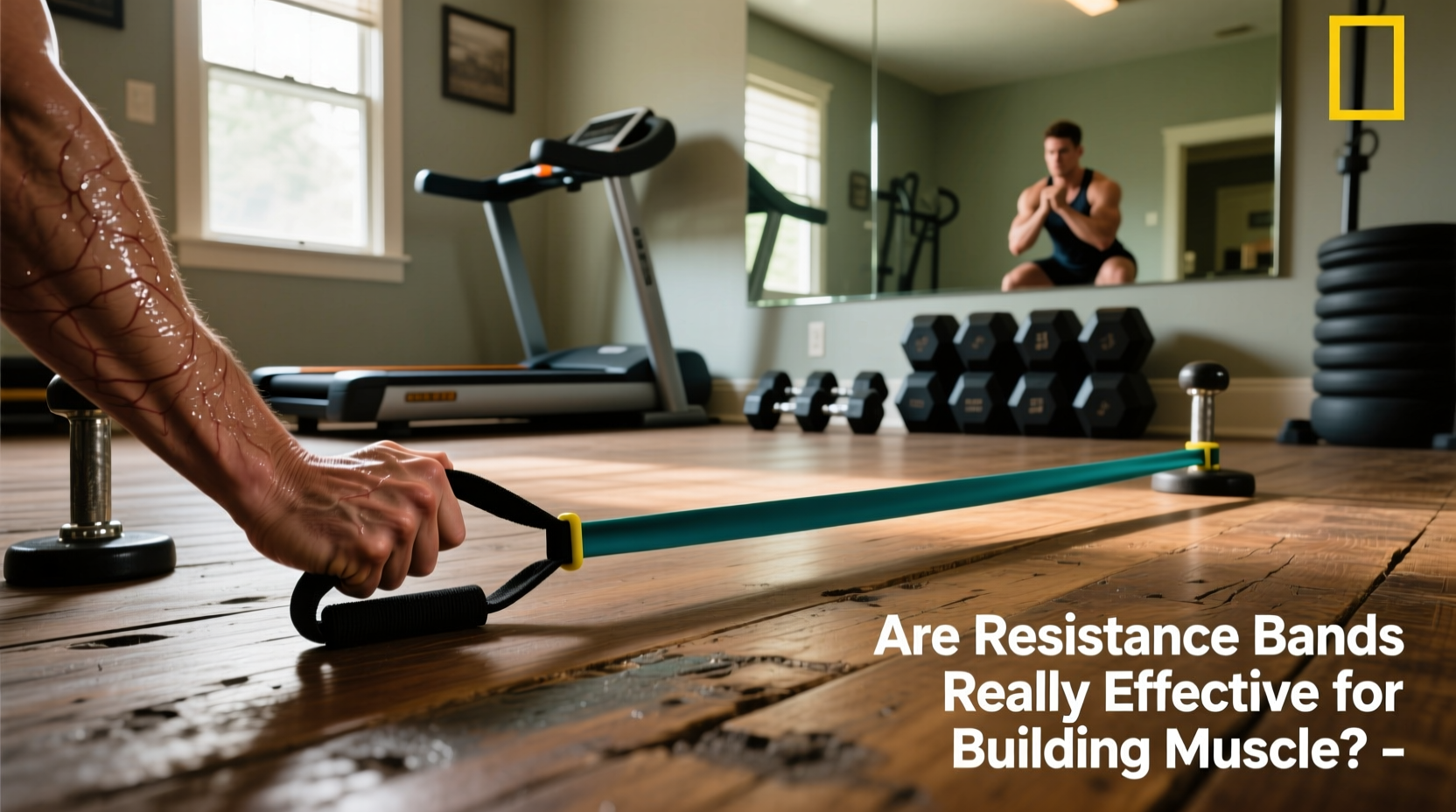
Muscle hypertrophy—the physiological process of muscle growth—relies on three primary mechanisms: mechanical tension, metabolic stress, and muscle damage. Of these, mechanical tension is the most influential factor. It refers to the force generated within a muscle during contraction against resistance.
For muscle growth to occur, that tension must be sufficient to challenge the muscle beyond its current capacity—a principle known as progressive overload. This doesn’t necessarily require heavy barbells; it requires consistent increases in load, volume, or time under tension over time.
Resistance bands create mechanical tension through elastic resistance. As the band stretches, the force required to continue the movement increases. This variable resistance curve differs from free weights, which provide constant resistance throughout the range of motion. However, research shows that both forms can stimulate hypertrophy when programmed appropriately.
“Muscle doesn’t know if the resistance comes from a dumbbell or a band. What matters is whether you’re applying enough stimulus to trigger adaptation.” — Dr. Brad Schoenfeld, CSCS, leading researcher in hypertrophy science
How Resistance Bands Compare to Free Weights
While resistance bands can contribute to muscle growth, they aren't a perfect 1:1 replacement for free weights in every scenario. Understanding the differences helps clarify where bands excel—and where they fall short.
| Factor | Resistance Bands | Free Weights (Dumbbells/Barbells) |
|---|---|---|
| Progressive Overload | Requires changing band thickness or combining bands; less precise | Easily adjustable in small increments (e.g., 2.5–5 lb jumps) |
| Range of Motion Loading | Increases resistance at peak contraction (e.g., top of bicep curl) | Constant resistance throughout movement |
| Stability Demand | Lower—bands stabilize themselves | Higher—requires core and joint stabilization |
| Portability & Cost | Highly portable, affordable ($10–$50) | Bulky, expensive (bench + rack + weights = $500+) |
| Maximal Strength Development | Limited for advanced lifters | Superior due to higher absolute loads |
The data suggests that resistance bands are particularly effective for beginners and intermediates, travelers, or those rehabilitating injuries. For elite athletes aiming to maximize strength, free weights still dominate due to their ability to handle heavier absolute loads.
When Resistance Bands Shine: Practical Applications
Despite limitations in maximal loading, resistance bands offer unique advantages in specific training contexts:
- Home Workouts: Ideal for space-limited environments. A full-body session can be done in under 30 minutes with minimal equipment.
- Injury Rehabilitation: Physical therapists use bands extensively because they allow controlled, low-impact loading during recovery.
- Warm-Ups and Activation: Light bands activate glutes, shoulders, and stabilizers before lifting sessions.
- Exercise Variation: Adding bands to squats or bench presses increases resistance at the top of the movement, targeting weak points.
- Travel Fitness: Lightweight and TSA-friendly, making them perfect for maintaining consistency on the road.
Building Muscle with Bands: A Real-World Example
Consider Mark, a 34-year-old software engineer who works remotely and travels frequently. With inconsistent gym access, he struggled to maintain his physique using only bodyweight exercises. After researching alternatives, he invested in a premium resistance band set with five levels of tension.
Over six months, Mark followed a structured program focusing on compound movements—band rows, squat variations, chest presses, and hip thrusts—using progressive overload principles. He tracked reps, sets, and band combinations, ensuring each week presented a greater challenge than the last.
Results:
- Gained noticeable definition in arms, back, and glutes
- Improved push-up max from 15 to 28 reps
- Lost 4% body fat without dietary changes
- Maintained strength during two-month European trip using only bands
Mark didn’t achieve powerlifter-level strength, but he built functional muscle, improved endurance, and stayed consistent—something he hadn’t managed in years.
This case illustrates a key truth: resistance bands work best when integrated into a disciplined, progressive system—not as a passive addition.
Step-by-Step Guide to Building Muscle with Resistance Bands
If you're serious about gaining muscle using resistance bands, follow this proven sequence:
- Choose the Right Bands
Select a set with graduated resistance (light, medium, heavy, x-heavy). Loop-style bands with 10–100+ lbs of combined resistance offer the most versatility. - Focus on Compound Movements
Target multiple muscle groups per exercise:- Band Squats (legs, glutes)
- Band Rows (back, biceps)
- Standing Chest Press (chest, shoulders)
- Glute Bridges with Band Above Knees (glutes, hamstrings)
- Apply Progressive Overload
Each week, aim to either:- Increase reps by 1–2 per set
- Add an extra set
- Use a thicker band or combine two lighter ones
- Control Tempo and Form
Use a 3-second eccentric (lowering) phase and explosive concentric (lifting) motion. Avoid snapping or jerking the band. - Train Consistently
Aim for 3–4 resistance band workouts per week, allowing at least 48 hours of recovery between working the same muscle group. - Track Progress
Keep a log of exercises, bands used, reps, and perceived difficulty. This ensures long-term progression.
Common Mistakes That Limit Results
Many people fail to see gains with resistance bands not because the tools are ineffective—but because of avoidable errors:
- Using too light a band – If you can do 30+ reps easily, the band isn’t challenging enough.
- Skipping progressive overload – Sticking with the same routine for months leads to plateaus.
- Poor anchoring technique – Unstable anchor points reduce tension and risk injury.
- Neglecting lower body work – Most focus on upper body; legs respond well to band-driven glute bridges, step-ups, and lateral walks.
- Not mimicking natural movement patterns – Choose exercises that replicate real-life motions (push, pull, hinge, squat).
Expert Insight: What Do Researchers Say?
A 2020 meta-analysis published in the Sports Medicine journal reviewed 11 studies comparing elastic resistance to conventional resistance training. The conclusion?
“Elastic resistance produces similar gains in muscle strength and size compared to traditional resistance methods when volume and intensity are matched.” — L. Pedro et al., Sports Medicine, 2020
Another study from the University of Loyola Marymount found that participants using resistance bands for 8 weeks increased muscle thickness in the biceps and quadriceps by nearly 8%, comparable to free weight groups.
However, researchers noted a caveat: advanced trainees eventually hit a ceiling with bands unless they incorporate hybrid techniques—such as combining bands with bodyweight exercises or using them as supplemental resistance.
Frequently Asked Questions
Can I build significant muscle mass using only resistance bands?
Yes, especially if you're a beginner or intermediate lifter. While elite muscle mass development may require heavier loads available only with free weights, resistance bands can support substantial hypertrophy when used with proper programming and progressive overload.
Do resistance bands help with strength gains?
Absolutely. Strength is task-specific, and bands improve strength within the movement patterns trained. They’re particularly effective for functional strength and joint stability. However, maximal strength (e.g., one-rep max deadlift) will likely plateau earlier than with barbell training.
Are resistance bands safe for older adults or people with joint issues?
Yes—often more so than weights. The smooth, controlled tension reduces impact on joints. Many physical therapists prescribe bands for rehabilitation after knee surgery, rotator cuff repairs, and back pain recovery.
Checklist: Is Your Band Training Effective?
Use this checklist to evaluate your current resistance band routine:
- ✅ Am I increasing resistance or volume weekly?
- ✅ Are my major muscle groups being worked 2–3 times per week?
- ✅ Do I feel muscle fatigue by the end of each set?
- ✅ Are my bands securely anchored and properly aligned?
- ✅ Am I tracking my workouts and progress?
- ✅ Am I incorporating rest days for recovery?
- ✅ Are my goals realistic given my experience level?
If you answered “no” to more than two of these, your program likely needs refinement.
Conclusion: Tools Don’t Build Muscle—Training Does
Resistance bands are not a magic solution, nor are they a gimmick. They are a legitimate tool in the strength-training arsenal—one that offers accessibility, versatility, and scientifically supported results.
Their value lies not in replacing the gym, but in removing barriers to consistent training. Whether you're stuck at home, traveling, recovering from injury, or simply looking for creative ways to challenge your muscles, resistance bands deliver real benefits.
Like any method, success depends on discipline, smart programming, and adherence to the principles of progressive overload. Ignore the hype, respect the science, and use bands as part of a broader strategy for long-term fitness.
🚀 Ready to transform your fitness routine? Grab a quality resistance band set today, commit to a 6-week progressive plan, and see what your body is truly capable of—no gym required.








