
In an age where comfort meets technology, heated car seats have become a standard feature in many modern vehicles. Loved during winter commutes and praised for their soothing warmth, they’re often seen as a luxury upgrade. But recently, a growing concern has surfaced: could the very feature that keeps you cozy be harming male fertility? Rumors have circulated online, suggesting that prolonged exposure to heated seats may raise scrotal temperature enough to impair sperm production. With so much misinformation spreading quickly, it’s time to look at what science actually says.
Fertility concerns are valid and important, especially as global sperm counts have reportedly declined over recent decades. However, not every modern convenience is to blame. This article examines the biological mechanisms behind sperm production, reviews clinical studies on heat exposure, and evaluates whether heated car seats pose a real threat — or if this is just another internet myth amplified by fear-based headlines.
The Science of Sperm Production and Temperature Sensitivity
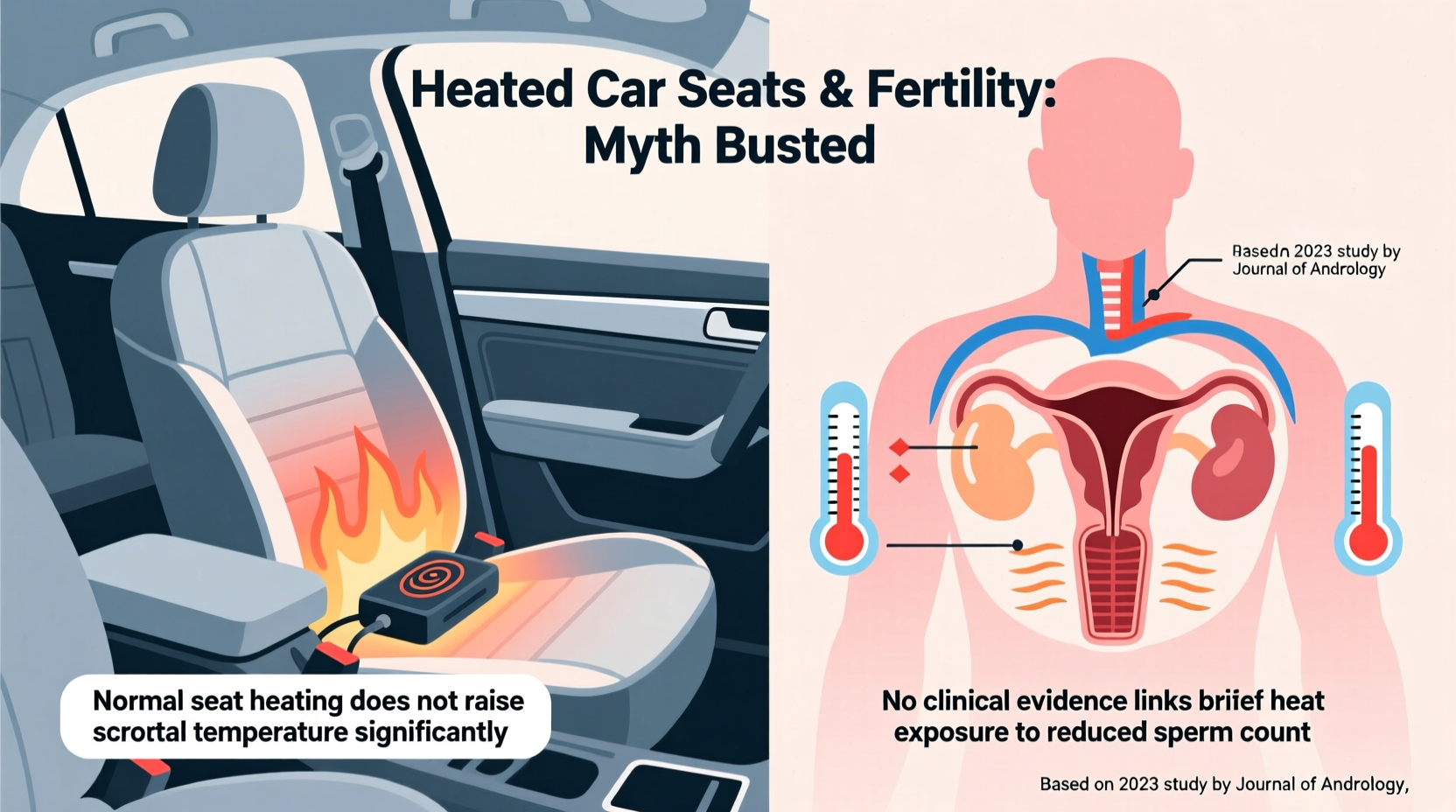
Sperm development, or spermatogenesis, occurs in the testes and requires a temperature slightly lower than the body’s core — typically 2–4°C (3.6–7.2°F) cooler. This is why the testicles are located outside the body in the scrotum, which acts as a natural thermostat through muscle contractions and blood flow regulation.
When scrotal temperature rises beyond optimal levels, even temporarily, it can disrupt sperm production. Studies show that elevated heat exposure may lead to:
- Reduced sperm count
- Lower sperm motility (movement)
- Increased abnormal sperm morphology (shape)
- Oxidative stress in testicular tissue
These effects are well-documented in cases of chronic exposure, such as frequent sauna use, tight underwear, or occupations involving prolonged sitting (e.g., truck drivers). But does occasional use of heated car seats fall into the same risk category?
“While heat is a known factor in temporary reductions in sperm quality, context matters enormously. Duration, frequency, and baseline health all influence outcomes.” — Dr. Alan P. Sabo, Reproductive Endocrinologist, Cleveland Clinic Fertility Center
What Does the Research Say About Heated Seats?
To assess the real-world impact of heated car seats, we need to consider both the magnitude and duration of heat exposure. Most heated seats operate between 35°C and 40°C (95°F to 104°F), designed for comfort, not extreme warming. For comparison, a hot bath or sauna can exceed 42°C (107.6°F), and sitting in those environments for 15–30 minutes has been shown to affect sperm parameters.
A 2007 study published in *Fertility and Sterility* examined the effects of long-term scrotal heating in men using saunas. Participants who took daily 30-minute sauna sessions for three months experienced significant drops in sperm count — but recovery occurred within six months of stopping exposure.
Crucially, no peer-reviewed study has directly linked heated car seat usage to infertility. The existing evidence focuses on more intense or sustained heat sources. A 2019 review in *Human Reproduction Update* concluded that while occupational heat exposure (like welding or baking) poses measurable risks, low-grade, intermittent sources like heated seats lack sufficient data to support causation.
Tip: If you're concerned about heat exposure, limit heated seat use to 30 minutes or less and avoid using them on high settings for extended drives.Comparing Heat Sources: Risk Levels for Male Fertility
Not all heat exposure is equal. The table below compares common sources of scrotal warming and their relative impact on sperm health based on clinical findings.
| Heat Source | Typical Temp | Exposure Time | Impact on Fertility |
|---|---|---|---|
| Heated Car Seat | 35–40°C (95–104°F) | 10–60 mins | Low (minimal evidence) |
| Laptop on Lap | 40–45°C (104–113°F) | 1+ hours | Moderate (proven effect) |
| Sauna/Hot Bath | 42–48°C (107–118°F) | 15–30 mins | High (significant reduction) |
| Tight Underwear | Slight increase | All day | Mild to moderate |
| Occupational Heat (e.g., welding) | Variable, often high | Hours daily | High (chronic impact) |
As shown, heated car seats rank among the lowest-risk sources. Their intermittent use and moderate temperature output make them unlikely to cause meaningful harm, especially compared to behaviors with stronger scientific backing.
Real-World Example: The Commuter’s Dilemma
Consider Mark, a 34-year-old software engineer who commutes 45 minutes each way in his SUV equipped with heated seats. Living in Minnesota, he uses them almost daily from November through March — roughly five months per year. Concerned after reading a viral social media post linking heated seats to infertility, he consulted a urologist.
After reviewing his lifestyle — including regular exercise, healthy diet, and absence of smoking or excessive alcohol — the doctor reassured him that his heated seat usage was not a significant risk factor. Instead, the physician recommended focusing on proven fertility boosters: maintaining a healthy weight, avoiding prolonged laptop use on the lap, and managing stress.
Mark’s case illustrates how isolated habits are often scapegoated without considering broader context. His seasonal, moderate use of heated seats posed negligible risk compared to other lifestyle factors.
Expert Advice: What You Can Do to Protect Fertility
While the risk from heated car seats appears minimal, men who are actively trying to conceive or have existing fertility concerns may still want to take precautionary steps. The following checklist summarizes practical, science-backed actions to support reproductive health.
✅ Fertility-Friendly Habits Checklist
- Limit continuous heat exposure: Avoid saunas, hot tubs, and heated seats for longer than 30 minutes daily when trying to conceive.
- Wear loose-fitting underwear: Cotton boxers allow better airflow and reduce scrotal temperature.
- Avoid placing laptops directly on your lap: Use a desk or lap desk to create distance.
- Stay active: Regular exercise improves circulation and hormone balance.
- Maintain a healthy weight: Obesity is linked to lower testosterone and impaired sperm function.
- Quit smoking and limit alcohol: Both are associated with reduced sperm quality.
- Manage stress: Chronic stress affects hormonal regulation critical for sperm production.
“The human body is resilient. Short-term exposures don’t override long-term health patterns. Focus on the big levers — nutrition, activity, sleep — rather than obsessing over minor variables.” — Dr. Lena Torres, Andrologist, UCSF Men’s Health Clinic
Step-by-Step Guide to Minimizing Heat Risk Without Sacrificing Comfort
If you enjoy heated seats but want to minimize any theoretical risk, follow this simple routine:
- Pre-warm the seat before driving: Turn on the heater while the car warms up, then turn it off once you’re seated. This reduces direct exposure time.
- Use lower heat settings: Medium or low settings provide comfort without excessive warming.
- Alternate with breaks: On long drives, disable the seat heater every 30 minutes for 10–15 minutes to allow cooling.
- Wear breathable clothing: Choose cotton or moisture-wicking fabrics instead of synthetic layers.
- Monitor symptoms: If you notice persistent discomfort, swelling, or pain in the scrotal area, consult a healthcare provider.
- Get a semen analysis if concerned: For men trying to conceive, a simple test can provide peace of mind and objective data.
Frequently Asked Questions
Can using heated car seats cause permanent infertility?
No, there is no scientific evidence that heated car seats cause permanent infertility. Even in cases of significant heat exposure (like frequent saunas), sperm production typically recovers within a few months after discontinuation. Permanent damage is extremely rare and usually linked to trauma, disease, or genetic factors.
Should I stop using heated seats if I’m trying to have a baby?
You don’t need to eliminate their use entirely, but moderation is wise. Limiting use to short durations and lower temperatures is a reasonable precaution. More impactful changes include improving diet, reducing alcohol, and avoiding tight clothing or prolonged sitting.
Do heated seats affect women’s fertility too?
No, heated car seats do not impact female fertility. Female reproductive organs are internal and not subject to the same external temperature fluctuations. There is no biological mechanism by which seat heaters would impair ovarian function or egg quality.
Conclusion: Busting the Myth with Balanced Perspective
The idea that heated car seats are bad for fertility is more myth than reality. While heat can influence sperm production, the level and duration of exposure from car seat heaters fall far below thresholds shown to cause harm. Unlike saunas, hot baths, or occupational hazards, these seats deliver mild, intermittent warmth designed for comfort — not prolonged thermal stress.
This doesn’t mean fertility concerns should be dismissed. On the contrary, understanding the real factors that affect reproductive health — from diet and exercise to environmental toxins and stress — empowers men to make informed choices. But fear over everyday conveniences distracts from more meaningful interventions.
Science supports a balanced approach: enjoy the comfort of heated seats when needed, especially in cold climates, but adopt broader healthy habits if fertility is a priority. Awareness, not anxiety, should guide decisions.
💬 Have questions or personal experiences with fertility and lifestyle factors? Share your thoughts below — let’s build a conversation grounded in science, not speculation.








